Feds Propose Removing Brake Pedal Requirement for Autonomous Cars
Table of Contents
The US government is taking another step toward making fully autonomous vehicles a reality. The National Highway Traffic Safety Administration (NHTSA) has announced proposed changes to the Federal Motor Vehicle Safety Standards (FMVSS) that could remove one of the biggest requirements for driverless vehicles.
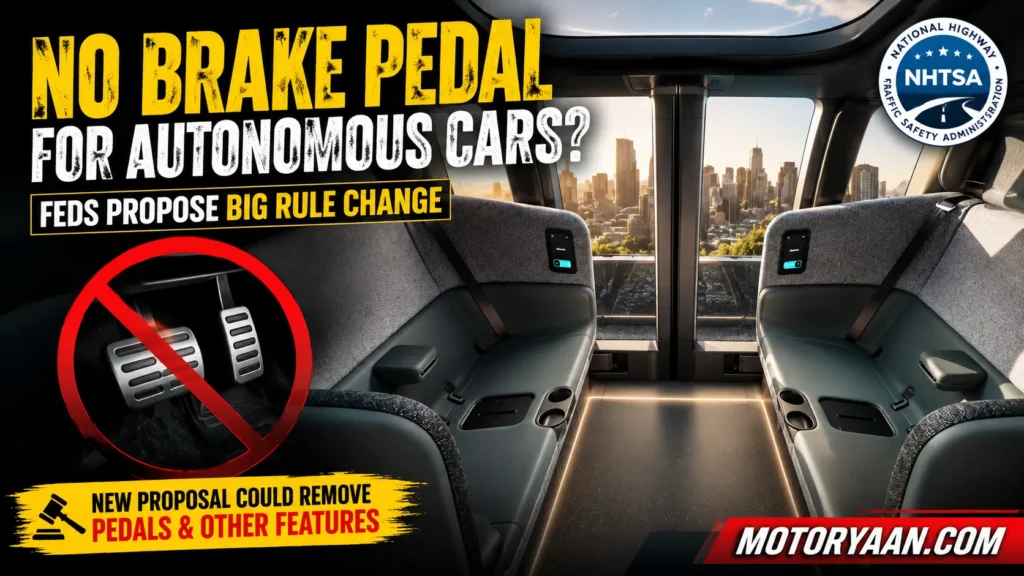
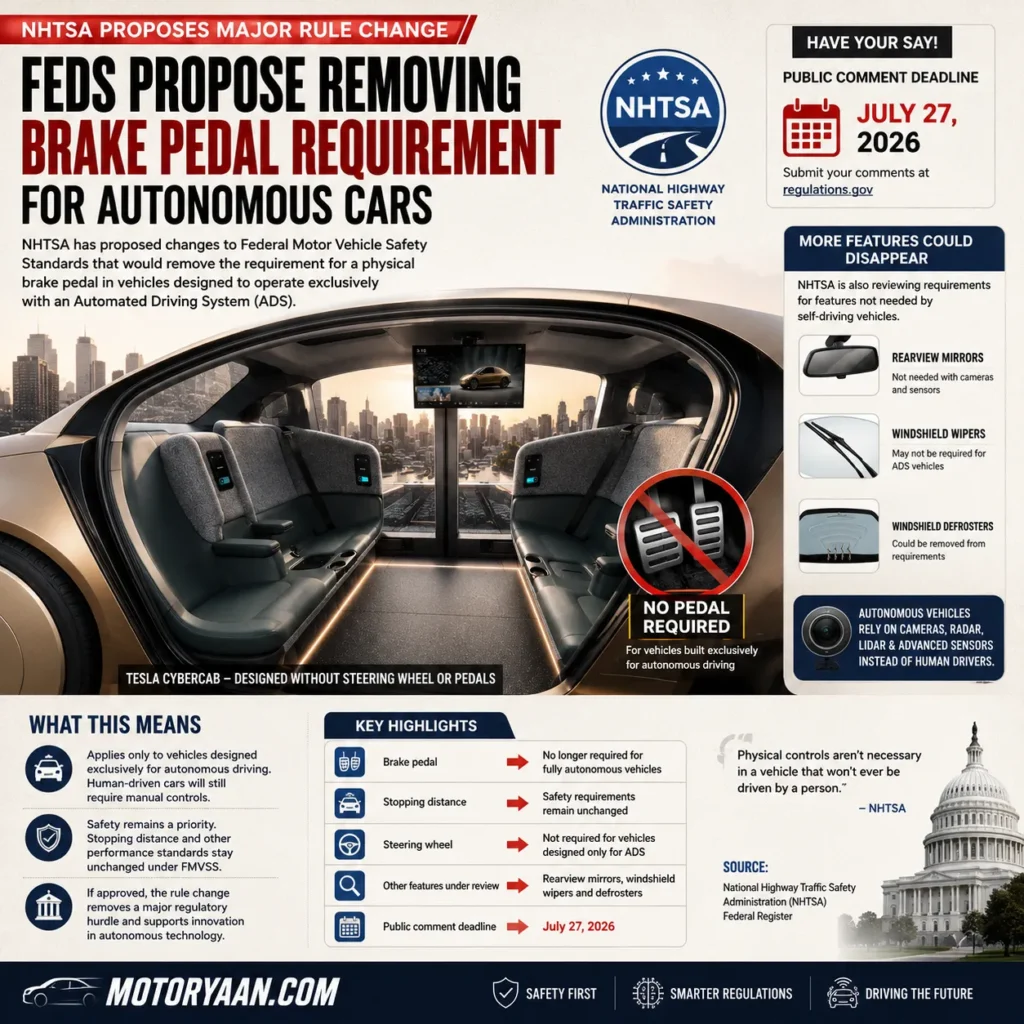
If the proposal is approved, vehicles designed to operate only with an Automated Driving System (ADS) would no longer need to have a physical brake pedal.
NHTSA Wants to Update Outdated Rules
Current federal safety regulations were written for vehicles driven by humans. That means every new vehicle must meet requirements that include manual controls such as a steering wheel and brake pedal.
However, companies developing fully autonomous vehicles have argued for years that these rules no longer make sense for cars that will never have a human driver.
NHTSA has now started the rulemaking process to modernize these regulations for the next generation of autonomous vehicles.
No Brake Pedal, But Safety Rules Stay the Same
One important point is that the proposal does not reduce safety requirements.
Instead, it removes the requirement for a physical brake pedal in vehicles built exclusively for autonomous driving.
Stopping performance will still be regulated. Autonomous vehicles must continue to meet the same federal stopping distance standards required under FMVSS. In simple words, the vehicle still has to stop safely, even if there is no pedal for a person to press.
Vehicles Like Tesla Cybercab Could Benefit
One of the biggest examples is Tesla’s Cybercab.
The Cybercab was designed without a steering wheel or pedals because it is intended to drive itself using an automated driving system. Under the proposed changes, vehicles with this type of design could become eligible for certification under FMVSS No. 135.
According to NHTSA, manual controls are unnecessary in vehicles that are never intended to be driven by humans.
More Traditional Features Could Also Disappear
The proposed rule goes beyond the brake pedal.
NHTSA also mentioned that future autonomous vehicles may no longer need features that exist mainly for human drivers.
These could include:
- Rearview mirrors
- Windshield wipers
- Windshield defrosters
The reason is simple. Most autonomous vehicles rely on cameras, sensors, radar and other advanced technologies instead of a driver’s direct view of the road.
Public Can Submit Feedback
The proposal is still under review.
NHTSA is accepting public comments before making a final decision. According to the Federal Register, comments on the proposed rule can be submitted until July 27, 2026.
What This Means
The proposed changes do not mean every new car will lose its brake pedal anytime soon. They apply only to vehicles designed exclusively for autonomous driving.
For regular passenger cars that people drive themselves, existing requirements for manual controls will remain in place.
If approved, the new rules would remove a major regulatory hurdle for companies developing fully driverless vehicles and help align federal safety standards with the latest autonomous vehicle technology.
Key Highlights
| Feature | Proposed Change |
|---|---|
| Brake pedal | No longer required for fully autonomous vehicles |
| Stopping distance | Safety requirements remain unchanged |
| Steering wheel | Not required for vehicles designed only for ADS |
| Other features under review | Rearview mirrors, windshield wipers and defrosters |
| Public comment deadline | July 27, 2026 |
Conclusion
The latest proposal from NHTSA reflects how quickly autonomous vehicle technology is evolving. Rather than lowering safety standards, the agency is looking to remove requirements that only apply to human drivers while keeping strict performance standards in place.
If the proposal becomes law, future driverless vehicles such as the Tesla Cybercab could move one step closer to public roads without needing traditional controls like a brake pedal or steering wheel.
Sources and References
Official Sources
1. NHTSA Press Release (Official)
https://www.nhtsa.gov/press-releases/fmvss-updates-brake-pedal-requirements
Official announcement explaining the proposed FMVSS changes, brake pedal requirement removal, and updated autonomous vehicle regulations.
2. National Highway Traffic Safety Administration (NHTSA)
https://www.nhtsa.gov/
The official U.S. government website covering vehicle safety standards, recalls, and autonomous vehicle regulations.
3. NHTSA Automated Vehicle Safety
https://www.nhtsa.gov/vehicle-safety/automated-vehicles-safety
Official guide explaining different levels of vehicle automation and how automated driving systems are regulated.
Trusted News & Automotive Sources
Independent coverage of the proposal with additional industry context and regulatory background.
5. Car and Driver
https://www.caranddriver.com/news/a71746274/federal-standards-drop-brake-pedal-requirement-driverless-cars/
Detailed automotive coverage explaining what the proposed rule means for future autonomous vehicles such as Tesla Cybercab.
6. TechCrunch
https://techcrunch.com/2026/06/25/trump-admin-proposes-axing-brake-pedal-requirement-for-avs-in-a-boost-for-tesla/
Technology focused analysis covering the impact on autonomous vehicle companies and the robotaxi industry.
7. Business Insider
https://www.businessinsider.com/no-brakes-trumps-dot-pedal-free-tesla-zoox-2026-6
Explains how the proposal could affect Tesla, Zoox, and the future deployment of purpose built autonomous vehicles.