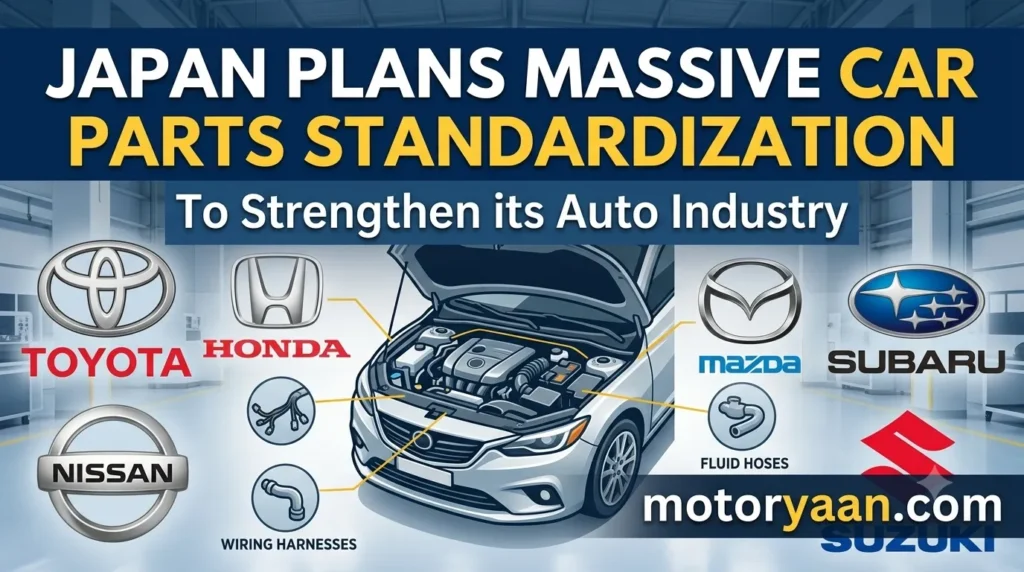
Japan Plans Massive Car Parts Standardization to Strengthen Its Auto Industry
Japan‘s automotive industry is preparing for one of its biggest changes in decades. Instead of every manufacturer developing many of the same basic components independently, the country’s largest automakers are discussing a plan to standardize selected car parts across different brands.
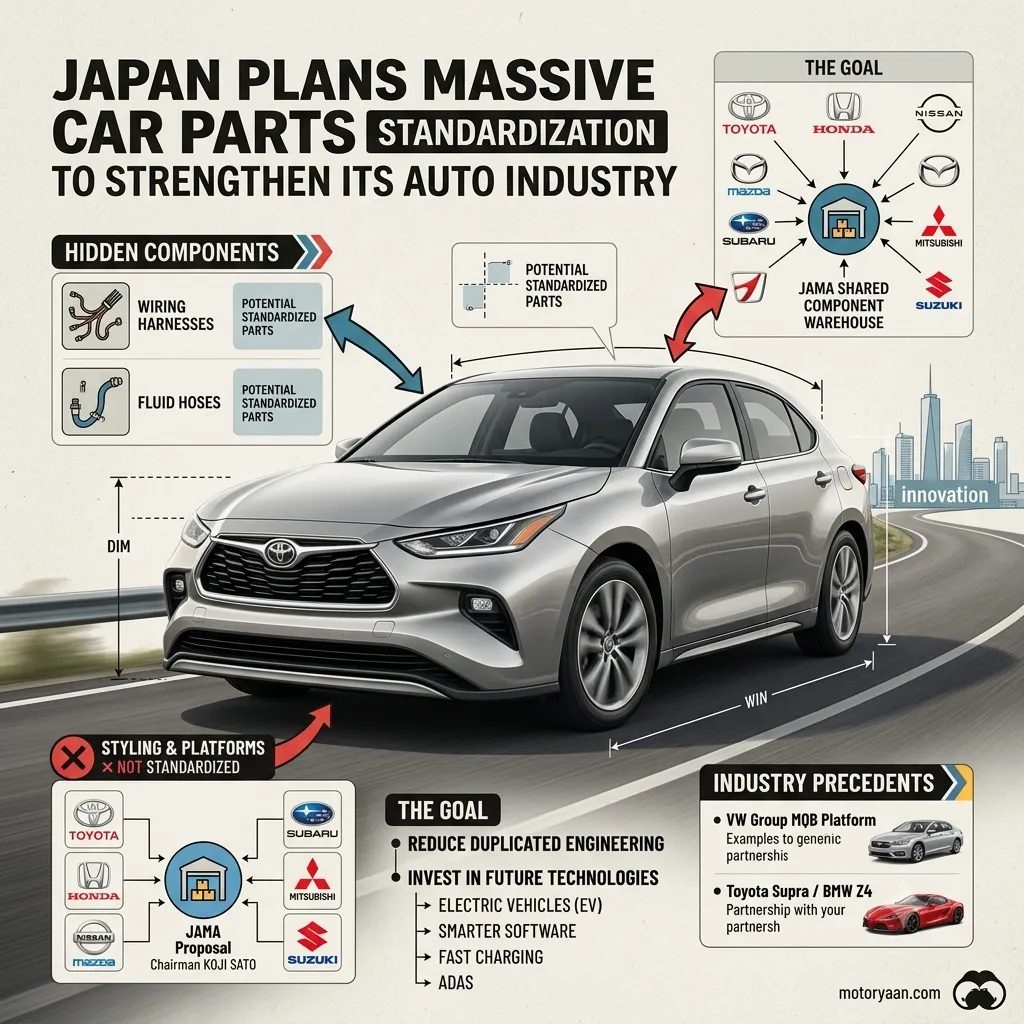
The idea is simple. Share the components that customers never see and use the saved time and money to develop better electric vehicles, smarter software, faster charging technology, and advanced driver assistance systems.
According to reports from Automotive News, the proposal is being led through the Japan Automobile Manufacturers Association (JAMA), which represents Japan’s biggest vehicle manufacturers.
Why Japan Wants to Standardize Car Parts
The global automotive industry is changing quickly. Electric vehicles, software defined cars, autonomous driving technology, and stricter emissions rules have made vehicle development much more expensive.
Toyota CEO Koji Sato, who also serves as Chairman of JAMA, believes Japanese automakers need to work together to remain competitive.
Sato said the Japanese auto industry is going through a massive period of transition and now is the right time for the industry to evolve through collaboration and reform.
Rather than spending engineering resources developing similar basic components again and again, manufacturers could share those parts and focus their investment on technologies customers actually value.
Which Companies Could Be Part of the Plan?
The proposal involves members of the Japan Automobile Manufacturers Association, including:
| Japanese Automaker |
|---|
| Toyota |
| Honda |
| Nissan |
| Mazda |
| Subaru |
| Mitsubishi |
| Suzuki |
These companies already compete in global markets, but they may also cooperate on selected components that do not affect the identity of their vehicles.
What Parts Could Become Standard?
The discussion is not about making every Japanese car identical.
Instead, the focus is on components that most buyers never notice.
Possible examples include:
- Wiring harnesses
- Fluid hoses
- Other hidden mechanical and electrical components
There has been no indication that manufacturers plan to standardize:
- Vehicle platforms
- Exterior body panels
- Body castings
- Styling
- Brand specific designs
This means Toyota, Honda, Nissan, and other brands would still develop vehicles with their own driving characteristics, designs, and engineering philosophy.
The Auto Industry Already Shares Parts
Parts sharing is nothing new in the automotive industry.
Many manufacturers already share platforms and components to reduce production costs.
One of the best known examples is the Volkswagen Group’s MQB platform, which supports a wide range of vehicles across multiple brands.
There have also been several well known partnerships between manufacturers, including:
- Toyota and BMW jointly developed the Toyota Supra and BMW Z4.
- Mazda and Fiat worked together on the Fiat 124 Spider and Mazda MX5.
- Ford and General Motors jointly developed a ten speed automatic transmission before tuning it separately for their own vehicles.
These partnerships show that companies can share engineering while still creating products with different driving experiences.
Why Japanese Automakers See This as Important
Nissan CEO Ivan Espinosa said Japanese manufacturers need stronger cooperation because competitors in other regions are becoming better organized.
According to him, the industry will likely see much more collaboration among Japanese original equipment manufacturers in the coming years.
The goal is to reduce duplicated engineering work and redirect resources toward:
- Better software
- Faster charging electric vehicles
- Improved driver assistance systems
- Future mobility technologies
This approach could also lower development costs during a period when manufacturers are investing billions in electrification.
Benefits of Car Parts Standardization
If implemented carefully, the proposal could provide several advantages.
Lower development costs
Sharing basic components reduces engineering and manufacturing expenses.
Faster technology development
Manufacturers can spend more time improving electric vehicles, software, and safety systems instead of redesigning common parts.
Better supply chain efficiency
Using common components may simplify production and reduce supply chain complexity.
Easier repairs
For vehicle owners and independent repair shops, standardized components could make replacement parts easier to find and potentially more affordable.
Are There Any Downsides?
There are also concerns.
Many enthusiasts worry that greater standardization could make vehicles feel too similar.
One criticism often aimed at large platform sharing programs is that cars begin to lose some of their unique identity.
However, sharing hidden components such as wiring or hoses is unlikely to change how a vehicle looks or drives.
The real challenge will be finding the right balance between reducing costs and preserving each brand’s character.
What This Means for the Future
At this stage, the proposal focuses only on components that remain out of sight. There has been no suggestion that Japanese manufacturers will begin building identical vehicles or sharing complete platforms across the industry.
If the plan moves forward, it could become one of the largest collaborative efforts ever attempted by Japan’s automotive sector.
For consumers, the biggest benefits may come through faster innovation, improved technology, better parts availability, and potentially lower production costs, while manufacturers continue competing in vehicle design, performance, and brand identity.
Sources & References
- Automotive News
https://www.autonews.com/ - Japan Automobile Manufacturers Association (JAMA)
https://www.jama.org/ - Toyota Global Newsroom
https://global.toyota/en/newsroom/ - Nissan Global Newsroom
https://global.nissannews.com/