
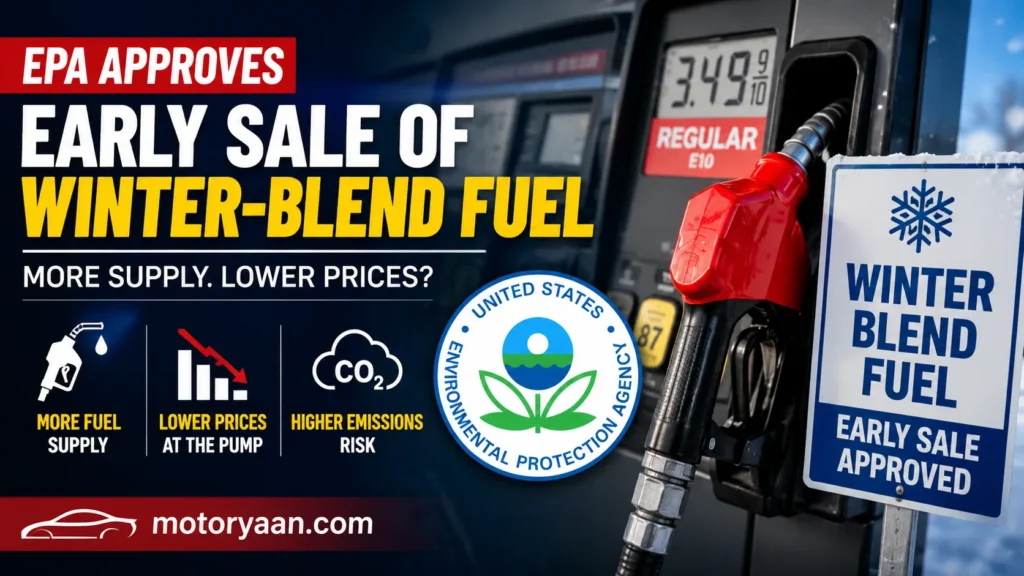
EPA Approves Early Sale of Winter Blend Gasoline to Increase U.S. Fuel Supply
Table of Contents
The U.S. Environmental Protection Agency (EPA) has approved the early sale of winter blend gasoline in an effort to increase fuel supplies and help bring down gasoline prices at the pump.
The temporary move allows gasoline with higher volatility to enter the market earlier than it normally would. The EPA says the decision could increase domestic gasoline supply by hundreds of thousands of barrels per day.
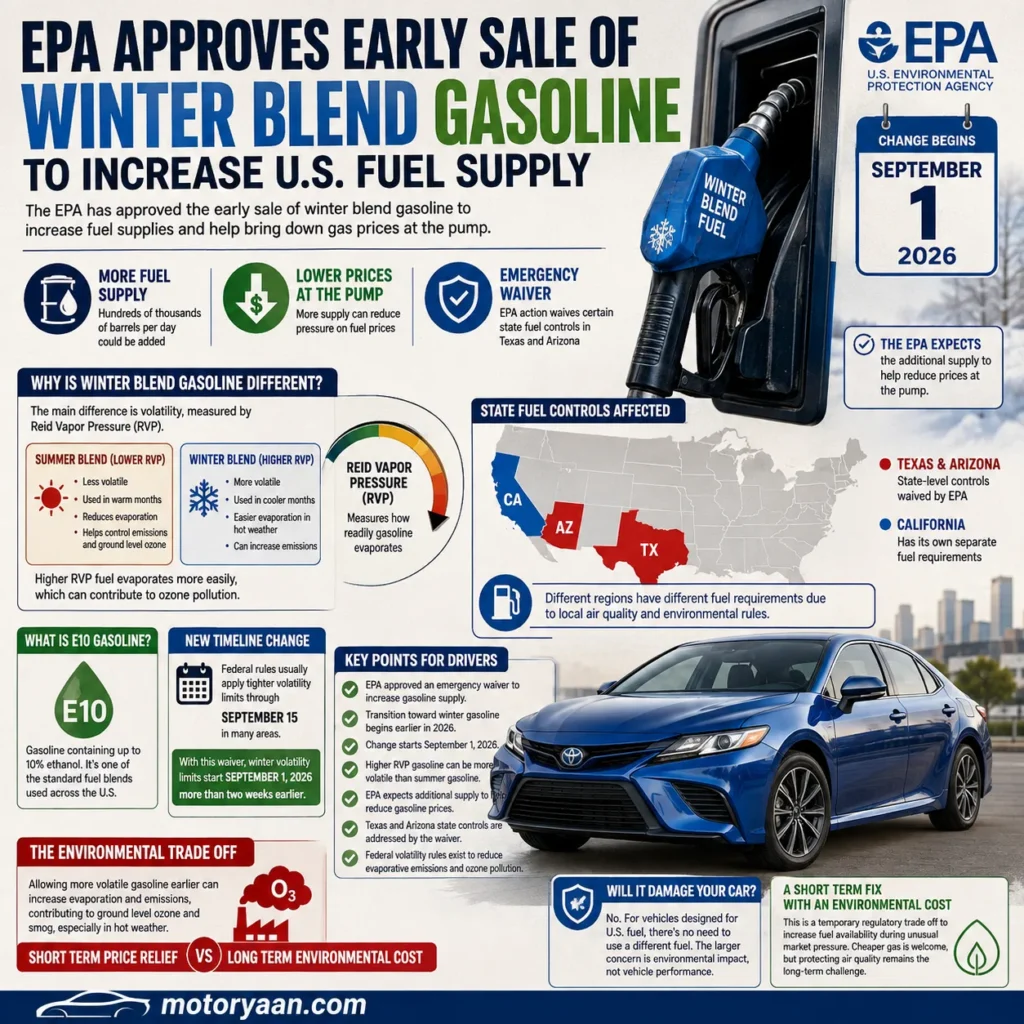
Under the latest waiver, the change begins September 1, 2026. The EPA is bringing forward wintertime volatility limits that would normally apply after the summer fuel control period. The waiver also affects state level fuel controls in places such as Texas and Arizona, while California has its own fuel requirements.
For drivers, the obvious attraction is simple: more gasoline supply could mean lower prices. But there is an environmental reason why this fuel is normally restricted during warmer months.
Why Is Winter Blend Gasoline Different?
The main difference between summer and winter gasoline comes down to volatility.
Gasoline naturally produces vapours. When temperatures rise, those vapours escape more easily. This is where Reid Vapor Pressure, commonly called RVP, becomes important.
RVP measures how readily gasoline evaporates under specific conditions. Lower RVP gasoline is less volatile and is used during the warmer months to help control evaporative emissions and ground level ozone.
Winter gasoline can have higher volatility because colder temperatures make fuel evaporation less of a concern.
So, despite what the name might suggest, winter blend gasoline is not some special fuel designed to make your car happier when the temperature drops. It is mainly about controlling fuel volatility as the seasons change.
What Is E10 Gasoline?
E10 is gasoline containing up to 10 percent ethanol. It remains one of the standard gasoline blends used across the United States.
During summer, gasoline volatility rules become stricter because higher temperatures can increase evaporation. Federal rules generally apply tighter volatility limits during the summer control period, which runs through September 15 in many areas. Some states have longer control periods.
The latest EPA action changes that timetable.
Starting September 1, gasoline can move toward the volatility limits normally associated with the winter period. This effectively brings the transition to winter gasoline forward by more than two weeks in much of the country.
Why Did the EPA Approve the Change?
The EPA says the decision responds to what it describes as extreme and unusual fuel supply circumstances affecting the United States.
The agency is working with the U.S. Department of Energy to increase the amount of gasoline available in the domestic market. According to the EPA, allowing higher RVP gasoline earlier could add hundreds of thousands of barrels of gasoline supply per day.
The basic logic is straightforward.
More gasoline available in the market can reduce pressure on fuel supplies. If supply increases while demand remains relatively steady, gasoline prices can come under pressure.
Whether every driver immediately sees a major reduction at the pump is another matter. Gasoline prices depend on several factors, including crude oil prices, refining costs, transportation and local market conditions.
Texas, Arizona and California Face Special Rules
The latest waiver also deals with states that have fuel volatility requirements extending beyond the normal federal schedule.
The EPA specifically says its action waives certain state level controls in Texas and Arizona. California also has separate fuel requirements, making its situation more complicated than simply switching to the same gasoline specification used elsewhere.
This matters because the United States does not operate with one identical gasoline specification everywhere.
Different regions can have different fuel requirements based on local air quality and environmental rules. These so called boutique fuel requirements can make the fuel supply chain more complicated because refiners and distributors may need to produce different gasoline specifications for different markets.
The EPA has been using emergency fuel waivers throughout 2026 to simplify parts of that system and increase fuel availability.
The Environmental Trade Off
There is a clear trade off involved in allowing more volatile gasoline to reach the market earlier.
Higher RVP gasoline evaporates more easily. During hot weather, gasoline vapours can contribute to the formation of ground level ozone, which is one of the reasons the EPA regulates gasoline volatility during the summer months.
Modern vehicles have systems designed to control fuel vapours, including sealed fuel systems and evaporative emission controls. However, fuel volatility remains an important part of the wider emissions picture.
That is why summer gasoline normally carries stricter volatility requirements.
The current EPA decision essentially accepts a temporary change to those requirements in exchange for increasing fuel supply during a period of unusual market pressure.
What Does This Mean for American Drivers?
For most drivers, there is no complicated procedure involved.
You simply fill the vehicle with gasoline that meets the applicable fuel requirements at the station.
The important difference happens upstream, where refiners, fuel distributors and retailers can move gasoline with different volatility characteristics through the supply chain.
The EPA expects the additional supply to help reduce prices at the pump.
The change also means that motorists in affected areas may encounter gasoline that would normally be associated with the cooler months earlier than usual.
Key points for drivers
- The EPA approved an emergency waiver to increase gasoline supply.
- The transition toward winter gasoline begins earlier in 2026.
- The change starts September 1, 2026.
- Higher RVP gasoline can be more volatile than summer gasoline.
- The EPA expects the additional supply to help reduce gasoline prices.
- Texas and Arizona have additional state fuel controls that are addressed by the waiver.
- Federal gasoline volatility rules exist primarily to reduce evaporative emissions and ozone pollution.
Will Winter Blend Gasoline Damage Your Car?
For vehicles designed to run on the gasoline being sold legally in their market, the EPA’s waiver does not mean drivers suddenly have to use a completely different type of fuel.
The bigger issue is the environmental impact of allowing higher volatility gasoline earlier in the season, rather than a sudden mechanical problem for modern vehicles.
It is also important not to confuse gasoline volatility with ethanol content. RVP describes how readily gasoline evaporates, while E10 and E15 describe the amount of ethanol blended into gasoline.
Those are different characteristics.
The EPA has also issued separate fuel waivers in 2026 involving E15 and ethanol blending. In March, for example, the agency announced a temporary waiver allowing nationwide E15 sales and removing certain federal barriers around E10 fuel requirements.
A Short Term Fuel Price Fix With an Environmental Cost
The EPA’s decision is essentially a supply move.
The government wants more gasoline available at a time when fuel prices and supply conditions remain under pressure. Bringing forward the winter fuel transition gives refiners and distributors greater flexibility and allows gasoline with higher volatility to enter the market earlier.
That could help consumers at the pump.
But the reason summer gasoline normally has lower volatility has not disappeared. Hot weather still increases evaporation, and gasoline vapours can contribute to ozone pollution.
So this is not really a case of winter gasoline suddenly becoming better for cars. It is a temporary regulatory trade off designed to increase fuel availability.
For drivers, cheaper gasoline would obviously be welcome. For regulators, the challenge is making sure that short term relief does not create a bigger environmental problem.
Sources and References
Official sources
- U.S. Environmental Protection Agency (EPA)
Official announcement covering the September 1, 2026 early transition to winter gasoline and the expected increase in gasoline supply. - EPA Fuel Waivers
Official EPA page listing the 2026 emergency fuel waivers and the detailed changes to gasoline volatility rules. - EPA Gasoline Reid Vapor Pressure (RVP)
Useful for explaining what RVP means, why summer gasoline has lower volatility and how gasoline evaporation affects ozone pollution. - EPA Gasoline Standards
EPA’s main reference hub for gasoline regulations, emissions, RVP, reformulated gasoline and fuel waivers. - EPA National Fuel Waiver PDF, September 1, 2026
The actual EPA waiver document. This is particularly useful if you want to demonstrate that the article is based on the primary government document rather than secondary reporting. - EPA Federal Gasoline Regulations
Official information covering federal gasoline regulations, including RVP, E15 and other fuel requirements.
U.S. fuel price data
- U.S. Energy Information Administration (EIA) gasoline prices
Official U.S. government data for weekly regular gasoline prices across the country and individual regions. Good for adding current price figures or future updates to the article. - EIA All Grades Gasoline Prices
Weekly U.S. gasoline price data covering different fuel regions. Useful for tracking whether the EPA action is actually followed by changes at the pump.
Useful secondary source
- Car and Driver
Automotive publication that reported the EPA’s winter blend decision and provides useful automotive context around the fuel change.
EPA Early Winter Blend Gasoline FAQ
Here are the key answers about the EPA's decision to allow winter blend gasoline to reach the U.S. market earlier in 2026.
What did the EPA approve for gasoline in 2026?
The U.S. Environmental Protection Agency approved the early sale of winter blend gasoline to increase fuel supply and help reduce gasoline prices at the pump. The change allows gasoline with higher volatility to enter the market earlier than it normally would.
When does the early winter gasoline change begin?
The change begins September 1, 2026. This brings forward the transition toward gasoline volatility limits normally associated with the winter period.
Why is the EPA allowing winter blend gasoline earlier?
The EPA says the decision responds to extreme and unusual fuel supply circumstances in the United States. Allowing higher volatility gasoline earlier could add hundreds of thousands of barrels of gasoline supply per day and put less pressure on fuel availability.
What is the difference between summer and winter gasoline?
The main difference is volatility. Summer gasoline generally has lower Reid Vapor Pressure, or RVP, which helps reduce evaporation during warmer weather. Winter gasoline can have higher volatility because colder temperatures make fuel evaporation less of a concern.
What does RVP mean in gasoline?
RVP stands for Reid Vapor Pressure. It measures how readily gasoline evaporates under specific conditions. Lower RVP gasoline is less volatile and is used during warmer months to help control evaporative emissions and ground level ozone.
What is E10 gasoline?
E10 is gasoline containing up to 10 percent ethanol. It is one of the standard gasoline blends used across the United States. Ethanol content and gasoline volatility are separate characteristics.
Which states have special fuel rules under the waiver?
The EPA's action addresses certain state level fuel controls in Texas and Arizona. California has separate fuel requirements, so its situation is different from many other states.
Will winter blend gasoline damage my car?
For vehicles designed to run on the gasoline legally sold in their market, the waiver does not mean drivers suddenly need to use a completely different type of fuel. The main concern discussed with higher volatility gasoline is its environmental impact rather than a sudden mechanical problem for modern vehicles.
Can the EPA's decision lower gasoline prices?
The EPA expects the additional gasoline supply to help reduce prices at the pump. However, drivers may not see the same price change everywhere because gasoline prices also depend on crude oil prices, refining costs, transportation and local market conditions.
Does higher RVP gasoline create more pollution?
Higher RVP gasoline evaporates more easily. During hot weather, gasoline vapours can contribute to the formation of ground level ozone. This is one reason the EPA normally applies stricter gasoline volatility requirements during warmer months.
Do drivers need to do anything differently at the gas station?
For most drivers, there is no special procedure. Motorists can fill their vehicles with gasoline that meets the applicable fuel requirements at the station. The major change happens within the fuel supply chain, involving refiners, distributors and retailers.