Fernando Alonso Slams 2026 Formula 1 Cars, Says Hybrid Racing Has Gone Too Far
Table of Contents
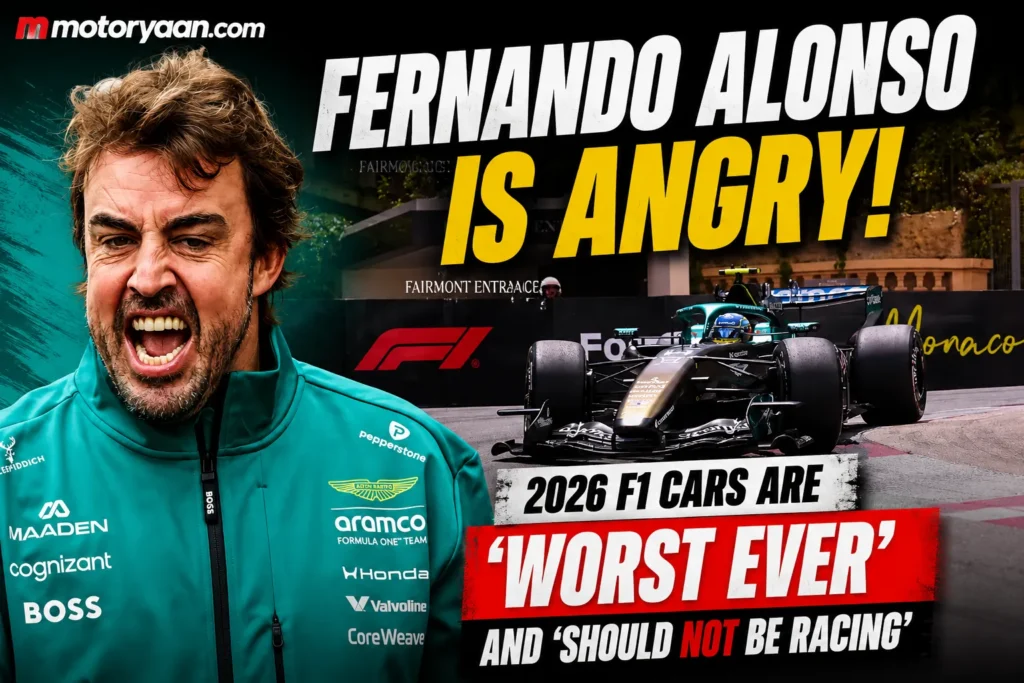
Fernando Alonso Calls the 2026 F1 Cars the Worst He Has Ever Driven
Fernando Alonso has never been afraid to speak his mind, and after the opening practice session in Monaco, the two time Formula 1 world champion made it clear that he is unhappy with the current generation of cars.
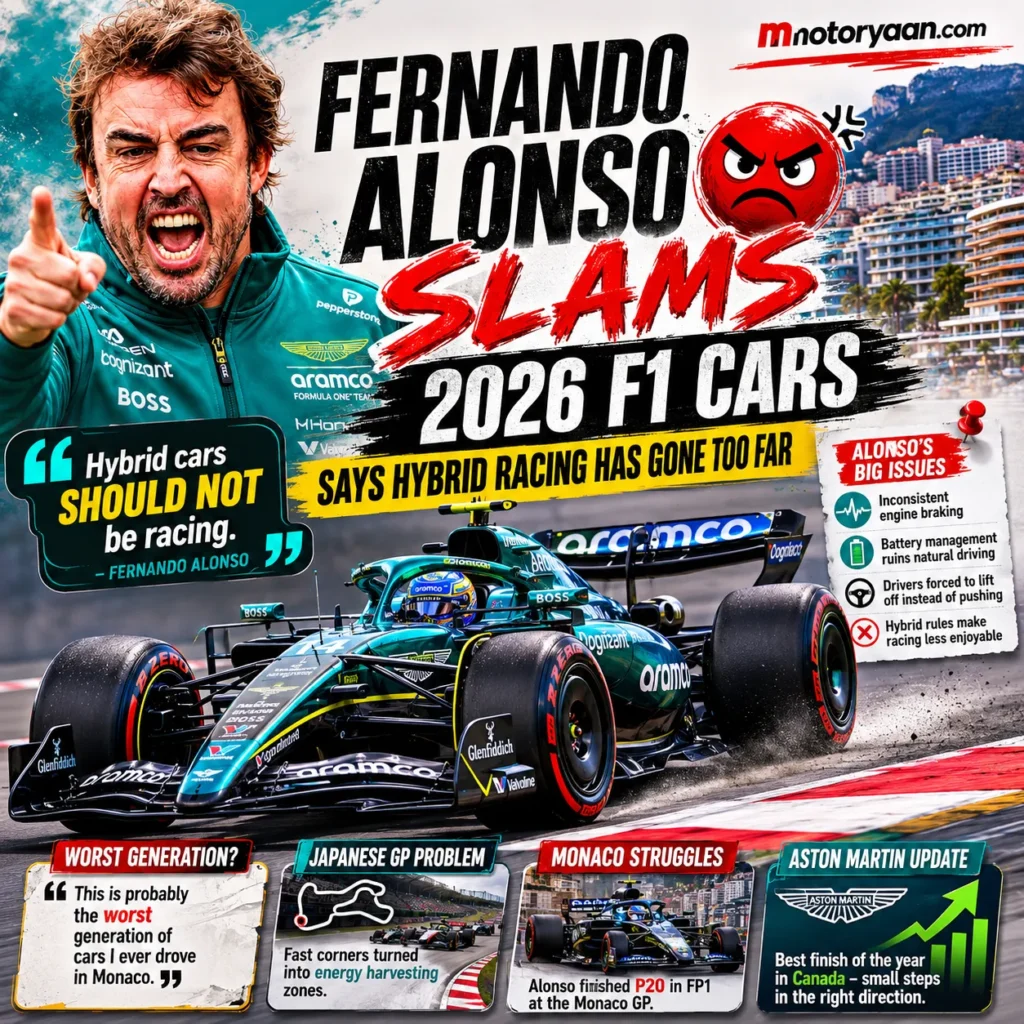
The Aston Martin driver described the 2026 Formula 1 machines as the worst cars he has driven around the famous streets of Monaco. His criticism mainly focused on the hybrid power unit regulations and the way drivers now have to manage energy recovery throughout a lap.
According to Alonso, the current system takes away the natural driving feel that has always defined Formula 1.
Why Fernando Alonso Is Angry With the 2026 F1 Regulations
The biggest issue for Alonso is the way the hybrid system recovers energy to recharge the battery.
Instead of pushing flat out through every section of the circuit, drivers now have to carefully manage energy harvesting by lifting off the throttle or adjusting braking points. That process changes how the car behaves from one corner to another.
Alonso explained that the amount of engine braking changes depending on the battery charge level.
When the battery is full, the system stops recovering energy, which also changes the car’s braking characteristics. As a result, drivers experience inconsistent handling throughout a lap.
He believes this unpredictability makes the cars less enjoyable and less natural to drive.
Hybrid Energy Recovery Creates Inconsistent Performance
One of Alonso’s biggest complaints is that the battery management system directly affects engine braking.
That means the same corner can feel different depending on the battery status.
Some laps provide more engine braking, while others provide less, forcing drivers to constantly adapt their driving style instead of attacking every corner with confidence.
For drivers competing at the highest level, consistency is critical. Alonso feels the current regulations work against that principle.
Japanese Grand Prix Highlighted the Problem
The debate around energy harvesting became much bigger earlier this season during the Japanese Grand Prix.
Suzuka is famous for its fast flowing corners that normally reward commitment and high speed driving. However, the latest regulations forced drivers to think about battery management instead of simply pushing at maximum pace.
Many drivers had to lift off the throttle through sections that would traditionally be taken flat out in previous generations of Formula 1 cars.
That sparked criticism from fans and experts who believe Formula 1 should always reward aggressive driving rather than energy conservation.
Monaco Was Expected to Be Different, But Alonso Disagrees
Because Monaco is a slow speed street circuit with heavy braking zones, many expected battery harvesting to play a smaller role.
Alonso disagreed.
He explained that the hybrid system still creates unpredictable engine braking even around Monaco’s tight corners. The changing balance of the car makes it difficult to build confidence, especially on a circuit where precision matters more than outright speed.
For a driver with Alonso’s experience, that inconsistency has become one of the biggest frustrations of the current regulations.
"Hybrid Cars Should Not Be Racing"
Perhaps Alonso’s strongest statement came when discussing the philosophy behind the current Formula 1 cars.
He argued that hybrid systems do not belong in racing because they force drivers to focus on energy management instead of pure performance.
His comments have added fuel to an ongoing debate within Formula 1 about whether modern technology has reduced the excitement of wheel to wheel competition.
While hybrid technology supports efficiency and sustainability goals, some drivers and fans believe it has made racing more complex and less instinctive.
Aston Martin's Difficult Weekend Added to the Frustration
Alonso’s comments also came during a challenging weekend for Aston Martin.
The team struggled for pace during the opening practice session, with Alonso finishing near the bottom of the timing sheets. His teammate Lance Stroll also endured a difficult session.
Poor performance combined with the demands of the new regulations appears to have increased Alonso’s frustration.
However, there are still signs of gradual progress for the Silverstone based team.
Aston Martin Still Looking for Progress
Despite recent struggles, Aston Martin has shown small improvements during the 2026 season.
The team managed its best race finish of the year in Canada, suggesting that updates are slowly moving the car in the right direction.
If development continues, Aston Martin could become more competitive during the second half of the season. Whether that will change Alonso’s opinion of the current Formula 1 regulations remains to be seen.
Key Takeaways
| Topic | Details |
|---|---|
| Main Criticism | Alonso believes the 2026 Formula 1 cars are the worst he has driven. |
| Biggest Concern | Hybrid energy recovery creates inconsistent engine braking characteristics. |
| Effect on Drivers | Drivers must actively manage battery levels instead of pushing flat out. |
| Japanese GP Issue | High-speed corners required lifting off the throttle for energy harvesting. |
| Monaco Impact | Battery management continued to affect car balance and driver confidence. |
| Aston Martin Situation | The team continues to struggle despite signs of gradual improvement. |
Final Thoughts
Fernando Alonso’s criticism reflects a wider conversation about the direction of modern Formula 1.
As the sport continues balancing sustainability with performance, the challenge will be preserving the raw driving experience that has made Formula 1 one of the world’s most exciting motorsport championships.
Whether fans agree with Alonso or support the new era of hybrid technology, his comments have once again sparked debate about what Formula 1 should look like in the future.
Sources & References
- Formula 1 Official Website
Official source for race results, regulations, driver standings, and technical updates.
Formula 1 Official Website - Motorsport.com
One of the most trusted motorsport news outlets covering F1 interviews, technical analysis, and race weekends.
Motorsport.com Formula 1 - The Drive
Automotive news publication covering industry news, motorsports, and exclusive reports. The original Alonso story was published here.
The Drive - Aston Martin Aramco Formula One Team
Official team website with driver information, race reports, and technical updates.
Aston Martin Aramco Formula One Team - FIA (Fédération Internationale de l’Automobile)
Official governing body of Formula 1 and publisher of sporting and technical regulations.
FIA Official Website - Honda Racing Corporation (HRC)
Official source for Honda’s Formula 1 power unit developments and hybrid technology updates.
Honda Racing Corporation - Reuters Sports
International news agency known for factual and unbiased coverage of Formula 1 and global motorsport events.
Reuters Sports Formula 1 - ESPN F1
Comprehensive coverage of Formula 1 news, race analysis, driver interviews, and championship updates for North American audiences.
ESPN Formula 1 - Racer Magazine
North America based motorsport publication offering in depth F1 news, technical features, and paddock analysis.
Racer Magazine - Autosport
Long established motorsport publication featuring Formula 1 news, technical insights, and exclusive interviews.
Autosport Formula 1