Volvo Gets U.S. Approval To Keep Importing Connected Cars Despite Geely Ownership
Table of Contents
Volvo Cleared Under New U.S. Connected Vehicle Rules
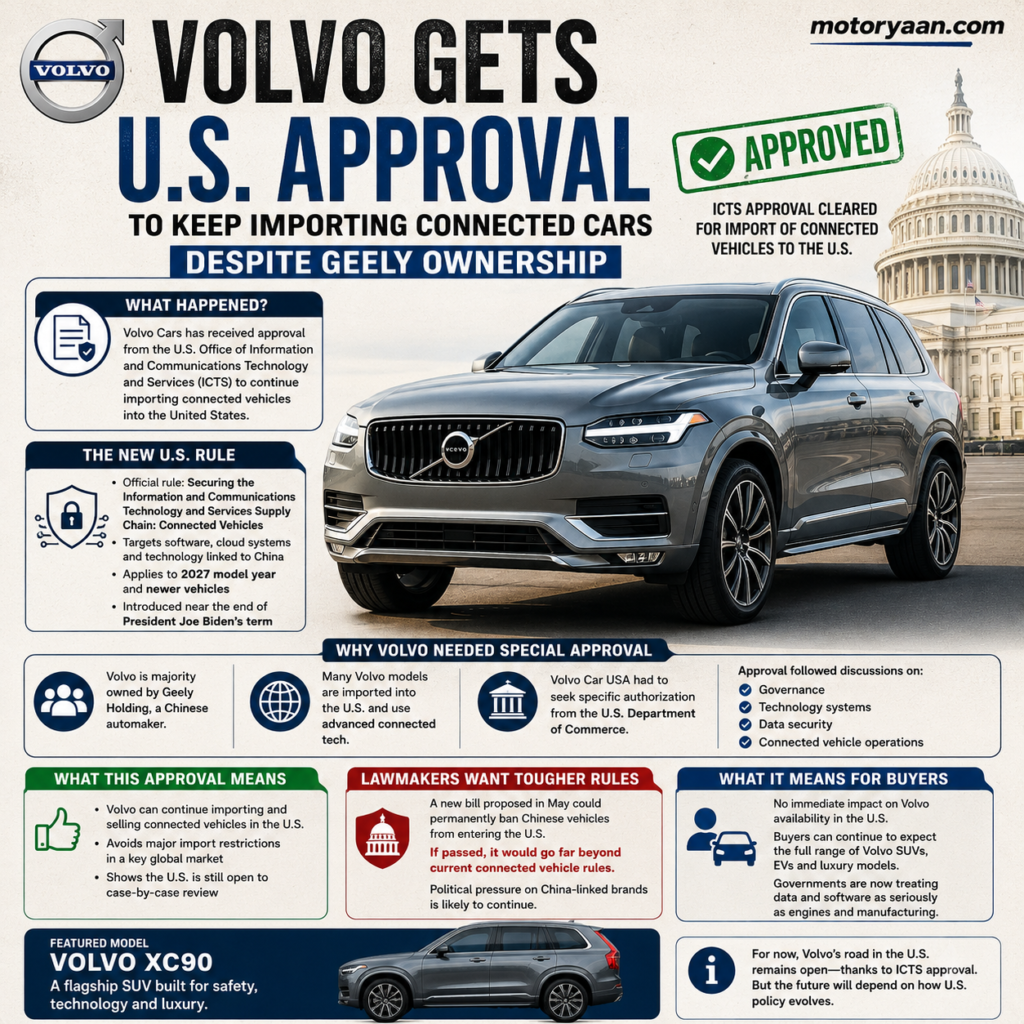
Volvo Cars has officially received approval from the U.S. Office of Information and Communications Technology and Services, also known as ICTS, to continue importing connected vehicles into the United States.
The decision is important for Volvo because the company is majority owned by Geely Holding. Under new U.S. regulations targeting Chinese connected vehicle technology, many automakers with ties to China could face heavy restrictions or outright bans in the American market.
Without this approval, Volvo could have struggled to sell a large part of its lineup in the U.S.
What Are The New U.S. Connected Vehicle Rules?
The rule is officially called Securing the Information and Communications Technology and Services Supply Chain: Connected Vehicles.
The regulation was introduced near the end of former U.S. President Joe Biden’s term. It focuses on vehicles that use connected software, internet services, cloud systems, and communication technology linked to China.
The rules begin applying to 2027 model year vehicles and newer.
In simple words, the U.S. government wants tighter control over vehicle software and data systems connected to foreign technology suppliers, especially those linked to China. Modern cars collect huge amounts of data through navigation systems, mobile apps, cameras, sensors, and over the air software updates. That has raised security concerns among lawmakers.
Why Volvo Needed Special Approval
Even though Volvo is a Swedish brand, its majority ownership by Geely placed it under extra scrutiny.
Volvo imports several vehicles into the United States, including models built outside the country. Because many modern Volvo models are heavily connected vehicles with advanced software systems, the company needed direct authorization from the U.S. Department of Commerce.
According to Volvo’s official statement:
“Under the rule, Volvo Car USA was required to follow a process with the U.S. Department of Commerce to obtain a specific authorization for the continued import and sale of connected cars in the U.S.”
The company also said the approval followed discussions with U.S. officials regarding:
- Governance
- Technology systems
- Data security
- Connected vehicle operations
That seems to have satisfied regulators for now.
Volvo Avoids A Major Problem In The U.S.
This approval matters more than it may first appear.
Without it, Volvo could have faced serious import restrictions in one of its biggest global markets. The U.S. remains important for the brand, especially for SUVs like the Volvo XC90 and other connected models in its lineup.
The decision also shows that the U.S. government is still willing to review companies individually instead of applying a blanket restriction across every automaker linked to China.
Still, things may not stay relaxed forever.
U.S. Lawmakers Want Even Tougher Rules
Several members of Congress proposed a new bill in May that could permanently block Chinese vehicles from entering the United States.
If passed, the proposal would go far beyond current connected vehicle regulations. It would make it much harder for Chinese automakers or companies tied closely to China to operate in the American auto market.
That means brands with Chinese ownership structures may continue facing political pressure even if they receive temporary approvals or exemptions.
For Volvo, the latest approval removes immediate uncertainty. But the long term situation around connected vehicle imports in the U.S. still looks complicated.
What This Means For Buyers
For American customers, the decision means Volvo vehicles will continue arriving in the market without disruption for now.
Buyers looking at Volvo SUVs, EVs, and luxury models should not see immediate changes in availability because of the new ICTS rules.
However, the bigger story here is how governments are now treating software and data in vehicles almost as seriously as engines and manufacturing. Modern cars are becoming rolling computers, and regulators are paying close attention to where that technology comes from.
Sources and References
- Volvo Official Press Release
Official Volvo Cars statement confirming the ICTS authorization approval in the United States. - U.S. Department of Commerce Connected Vehicles Rule
Official U.S. government page explaining the connected vehicles regulations and national security rules. - Federal Register ICTS Rule Document
Full federal regulation document for the connected vehicles supply chain rule. - Car and Driver Coverage
Detailed automotive industry report covering Volvo’s approval and Geely ownership concerns. - Reuters Report
Trusted international news coverage with additional details about U.S. regulations and Volvo’s future plans. - Wall Street Journal Report
Business focused report covering market impact and Volvo’s U.S. operations. - Autoweek Coverage
Automotive news article discussing the political and manufacturing impact of the approval. - TechCrunch Report
Technology focused breakdown of the connected vehicle approval and software security concerns. - BIS Specific Authorizations Page
Official U.S. government page about ICTS specific authorizations and compliance process. - Mayer Brown Legal Analysis
Legal explanation of how the connected vehicle rules affect automakers and imports.
Frequently Asked Questions
Why did Volvo need special approval in the United States?
Volvo required authorization because the company is majority owned by Geely Holding, a Chinese automaker group. New U.S. connected vehicle rules place additional scrutiny on companies linked to Chinese technology and software systems.
What approval did Volvo receive from the U.S. government?
Volvo received approval from the Office of Information and Communications Technology and Services, also known as ICTS, allowing the company to continue importing connected vehicles into the United States.
What are the new U.S. connected vehicle rules?
The regulation is officially called Securing the Information and Communications Technology and Services Supply Chain: Connected Vehicles. It focuses on software, internet systems, and connected vehicle technology linked to China.
When do the new connected vehicle regulations start?
The new U.S. rules begin applying to 2027 model year vehicles and newer models entering the American market.
Could Volvo have stopped selling cars in the U.S. without approval?
Yes. Without approval, Volvo could have faced serious restrictions on importing connected vehicles into the United States, affecting a large portion of its lineup.
Why is the U.S. government focusing on connected vehicles?
Modern vehicles collect large amounts of data through sensors, cameras, apps, navigation systems, and over the air software updates. U.S. lawmakers are concerned about data security and foreign technology influence.
Which Volvo models could be affected by these rules?
Connected models such as the Volvo XC90 and other software heavy Volvo vehicles could be affected because they rely on advanced digital systems and connected technology features.
What did Volvo discuss with U.S. officials during the approval process?
Volvo said discussions focused on governance, technology systems, data security, and connected vehicle operations before approval was granted.
Are lawmakers pushing for stricter restrictions on Chinese vehicles?
Yes. Several U.S. lawmakers recently proposed stricter legislation that could permanently block Chinese vehicles and related automotive technology from entering the American market.
What does this approval mean for Volvo buyers in the U.S.?
For now, American customers should continue seeing Volvo vehicles available without major disruptions. The approval allows Volvo to continue importing connected vehicles into the country.