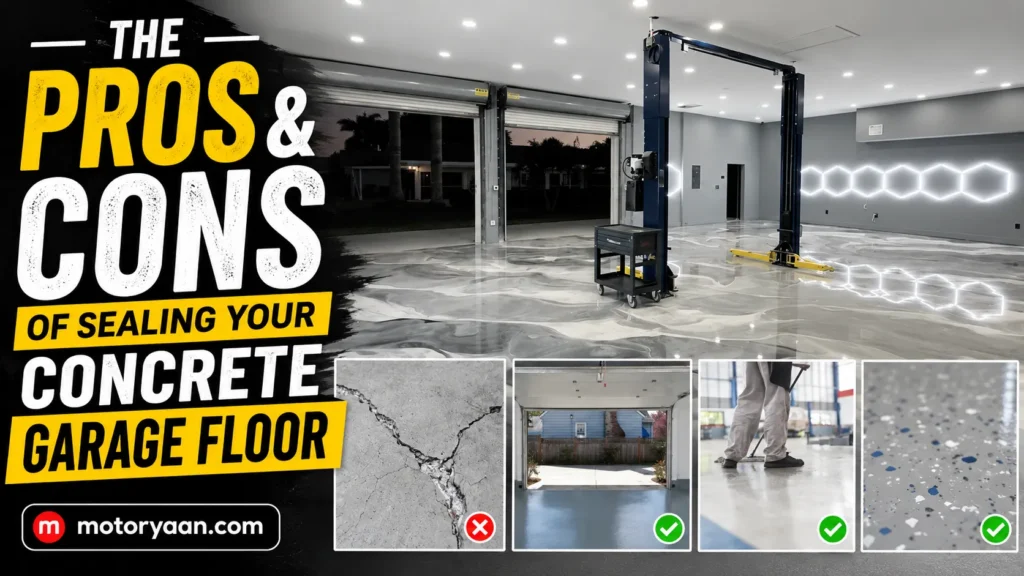
Should You Seal Your Concrete Garage Floor? Pros and Cons Every Homeowner Should Know
Table of Contents
A garage is more than just a place to park a car. For many car enthusiasts and DIY mechanics, it is a workshop, storage area, and sometimes even a second home. Whether you spend weekends working on projects or simply want a cleaner and more durable space, the condition of your garage floor matters.
One of the most common garage upgrades is sealing the concrete floor. It is a relatively simple project that can dramatically improve the appearance and durability of a garage. However, sealing a garage floor is not always the perfect solution. There are advantages, costs, and limitations that should be considered before starting the job.
Why People Seal Concrete Garage Floors
Concrete is strong, but it is also porous. Over time, oil, grease, fuel, moisture, road salt, and other contaminants can penetrate the surface and cause staining or damage.
A quality sealer creates a protective barrier that helps prevent these substances from soaking into the concrete. This extra layer can improve durability and reduce long term wear.
The right choice depends on:
- The condition of the existing concrete
- Your budget
- How often the garage is used
- The type of vehicles stored inside
- The type of sealer being applied
Benefits of Sealing a Garage Floor
Better Protection Against Oil, Chemicals, and Moisture
One of the biggest advantages of sealing concrete is protection.
Unsealed concrete absorbs liquids easily. Oil spills, brake fluid, fuel, and other automotive chemicals can leave permanent stains if they penetrate the surface.
Acrylic sealers are often recommended because they keep stains on the surface, making them easier to clean before they become permanent.
In regions where road salt is commonly used during winter, a sealer can also help protect concrete from salt related damage.
Increased Durability
Garage floors experience a lot of abuse.
Heavy vehicles, dropped tools, equipment movement, and constant foot traffic can gradually wear down concrete. A properly installed epoxy coating creates a tougher surface that can better withstand daily use.
For garages that function as workshops, this added durability can be especially valuable.
Easier Cleaning
Anyone who has cleaned oil from raw concrete knows how frustrating it can be.
Once a floor is sealed, most spills stay on the surface rather than soaking in. This makes routine maintenance much easier.
In many cases, a simple mop or wipe down is enough to remove dirt and fluid spills.
Longer Concrete Life
Concrete floors can last for decades. Some estimates suggest properly maintained concrete can survive 50 to 100 years.
Sealing helps reduce exposure to moisture and contaminants, which can extend the life of the floor and reduce repair costs over time.
Aesthetic Benefits of a Sealed Garage Floor
Cleaner and More Professional Appearance
Bare concrete often looks dull, dusty, and stained.
A sealer can transform the appearance of the floor and make the entire garage feel more finished.
Homeowners can choose from:
- Clear matte finishes
- Clear glossy finishes
- Solid color epoxy coatings
- Decorative flake systems
- Custom patterns and textures
This flexibility allows owners to create a garage that matches their style.
Improved Light Reflection
Lighting is one of the most important parts of a functional garage.
Glossy epoxy and similar coatings reflect light better than raw concrete. Combined with proper lighting, this can make a garage feel brighter and more comfortable to work in.
Many people notice the space looks larger and cleaner after the floor is coated.
Protects Existing Color Treatments
If the concrete has already been stained or colored, a sealer helps preserve that appearance.
Without protection, colors can gradually fade due to wear and exposure.
Drawbacks of Sealing a Garage Floor
Ongoing Maintenance
Many homeowners assume sealing is a one time project. That is not always true.
Different sealers have different lifespans.
| Sealer Type | Typical Lifespan |
|---|---|
| Acrylic Sealer | 1 to 3 years |
| Epoxy Coating | Up to 20 years or more with proper installation |
Acrylic products often require regular reapplication. High traffic garages may need maintenance sooner due to vehicle weight, hot tires, tool drops, and chemical exposure.
Higher Long Term Costs
The larger the garage, the more expensive sealing becomes.
Costs include:
- Surface preparation
- Cleaning products
- Repair materials
- Sealer or coating products
- Future maintenance and reapplication
While epoxy coatings last longer, they typically require a larger upfront investment.
Dust and Dirt Become More Noticeable
Many garage owners report that solid color epoxy floors show dust, dirt, and debris very easily.
As a result, some garages require more frequent cleaning to maintain their appearance.
Decorative flake finishes can help hide dust and small debris better than plain solid color coatings.
Slippery Surface When Wet
A glossy sealed floor may look great, but it can become slippery.
Water, condensation, oil, fuel, and other liquids can reduce traction significantly.
This creates a potential safety concern, especially in busy garages.
Anti slip additives can improve grip, but they add extra cost and may reduce the glossy appearance.
Potential Application Problems
Concrete Must Cure First
New concrete should fully cure before any sealer is applied.
Most experts recommend waiting around 28 days before sealing fresh concrete.
Applying a coating too early can lead to premature failure.
Moisture Can Cause Epoxy Failure
One common issue with epoxy coatings is trapped moisture.
Epoxy creates a barrier that prevents moisture from escaping through the concrete.
If moisture is already present underneath the surface, pressure can build over time and cause:
- Bubbling
- Blistering
- Peeling
- Delamination
If your garage floor has moisture problems, sealing should not be the first step. The moisture issue must be addressed first.
Sealers Do Not Fix Structural Problems
A sealer is not a repair product.
If the concrete has major cracks, shifting, or structural damage, simply applying a coating will not solve the underlying issue.
Damaged concrete should be repaired before any sealing work begins. Otherwise, cracks can return and damage the coating later.
Environmental and Health Considerations
Not all sealers are the same.
Solvent Based Sealers
Some solvent based acrylic and epoxy products release strong fumes during application.
These fumes may:
- Cause discomfort during installation
- Require additional ventilation
- Contribute to air pollution
Water Based Sealers
Water based products generally release far fewer volatile organic compounds.
Many homeowners prefer them because they are safer to work with and produce fewer odors during application.
Is Sealing a Garage Floor Worth It?
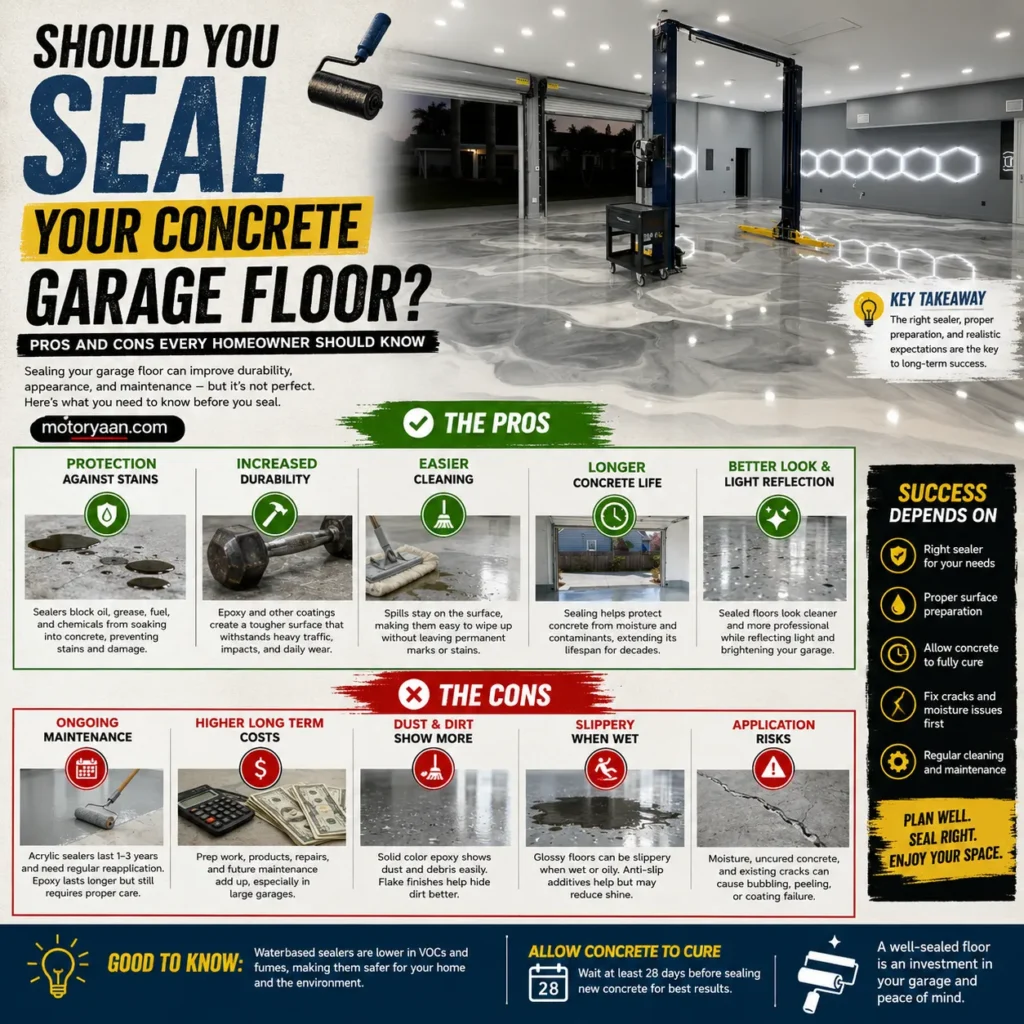
For most homeowners, sealing a concrete garage floor offers clear benefits. It protects against stains, improves durability, enhances appearance, and makes cleaning easier.
However, it is not a maintenance free upgrade. Some coatings require regular reapplication, glossy finishes can become slippery, and existing moisture or structural problems must be fixed before sealing.
If your garage is in good condition and you want a cleaner, more durable workspace, sealing the floor can be a worthwhile investment. Just make sure you choose the right product and understand the long term maintenance involved.
Sources and References
- Jalopnik Garage Floor Sealing Article
Automotive focused article discussing the advantages and drawbacks of sealing concrete surfaces. - Family Handyman Concrete Crack Repair Guide
Practical advice on repairing concrete cracks before applying sealers or coatings. - Rust Oleum Garage Floor Coatings
Manufacturer information about epoxy garage floor coatings, durability, and application. - Quikrete Concrete Sealer Information
Official guidance on concrete sealers and surface protection. - Sherwin Williams Concrete Coatings Guide
Professional information about concrete floor coating systems and performance. - Garage Living Garage Floor Coatings Guide
Detailed overview of garage floor coating types, maintenance, and benefits. - The Spruce Garage Floor Coating Guide
Homeowner friendly guide explaining coating options and maintenance requirements. - Concrete Network Concrete Sealers Guide
Industry resource covering concrete sealer types, benefits, and applications. - Decorative Concrete of Virginia Official Website
Professional concrete coating company with practical information on garage floor systems.
Frequently Asked Questions
For many homeowners, sealing a concrete garage floor is worth it because it protects against oil stains, moisture, road salt, and chemical spills. It can also improve durability, make cleaning easier, and give the garage a cleaner, more professional appearance.
The biggest benefits include protection from stains and chemicals, improved durability, easier cleaning, longer concrete life, better light reflection, and a more attractive appearance. Sealed floors can also help preserve decorative finishes and colors.
Sealed garage floors require maintenance over time. Some coatings can become slippery when wet, dust may be more visible on certain finishes, and installation costs can be significant. Moisture problems underneath the concrete can also lead to coating failure.
Acrylic sealers typically last between 1 and 3 years before reapplication is needed. Properly installed epoxy coatings can last 20 years or longer, depending on garage usage, maintenance, and surface preparation.
Yes. A sealed surface prevents most oil, grease, fuel, and chemical spills from soaking into the concrete. Since contaminants remain on the surface, they are generally easier to wipe or mop away.
Epoxy coatings create a tougher protective layer over the concrete. While they do not strengthen the concrete structure itself, they help resist wear, impacts, dropped tools, and heavy vehicle traffic.
Yes. Sealers are not designed to fix structural damage. Existing cracks, shifting concrete, or moisture issues should be repaired before applying any coating to help prevent future problems.
Most experts recommend waiting about 28 days for new concrete to fully cure before applying a sealer or epoxy coating. Applying a coating too early can lead to poor adhesion and premature failure.
Peeling, bubbling, and blistering often occur when moisture becomes trapped beneath the coating. If the concrete contains excess moisture before installation, pressure can build underneath the epoxy and cause the coating to fail.
Water based sealers generally produce fewer fumes and lower volatile organic compound emissions during application. Solvent based products can offer strong performance but often release stronger odors and require more ventilation.