Table of Contents
What this build is about
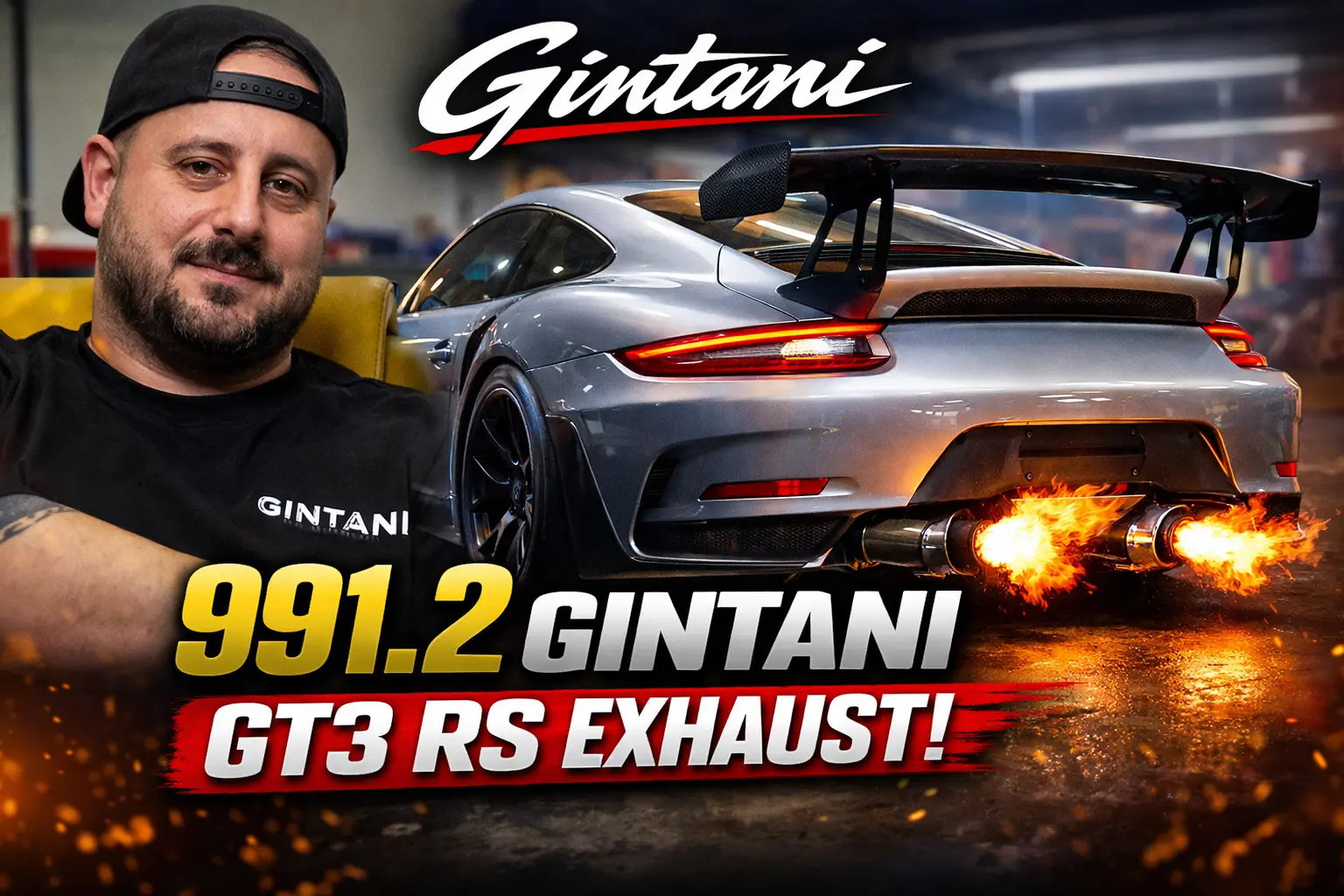
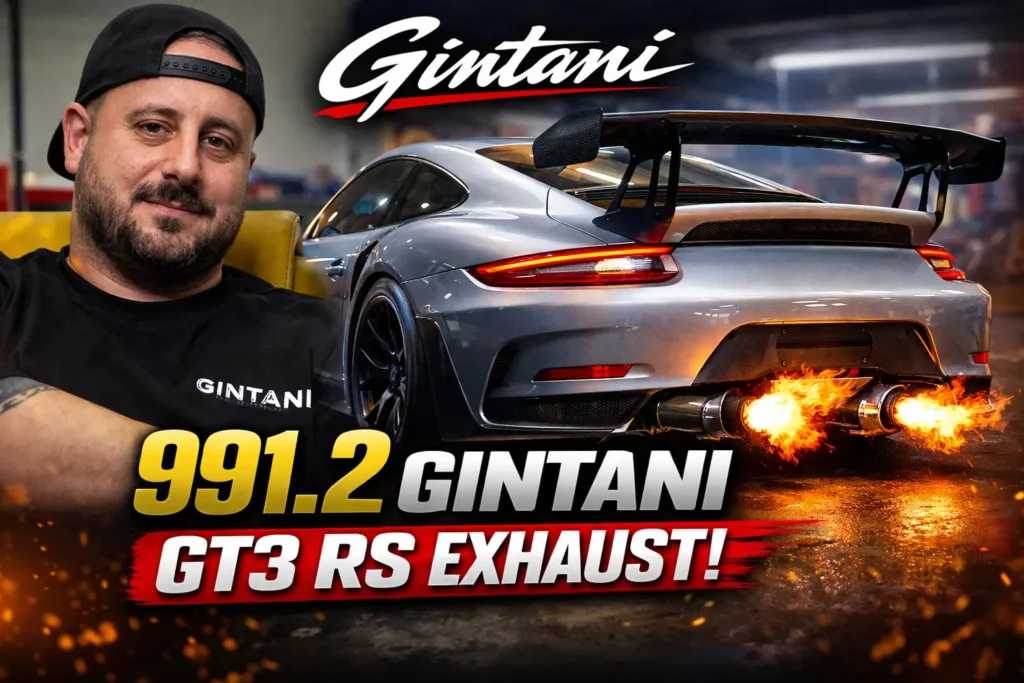
This is a 991.2 Porsche 911 GT3 RS fitted with a full titanium 991.2 Gintani GT3 RS Exhaust System. The setup is not an off the shelf exhaust. It is the first complete system of its kind from Gintani for the 991.2 platform, built after the original design was scrapped due to clearance issues.
The workshop started with a plan similar to their 992 setup. But during test fitting, the headers did not clear properly. Instead of forcing it, the team went back to the drawing board and rebuilt the entire system from scratch.
That means:
• New headers
• New rear section
• New routing
• Full titanium construction
• Completely fresh design
So the owner ended up with the first production style 991.2 Gintani GT3 RS system.
Full system details
From what the workshop revealed in the video, the system includes:
Key components
• Full titanium exhaust construction
• Custom fabricated headers
• Six inch high flow catalytic converters
• X pipe layout for smoother exhaust flow
• Slant cut single wall exhaust tips
• Valve controlled rear section
• Reinforced titanium structure with gussets for strength
The goal was simple. Keep the system light, strong, and loud when needed, but still usable on the street.
Why titanium was used
Titanium is popular in high end exhaust systems because:
• It is much lighter than steel
• It handles heat better
• It produces a sharper, higher pitched sound
• It helps reduce overall vehicle weight
There is always a concern that titanium cracks over time. The fabricator addressed this directly. He explained that they use extra support points and gussets to increase durability and reduce stress in key areas.
Sound character and street behaviour
The system uses high flow catalytic converters. That keeps it more usable on public roads and prevents the harsh, metallic noise that fully catless systems often produce.
According to the builder:
• The sound is very close to their 992 GT3 RS system
• Difference is around five percent
• High pitched and aggressive under throttle
• Calm and clean during cruising
• No excessive ear fatigue at low RPM
The valve controller also plays a big role. It allows the driver to quiet the car when entering neighbourhoods or driving on the highway.
But the builder made one thing clear.
The valves are meant for quiet cruising only. Hard driving should always be done with the valves open to avoid back pressure.
Claimed performance gain
One of the biggest talking points was the power increase.
The shop claims:
• Over 40 horsepower gain at the wheels
• No ECU tuning required
• Completely stock engine otherwise
They also mentioned that the extra power shows across the mid range and continues all the way to redline. In simple terms, the car feels more alive everywhere, not just at the top end.
Visual changes at the rear
Apart from sound and power, the exhaust also changes the look of the GT3 RS.
Exterior changes
• Slant cut single wall tips for a race inspired look
• Rear back plate similar to factory design
• Cleaner appearance with less visible piping
The flames seen during revs also show how free flowing the system is. The team even joked that the rear bumper might not last long with those fire bursts.
Real world driving impressions
During the short drive in the video:
• The car sounded wild on throttle
• Cruising noise stayed controlled
• High pitched tone stood out clearly
• Throttle response felt sharper
• Power delivery felt stronger through the mid range
The owner’s reaction said everything. He immediately noticed the sound difference and the stronger pull.
Why this setup matters
This system is important because:
• It is the first full 991.2 GT3 RS Gintani setup
• It was redesigned completely after initial issues
• It delivers big sound without sacrificing street comfort
• It claims real power gains without ECU tuning
For owners who want a race car style soundtrack without turning the GT3 RS into a daily driving nightmare, this kind of setup makes sense.
Final thoughts
The 991.2 GT3 RS already sounds incredible from the factory. But a full titanium system like the 991.2 Gintani GT3 RS exhaust takes the drama to another level.
It is louder, sharper, and more aggressive, yet still usable thanks to the valve control and high flow cats. Add the claimed 40 wheel horsepower gain, and the upgrade becomes more than just a noise mod.
It turns the GT3 RS into something that feels closer to a track car every time you hit the throttle. And judging by the flames out of the exhaust, the neighbours will definitely notice.
Sources and reference
The article is based on the following YouTube video, which shows the installation, first start, driving impressions, and workshop details of the 991.2 Gintani GT3 RS system.
The video documents the custom exhaust build, the redesign after clearance issues, the titanium construction, high flow cats, valve control, and the claimed 40 wheel horsepower gain.
991.2 Gintani GT3 RS Exhaust: FAQ
Is this the first 991.2 Gintani GT3 RS exhaust system?
Yes. The shop originally tried a setup similar to their 992 system, but it had clearance issues with the headers. Instead of forcing it, they scrapped the design and rebuilt everything. The owner in the video received the first complete 991.2 Gintani GT3 RS system.
What parts are included in the full system?
The system includes new custom headers, a new rear section, an X pipe layout, six inch high flow catalytic converters, a valve controlled exhaust, and slant cut single wall tips. Everything is built from titanium to keep weight low.
Does the exhaust require an ECU tune?
No. The shop confirmed that the car was completely stock and had not received any ECU calibration. The power gains were achieved only with the exhaust upgrade.
How much power does the 991.2 Gintani GT3 RS system add?
According to the builder, the exhaust can add more than 40 horsepower at the wheels. They also mentioned that the extra power is noticeable through the mid range and continues up to redline.
How does the exhaust sound compared to the 992 system?
The builder said it sounds very similar to the 992 setup, with only about a five percent difference. The tone is high pitched and aggressive when you push the car, but calm and clean when cruising at low RPM.
Is the exhaust too loud for daily driving?
No. The system uses high flow cats and a valve controller. When the valves are closed, the sound becomes quieter and more suitable for neighborhoods or highway cruising. When the valves are open, the car becomes much louder and more aggressive.
Why does the system use titanium?
Titanium keeps the exhaust light and helps produce a sharper, high pitched sound. The builder also mentioned that they reinforce the structure with gussets and extra supports to reduce the risk of cracking.
Does the exhaust produce flames?
Yes. The video shows visible flames coming from the exhaust during revs. This happens because of the free flowing design and the high flow catalytic converters.