Genesis Le Mans Debut Proves the Brand Is Ready to Challenge the World's Best
Table of Contents
Genesis Le Mans Debut Shows Why Finishing Was a Victory in Itself
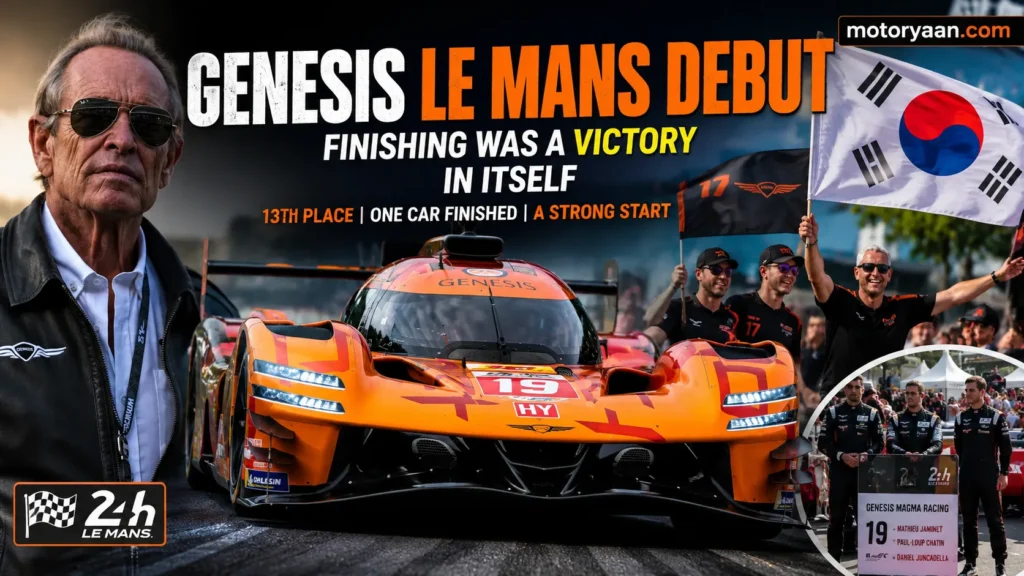
Finishing 13th in one of the toughest races in the world may not sound like a headline making achievement. But for Genesis, simply crossing the finish line at the 2026 24 Hours of Le Mans was a major success.
The luxury brand is barely a decade old, and its World Endurance Championship project is even younger. Despite that, Genesis Magma Racing managed to complete its first Le Mans campaign against some of the biggest names in motorsport.
Building a competitive endurance racing team takes years. Genesis has done it in less than two years, making its first appearance one of the most impressive stories from this year’s race.
Why Le Mans Is One of the Toughest Challenges in Motorsport
The 24 Hours of Le Mans is not just about building a fast race car.
Every team must coordinate hundreds of engineers, mechanics, strategists, software experts, and drivers over a full day of nonstop racing. Reliability, teamwork, planning, and quick decision making matter just as much as outright speed.
One mistake can ruin months of preparation.
That is why many experienced manufacturers struggle during their first attempts.
Genesis entered knowing the challenge would be enormous.
Genesis Built a Racing Team Almost From Scratch
Just over a year and a half ago, Genesis had no dedicated endurance racing operation.
There were no race engineers, no established garage structure, no endurance drivers, and no Hypercar programme.
The company had to create everything from the ground up.
That included:
- Recruiting experienced personnel
- Building technical partnerships
- Developing the Genesis GMR 001 Hypercar
- Training engineers and mechanics
- Creating race operations
- Preparing drivers for endurance competition
For a brand founded only ten years ago, reaching the Le Mans grid itself was already a milestone.
Genesis Magma Racing at the 2026 Le Mans
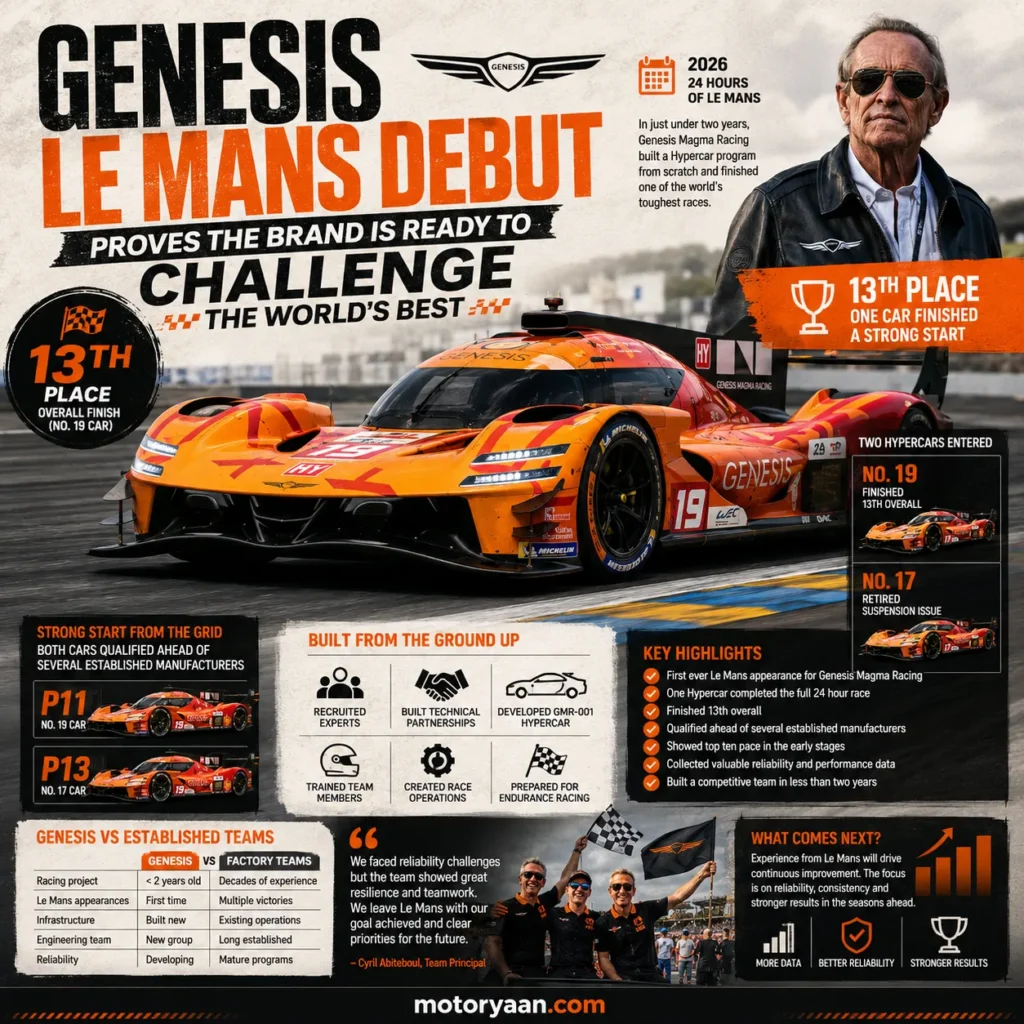
Genesis entered two Hypercars in the event.
One car successfully completed the race while the second retired after a suspension problem.
| Team Car | Result |
|---|---|
| No. 19 Genesis GMR 001 | Finished 13th overall |
| No. 17 Genesis GMR 001 | Retired after suspension issue |
Although one retirement was disappointing, the team achieved its primary objective by getting a car to the finish.
In endurance racing, reliability often matters more than outright pace during a debut season.
The No 19 Car Delivered a Strong Performance
The No 19 Genesis GMR 001 was driven by Paul Loup Chatin, Mathieu Jaminet, and Daniel Juncadella.
The trio remained competitive throughout large sections of the race and eventually secured 13th place overall.
The result may appear modest on paper, but context tells a different story.
The team consistently fought near the top ten during the opening stages before reliability issues affected progress.
For a completely new operation, maintaining that pace showed the underlying potential of the package.
Qualifying Was Another Positive Sign
Genesis surprised many observers before the race even began.
Both cars qualified ahead of several established manufacturers.
The No 19 machine started 11th while the No 17 car qualified 13th.
That placed Genesis ahead of multiple factory entries from manufacturers with decades of endurance racing experience.
It demonstrated that the new Hypercar has genuine pace.
Building a Team Takes More Than Hiring People
Putting talented people in the same building does not automatically create a winning race team.
Every department must work together under pressure.
Communication must become second nature.
Mechanics, engineers, strategists, and drivers need complete trust in one another.
That process normally takes years.
Genesis has only completed two races together, making its performance even more impressive.
Reliability Remains the Biggest Challenge
Every new endurance programme faces technical issues.
Genesis experienced several reliability concerns during the race, including the suspension failure that ended the No 17 car’s challenge.
However, identifying weaknesses is part of developing any competitive programme.
Each problem provides valuable engineering data that can improve future performance.
The team now leaves Le Mans with clear priorities for development.
Experience Will Make Genesis Stronger
Every lap completed during a 24 hour race generates valuable information.
Engine temperatures.
Tyre wear.
Brake performance.
Fuel strategy.
Driver consistency.
Mechanical durability.
All of these lessons will help Genesis improve its Hypercar programme before the next round of competition.
The experience gained during one Le Mans weekend cannot be replicated in testing.
How Genesis Compares With Established Manufacturers
| Genesis | Traditional Factory Teams |
|---|---|
| Racing project less than two years old | Decades of endurance experience |
| First Le Mans appearance | Multiple Le Mans victories |
| Built new infrastructure | Existing race operations |
| New engineering group | Long-established teams |
| Developing reliability | Mature race programmes |
This comparison explains why simply finishing deserves recognition.
Genesis is competing against organisations with generations of racing knowledge.
The Human Side Behind the Project
Behind every race car stands an enormous workforce.
Mechanics spend months assembling components.
Engineers analyse thousands of data points.
Designers work countless hours improving aerodynamics.
Support staff manage logistics across multiple countries.
The successful completion of Genesis’ first Le Mans rewarded the efforts of hundreds of people who worked almost nonstop to make the project possible.
Their achievement extends far beyond a finishing position.
Why the Result Matters for the Genesis Brand
Motorsport has always helped manufacturers improve engineering and strengthen brand identity.
Competing at Le Mans places Genesis alongside some of the world’s most respected automotive names.
The project also demonstrates the company’s long term commitment to performance engineering.
Even without a podium finish, the debut adds credibility to Genesis as it expands globally.
Key Highlights From Genesis' First Le Mans
- First ever Le Mans appearance for Genesis Magma Racing
- One Hypercar completed the full 24 hour race
- Finished 13th overall
- Qualified ahead of several established manufacturers
- Demonstrated top ten pace during the early stages
- Gathered valuable reliability and performance data
- Built a competitive team in less than two years
What Comes Next for Genesis Magma Racing
The debut marks only the beginning.
Future development will focus on improving reliability while maintaining the speed already shown during qualifying and the early race stages.
As the engineers gain more experience and the team works together over a full season, stronger finishes should become possible.
Many successful endurance programmes needed several years before becoming race winners.
Genesis appears to have built a solid foundation for long term success.
Conclusion
Results alone do not always tell the full story.
Looking only at a 13th place finish misses the remarkable achievement behind Genesis’ first Le Mans campaign.
The company built a Hypercar programme from scratch, assembled a new team, qualified competitively, and successfully completed one of the world’s toughest endurance races in less than two years.
There are still areas to improve, especially reliability, but the debut proved that Genesis belongs on the international endurance racing stage.
If the brand continues developing at its current pace, stronger results are likely to follow in the coming seasons.
Sources and References
Official Sources
- Genesis Magma Racing Official Le Mans Page
Official page covering Genesis Magma Racing’s Le Mans programme, race schedule, drivers, and technical information.
Genesis Magma Racing Le Mans Official - Genesis World Endurance Championship Programme
Official Genesis motorsport page featuring the WEC calendar, Hypercar programme, team lineup, and race updates.
Genesis WEC Official - Hyundai Motorsport Newsroom
Official news and press releases about Genesis Magma Racing, qualifying, race results, and technical updates.
Hyundai Motorsport Newsroom - FIA World Endurance Championship
Official championship website with race news, team announcements, and Le Mans coverage.
FIA WEC Official News
Trusted Automotive Sources
- Car and Driver
One of North America’s most trusted automotive publications covering Genesis Hypercar development and Le Mans expansion.
Car and Driver Genesis Coverage - The Drive
Detailed motorsport analysis and behind the scenes coverage of Genesis Magma Racing’s first Le Mans campaign.
https://www.thedrive.com
Official Event Source
- 24 Hours of Le Mans Official Website
Official race information, history, results, teams, and event details.
24 Hours of Le Mans Official
Technical and Motorsport Reference
- Oreca Official
Technical partner involved in the Genesis Hypercar programme and endurance racing development.
Oreca Official
Additional Trusted Reference
- Motorsport.com
International motorsport news source covering WEC, Le Mans, Hypercar racing, and Genesis developments.
Motorsport.com WEC Section