Formula 1 to Reduce Electric Power Share From 2027 as FIA Approves New Engine Changes
Table of Contents
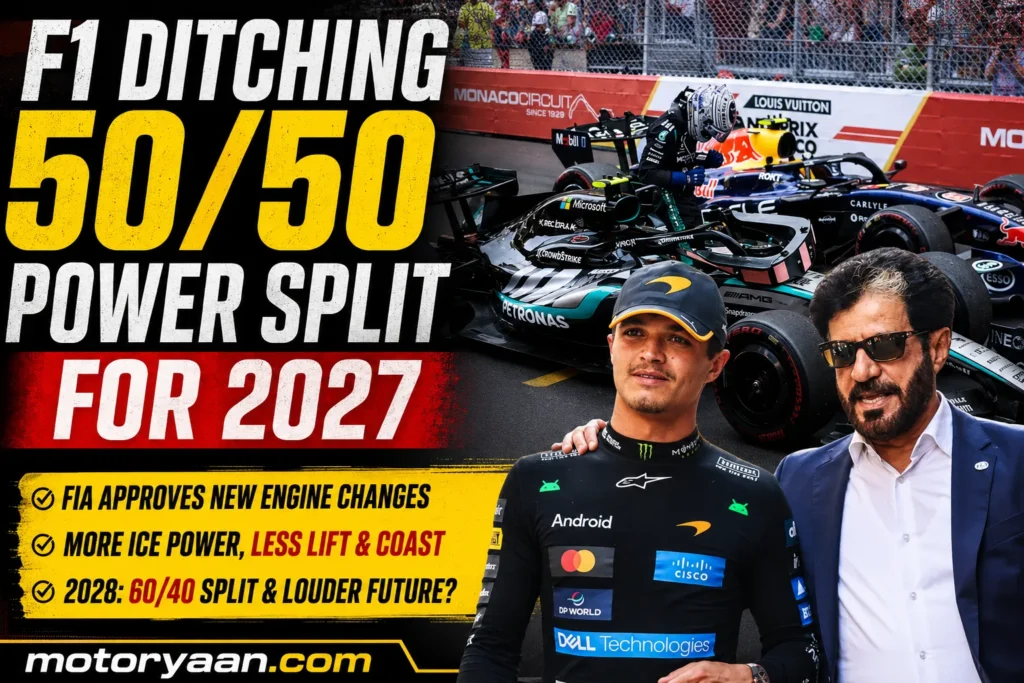
Formula 1 is set to make another major change to its hybrid power units from the 2027 season. After months of discussions between the FIA, Formula 1, teams, and engine manufacturers, officials have agreed to reduce the electric contribution and increase the role of the internal combustion engine.
The decision comes after repeated complaints from drivers, who argued that the current regulations force them to spend too much time managing battery energy instead of racing flat out.
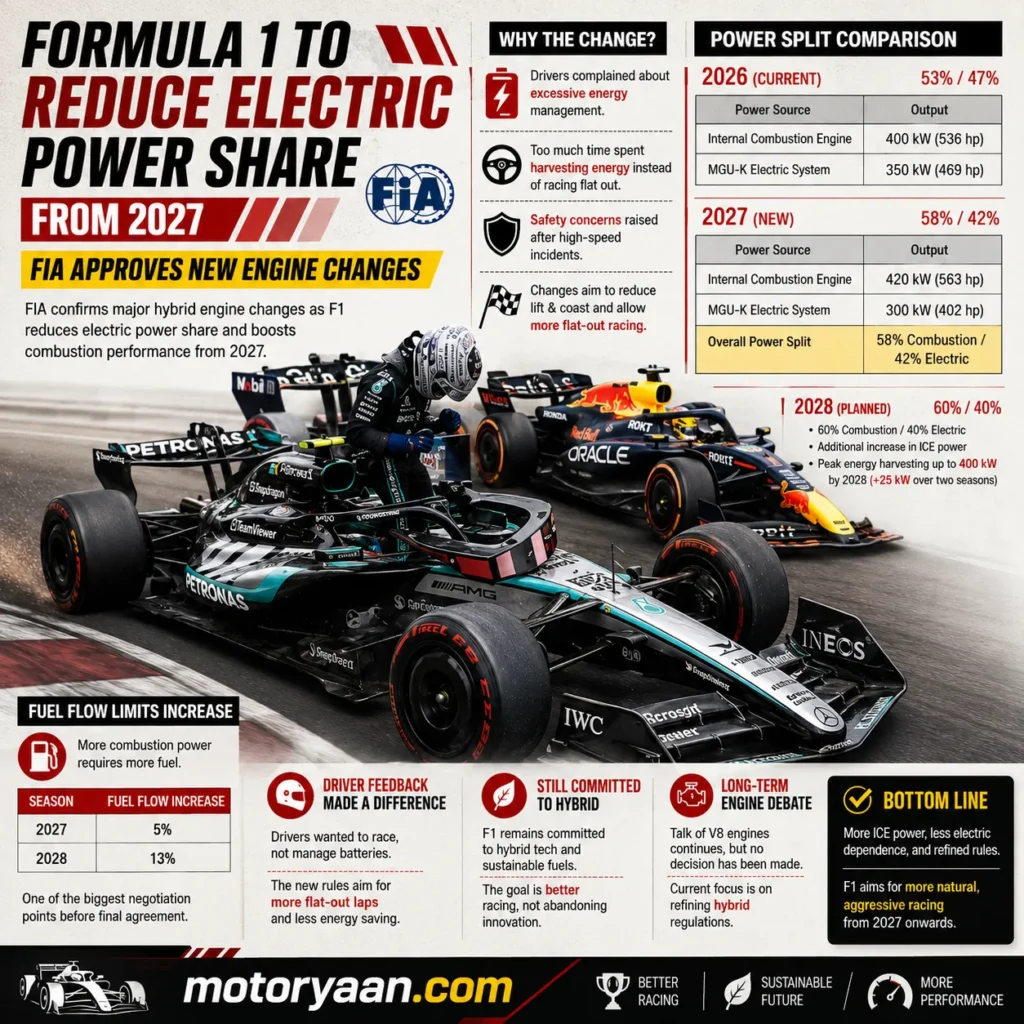
Why Formula 1 Is Changing the Power Split
When the new generation of power units arrived for 2026, Formula 1 wanted an almost equal balance between combustion and electric power. The original target was a 50 50 split.
In practice, the cars run with a 53 percent combustion and 47 percent electric balance, producing:
| Power Source | Output |
|---|---|
| Internal Combustion Engine | 400 kW (536 hp) |
| MGU-K Electric System | 350 kW (469 hp) |
While the concept looked impressive on paper, teams continued using battery capacities that had remained largely unchanged since 2014. At the same time, electric power output more than doubled.
As a result, drivers had to spend significant portions of every lap harvesting energy instead of attacking at full speed, especially outside heavy braking zones.
New Formula 1 Engine Power Split for 2027
To reduce excessive energy management, Formula 1 will introduce a revised power balance from 2027.
| 2027 Power Unit Changes | Output |
|---|---|
| Internal Combustion Engine | 420 kW (563 hp) |
| Electric MGU-K | 300 kW (402 hp) |
| Overall Power Split | 58% Combustion / 42% Electric |
The revised setup aims to reduce lift and coast driving and limit super clipping, allowing drivers to push harder throughout a lap.
Bigger Changes Planned for 2028
The 2027 update is only the first step.
Formula 1 plans to move to a 60 percent combustion and 40 percent electric split in 2028 with another increase in combustion engine performance.
Officials will also increase peak energy harvesting capability by 25 kW over the next two seasons, taking it to 400 kW by 2028.
The objective is simple. Drivers should spend less time saving energy and more time racing wheel to wheel.
Fuel Flow Limits Will Also Increase
Increasing combustion power requires additional fuel.
To support the revised engine balance, Formula 1 has approved higher fuel flow limits.
| Season | Fuel Flow Increase |
|---|---|
| 2027 | 5% |
| 2028 | 13% |
Negotiations around fuel flow reportedly became one of the biggest discussion points between manufacturers before an agreement was reached.
Driver Feedback Played a Major Role
Many drivers welcomed the close racing produced by the new regulations early in the season, but concerns quickly shifted toward energy management.
Instead of attacking every lap, drivers often had to compromise their pace to recharge batteries.
Several competitors also raised safety concerns after high speed incidents highlighted the challenges created by inconsistent energy deployment during races.
The latest changes are expected to allow more flat out driving while reducing the need for constant battery management.
Formula 1 Still Committed to Hybrid Technology
Although electric power will play a smaller role from 2027, Formula 1 is not abandoning hybrid technology.
The championship remains committed to sustainable fuels and hybrid powertrains while adjusting the balance to improve racing quality.
The updated regulations represent a compromise between technological innovation and driver demands for more natural racing.
What About a Return to V8 Engines?
Debate continues over Formula 1’s long term engine direction.
FIA President Mohammed Ben Sulayem has previously expressed support for simpler V8 engines powered by sustainable fuels. More recently, discussions around hybrid V8 concepts have gained attention among fans and some figures within the sport.
However, no official decision has been taken, and the current focus remains on refining the hybrid regulations rather than replacing them.
Final Thoughts
The 2027 engine changes mark an important adjustment for Formula 1 rather than a complete change of direction.
By increasing combustion power and reducing reliance on electric deployment, the FIA hopes to create racing that feels more natural while keeping hybrid technology and sustainable fuels at the heart of the sport.
If the changes deliver more flat out driving and less energy saving, fans could see a more aggressive style of Formula 1 racing over the coming seasons.
Sources and References
Official FIA Announcement
https://www.fia.com/news
Official source for Formula 1 technical regulations, governance updates, and approved power unit rule changes.
Formula1.com
https://www.formula1.com/en/latest
The official Formula 1 website covering the latest news, technical updates, and regulation announcements.
Reuters
https://www.reuters.com/world/sport/
Trusted global news agency providing factual reporting on Formula 1’s 2027 and 2028 engine regulation changes.
Motorsport.com
https://www.motorsport.com/f1/news/
Leading motorsport publication offering detailed technical analysis and coverage of Formula 1 developments.
The Race
https://www.the-race.com/formula-1/
Expert Formula 1 analysis with in depth explanations of engine regulations and team reactions.
Sky Sports F1
https://www.skysports.com/f1
Reliable source for Formula 1 news, race coverage, and technical regulation updates for international audiences.
GrandPrix.com
https://www.grandprix.com/
Independent Formula 1 news website covering FIA decisions, technical changes, and paddock developments.
GPFans
https://www.gpfans.com/en/f1-news/
Formula 1 focused news platform featuring regulation updates, team news, and expert insights.
Frequently Asked Questions
Why is Formula 1 reducing the electric power share from 2027?
Formula 1 is reducing the electric power contribution after drivers raised concerns that excessive battery management was affecting racing. The revised regulations aim to let drivers push harder and spend less time harvesting energy.
What will the new Formula 1 power split be in 2027?
From the 2027 season, the power unit will deliver approximately 58 percent of its power from the internal combustion engine and 42 percent from the electric MGU K system.
How much power will the 2027 Formula 1 engine produce?
The revised power unit will generate 420 kW or 563 horsepower from the combustion engine and 300 kW or 402 horsepower from the electric system.
What changes are planned for Formula 1 in 2028?
Formula 1 plans to move to a 60 percent combustion and 40 percent electric power split while increasing combustion performance and peak energy harvesting capability.
Will fuel flow limits change under the new regulations?
Yes. Fuel flow limits will increase by 5 percent in 2027 and by 13 percent in 2028 to support the higher combustion engine output.
Will Formula 1 stop using hybrid technology?
No. Formula 1 remains committed to hybrid technology and sustainable fuels. The new rules simply rebalance the contribution of combustion and electric power to improve racing.
Why did drivers ask for these engine changes?
Drivers believed they spent too much time managing battery energy instead of racing at maximum pace. The revised regulations are expected to reduce lift and coast driving and improve on track action.
Is Formula 1 returning to V8 engines?
No official decision has been made. Discussions around V8 engines powered by sustainable fuels continue, but Formula 1's current focus remains on refining its hybrid power unit regulations.