Aston Martin Delays V12's Retirement as New Platform Takes Shape
Table of Contents
Aston Martin Delays V12’s Death as It Develops a New Modular Platform
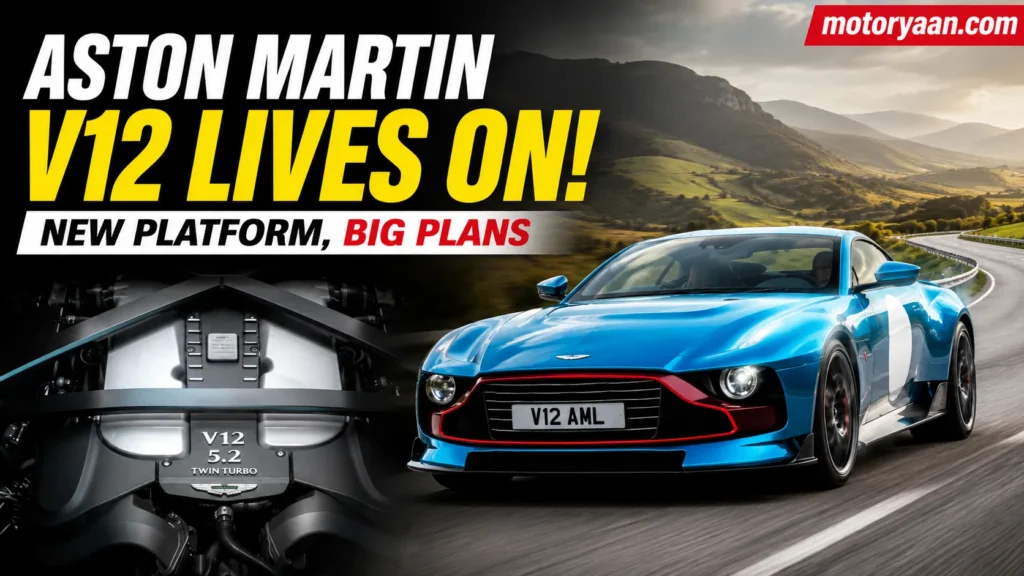
Aston Martin is not ready to say goodbye to its iconic V12 engine. While many luxury carmakers are moving towards full electrification, Aston Martin says its legendary 12 cylinder engine still has a future.
The company is also working on a completely new modular platform that will support both sports cars and SUVs. At the same time, it is preparing for a future where fully electric models become a bigger part of its lineup.
According to Aston Martin CEO Adrian Hallmark, the company has managed to future proof the V12 so it can continue meeting European and United States emissions regulations for several more years.
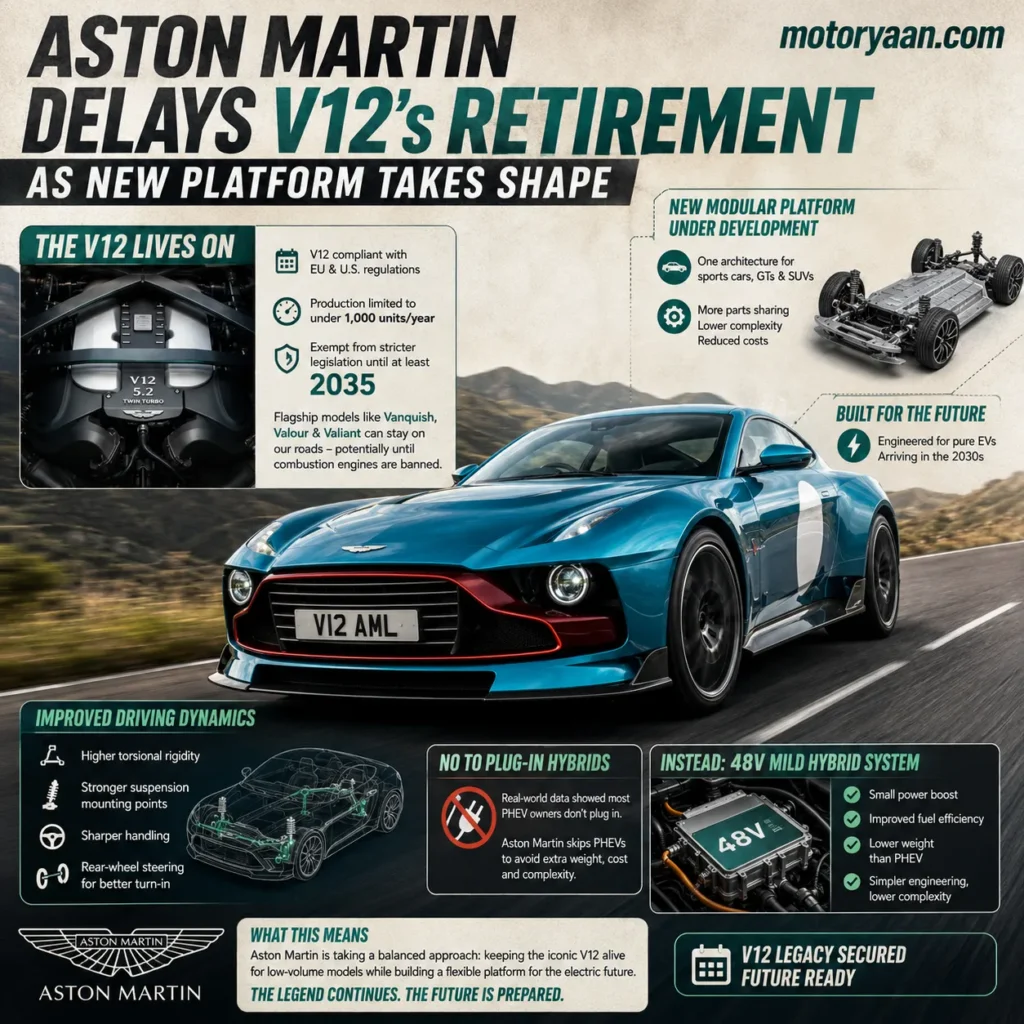
Aston Martin V12 Will Stay Until Combustion Engines Are Fully Banned
The biggest news is that Aston Martin has updated its V12 engine to remain compliant with upcoming emissions rules.
Hallmark explained that the company can continue producing the engine because of a special exemption available to low volume manufacturers.
He said Aston Martin plans to keep V12 production below 1,000 units per year, allowing the company to remain exempt from stricter legislation until at least 2035.
That means flagship models such as the Vanquish, along with limited production cars like the Valour and Valiant, could continue using the V12 until governments completely ban the sale of new combustion powered vehicles.
For enthusiasts, that is welcome news. The sound and character of Aston Martin’s naturally aspirated and twin turbo V12 engines have become an important part of the brand’s identity.
New Modular Platform Under Development
Alongside keeping the V12 alive, Aston Martin is also developing an entirely new vehicle architecture.
The clean sheet platform has been designed to support multiple vehicle types on the same production line.
It will allow Aston Martin to build:
- Luxury sports cars
- Grand tourers
- Performance SUVs
Using one modular platform helps the company reduce manufacturing complexity, increase parts sharing, and lower production costs.
Built for Future Electric Cars
Although Aston Martin is not rushing into electric vehicles, its next generation platform has already been engineered with EVs in mind.
According to Hallmark, fully electric Aston Martin models based on this architecture are expected to arrive during the 2030s.
Instead of redesigning everything later, the company is preparing its future platform now so it can support electric powertrains whenever customer demand grows.
Better Driving Dynamics
The new architecture is not only about electrification.
Hallmark said Aston Martin is using new engineering methods that improve chassis stiffness while adding only a small amount of weight.
Expected improvements include:
- Higher torsional rigidity
- Stronger suspension mounting points
- Sharper handling
- Better overall driving dynamics
- Rear wheel steering for improved corner entry on GT models
These upgrades should help future Aston Martin models deliver an even more engaging driving experience.
Aston Martin Says No to Plug In Hybrids
One surprising decision is Aston Martin’s choice to skip plug in hybrid technology.
Hallmark said the company believes plug in hybrids no longer make sense for its lineup.
The decision follows changes in European emissions regulations after real world driving data showed that many PHEV owners rarely charged their vehicles. As a result, plug in hybrids now receive fewer emissions credits than before.
According to Aston Martin, adding the extra weight, complexity, and cost of a plug in hybrid system does not provide enough benefits for its customers.
Instead, the company plans to introduce a 48 volt mild hybrid system.
This setup will provide:
| Feature | Benefit |
|---|---|
| 48 volt electrical system | Small power increase |
| Mild hybrid assistance | Improved fuel efficiency |
| Lower weight than PHEV | Better performance and handling |
| Simpler engineering | Lower production complexity |
What This Means for Aston Martin
Aston Martin appears to be taking a balanced approach to the future.
Rather than abandoning combustion engines immediately, the company plans to keep its iconic V12 alive for exclusive low volume models while preparing a flexible platform capable of supporting future electric vehicles.
The decision also reflects changing market conditions. Instead of investing heavily in plug in hybrids, Aston Martin is focusing on traditional performance, mild hybrid technology, and fully electric vehicles when the timing is right.
For buyers who still dream of owning a V12 powered Aston Martin, there is still time. The legendary engine is expected to remain part of the company’s lineup for several more years, provided production stays within regulatory limits.
Sources & References
Official Sources
Aston Martin Media Centre
https://media.astonmartin.com/
Official newsroom with press releases, product announcements, specifications, and company updates.
Aston Martin Official Website (US)
https://www.astonmartin.com/en-us
Official Aston Martin website for model information, technology, and brand updates for North America.
Trusted Automotive Publications
Car and Driver
https://www.caranddriver.com/news/
One of the most trusted US automotive publications covering new vehicle launches, industry news, and exclusive interviews.
Auto Express
https://www.autoexpress.co.uk/aston-martin
UK automotive publication that published CEO Adrian Hallmark’s comments about Aston Martin’s future platform and V12 plans.
MotorTrend
https://www.motortrend.com/news/
Respected US automotive publication with industry news, reviews, and technical analysis.
Road & Track
https://www.roadandtrack.com/news/
US publication focused on performance cars, sports cars, and automotive engineering.
Autocar UK
https://www.autocar.co.uk/car-news
One of the world’s oldest automotive publications with detailed industry reporting and manufacturer interviews.
Top Gear
https://www.topgear.com/car-news
Global automotive publication covering supercars, luxury brands, and industry developments.
Industry & Regulatory References
European Commission Climate Action
https://climate.ec.europa.eu/
Official European Commission website covering emissions regulations and the planned phase out of new combustion engine vehicle sales.
U.S. Environmental Protection Agency (EPA)
https://www.epa.gov/
Official source for US vehicle emissions regulations and environmental standards.