Hyundai Grandeur Calligraphy Detailed Review
Seventh Generation GN7 Hybrid Sedan
The Hyundai Grandeur Calligraphy is the top variant of the seventh generation Grandeur, internally called GN7. It is one of Hyundai’s most advanced sedans, featuring premium technology, hybrid efficiency, and a design language that stands out because of its size and elegance.
Powertrain and Hybrid Technology
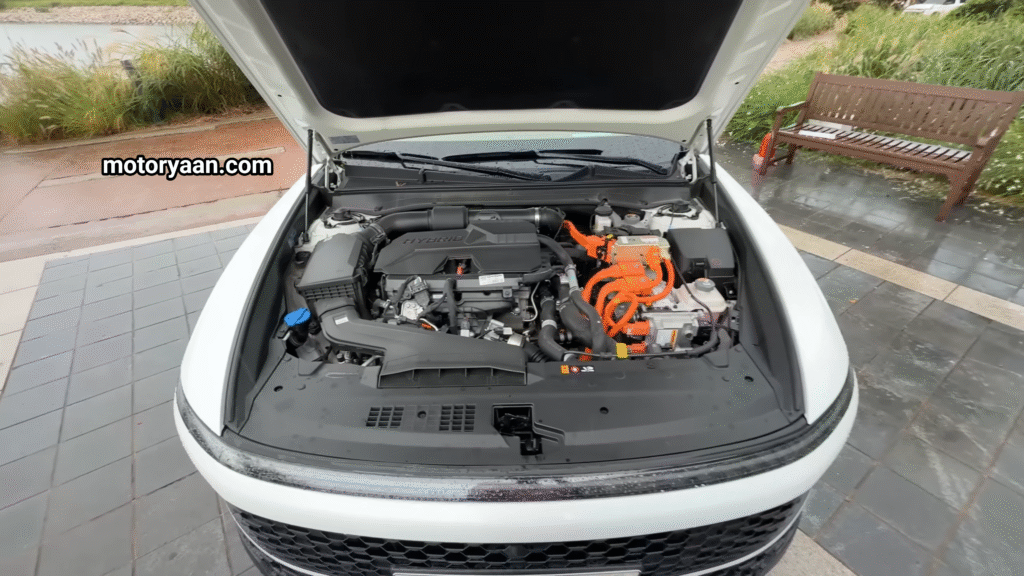
The Grandeur Calligraphy hybrid uses Hyundai’s Smartstream G powertrain. Under the hood, gas struts hold the bonnet, and orange cables indicate the high voltage system.
1.6 L Hybrid Powertrain Specs
1.6 L turbocharged petrol engine
Engine output: 180 hp and 265 Nm
Electric motor output: 60 hp and 264 Nm
Combined power: 230 PS
Combined torque: 265 Nm
6-speed automatic gearbox
Claimed efficiency: 18 km per liter
Predictive gear system linked to navigation to reduce unnecessary shifts
Optional 3.5 L V6
300 hp
Comes with an 8-speed gearbox
More emotional and powerful drive experience
Despite being a sedan, the hybrid system and battery weight (around 1,800 kg overall) cause slight body roll, but refinement remains exceptional.
Exterior Design and Key Features
As soon as you unlock the car, a light animation plays across the front. Keeping the unlock button pressed drops the rear curtain blinds first and then rolls down the windows. The sunroof does not open with the remote. The same remote also lets you turn on the car and move it forward or backward using the remote parking feature. This technology is available on other Hyundai cars like the Ioniq 5, Ioniq 5N, and the Tucson abroad.
Lighting and Design Elements
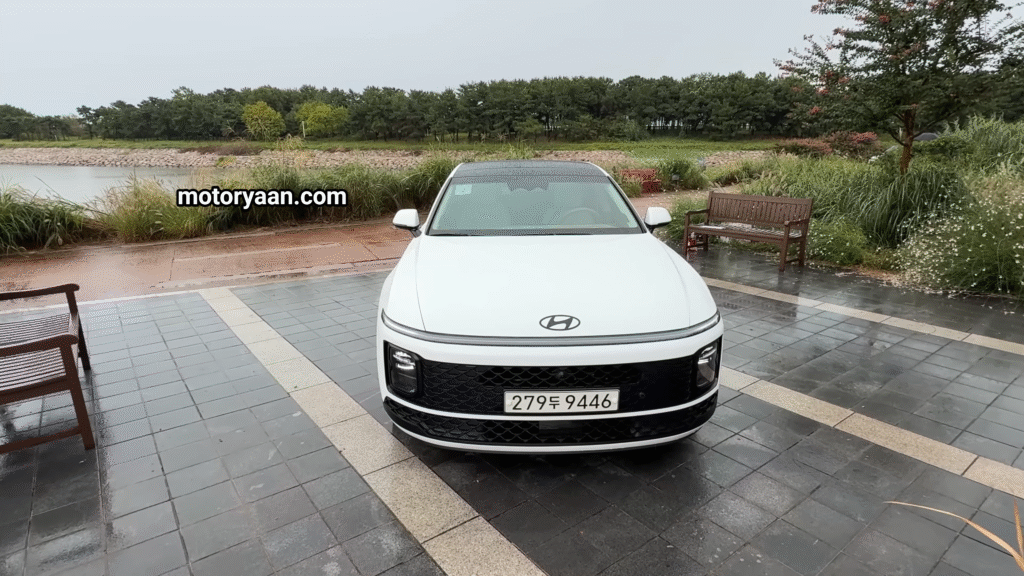
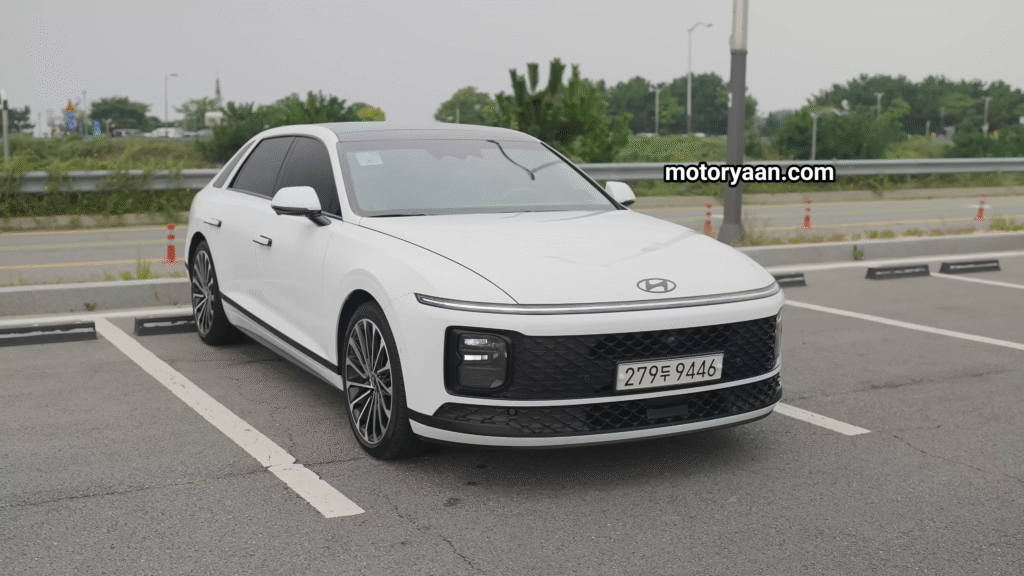
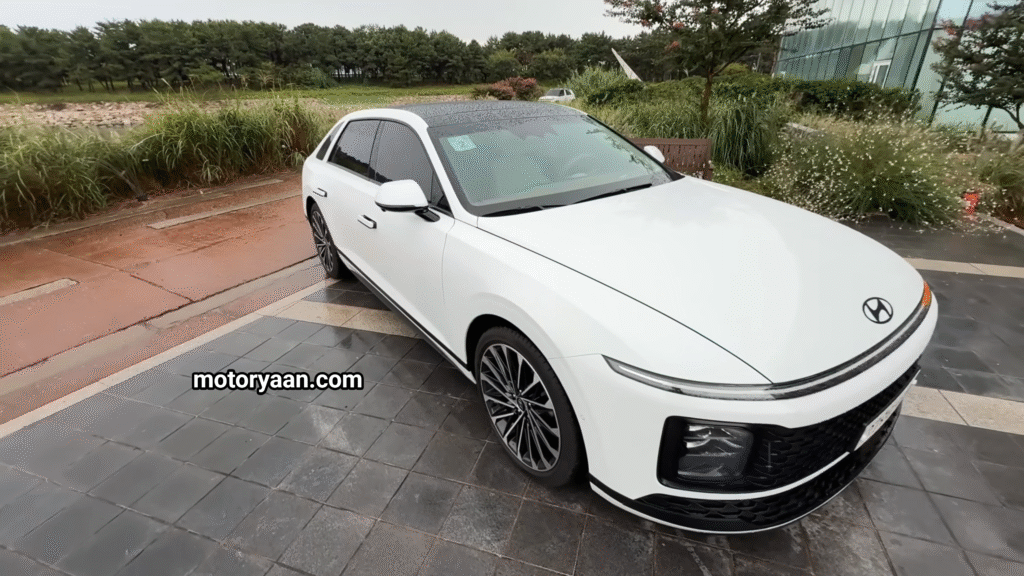
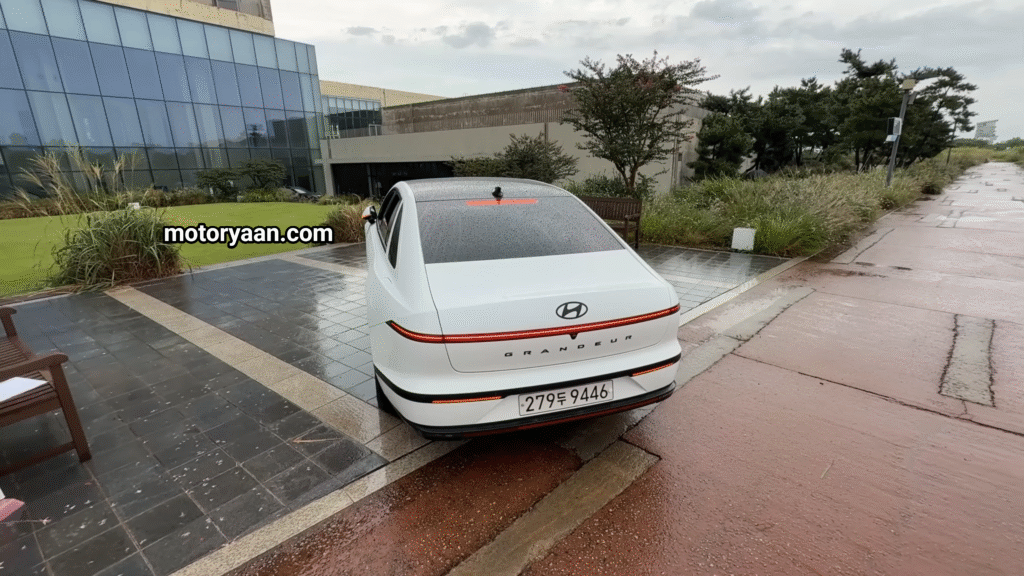
Frameless doors that look extremely premium
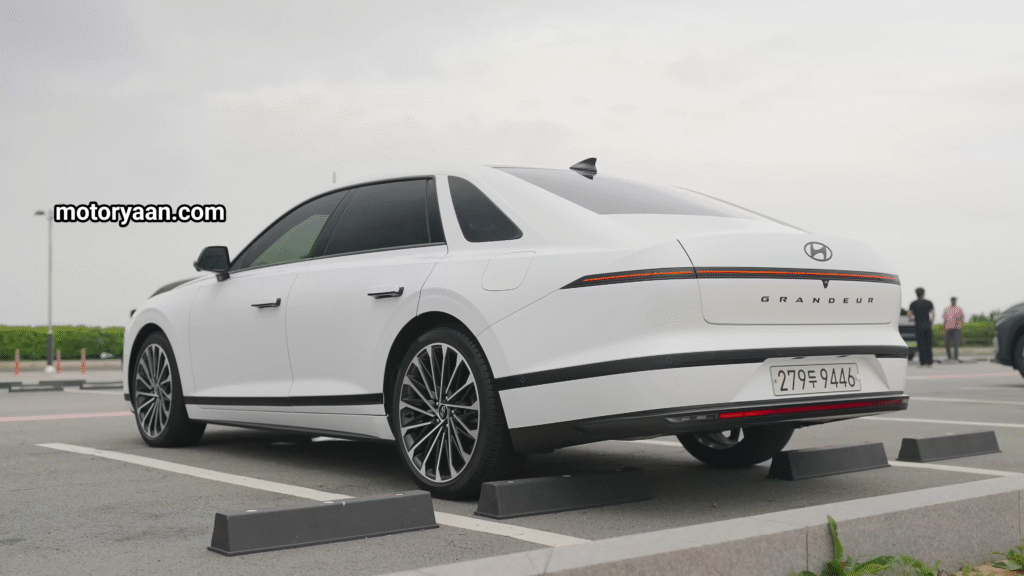
Flush door handles that pop in and out
DRLs integrated with the indicators
A massive front grill and lower bumper grills
Radar and camera for safety systems
Projector headlamps placed lower on the bumper
360 degree camera system
Fully tinted windows from the factory
Dimensions and Wheels
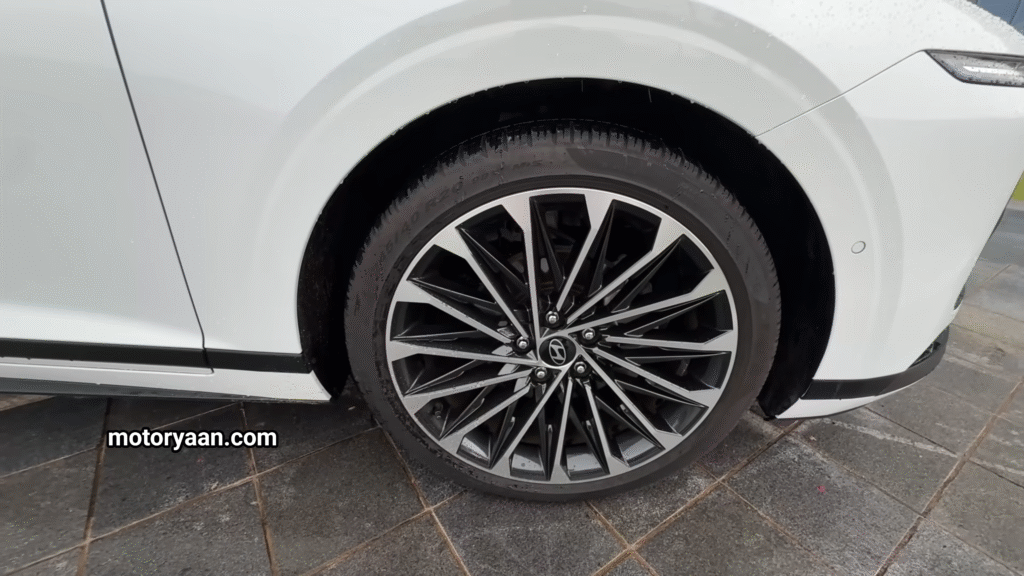
More than 5 meters in length
Wheelbase of almost 2.9 meters
245/40 R20 tires
Six ultrasonic sensors at the front for remote parking
Rain sensing wipers
The design is clean with fewer elements and a lot of body panels, giving it a luxury sedan presence similar to Genesis models.
Interiors, Tech and Features
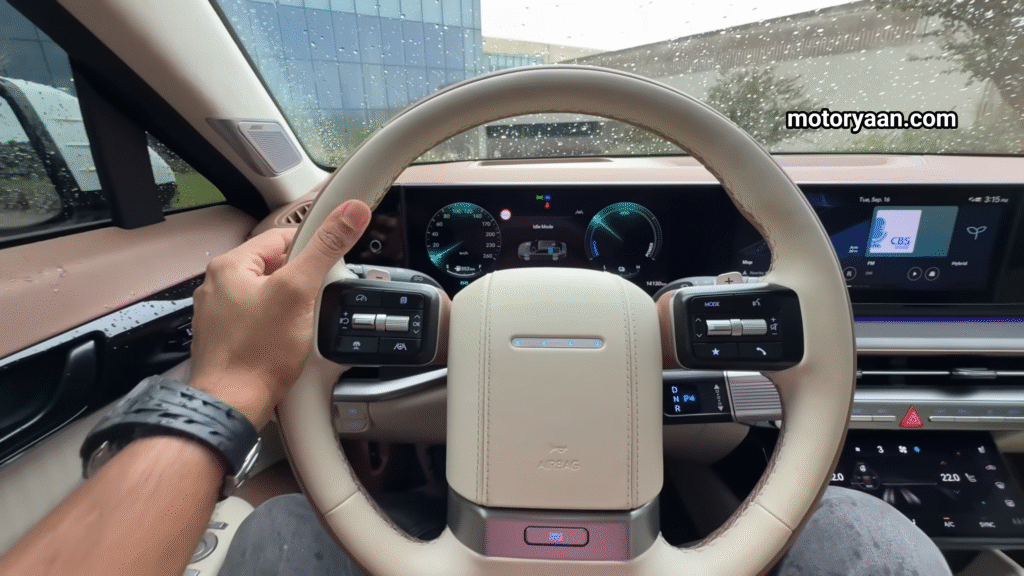
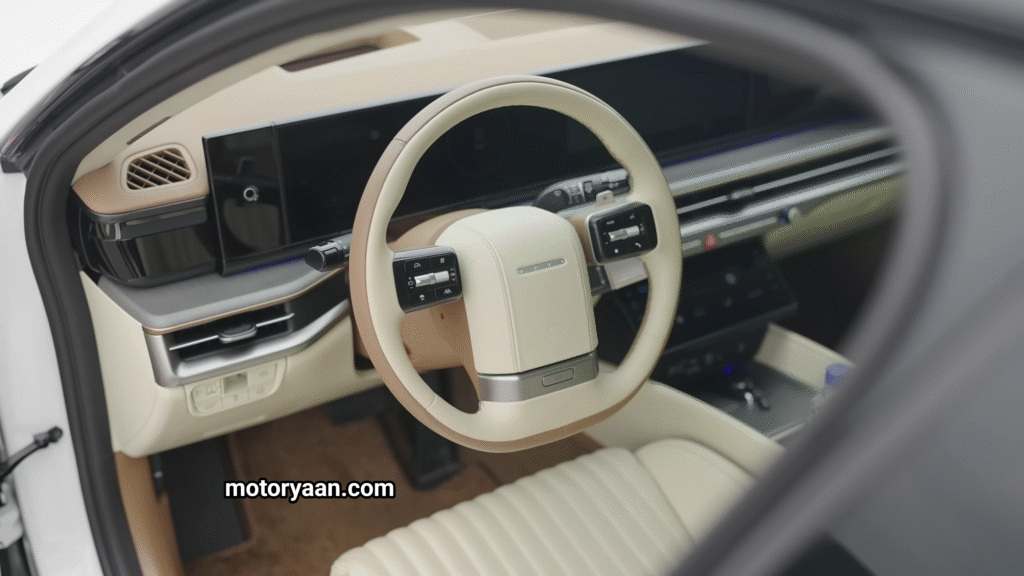
The dashboard is filled with screens and physical controls where needed.
Screens and Controls
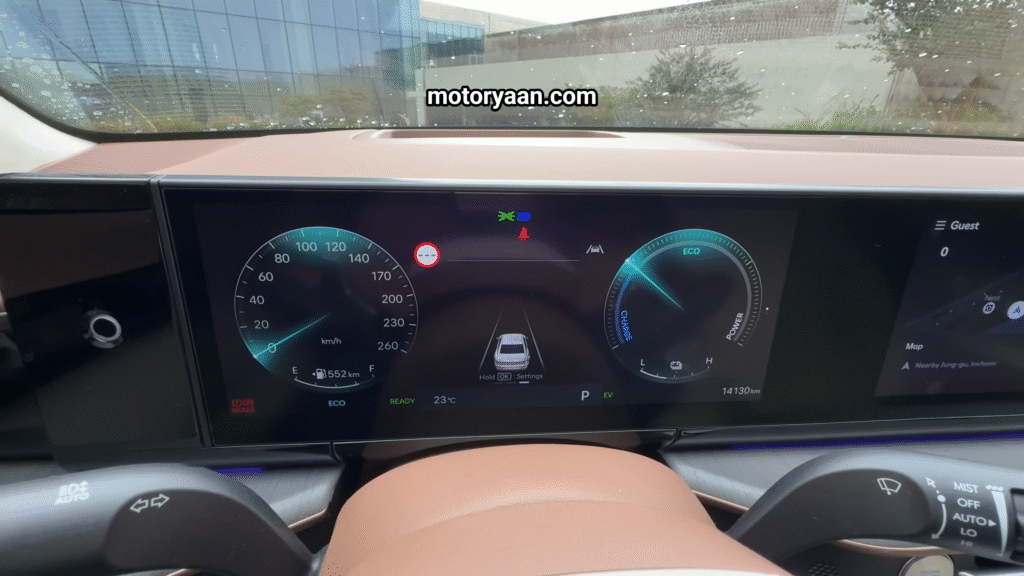
12.3 inch digital instrument cluster
12.3 inch infotainment screen
Combined 24.6 inch curved display layout
Hyundai’s MOS code H logo on the steering
Built-in dash cam with recording option
Wireless Apple CarPlay and Android Auto
UVC sterilizer to disinfect items placed in the wireless charging area
Fingerprint sensor for personalized settings
Heads-up display with high brightness
Dual zone climate control
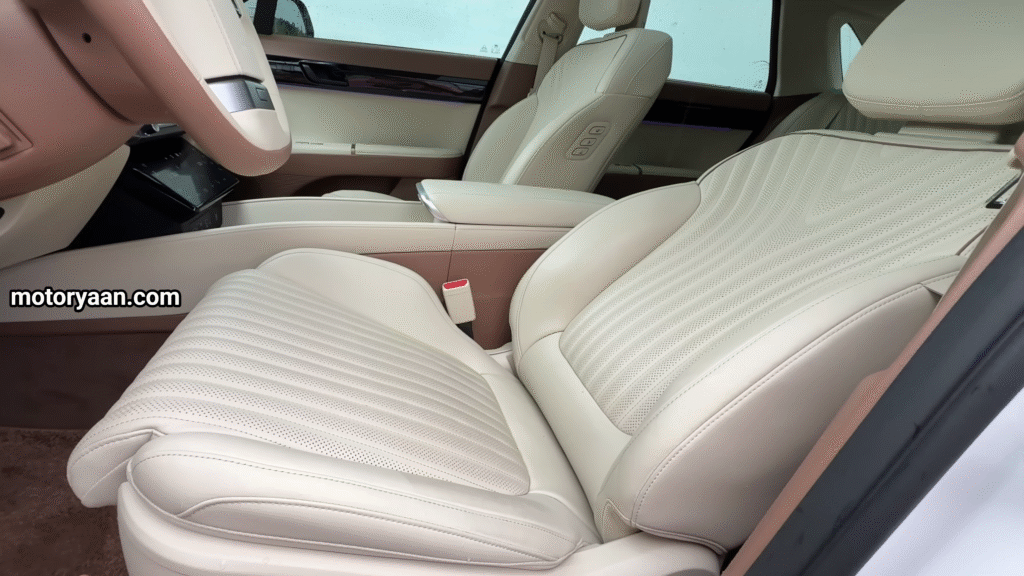
Seat heating and ventilation
Steering heating
Multiple ambient lighting options
Audi-style secondary control screen
12V socket and multiple storage areas
Navigation and In-Car Services
Hyundai’s built-in navigation works better in markets where Google Maps is not allowed.
Shows toll deductions instantly through the high pass system
Built-in vehicle manual
Onboard diagnostics
Smooth and detailed map guidance
Interior Comfort and Space
The cabin feels extremely premium due to its mix of beige, brown, and dark tones. Acoustic control insulation is provided to keep sound outside. The doors do not have soft close, but the overall comfort matches luxury brands.
Rear Seat Experience
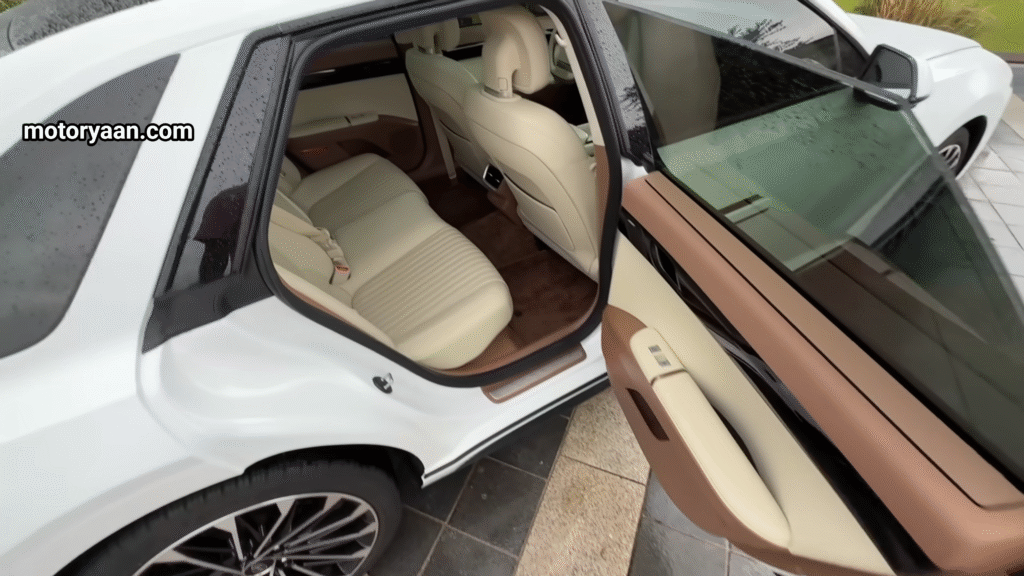
Good legroom and under-thigh support
Adequate headroom
Electronic boss mode to move the front passenger seat
Rear AC vents and two USB-C chargers
Center armrest with audio controls and a physical rotary volume dial
Heated rear seats
Panoramic sunroof, although it could extend further
Soft pillows, ISOFIX mounts, and a Calligraphy logo on the seats
Proper headrest for the center passenger
Boot and Practicality
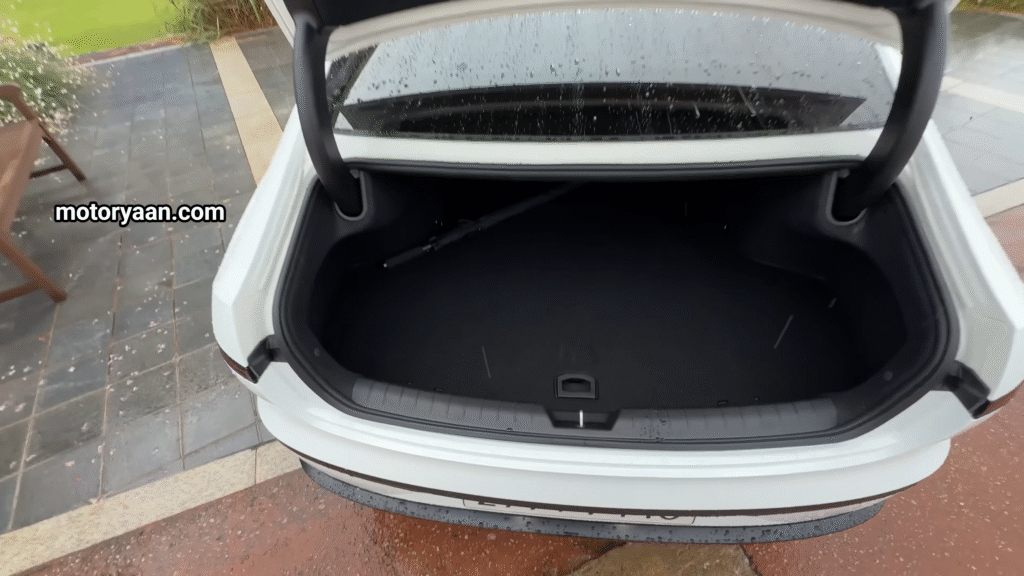
The boot has a hidden release button integrated into the tail section.
Powered boot
No spare wheel and no tire inflator
Provided with only a fire extinguisher
Warning triangle included
Rear seats do not recline
Driving Experience
Driving the Grandeur feels extremely smooth and silent. In electric mode, the cabin becomes almost noise-free. The steering is light, easy to maneuver, and does not let you feel the actual size of the sedan.
Key Driving Highlights
Eco, Sport, and My Drive modes
Paddle shifters (not very effective in daily use)
Hybrid system ensures smooth acceleration without push-back
Excellent insulation with minimal road noise
Torque vectoring helps in cornering
Almost 700 km range on a full tank
On highways, the car delivers a luxury-class feel similar to an E-Class. The navigation-linked predictive gearbox enhances smoothness.
Why the Grandeur Is Not Sold in the US
Although known as the Grandeur in Korea, the car was sold as the Azera in other markets. It was discontinued in many regions including the US.
Reasons Behind Discontinuation
To avoid cannibalizing Genesis luxury sedan sales
To protect the popularity of the Hyundai Sonata
Falling global demand for sedans
Large sedans losing popularity to SUVs
History and Fun Facts
The Grandeur is currently in its seventh generation
The first two generations were rebadged Mitsubishi sedans (Mitsubishi Debonair)
Hyundai adopted badge engineering when the brand was still young
The Grandeur sits above the Sonata as Hyundai’s flagship sedan
Available in both FWD and AWD in some markets
Kia’s sibling model is the K8, previously known as the Cadenza
Conclusion
The Hyundai Grandeur Calligraphy is a spacious, silent, and feature-rich luxury sedan. It delivers refinement, advanced technology, high efficiency, and a premium driving experience. Even though sedans are losing their popularity to SUVs, the Grandeur still proves how enjoyable and comfortable a full-size sedan can be.
If Hyundai ever brings it to India, it could offer E-Class level comfort at a more accessible price bracket, which would be a game changer for sedan lovers.