Australia May Introduce the World's First Roadside THC Limit for Medicinal Cannabis Drivers
Table of Contents
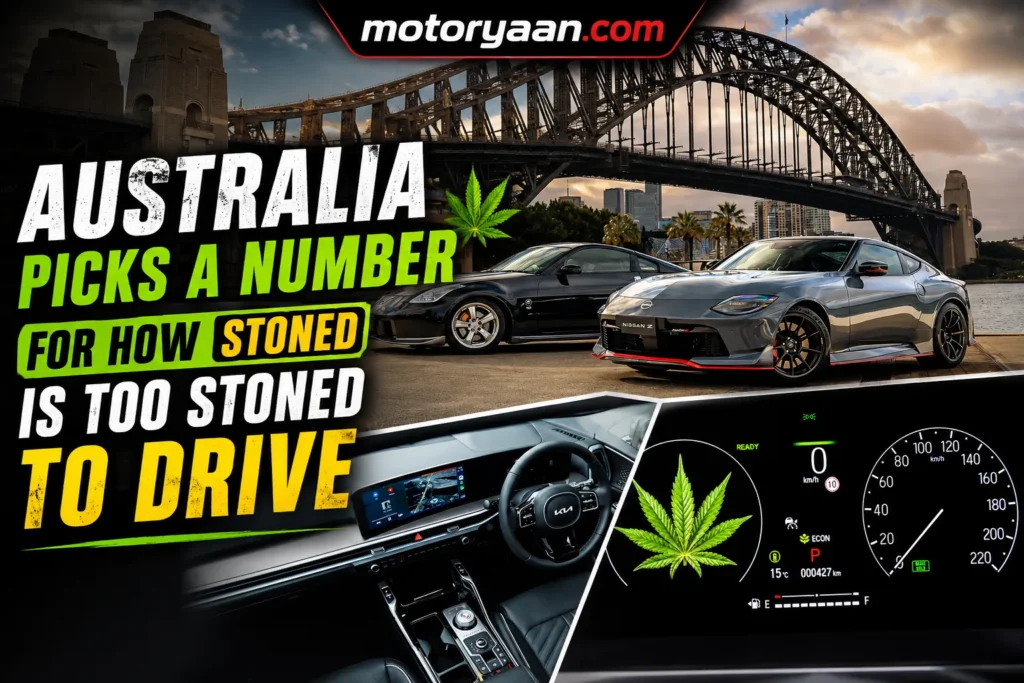
Australia could soon become the first country to introduce a legal roadside THC limit for drivers using prescribed medicinal cannabis. A new proposal in New South Wales aims to balance road safety with the rights of patients who legally rely on medical cannabis treatment.
The proposal marks a significant shift in Australia’s drug driving laws and could change how police handle roadside cannabis testing.
New South Wales Plans Major Change to Drug Driving Laws
Medicinal cannabis has been legal in Australia since 2016. However, despite holding a valid prescription, patients have faced the same penalties as recreational users if THC was detected during roadside drug tests.
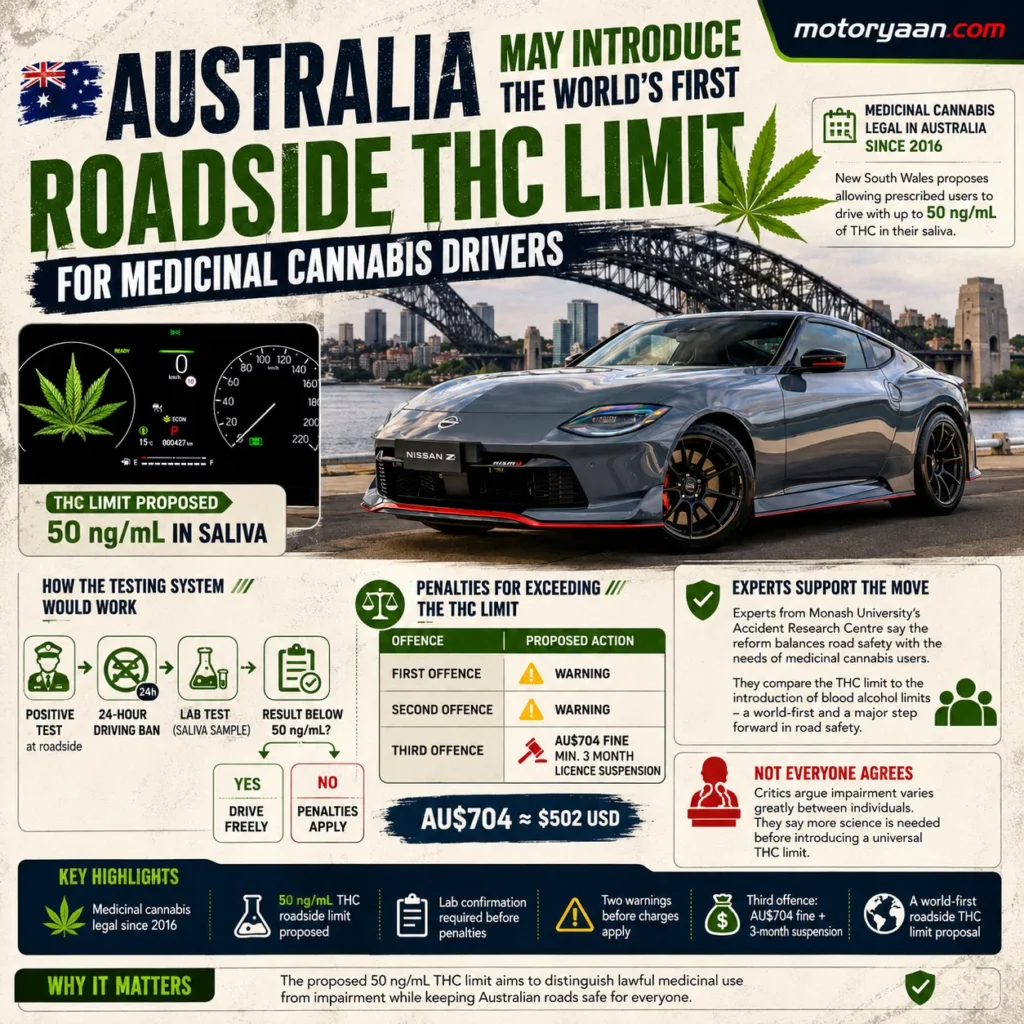
The proposed reform would allow eligible medicinal cannabis patients to legally drive with up to 50 nanograms per milliliter (ng/mL) of THC in their saliva.
Supporters say the change recognizes the difference between lawful medical use and illegal drug use while maintaining strict road safety standards.
How the Proposed THC Testing System Would Work
Under the new proposal, a driver who tests positive during a roadside drug screening would not automatically face penalties.
Instead, the process would follow these steps:
- The driver would receive an immediate 24 hour driving prohibition.
- A second saliva sample would be collected for laboratory analysis.
- If the laboratory result is below 50 ng/mL, the driver would be allowed to resume driving legally.
- If the THC level exceeds the legal limit, enforcement action would follow based on the number of previous offences.
This approach aims to provide more accurate testing while reducing unnecessary penalties for prescribed medicinal cannabis users.
Penalties for Exceeding the THC Limit
Drivers who exceed the proposed THC threshold would not be punished immediately.
The draft framework includes a warning system:
| Offence | Proposed Action |
|---|---|
| First Offence | Warning |
| Second Offence | Warning |
| Third Offence | AU$704 fine and minimum three-month licence suspension |
The proposed fine equals approximately AU$704, along with a minimum suspension of three months from driving.
Why Experts Support the Proposal
Road safety researchers believe the proposal represents an important step toward modernizing drug driving laws.
According to experts from Monash University’s Accident Research Centre, the reforms attempt to balance public safety with the needs of medicinal cannabis patients while preserving the integrity of roadside drug enforcement.
They also describe the introduction of a roadside THC limit as a landmark development, comparing its significance to the establishment of legal blood alcohol concentration limits for drink driving.
If implemented, New South Wales would become the first jurisdiction in the world to adopt a measurable roadside THC limit for medicinal cannabis users.
Not Everyone Agrees
The proposal has also attracted criticism.
Opposition leader Kellie Sloane has questioned whether a fixed THC threshold can accurately measure impairment.
Critics argue that cannabis affects individuals differently depending on factors such as body chemistry, dosage, tolerance, and metabolism. Because of these variations, some believe scientific research is not yet advanced enough to support a universal legal limit.
Their concern is that two drivers with the same THC reading may experience very different levels of impairment.
Why This Proposal Matters
As medicinal cannabis prescriptions continue to increase across Australia, governments face growing pressure to update laws that reflect modern medical treatment while protecting public safety.
The proposed 50 ng/mL roadside limit attempts to strike that balance by distinguishing lawful medicinal use from unsafe driving behaviour.
Whether the proposal becomes law remains uncertain, but it has already sparked international discussion about how countries should regulate medicinal cannabis and driving.
Key Highlights
- Medicinal cannabis has been legal in Australia since 2016.
- New South Wales proposes allowing prescribed users to drive with up to 50 ng/mL THC in saliva.
- Positive roadside tests would require laboratory confirmation before penalties are applied.
- Drivers exceeding the limit would receive two warnings before facing legal consequences.
- A third violation could result in a AU$704 fine and a minimum three month licence suspension.
- The proposal could make New South Wales the first jurisdiction in the world to establish a legal roadside THC limit for medicinal cannabis users.
Conclusion
The proposed roadside THC limit represents one of the most significant changes to Australia’s drug driving laws in years. It acknowledges the growing use of prescribed medicinal cannabis while continuing to prioritize road safety through measurable limits and laboratory verification.
If approved, the reform could become a model for other countries exploring how to regulate medicinal cannabis users behind the wheel without treating all THC detection as automatic impairment.
Sources & References
1. ABC News Australia
https://www.abc.net.au/news/2026-06-04/nsw-medicinal-cannabis-driving-reforms-parliament/106755646
Official report covering the NSW Government’s proposed medicinal cannabis driving reforms and THC limit.
2. Monash University Accident Research Centre
Official research center providing road safety expertise and commentary on the proposed THC driving laws.
3. NSW Government
Official website of the New South Wales Government for legislation, transport policies, and public announcements.
4. Transport for NSW
https://www.transport.nsw.gov.au
Official transport authority responsible for driver licensing, road safety, and implementation of transport regulations.
5. Therapeutic Goods Administration (TGA)
Australia’s official regulator for medicines and medicinal cannabis products.
6. National Highway Traffic Safety Administration (NHTSA)
Official U.S. agency dedicated to road safety research and impaired driving prevention.
7. Centers for Disease Control and Prevention (CDC)
U.S. government resource explaining cannabis use and its effects on driving and public health.
8. Canadian Centre on Substance Use and Addiction (CCSA)
Canada’s national organization providing research and education on cannabis impaired driving.
9. Carscoops
https://www.carscoops.com/2026/06/nsw-cannabis-driving-limit/
Automotive news report summarizing the proposed Australian roadside THC limit and its implications.
10. CarExpert Australia
https://www.carexpert.com.au/car-news/cannabis-users-granted-provisions-to-drive-in-nsw
Australian automotive publication explaining how the proposed law would affect medicinal cannabis drivers.
11. The Guardian Australia
https://www.theguardian.com/australia-news
Independent news coverage of Australia’s proposed medicinal cannabis driving reforms.
12. Australian Government Department of Health
Official government source for health policy and medicinal cannabis information in Australia.