Mercedes Benz Could Face U.S. Sales Ban Under New China Ownership Proposal. Here's What It Means for Buyers
Table of Contents
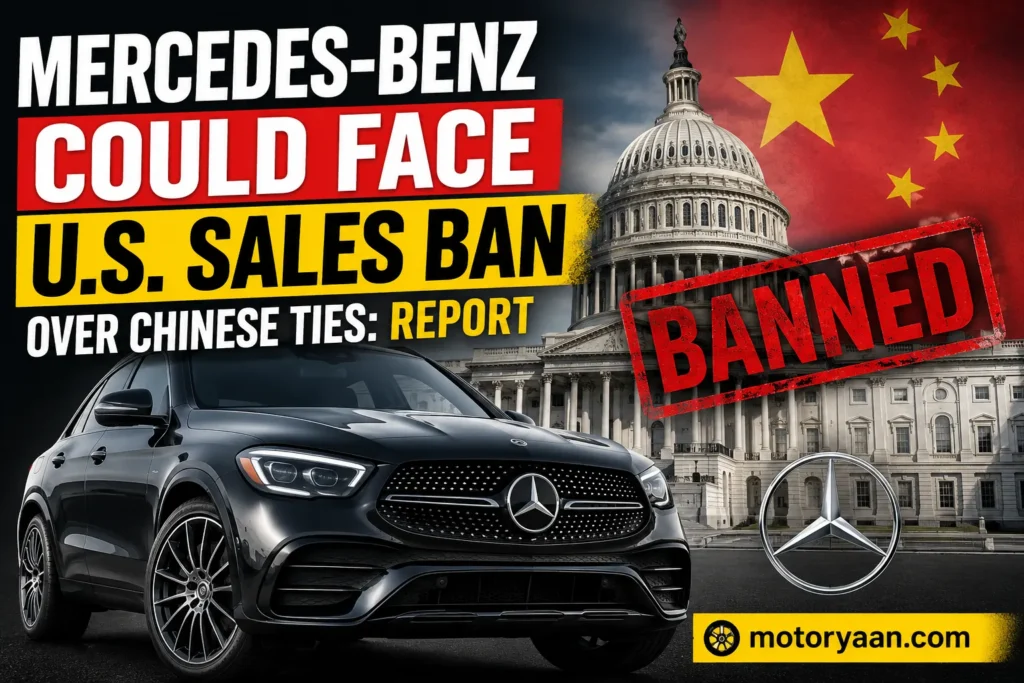
Mercedes Benz is facing an unusual challenge in one of its most important markets. A proposed piece of U.S. legislation could potentially restrict the German automaker’s ability to sell vehicles in the United States because of ownership stakes held by Chinese investors.
While the bill is still working its way through Congress, the situation highlights how geopolitical tensions are increasingly influencing the automotive industry. For buyers, investors, and manufacturers, the story goes far beyond Mercedes Benz itself. It raises broader questions about foreign investment, vehicle technology, manufacturing strategy, and the future of global automotive partnerships.
What Is Happening?
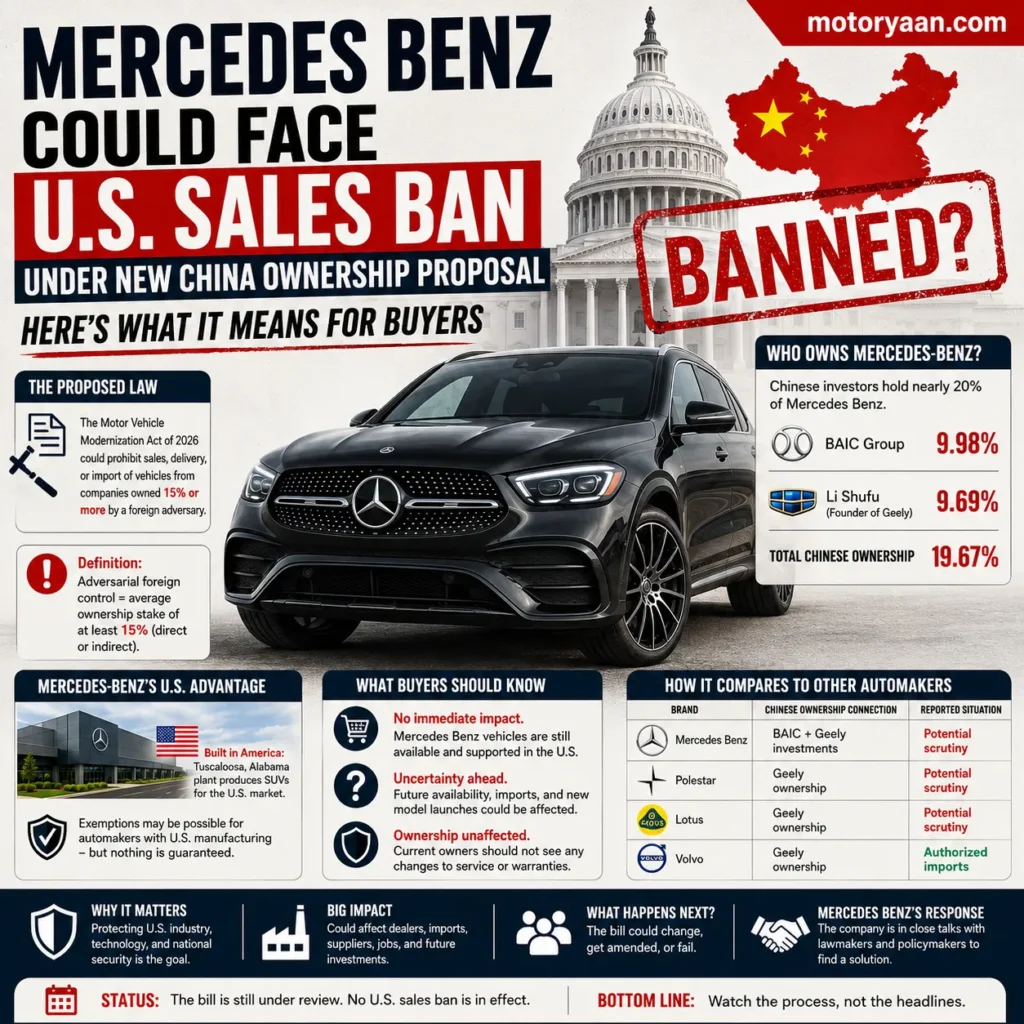
The concern stems from an amendment tied to the proposed Motor Vehicle Modernization Act of 2026. According to reports, the legislation would prohibit vehicle sales, deliveries, or imports from manufacturers considered to be controlled by a foreign adversary. The proposal defines such control as an average ownership stake of at least 15 percent, whether direct or indirect.
Mercedes Benz falls into the spotlight because two major Chinese investors collectively hold nearly 20 percent of the company:
| Investor | Ownership Stake |
|---|---|
| BAIC Group | 9.98% |
| Li Shufu (Founder of Geely) | 9.69% |
| Total Chinese Ownership | 19.67% |
If lawmakers ultimately apply the legislation as currently written, Mercedes Benz could face restrictions in the U.S. market.
This is not a typical automotive regulatory issue. Most vehicle regulations focus on safety, emissions, or technology compliance. This proposal focuses on ownership structure, which could create challenges for several globally connected automakers.
Why This Matters
The United States remains one of Mercedes Benz’s most valuable markets, particularly for high margin SUVs and luxury vehicles.
A sales restriction would affect far more than dealership inventories. It could impact:
- Dealer networks
- Manufacturing operations
- Supplier contracts
- Vehicle imports
- Future product planning
- Luxury vehicle competition
The proposal also signals a larger shift in Washington’s approach toward Chinese involvement in critical industries, including automotive manufacturing and connected vehicle technology.
Automakers spent decades building global ownership structures and supply chains. Governments are now increasingly evaluating those relationships through national security and economic security lenses rather than purely commercial considerations.
Mercedes Benz May Have One Important Advantage
Unlike some foreign automakers that rely entirely on imports, Mercedes Benz maintains a significant manufacturing presence in the United States.
The company operates a major production facility in Tuscaloosa, Alabama, which builds several SUV models for both domestic and export markets. The amended legislation reportedly includes provisions that could offer exemptions to manufacturers with U.S. production facilities.
However, the situation remains uncertain.
As currently described, the exemption may not automatically apply if a manufacturer still has direct or indirect ownership ties to a foreign adversary government. That means Mercedes Benz’s U.S. manufacturing footprint could help its case, but it may not completely eliminate regulatory concerns.
The Alabama plant gives Mercedes a stronger position than many imported luxury brands. Policymakers typically consider domestic jobs and investment when evaluating major industrial legislation.
What Buyers Should Know
At the moment, nothing changes for current Mercedes Benz owners.
The bill has not become law, and Mercedes Benz continues normal operations in the United States. Vehicles remain available through dealers, service networks continue operating, and ownership support remains unchanged.
For prospective buyers, the key point is uncertainty rather than immediate disruption.
Potential concerns could include:
- Future vehicle availability
- Import timing for specific models
- Product launch schedules
- Long term regulatory compliance costs
That said, large automakers typically have multiple strategies available, including ownership restructuring, legal exemptions, policy negotiations, or supply chain adjustments.
Luxury vehicle buyers often worry about resale values during regulatory uncertainty. However, markets generally respond to actual policy implementation rather than proposed legislation.
How It Compares to Other Automakers
Mercedes Benz is not the only company potentially affected by increased scrutiny of Chinese automotive ties.
Automakers such as Lotus and Polestar could face similar questions because of their ownership connections to Geely. Meanwhile, Volvo has reportedly already received authorization to continue importing vehicles despite its Chinese ownership relationship.
| Brand | Chinese Ownership Connection | Reported Situation |
|---|---|---|
| Mercedes Benz | BAIC + Geely investments | Potential scrutiny |
| Polestar | Geely ownership | Potential scrutiny |
| Lotus | Geely ownership | Potential scrutiny |
| Volvo | Geely ownership | Reportedly authorized imports |
This demonstrates that ownership alone may not determine outcomes. Regulatory interpretations, exemptions, manufacturing footprints, and national economic interests could all influence final decisions.
The automotive industry is deeply interconnected. Policymakers attempting to separate Chinese influence from global vehicle manufacturing face a far more complex challenge than simply targeting one brand.
Potential Drawbacks for Mercedes Benz
If the legislation advances without significant changes, Mercedes Benz could face several challenges:
- Increased regulatory compliance costs.
- Potential restructuring pressure involving shareholders.
- Additional uncertainty for future investment planning.
- Competitive disadvantages versus unaffected rivals.
- Greater scrutiny of technology partnerships and supply chains.
Even if a complete sales ban never materializes, the company may need to dedicate significant resources toward addressing policymakers’ concerns.
Often the biggest impact of legislation is not the final restriction itself. It is the operational uncertainty created while businesses wait for regulatory clarity.
What Could Happen Next?
Several outcomes remain possible:
- The legislation could be amended further.
- Mercedes Benz could qualify for an exemption.
- Ownership thresholds could change.
- Regulatory agencies could interpret the rules differently.
- The bill could fail to become law altogether.
Mercedes Benz CEO Ola Källenius has publicly expressed confidence that the company can handle the situation if the legislation progresses, while the automaker says it is actively engaging with lawmakers and policymakers.
Key Takeaways
- A proposed U.S. bill could restrict vehicle sales from manufacturers with significant ownership ties to foreign adversaries.
- Mercedes Benz currently has approximately 19.67% combined ownership linked to Chinese investors BAIC and Geely interests.
- The company operates a major manufacturing facility in Alabama, which could become an important factor in any exemption discussions.
- No sales restrictions currently exist.
- Current Mercedes owners and buyers are not facing immediate changes.
- The broader issue reflects growing U.S. scrutiny of Chinese involvement in the automotive sector.
Sources and References
Official Mercedes Benz Sources
- Mercedes Benz USA Official Website
Official U.S. website for vehicle information, pricing, specifications, inventory, and ownership resources. - Mercedes Benz USA Newsroom
Official source for U.S. press releases, product announcements, recalls, manufacturing updates, and company news. - Mercedes Benz Global Website
Official global brand website covering corporate news, future technologies, sustainability, and worldwide product information.
Government & Regulatory Sources
- NHTSA (National Highway Traffic Safety Administration)
Official U.S. government source for recalls, safety investigations, crash ratings, and automotive regulations. - EPA Fuel Economy Database
Official U.S. fuel economy and EV efficiency data used by American buyers.
Trusted U.S. Automotive Publications
- Car and Driver
U.S. automotive reviews, testing, industry news, and comparison articles. - MotorTrend
Vehicle reviews, first drives, buying guides, and automotive industry coverage. - Road & Track
Performance vehicle reviews, enthusiast content, and automotive industry analysis. - Automotive News
Industry-focused reporting covering manufacturers, regulations, dealerships, and market trends.
Business & Financial Sources
- Reuters Autos & Transportation
Reliable reporting on recalls, legislation, manufacturing, and global automotive business developments. - CNBC Autos
Coverage of automotive policy, investments, EVs, and industry trends.
For Canadian Readers
- Mercedes Benz Canada
Official Canadian vehicle pricing, specifications, inventory, and ownership information.
For Australian Readers
- Mercedes Benz Australia
Official Australian vehicle information, pricing, dealer network, and ownership resources.
Mercedes Benz Sales Ban Proposal
Is Mercedes Benz banned from selling cars in the United States?
No. The proposed legislation has not become law, and Mercedes Benz continues normal U.S. operations. Vehicles are still available through dealers, and there is no active sales ban at this time.
Why is Mercedes Benz being scrutinized?
Mercedes Benz is under scrutiny because Chinese investors hold a combined stake of roughly 19.67 percent. That includes BAIC Group at 9.98 percent and Li Shufu, the founder of Geely, at 9.69 percent.
Does Mercedes Benz build vehicles in America?
Yes. Mercedes Benz operates a major manufacturing plant in Tuscaloosa, Alabama. That U.S. production base could matter if lawmakers consider exemptions for automakers with domestic manufacturing.
Should current Mercedes Benz owners be concerned?
There is no immediate impact on ownership, servicing, warranties, or vehicle availability today. Current Mercedes Benz owners should not see any change unless the proposal moves forward and becomes law.
Could other automakers be affected too?
Yes. Brands with Chinese ownership ties, including Lotus and Polestar, could also face regulatory attention depending on how future legislation is written and applied. Volvo has reportedly already received authorization to continue imports.