Why Vehicle Software Updates Often Fail To Improve The Ownership Experience
Table of Contents
Modern vehicles receive software updates more often than ever before. Automakers promise better performance, new features, bug fixes, and an improved ownership experience through over the air updates. In theory, that sounds great.
In reality, many vehicle owners feel differently.
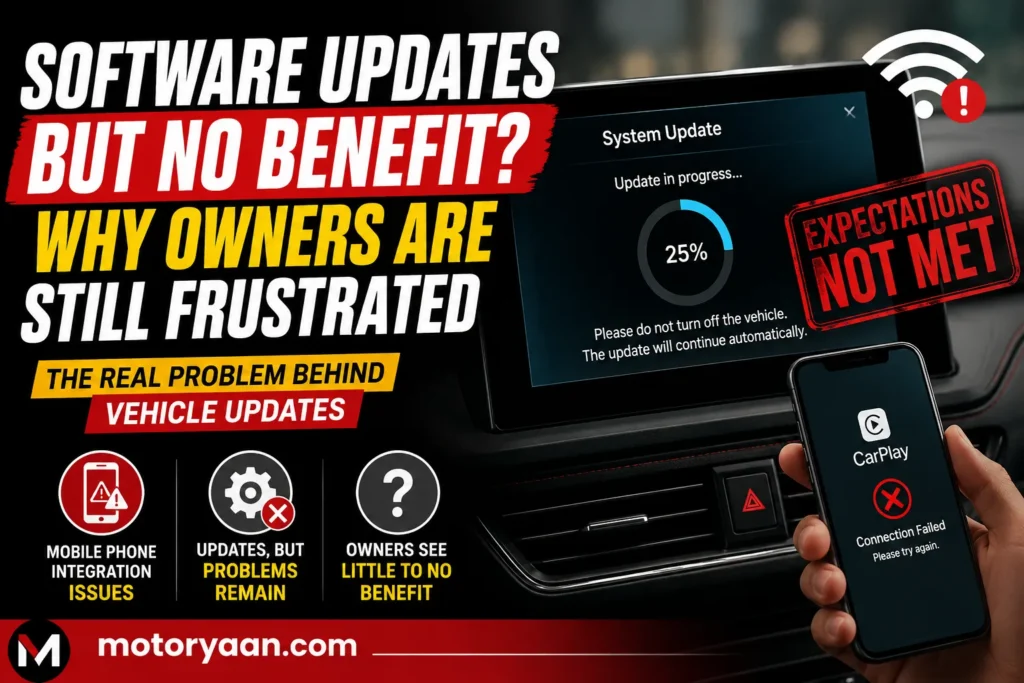
A growing number of drivers report that software updates bring little noticeable benefit. In some cases, updates even create new issues, especially with mobile phone connectivity and infotainment systems. For many owners, the update process feels like a disruption rather than an improvement.
Mobile Phone Integration Remains A Major Complaint
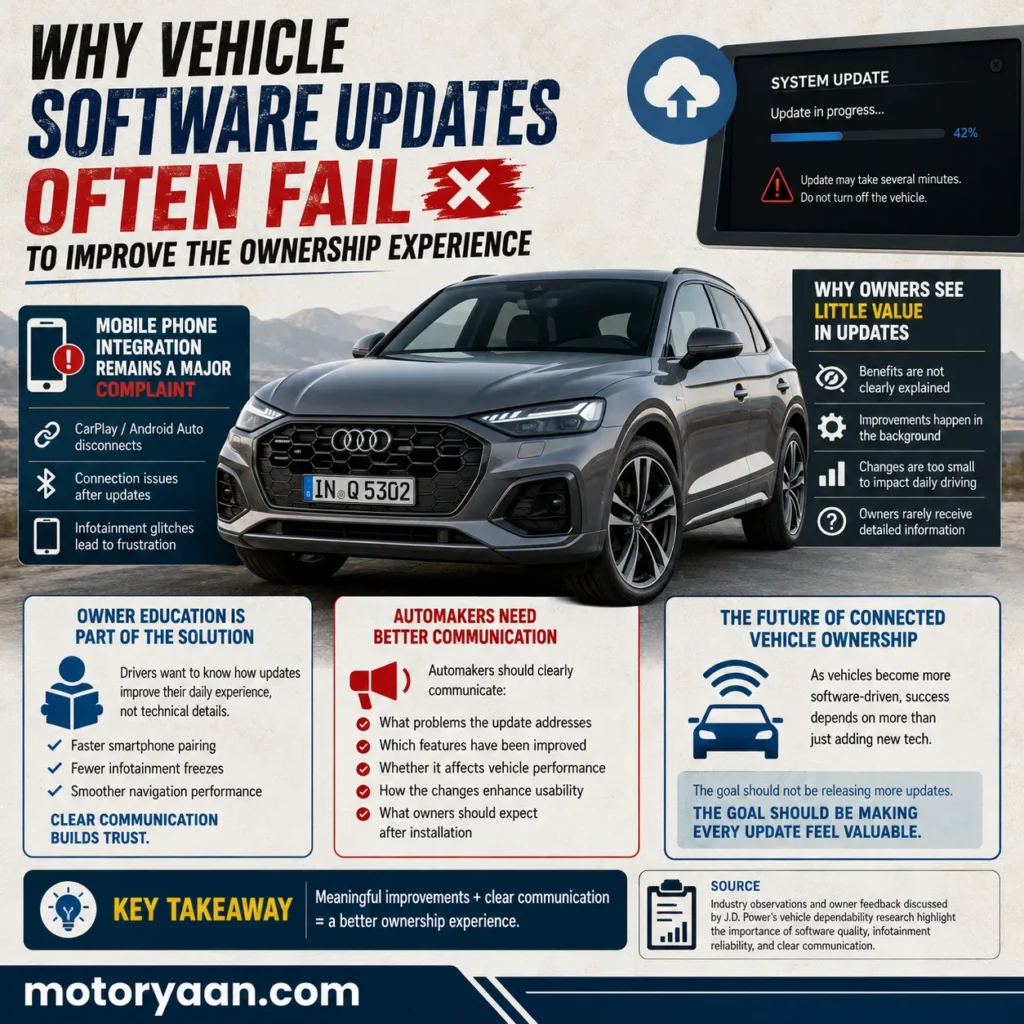
One of the most common complaints among vehicle owners involves smartphone connectivity. Features such as Apple CarPlay and Android Auto have become essential parts of the modern driving experience. When these systems fail to connect properly, disconnect unexpectedly, or experience software glitches, frustration quickly follows.
Many owners say software updates often fail to solve these problems completely. Some even report that new updates introduce fresh connectivity issues that were not present before.
This creates a gap between customer expectations and actual results.
Why Many Owners See Little Value In Software Updates
Software updates are supposed to make vehicles better over time. However, many drivers struggle to identify what has actually changed after an update is installed.
Several factors contribute to this problem:
- Benefits are often not clearly explained.
- Improvements may happen in the background and remain unnoticed.
- Feature changes are sometimes too small to impact daily driving.
- Owners rarely receive detailed information about what an update improves.
As a result, many drivers view updates as unnecessary or ineffective.
Owner Education Is Part Of The Solution
Industry experts increasingly point to owner education as a key factor.
When vehicle manufacturers release a software update, they often focus on technical details rather than explaining real world benefits. Most drivers do not care about software version numbers or backend improvements. They want to know how the update will improve their daily ownership experience.
For example, instead of saying an update improves system stability, automakers could explain that drivers may experience faster smartphone pairing, fewer infotainment freezes, or smoother navigation performance.
Clear communication helps owners understand the value of the update.
Automakers Need Better Communication
Software updates can deliver meaningful improvements, but owners need transparency.
Automakers should clearly communicate:
- What problems the update addresses.
- Which features have been improved.
- Whether the update affects vehicle performance.
- How the changes enhance everyday usability.
- What owners should expect after installation.
Without this information, many customers remain unaware of the benefits that updates provide.
The Future Of Connected Vehicle Ownership
As vehicles become more software driven, regular updates will continue to play a larger role in ownership. However, success will depend on more than just adding new technology.
Manufacturers must focus on delivering updates that provide meaningful improvements while clearly explaining their purpose and benefits. When owners understand how an update improves their vehicle, they are more likely to view the technology positively.
The goal should not simply be releasing more updates. The goal should be making every update feel valuable to the person behind the wheel.
Sources and References
J.D. Power Vehicle Dependability Study
Official dependability research covering long term vehicle ownership issues, software problems, infotainment reliability, and owner satisfaction trends.
J.D. Power Vehicle Dependability Study (VDS)
J.D. Power 2026 Vehicle Dependability Study
Official 2026 study highlighting how software complexity, OTA updates, and infotainment systems continue to impact vehicle reliability.
2026 J.D. Power Vehicle Dependability Study
Apple CarPlay Official
Official Apple page explaining CarPlay features, smartphone integration, navigation, communication, and in car connectivity.
Apple CarPlay Support
Official troubleshooting and support resource for common CarPlay connection and integration issues.
Android Auto Official
Official Android Auto platform page covering supported features, vehicle integration, and connectivity functions.
Android Auto Help Center
Official Google support portal with troubleshooting information, setup guides, and connectivity solutions.
Android Auto Setup Guide
Official Google guide explaining Android Auto compatibility, setup process, and supported features.
Android Auto Getting Started Guide
J.D. Power Dependability Ratings
Vehicle dependability rankings and reliability ratings across brands and segments based on owner reported issues.
Frequently Asked Questions
Why do vehicle software updates often fail to improve the ownership experience?
Many updates do not deliver changes that owners can clearly feel in everyday driving. Some fixes happen in the background, while others are too small to notice. In a few cases, updates even create new issues instead of solving the old ones.
Why is mobile phone integration such a common complaint?
Smartphone connectivity has become a basic part of modern ownership, especially for Apple CarPlay and Android Auto users. When pairing fails, connections drop, or the infotainment system glitches, owners notice it fast. Many software updates do not fully fix these problems.
Why do owners say they see little value after a software update?
Because the benefits are often not explained clearly. Owners may not know what changed, what improved, or how the update affects daily use. If the result is not obvious, the update feels pointless even if the software changed behind the scenes.
How can automakers make software updates more useful for owners?
Automakers should explain the real world benefit, not just the technical update. They should tell owners what problem was fixed, what feature improved, and what they should expect after installation. Clear communication makes the update feel more valuable.
What should automakers tell owners after releasing an update?
They should clearly explain:
- What problem the update addresses
- Which features were improved
- Whether vehicle performance changes
- How the update improves usability
- What owners should expect after installation
What is the main lesson from this issue with vehicle software updates?
The main lesson is simple. Updates should deliver meaningful improvement, and owners should understand that improvement clearly. If the change is useful but nobody can tell, the update still fails from the customer’s point of view.