Americans Are Finally Using Public Transport Again And High Gas Prices Are A Big Reason
Table of Contents
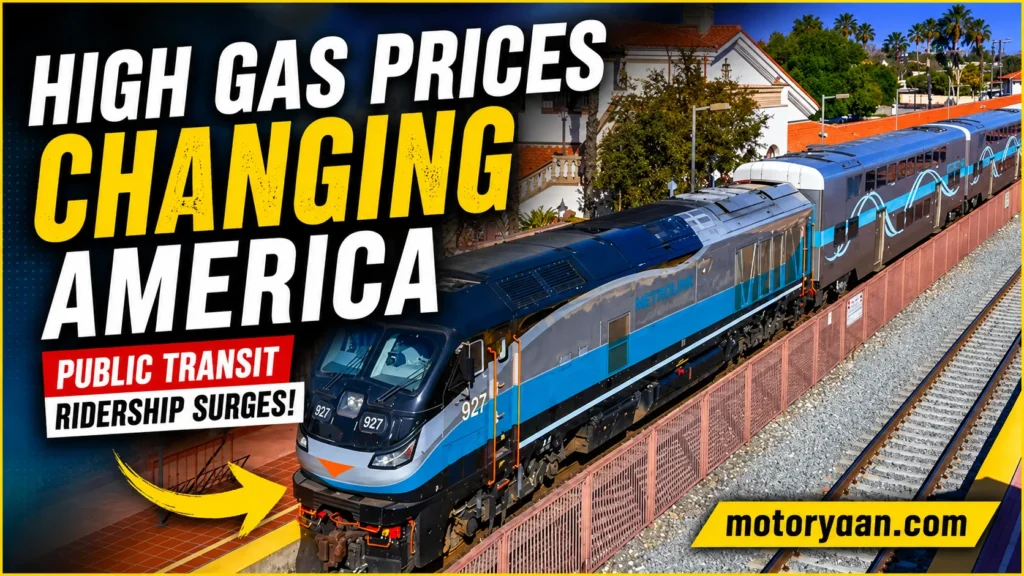
Gas prices in the United States have climbed sharply over the past few months, and many Americans are starting to rethink daily driving. With fuel prices crossing painful levels in several states, more commuters now appear to be choosing buses, trains, and subways instead of sitting in traffic and burning expensive gasoline.
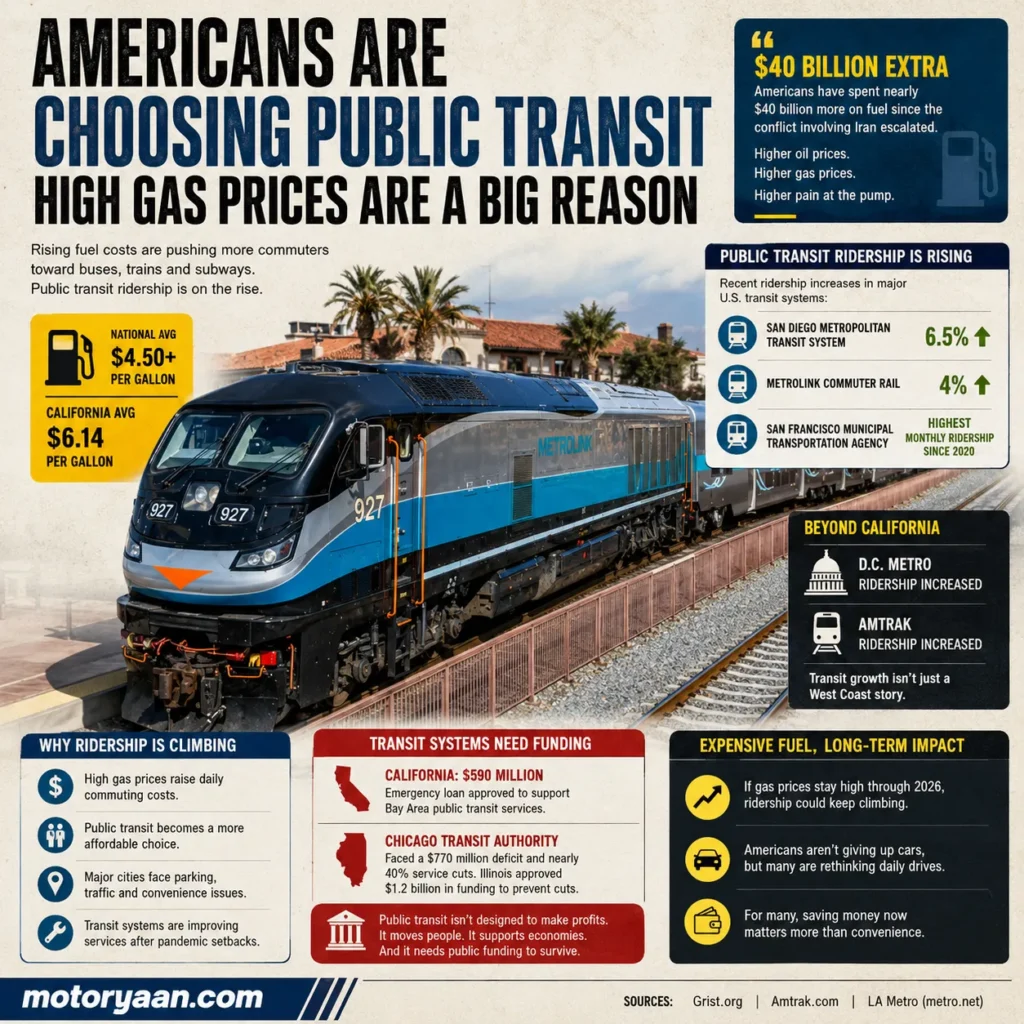
According to reports, Americans have spent nearly $40 billion extra on fuel since the conflict involving Iran escalated alongside U.S. military action supported by President Donald Trump. The jump in oil prices quickly pushed gasoline prices higher across the country, and public transportation systems are now seeing the effect.
Public Transit Ridership Is Rising Across The U.S.
The biggest shift has happened in California, which currently has the highest average gas prices in the country. While the national average sits above $4.50 per gallon, California drivers are paying around $6.14 per gallon in many areas.
A report from Grist highlighted growing public transit usage in several major California cities, including:
- Los Angeles
- San Francisco Bay Area
- San Diego
The numbers are starting to show clear movement:
| Transit System | Ridership Increase |
|---|---|
| San Diego Metropolitan Transit System | 6.5% |
| Metrolink commuter rail | 4% |
| San Francisco Municipal Transportation Agency | Highest monthly ridership since 2020 |
Outside California, agencies are reporting similar patterns. The Washington Metropolitan Area Transit Authority and Amtrak have also seen ridership growth in recent months.
Higher Gas Prices Are Likely Changing Commuter Habits
Transit officials remain careful about directly blaming fuel prices for the increase. The available data only covers around two and a half months, so agencies do not want to jump to conclusions too quickly.
Still, the timing is difficult to ignore.
When fuel becomes expensive, daily commuting costs rise fast, especially for people driving long distances in large SUVs or pickup trucks. Public transport suddenly starts looking far more practical, especially in major urban areas where parking and traffic already frustrate drivers.
At the same time, many transit systems have spent the past few years improving services after pandemic era ridership collapses.
For example, the Los Angeles County Metropolitan Transportation Authority recently opened the first section of its D Line Extension project, expanding subway access in the city.
Public Transportation Still Faces A Major Funding Problem
Even with ridership improving, many transit systems across America continue to face serious financial pressure.
Earlier this year, California lawmakers approved a $590 million emergency loan package to support Bay Area public transportation services. Without additional funding, several systems risked major operational problems.
Meanwhile, the Chicago Transit Authority nearly introduced a 40% service reduction because of a $770 million deficit. Illinois lawmakers eventually prevented the cuts by approving a $1.2 billion transit funding and reform package last November.
These examples show an important reality many people forget: public transportation systems are not designed to generate profits.
Their primary purpose is to move large numbers of people efficiently and support local economies. Fares help cover operating costs, but governments still need to fund these systems properly if cities want reliable buses, trains, and subway networks.
Expensive Fuel May Push Long Term Changes
If gas prices remain high through 2026, transit agencies could continue seeing stronger ridership numbers across major cities.
That does not automatically mean Americans are giving up cars completely. The U.S. still heavily depends on personal vehicles, especially outside urban centers. However, rising fuel costs are clearly forcing some commuters to consider alternatives again.
For many people, spending less money on fuel now matters more than the convenience of driving every day.
Sources and References
- Amtrak Official Website
Official U.S. passenger rail service website with train routes, schedules, tickets, and transit updates. - LA Metro Official Website
Official Los Angeles public transportation website covering buses, rail lines, fares, projects, and ridership services. - Metrolink Official Website
Southern California commuter rail service website with schedules, route maps, and regional rail information. - Discover Los Angeles Transit Guide
Travel and transit guide explaining LA Metro rail, buses, and regional public transport connections. - LA Metro Trip Planner
Official route planning tool for Los Angeles Metro bus and rail services. - Amtrak Train Schedules And Timetables
Direct timetable and train schedule lookup page from Amtrak. - Transit Access Pass (TAP) Official Website
Official payment and fare card platform used across Los Angeles transit systems. - Amtrak New Era Of Rail
Official Amtrak infrastructure and expansion project portal focused on future rail development in the U.S.