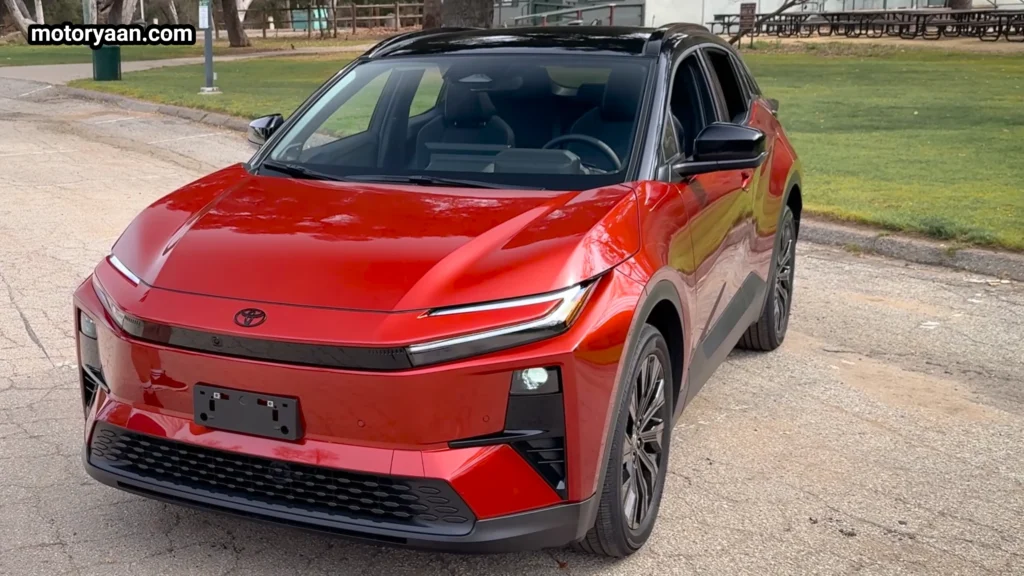
2026 Toyota C HR: 338 HP Electric Crossover Coupe With a New Mission
Table of Contents
The Toyota C HR is back. But this is not the same C HR that left the United States a few years ago.
Back then, it was a small four cylinder crossover aimed at younger buyers who wanted style on a budget. Now, the 2026 Toyota C HR returns as a fully electric, dual motor crossover coupe with over 300 horsepower and a much higher price tag.
This model joins Toyota’s expanding BZ electric family, which also received major updates for 2026. The C HR may not wear the BZ badge, but it shares a lot under the skin.
Let us break it down properly. Design, space, power, range, charging, pricing, and where it actually fits in today’s EV market.
Powertrain: 338 Horsepower Dual Motor Setup
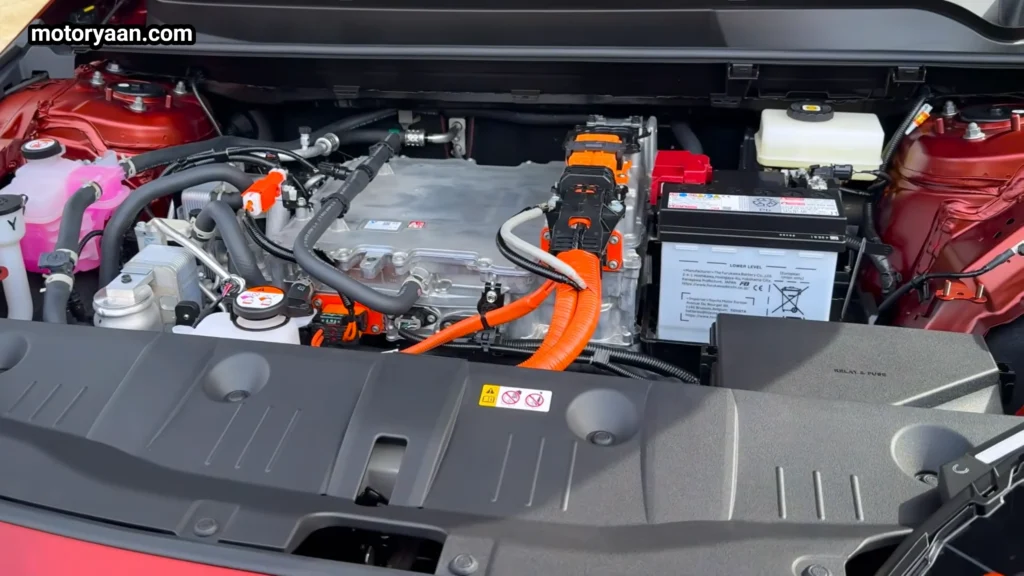
Under the hood, you will not find storage. You will find hardware.
The 2026 Toyota C HR uses:
Dual motor all wheel drive
338 horsepower combined
74.7 kWh battery pack
0 to 60 mph in about 4.9 to 5.0 seconds
Interestingly, power is front biased. The front motor produces roughly double the output of the rear. Some enthusiasts may prefer rear bias, but Toyota tuned this for everyday stability.
In real world driving on canyon roads, it feels quick and balanced. Not a dedicated performance EV, but far from boring.
Range and Charging: Good, Not Class Leading
Toyota claims:
287 miles of range for SE trim
273 miles for XSE with larger wheels
Charging details:
150 kW DC fast charging maximum
10 to 80 percent in around 30 minutes
11 kW Level 2 charging
NACS charging port
The NACS port means you can plug directly into Tesla Superchargers without adapters. That is a big improvement over earlier Toyota EV efforts.
Toyota also improved battery preconditioning and charging curves compared to the previous BZ generation.
Still, 150 kW is not segment leading. Some competitors charge faster.
Exterior Design: Hammerhead Face and Coupe Profile
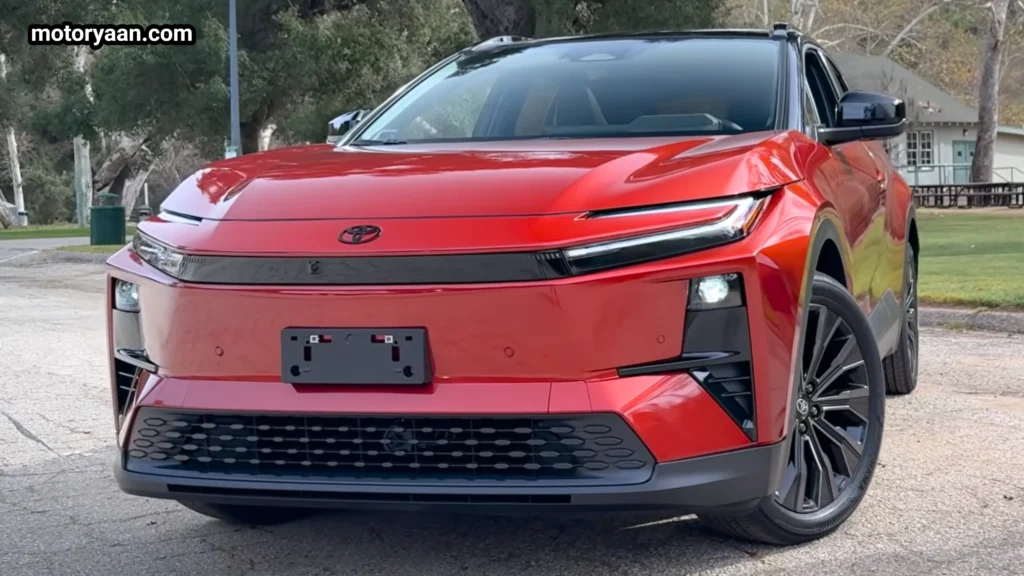
Toyota calls this design language the hammerhead front. You see it on other recent electric Toyota models as well.
The front end looks sharp and clean. No traditional grille openings because cooling needs are different in an EV. The daytime running lights sit up high. The main headlights sit lower inside black trim. Toyota hides them well, so the blocky shape does not stand out much.
If you live in colder regions, you might worry about snow buildup in that split light area. Toyota addresses that with headlight washers included in the cold weather package.
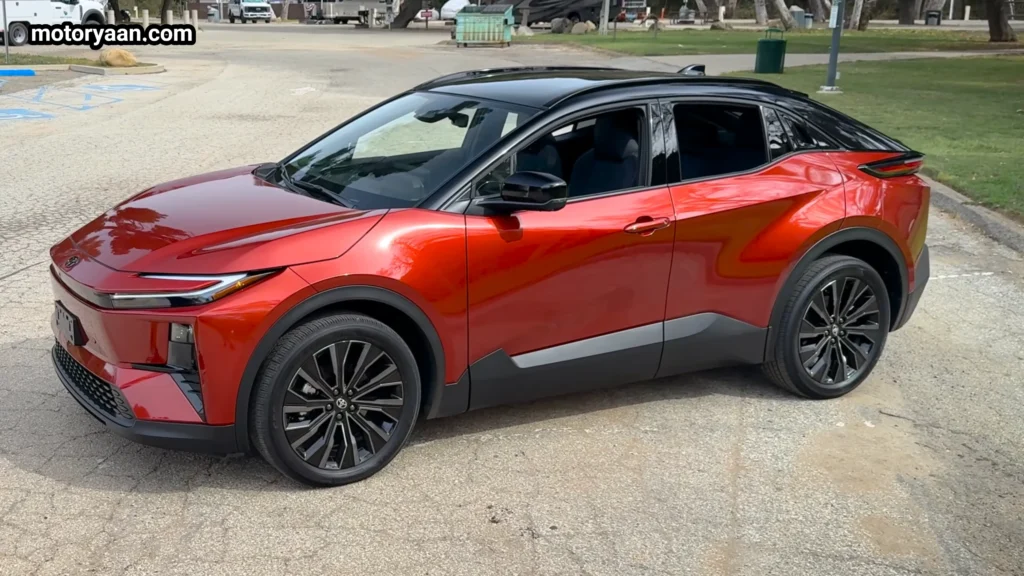
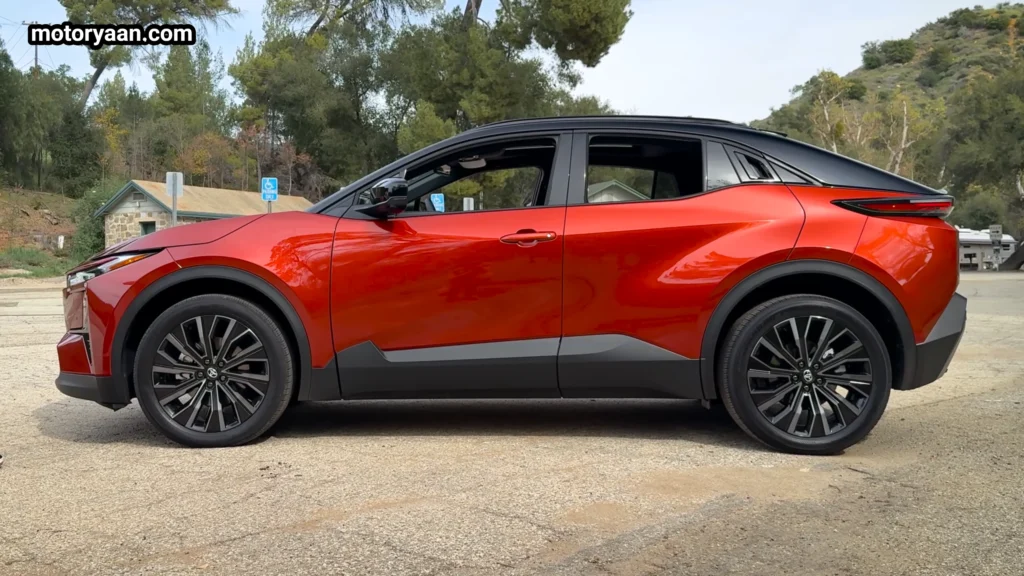
From the side, this is clearly a crossover coupe. The roof slopes down aggressively. In XSE trim, the two tone roof stands out. On lighter body colors, the black roof almost disappears visually. It gives the car a floating roof look.
Key exterior details:
20 inch wheels on XSE trim
Bigger brakes than the standard Toyota BZ and BZ Woodland
8 inches of ground clearance
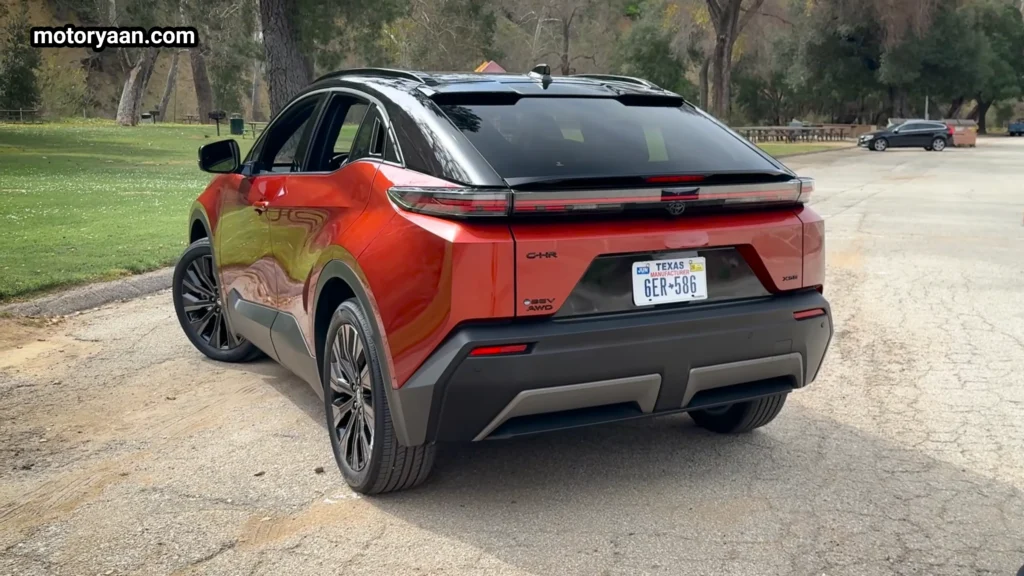
Dual rear spoilers
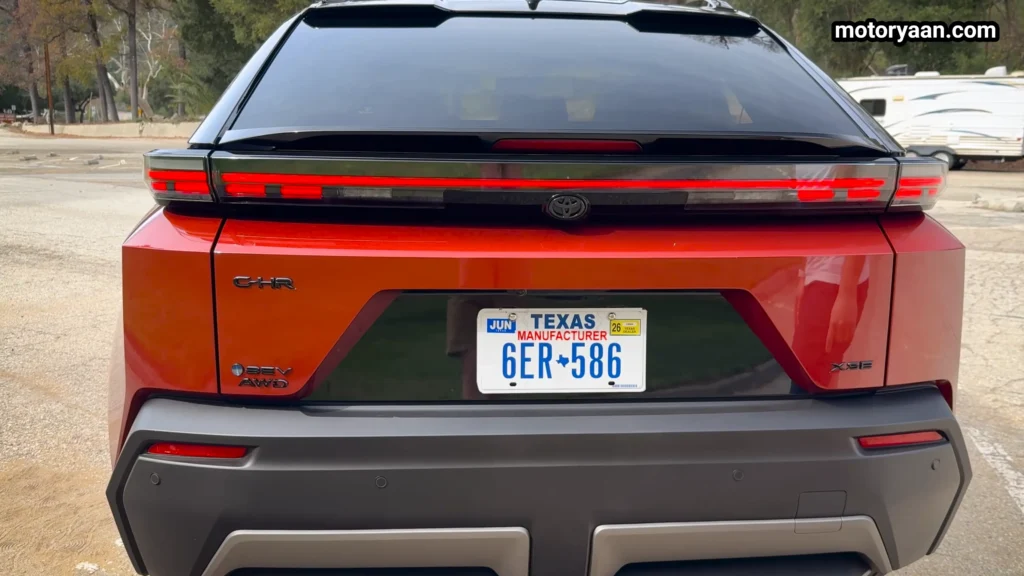
No rear wiper
The rear design looks sharper and more angular than the front. The lower bumper almost looks like something out of a video game diffuser. Some will love it. Some will not.
Interior Layout: Big Screens, Fewer Buttons
Inside, Toyota went minimal.
Highlights include:
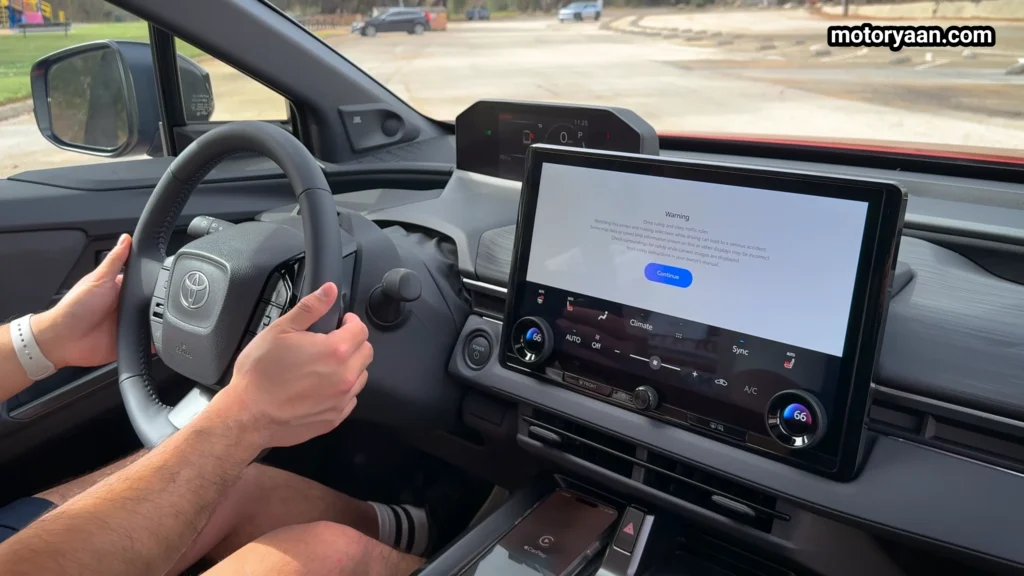
14 inch central touchscreen
7 inch driver display positioned above the steering wheel
Dual Qi wireless charging pads
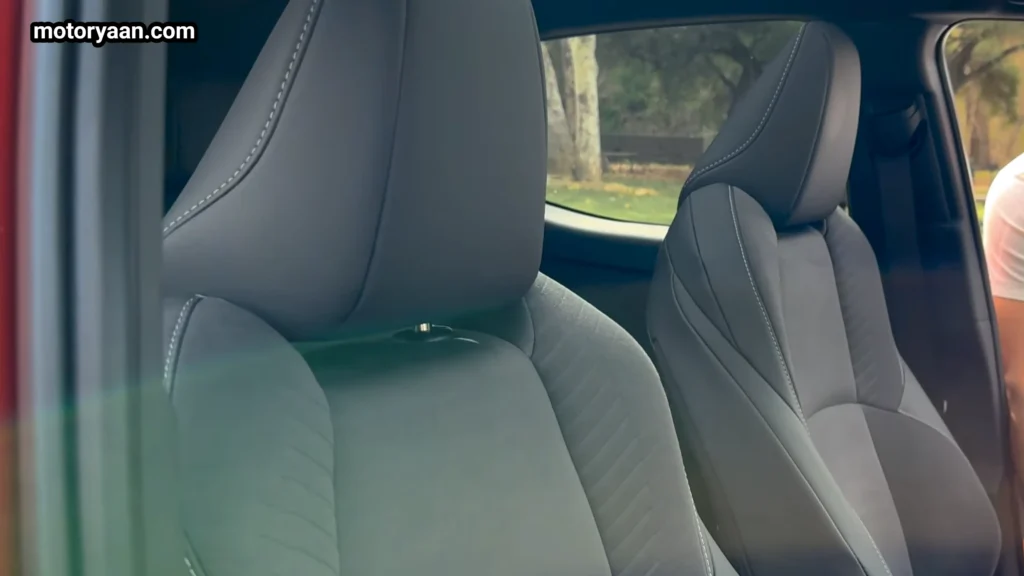
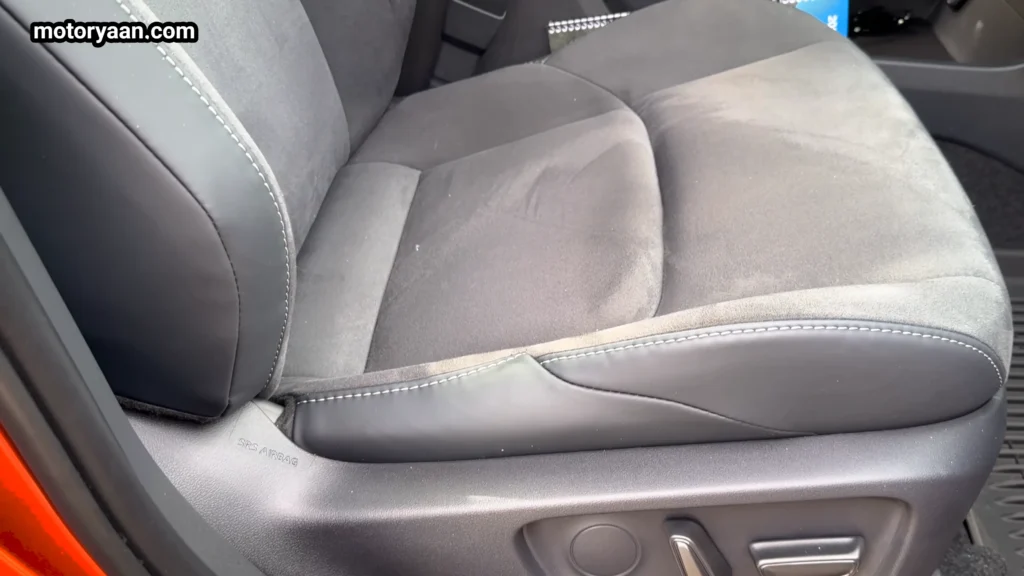
SoftTex seating surfaces
Manual tilt and telescopic steering
The driver display sits high, meant to be viewed above the steering wheel rather than through it. It replaces the need for a traditional head up display.
Most climate controls live inside the touchscreen. You still get:
Physical temperature dials
Volume knob
Front and rear defrost buttons
Storage is decent but not generous.
No traditional glove box
Two tier center console
Limited under armrest space
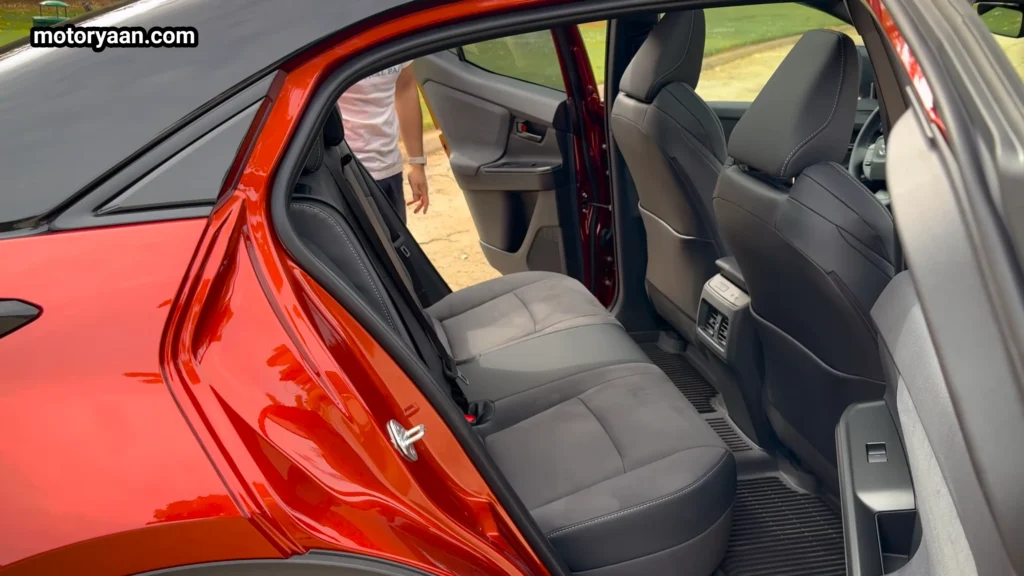
Rear seats offer:
Heated outboard seats
Two USB C ports
Air vents
Reclining seatbacks
Headroom in the back is tight for taller adults, especially with the panoramic glass roof.
Cargo Space: Stylish But Not Huge
If you choose style, you accept trade offs. Cargo space is one of them.
Toyota lists:
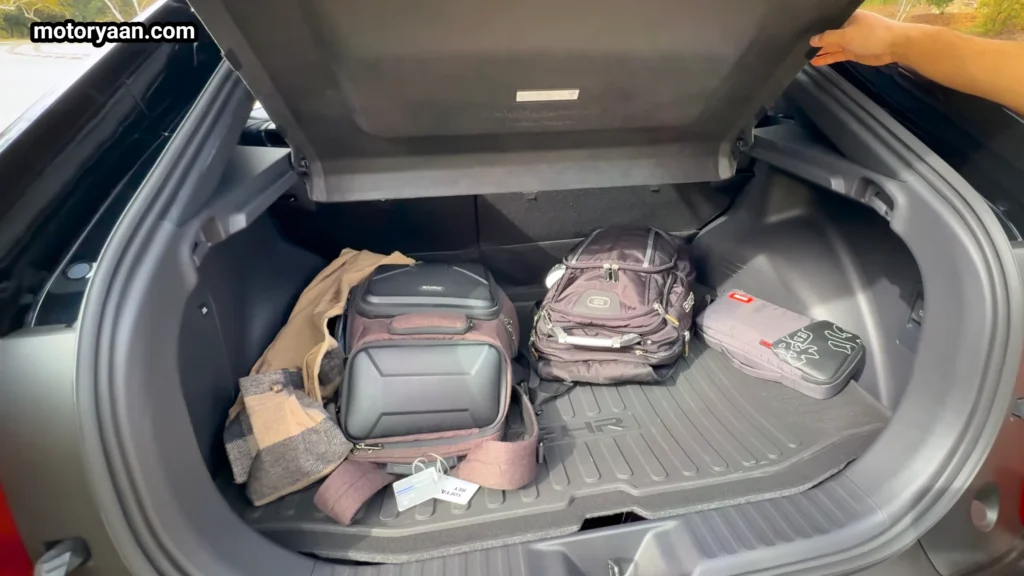
29.3 cubic feet behind the second row
59.5 cubic feet with seats folded
A standard 22 inch roller bag fits on its side without much issue. The hard cargo cover limits vertical clearance slightly, but you can remove it.
Under the floor, you get:
Inflator kit instead of spare tire
Small segmented storage
Room for charging cables
There is no front trunk under the hood. That space holds electric hardware instead.
Is it family SUV spacious? No.
Is it usable for daily life? Yes.
Driving Experience: Fun Without Trying Too Hard
The steering wheel is small and feels almost go kart like. It gives the C HR a playful character.
There is no dedicated sport mode. You get:
Eco mode
Regenerative braking controlled by paddles
No one pedal aggressive braking mode
Toyota tunes this EV to feel familiar. It does not overwhelm new EV buyers with extreme regenerative braking.
We recorded 0 to 60 runs at about 5 seconds. Toyota’s official 4.9 second claim seems realistic under ideal conditions.
Braking feels strong. This model has larger brakes than the standard Toyota BZ and even the BZ Woodland.
Pricing: Not Budget Friendly Anymore
The old C HR was affordable. The new one is not.
2026 Toyota C HR pricing:
SE starts at 38,450 dollars
XSE starts at 40,450 dollars
Well equipped XSE test vehicle at 43,475 dollars
There is currently no federal tax credit available for this model.
For context, pricing information comes directly from Toyota’s official 2026 model announcements and press materials.
At this price, it competes with models like the Tesla Model Y and other compact electric crossovers.
Where Does the 2026 Toyota C HR Fit?
This is not a family hauler first. It targets younger professionals.
If you are moving up from something like a Toyota Corolla and want:
More personality
All wheel drive
Strong acceleration
Lower maintenance than a gasoline vehicle
The C HR makes sense.
If you need maximum cargo and rear seat space, the larger Toyota BZ Woodland may suit you better.
The interesting twist is that this EV platform also connects to Subaru models, including a Subaru Uncharted variant with front wheel drive only. Toyota keeps this C HR all wheel drive.
Final Thoughts
The 2026 Toyota C HR is not a compromised EV. But it is not a class leader in every metric either.
It excels at:
Exterior design
Everyday fun
Balanced power
Improved charging access with NACS
It gives up:
Rear passenger space
Maximum cargo room
Faster DC charging speeds
Toyota invested heavily in updating its electric lineup. This C HR benefits from those improvements.
The bigger question is simple. What do you compare it against?
It is more stylish than entry level EVs.
Less spacious than some rivals.
Not the fastest charger.
But it feels cohesive. And for the right buyer, that may be enough.
If you want a compact electric crossover that looks interesting, drives well, and does not feel strange for someone new to EVs, the 2026 Toyota C HR deserves a serious test drive.
Sources and References
Official Toyota Sources
Toyota C-HR Official Model Page
https://www.toyota.com/upcoming-vehicles/c-hr/Toyota Press Release — 2026 C-HR BEV Debut
https://pressroom.toyota.com/toyota-debuts-stylish-powerful-2026-c-hr-battery-electric-vehicle/Toyota EV Warranty Overview
https://www.toyota.com/electrified-vehicles/warranty/Toyota North America Press Room Homepage
https://pressroom.toyota.com/
Additional Trusted References
CarsDirect 2026 Toyota C-HR Preview
https://www.carsdirect.com/toyota/c-hr/2026The Verge — Toyota C-HR EV Details
https://www.theverge.com/transportation/880395/toyota-chr-ev-price-range-specsToyota Press Release — 2026 Toyota C-HR Overview
https://pressroom.toyota.com/2026-toyota-c-hr-puts-sporty-stylish-spin-on-the-compact-electric-suv/
2026 Toyota C HR EV – Frequently Asked Questions
1. Is the 2026 Toyota C HR still a gasoline crossover?
No. The new C HR is fully electric. The previous US model used a small four cylinder engine, but the 2026 version runs on a dual motor electric setup with 338 horsepower and a 74.7 kWh battery.
2. How much power does the 2026 Toyota C HR produce?
The C HR produces a combined 338 horsepower from its dual motor all wheel drive system. Power is front biased, meaning the front motor delivers more output than the rear. Toyota claims 0 to 60 mph in about 4.9 seconds, and real world testing shows it is very close to that figure.
3. What is the driving range of the new Toyota C HR EV?
The SE trim is rated at 287 miles of range. The XSE trim, which comes with larger wheels, is rated at 273 miles. Both trims use the same 74.7 kWh battery.
4. How fast does the 2026 Toyota C HR charge?
The C HR supports up to 150 kW DC fast charging. Charging from 10 percent to 80 percent takes around 30 minutes under ideal conditions. Level 2 charging tops out at 11 kW. It also uses the NACS charging port, which allows direct access to Tesla Superchargers.
5. Does the C HR have a front trunk?
No. There is no front trunk. The space under the hood is used for electric components. Storage is limited to the rear cargo area and a small underfloor compartment.
6. How much cargo space does the 2026 Toyota C HR offer?
The C HR provides 29.3 cubic feet of cargo space behind the second row. With the rear seats folded nearly flat, total space increases to 59.5 cubic feet. There is no spare tire, but an inflator kit is included.
7. Is the rear seat spacious enough for adults?
Rear seat space is usable but tight. Taller passengers may notice limited headroom, especially with the panoramic glass roof. Legroom is adequate behind an average height driver, but space becomes tight if the front seats are pushed fully back. Rear seats recline and include heated outboard seating, air vents, and two USB C ports.
8. What interior features stand out in the C HR?
The cabin includes a 14 inch touchscreen, a 7 inch driver display positioned above the steering wheel, dual Qi wireless charging pads, SoftTex seating surfaces, and paddle shifters for regenerative braking. Most climate functions are controlled through the touchscreen, though volume and defrost controls remain physical.
9. Does the 2026 Toyota C HR have a sport mode?
No. The C HR offers Eco mode but does not include a dedicated Sport mode. Regenerative braking levels can be adjusted using paddle shifters. Toyota tuned the driving experience to feel balanced and everyday friendly rather than aggressive.
10. What is the price of the 2026 Toyota C HR?
The SE trim starts at 38,450 dollars. The XSE trim starts at 40,450 dollars. A well equipped XSE with options such as a glass roof and cold weather package can reach 43,475 dollars. At the time of launch, there is no federal tax credit available.
11. Who is the 2026 Toyota C HR best suited for?
The C HR fits younger professionals or drivers moving up from compact cars who want electric performance, all wheel drive, and bold styling without stepping into a larger family SUV. It prioritizes design and driving enjoyment over maximum cargo and rear seat space.