Kia Sonet HTK O vs HTK Plus
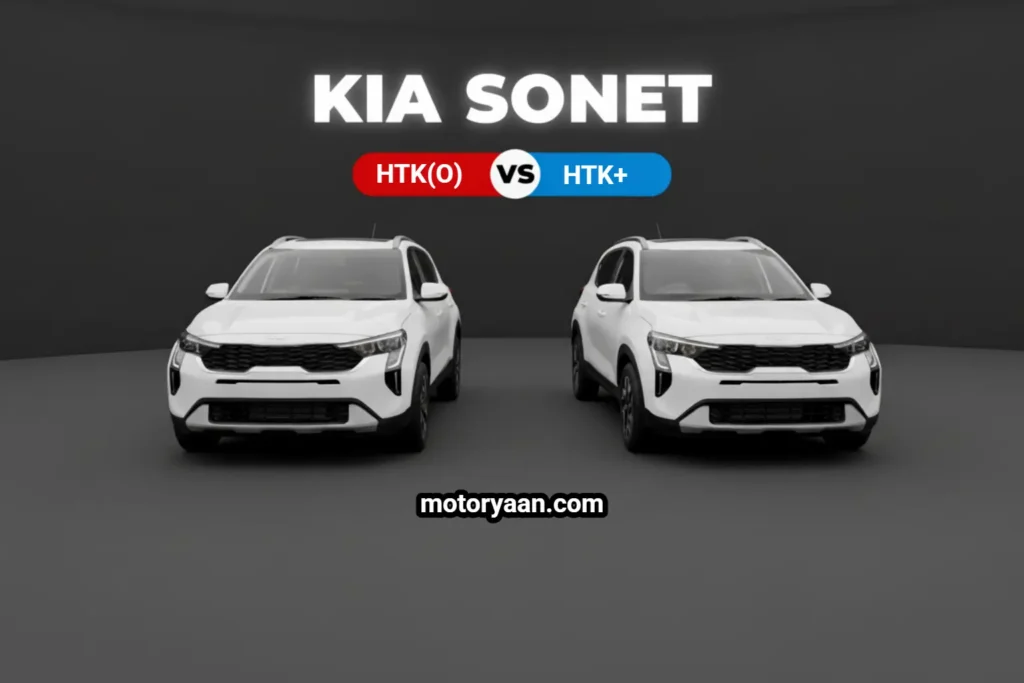
Choosing the right Kia Sonet variant can be confusing, especially between the HTK O and HTK Plus models. Both variants are very popular and are similar in many aspects, but subtle differences in features, interiors, and comfort can influence your decision. In this article, we compare these two variants thoroughly, using detailed observations to help you make an informed choice.
Engine and Transmission Options
Both HTK O and HTK Plus come with similar engine and transmission choices:
Petrol: 1.2-litre naturally aspirated engine, 5-speed manual transmission
Diesel: 1.5-litre diesel engine, 6-speed manual transmission
Both variants deliver the same performance and mileage. For this comparison, we focus on petrol variants, as diesel has only one minor difference in key features.
Performance Summary (Both Variants):
Power output: identical
Mileage: identical
Transmission: same (5-speed manual petrol / 6-speed diesel)
Price Comparison
The difference in price between HTK O and HTK Plus is relatively small for petrol but increases slightly for diesel due to RTO and TCS charges.
| Variant | Ex-Showroom Petrol | Ex-Showroom Diesel | Approx On-Road Price Difference |
|---|---|---|---|
| HTK O | ₹8,73,737 | ₹9,39,290 | Petrol: ₹39,000 Diesel: ₹70,000 |
| HTK Plus | ₹9,10,125 | ₹12,97,480 | – |
Note: The higher on-road diesel price in HTK Plus is because RTO charges exceed ₹10 lakh, plus a 1% TCS.
Exterior Comparison
Front Design
No difference in front profile
Both variants feature halogen headlamps, DRLs, front parking sensors
Side Design
HTK O: 16-inch styled wheels with fiber caps, 215/60 R16 (looks like alloy but not)
HTK Plus: 16-inch crystal-cut alloy wheels, 215/60 R16
Rear Design
Both have rear wiper, defogger, tail lamps, rear camera
Dual-tone roof rails and electric folding ORVMs with indicators are same in both
Key Exterior Difference: Only the wheels differ. HTK Plus has actual alloy wheels while HTK O comes with styled wheel caps.
Interior and Comfort Comparison
Key Observations
| Feature | HTK O | HTK Plus |
|---|---|---|
| Key Type | Remote key with central locking, engine starts by inserting key | Smart key with push-button start, lock/unlock automatically |
| Interior Theme | Full black with silver highlights | Dual-tone black and beige, more premium and airy |
| Seat Upholstery | Black fabric | Semi-leatherette (side leatherette, center fabric) |
| Rear Headrests | Fixed, non-adjustable | Height adjustable |
| Rear Armrest | Not available | Available with 2 cup holders |
| Wireless Charger | No | Yes |
| Steering Wheel | Standard | Leather-wrapped, flat-bottom with Sonet branding |
| Gear Lever | Standard | Leather-wrapped |
| Sunroof | Yes, standard size | Yes, same size |
| Parcel Tray | Not available | Not available |
Additional Notes:
Both have automatic AC, touchscreen infotainment, steering-mounted controls, front & rear Type-C charging ports, adaptive reverse parking camera with guidelines, digital cluster, 6 airbags, traction control, TPMS.
Rear seat folding differs: HTK O has a single bench fold, while HTK Plus has a 60:40 split, allowing flexible luggage arrangement and seating.
Comfort and Practicality
HTK Plus provides a more premium feel due to dual-tone interiors and semi-leatherette seats.
Adjustable rear headrests and center armrest improve passenger comfort.
Wireless charging adds convenience for modern smartphone users.
HTK O, although fully black and fabric, still offers good interior quality, sunroof, touchscreen, AC, and rear camera.
Exclusive Features of HTK Plus
Actual alloy wheels (16-inch crystal-cut)
Smart key with push-button engine start
Dual-tone premium interior
Semi-leatherette seats
Height-adjustable rear headrests and center armrest
Wireless charging
Leather-wrapped flat-bottom steering wheel and gear lever
Minor differences:
Diesel variant also gets engine start-stop button in the key; petrol only has it in HTK Plus
Practical Luggage and Seating Comparison
HTK O: Rear seat folds as a single bench; no 60:40 split
HTK Plus: 60:40 split allows luggage placement with seating for 1–2 passengers, flexible arrangements
Safety and Convenience
Both variants have:
Six airbags
Traction control
Digital instrument cluster
Front parking sensors
Tyre pressure monitoring system
Adaptive reverse camera
No difference in safety features between the two variants.
Verdict: Which Variant is Worth It?
HTK O
Good choice for budget-conscious buyers
Offers many standard features including sunroof, touchscreen, automatic AC, DRLs, rear camera
Exterior styling and wheels still look premium
Rear seat folding is basic, upholstery is fabric
HTK Plus
Worth paying ₹40,000 extra for petrol or ₹70,000 for diesel
Offers premium interiors, alloy wheels, smart key, push-button start, wireless charging
Better rear seat comfort with adjustable headrests and armrest
Leather-wrapped steering and gear lever enhance luxury feel
Conclusion:
Petrol: HTK Plus is 100% justified
Diesel: Extra ₹70,000 is also worth it due to premium features and comfort
Overall, HTK Plus is the better variant for those seeking comfort, style, and convenience
Final Recommendation
If you are looking for maximum value and features, the HTK Plus is the ideal choice.
If budget is a priority, the HTK O still offers an excellent package with most essential features intact.
Kia Sonet HTK O vs HTK Plus FAQ
What is the main difference between the Kia Sonet HTK O and HTK Plus?
The primary differences include alloy wheels, smart key with push-button start, dual-tone interiors, semi-leatherette seats, rear armrest, wireless charging, and a leather-wrapped steering wheel in the HTK Plus. HTK O offers similar core features but with simpler interiors and basic wheel caps.
Which engine options are available in both variants?
Both variants are offered with a 1.2 litre petrol engine paired to a 5 speed manual transmission and a 1.5 litre diesel engine paired to a 6 speed manual gearbox. Performance and mileage figures are identical for both variants.
How much is the price difference between HTK O and HTK Plus?
The petrol variant price difference is around 39,000 rupees. The diesel variant difference is about 70,000 rupees because the HTK Plus diesel crosses the 10 lakh ex showroom limit, which increases RTO charges and adds a 1 percent TCS.
Are there any exterior differences between HTK O and HTK Plus?
Yes. The only major exterior difference is the wheels. HTK O gets 16 inch styled steel wheels with fiber caps while HTK Plus gets 16 inch crystal cut alloy wheels. The rest of the exterior design remains the same for both.
Does the interior quality differ between the two variants?
Yes. HTK Plus offers a dual tone black and beige interior, semi leatherette seats, a leather wrapped steering wheel, and an overall more premium feel. HTK O comes with an all black cabin and fabric upholstery while still maintaining good build quality.
Which rear seat features are different in HTK Plus?
HTK Plus gets height adjustable rear headrests and a rear armrest with cup holders. It also features a 60:40 split rear seat for better luggage flexibility. HTK O gets fixed headrests and a single piece folding bench.
Is wireless charging available in both variants?
No. Wireless charging is available only in the HTK Plus. HTK O does not offer this feature.
Do both variants offer a sunroof?
Yes. Both HTK O and HTK Plus come with a standard sized sunroof.
Is there any difference in safety features?
No. Both variants offer the same safety package including six airbags, traction control, TPMS, front parking sensors, a digital instrument cluster, and an adaptive rear camera.
Which variant offers better value for money?
For petrol buyers, HTK Plus offers excellent value for the small price increase. For diesel buyers, the additional features in HTK Plus justify the higher on road price. HTK O remains a strong option if you want to save money while still getting most of the core features.