
Genesis GT3 Concept Revealed Ahead of 2026 Le Mans, Signals Bigger Motorsport Plans
Table of Contents
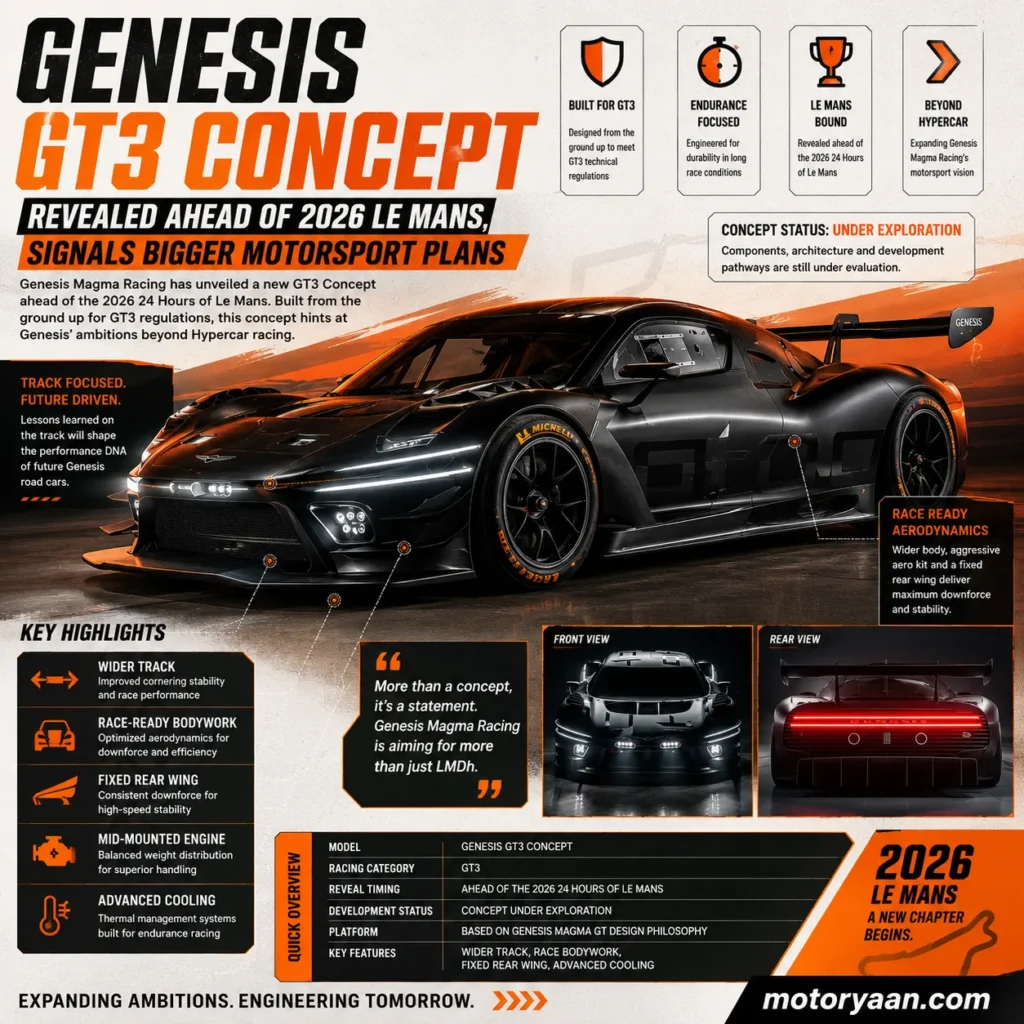
Genesis has taken another major step in global motorsport by unveiling its new Genesis GT3 Concept ahead of the 2026 24 Hours of Le Mans. Although the concept is not ready for competition yet, it shows that Genesis Magma Racing is looking beyond Hypercar racing and exploring a future in GT3 competition as well.
The new concept also highlights how the brand plans to use racing as a testing ground for future performance road cars.
Genesis GT3 Concept Built Specifically for GT3 Racing
Unlike many concept race cars that are modified versions of production models, Genesis says the GT3 Concept was developed from the ground up to meet GT3 technical regulations.
The concept takes inspiration from the Genesis Magma GT Concept but features several changes required for competitive endurance racing.
Key highlights include:
- Wider track width for improved cornering stability
- Race ready aerodynamic bodywork
- Large fixed rear wing for additional downforce
- Mid mounted engine layout
- Advanced thermal management systems designed to improve durability during long distance racing
These upgrades show that the project focuses on performance and endurance rather than styling alone.
Quick Overview
| Specification | Details |
|---|---|
| Model | Genesis GT3 Concept |
| Racing Category | GT3 |
| Reveal Timing | Ahead of the 2026 24 Hours of Le Mans |
| Development Status | Concept under exploration |
| Platform | Based on Genesis Magma GT design philosophy |
| Key Features | Wider track, race bodywork, fixed rear wing, advanced cooling |
More Than Just a Design Exercise
Genesis has clarified that the GT3 Concept remains an exploratory project. The company is still evaluating its architecture, components, and future development possibilities before making any production or racing commitments.
That said, the concept clearly demonstrates that Genesis Magma Racing has ambitions beyond its current Hypercar programme.
Rather than focusing on a single racing category, the brand appears interested in building a broader motorsport presence that could eventually include GT3 competition.
Racing Technology Could Shape Future Genesis Cars
One of the biggest takeaways from the GT3 Concept is its potential influence on future production vehicles.
According to Genesis, engineering lessons learned through projects like this could become part of the performance DNA of upcoming models under the Magma performance division.
Motorsport has long helped manufacturers develop stronger cooling systems, better aerodynamics, lighter materials, and improved chassis tuning. Genesis hopes to apply similar knowledge as it expands its high performance lineup.
For enthusiasts, that is an encouraging sign. What starts on the racetrack often finds its way onto the road.
Genesis Continues Expanding Its Motorsport Programme
The GT3 Concept arrives shortly after the debut of the Genesis GMR 001 Hypercar in the FIA World Endurance Championship, marking a busy year for the company’s racing division.
Instead of slowing down after entering top level endurance racing, Genesis is already exploring new opportunities and demonstrating a long term commitment to motorsport development.
Its growing investment suggests that racing will play an important role in shaping the identity of the Magma performance brand over the coming years.
Why the Genesis GT3 Concept Matters
The Genesis GT3 Concept may still be in the concept stage, but it offers a clear look at the company’s future direction. Built with GT3 regulations in mind and engineered around performance, durability, and aerodynamics, the project reflects Genesis’ expanding ambitions in global motorsport.
If the concept moves toward production or competitive racing, it could become another major milestone for the rapidly growing Magma performance division. Even if it remains an engineering study, the technology and experience gained from its development could help define the next generation of high performance Genesis road cars.
Sources and References
1. Genesis Newsroom – Magma GT3 Concept Official Announcement
Official Genesis press release announcing the Magma GT3 Concept and outlining the brand’s future motorsport vision.
2. MotorTrend – Genesis Reveals Magma GT3 Racing Concept Ahead of Le Mans
US automotive publication covering the GT3 Concept, its design philosophy, and Genesis’ expanding motorsport ambitions.
3. Car and Driver – Genesis Unveils a New GT3 Concept Ahead of the 2026 24 Hours of Le Mans
Detailed report explaining the GT3 Concept, GT3 regulations, and how it fits into Genesis Magma Racing’s future plans.
4. Sportscar365 – Genesis Reveals Magma GT3 Concept in Le Mans
Motorsport focused coverage discussing the concept’s performance first design and potential future GT3 programme.
5. DailySportscar – Genesis Presents Magma GT3 Concept
In depth endurance racing analysis covering the concept’s development and possible expansion beyond the Hypercar category.
6. Genesis at Le Mans Official Page
Official Genesis page featuring its Le Mans programme, Hypercar entry, race schedule, and Magma Racing updates.
7. Car and Driver – Genesis Magma GT Concept Interior Revealed
Covers the Magma GT Concept’s interior while also explaining its relationship to the newly revealed GT3 Concept.
8. duPont REGISTRY – Genesis Unveils the New Magma GT3 Concept at Le Mans
Luxury automotive publication highlighting the GT3 Concept’s design, performance focus, and Le Mans debut.