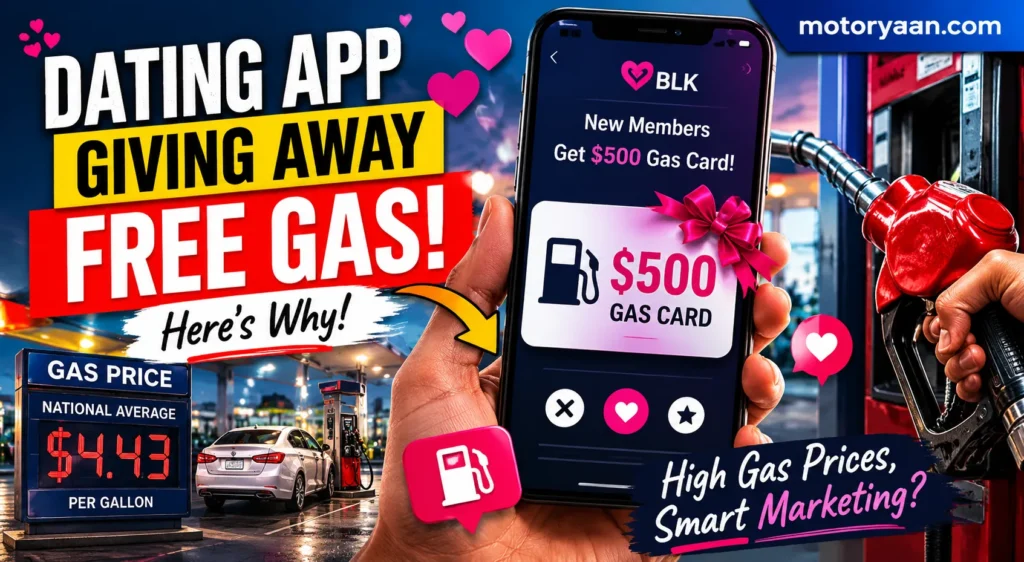
Dating App Giving Away Free Gas as Fuel Costs Remain a Major Concern in the U.S.
Table of Contents
Rising fuel prices have become such a major concern for Americans that even dating apps are now using gas giveaways to attract new users.
BLK, a dating app focused on the Black community, recently announced a promotion that will award ten users with $500 gas gift cards. The campaign comes at a time when fuel costs continue to put pressure on household budgets across the United States.
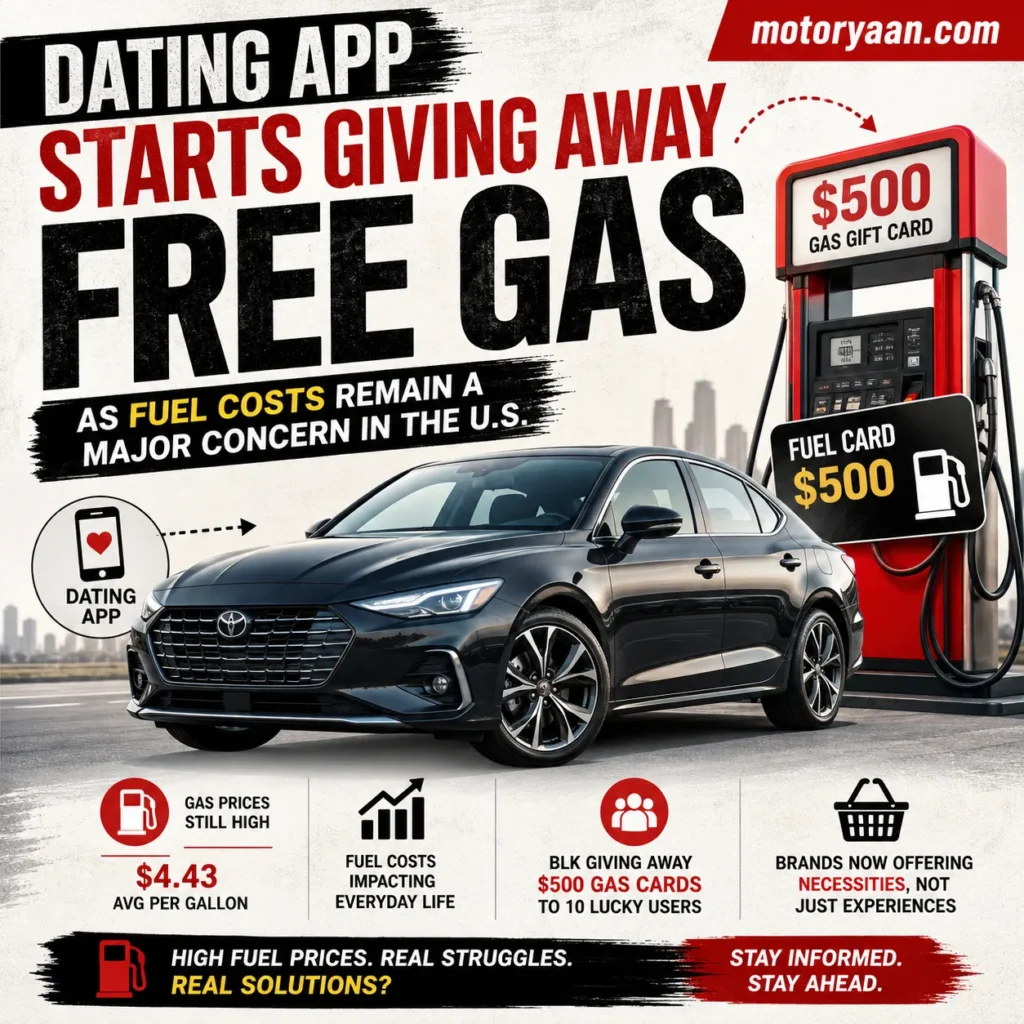
BLK Offers $500 Gas Gift Cards to New Users
According to reports, BLK is giving away $500 gas cards to ten participants as part of a promotional campaign aimed at increasing user engagement and attracting new members.
The giveaway is not a simple sign up offer. Participants must complete specific social media related requirements to qualify for the promotion. While the campaign serves as a marketing effort for the dating platform, it also highlights how fuel prices remain a key financial concern for many consumers.
For winners, a $500 fuel card could cover a significant amount of driving expenses, especially for commuters who rely on their vehicles daily.
Why a Dating App Is Focusing on Gas Prices
Traditionally, dating apps have promoted premium memberships, special features, or dating experiences. BLK’s decision to offer fuel assistance instead reflects changing consumer priorities.
When companies design marketing campaigns, they often focus on issues that matter most to their audience. Choosing gas cards instead of free dates or subscription discounts suggests that fuel expenses have become a more immediate concern for many Americans.
The move also indicates that brands are paying close attention to economic pressures affecting everyday life.
Fuel Costs Continue to Shape Consumer Spending
Fuel prices influence far more than transportation costs. They affect commuting expenses, travel plans, delivery costs, and household budgets.
As a result, companies across different industries have started adapting their marketing strategies to reflect these economic realities. Rather than promoting luxury experiences or nonessential products, some brands are now offering practical benefits that consumers can use immediately.
This shift highlights how inflation and cost of living concerns continue to influence purchasing decisions across the country.
Other Brands Are Also Offering Essential Goods
BLK is not the only company taking this approach.
Several recent promotions have focused on providing consumers with necessities rather than traditional marketing incentives.
Examples include:
- Fuel giveaways tied to entertainment promotions.
- Free grocery initiatives.
- Campaigns offering household essentials such as laundry products and toilet paper.
These promotions suggest that companies see value in addressing real financial pressures faced by consumers rather than simply advertising products or services.
A Sign of Changing Marketing Strategies
Marketing experts note that successful campaigns increasingly need to reflect the economic conditions people experience every day.
Instead of relying solely on entertainment or aspirational messaging, brands are finding ways to connect with audiences through practical support. Fuel costs, grocery bills, and other everyday expenses have become central topics in consumer conversations, making them natural focal points for modern marketing campaigns.
For BLK, the gas card giveaway is ultimately a customer acquisition strategy. However, it also serves as a reminder of how strongly economic concerns are shaping both consumer behavior and corporate decision making in 2026.
What This Means for Consumers
The promotion may help a handful of winners reduce their fuel expenses, but the bigger story is the trend behind it.
When companies begin offering necessities such as fuel, groceries, and household products as promotional incentives, it often reflects broader concerns about consumer affordability and spending power.
Whether this becomes a long term marketing trend remains to be seen, but for now, fuel prices appear important enough that even a dating app sees them as a powerful way to attract attention and connect with potential users.
Sources and References
1. Wired
https://www.wired.com
Technology, business, and culture publication that covered BLK’s gas giveaway campaign and the broader marketing trend.
2. BLK Dating App (Official Website)
https://www.blk-app.com
Official website of the BLK dating platform. Useful for verifying company information and promotions.
3. AAA Gas Prices
https://gasprices.aaa.com
One of the most trusted sources for U.S. fuel price data and national gas price averages.
4. Jalopnik
https://www.jalopnik.com/2183363/dating-app-giving-away-free-gas/
Original report discussing the BLK promotion and the connection between rising fuel costs and marketing campaigns.
5. Polymarket
https://polymarket.com
Prediction market platform referenced in discussions about consumer focused promotional events and free essentials giveaways.
6. Getty Images
https://www.gettyimages.com
Source of editorial and stock photography commonly used in news coverage.
Frequently Asked Questions
What is BLK giving away in this promotion?
BLK is reportedly giving away $500 gas gift cards to 10 winners as part of a promotion to attract new users.
Why would a dating app offer free gas cards?
The idea is simple. High fuel costs affect everyday spending, so BLK is using a practical reward to get attention and bring in new members.
Who is this promotion meant for?
The giveaway is aimed at new users and people who are willing to complete the required social media steps to qualify.
How many people can win the gas gift card?
According to the reported promotion details, only 10 participants will receive the $500 gas cards.
Why are fuel prices such a big topic right now?
Fuel prices affect commuting, travel, delivery costs, and household budgets. That is why brands now treat gas prices as a real consumer concern, not just a background issue.
Does this promotion show a larger marketing trend?
Yes. It shows that companies are shifting toward practical incentives like fuel, groceries, and household essentials because those benefits feel more useful to consumers right now.
Is this only about BLK, or are other brands doing similar things?
Other brands have also used giveaways tied to everyday needs, including fuel, groceries, laundry supplies, and toilet paper. It reflects how consumer priorities are changing.