Hyundai Crater Concept SUV Explained
Hyundai has been known for practical everyday cars, from hatchbacks and sedans to crossovers that simply get the job done. But the new Hyundai Crater concept is something else entirely. It is wild, aggressive, and designed purely with adventure in mind. While it is still a concept, it gives a strong hint of what Hyundai could bring to market in the future, especially as their XRT sub-brand grows into serious off-road territory.
This article breaks down the Hyundai Crater concept in detail, covering its design philosophy, off-road elements, interior innovations, quirky features, modes, and the hidden mascot that appears throughout the SUV.
What is the Hyundai Crater?
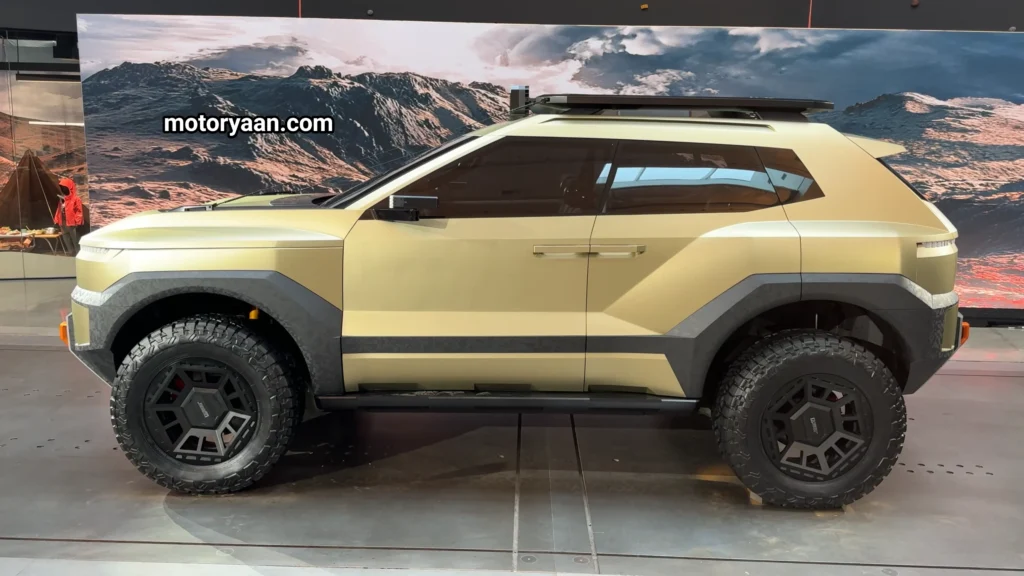
The Hyundai Crater is an off-road SUV concept built to explore the possibility of entering the hardcore adventure segment. It is not just another crossover. This is a rugged, body-on-style concept built with real off-road angles, huge tyres, and an exterior that looks like sculpted metal.
Hyundai already tested the waters with their XRT off-road inspired models. With vehicles like the Jeep Wrangler, Toyota 4Runner, and Ford Bronco doing exceptionally well, it makes sense for Hyundai to explore this category.
Exterior Design and Off-Road Build
Hyundai says the design started with a simple question: What would freedom look like? Their answer is a muscled, steel-like, sharp-edged SUV with pure outdoor DNA.
Key exterior highlights
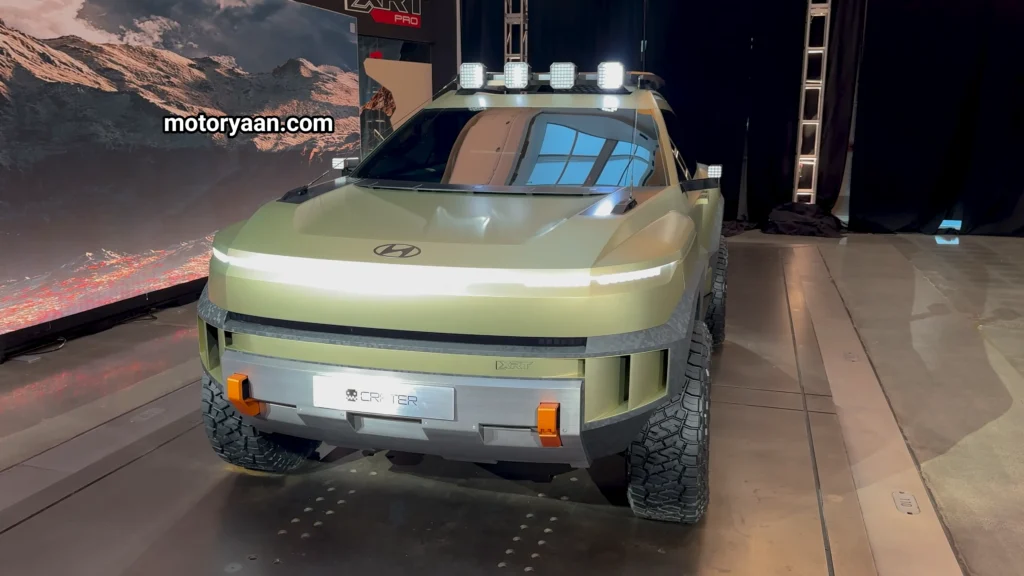
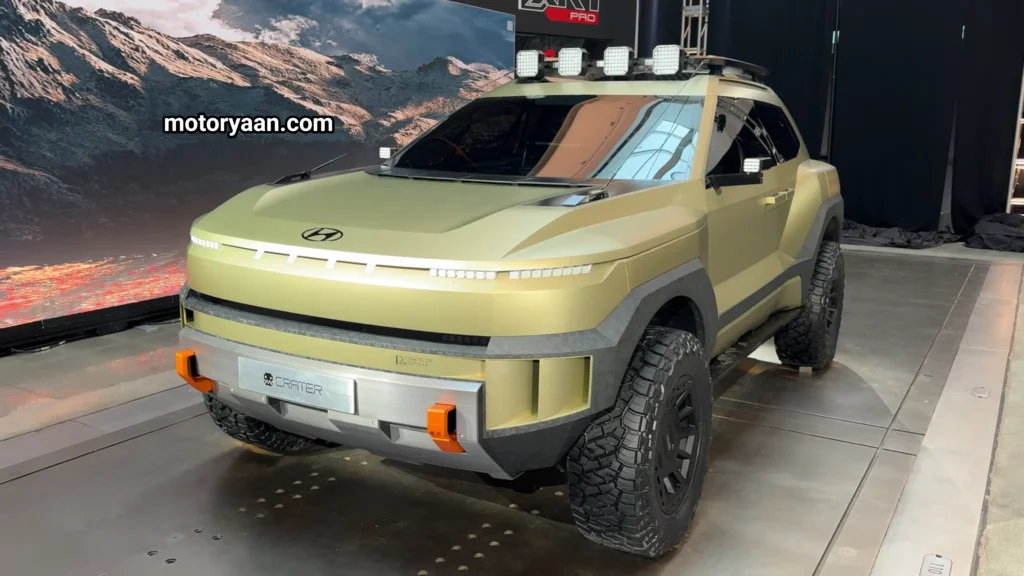
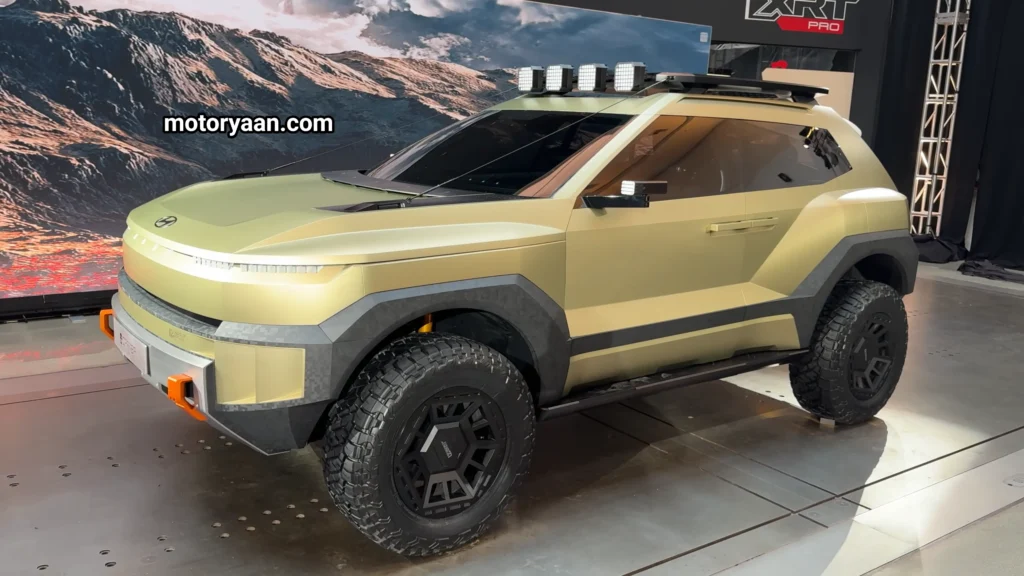
Muscular, rugged body designed in California
Sharp, angular fenders with a widebody look
Steel-inspired surfaces for a tough appearance
33 inch all-terrain tyres
18 inch wheels inspired by a “hexagonal asteroid impact”
Digital camouflage on the lower body
Excellent approach and departure angles
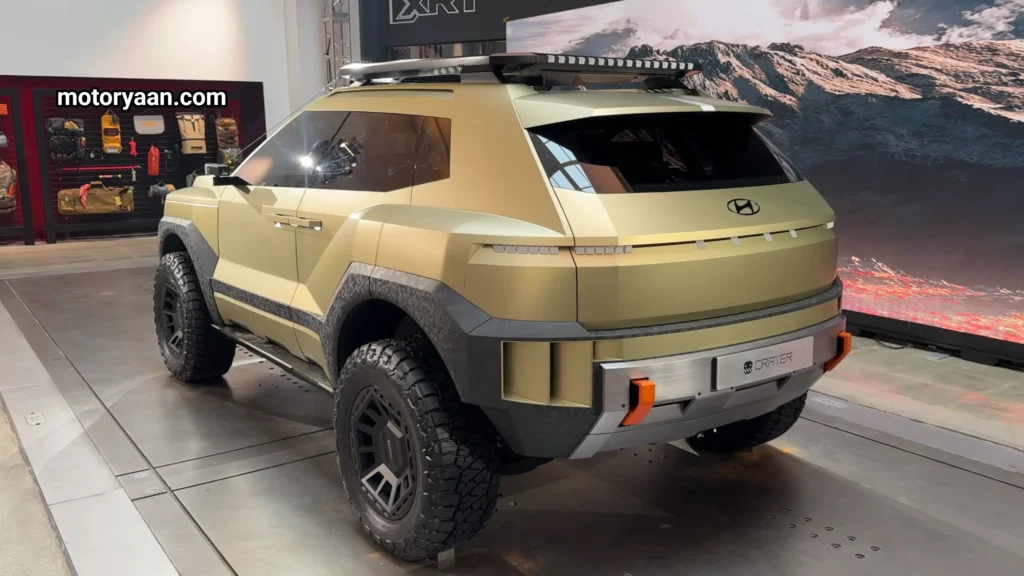
Pixelated lighting elements inspired by Ioniq models
Lighting elements
Pixel lighting is a major theme.
Pixel running lamps at the front
Pixel tail lamps
Pixel lighting on the roof rack for campsite illumination
Pixel-based smiley faces on the roof lights during the welcome animation

Welcome Sequence and Exterior Gadgets
The Crater has one of the most playful welcome animations in any concept SUV.
Welcome sequence features
Exterior lights perform an animation
A welcome sound plays
Auxiliary roof lights turn into animated smiley faces
Pixel lights glow across the body
The idea is simple. Hyundai wanted the car to make you feel happy when you walk up to it.
Unique Exterior Equipment
Some features are taken straight from serious off-roaders.
Off-road equipment
Limb risers: Wires stretching from the hood to the roof, used to push branches away from the windshield
Large metal skid plate: Tough steel-like protection under the nose
Front recovery hooks: Copper-orange hooks for towing
Driver-side bottle opener: The tow hook doubles as a bottle opener
And yes, Hyundai actually added a bottle opener to the front of an SUV.
Crater Man: The Mascot Hidden Everywhere
Hyundai created a funny, boxy figure named Crater Man, the unofficial mascot of the concept.
You will find Crater Man hidden:
On the front tow hook
At the base of the windshield
On the roof rack
Inside the third brake light
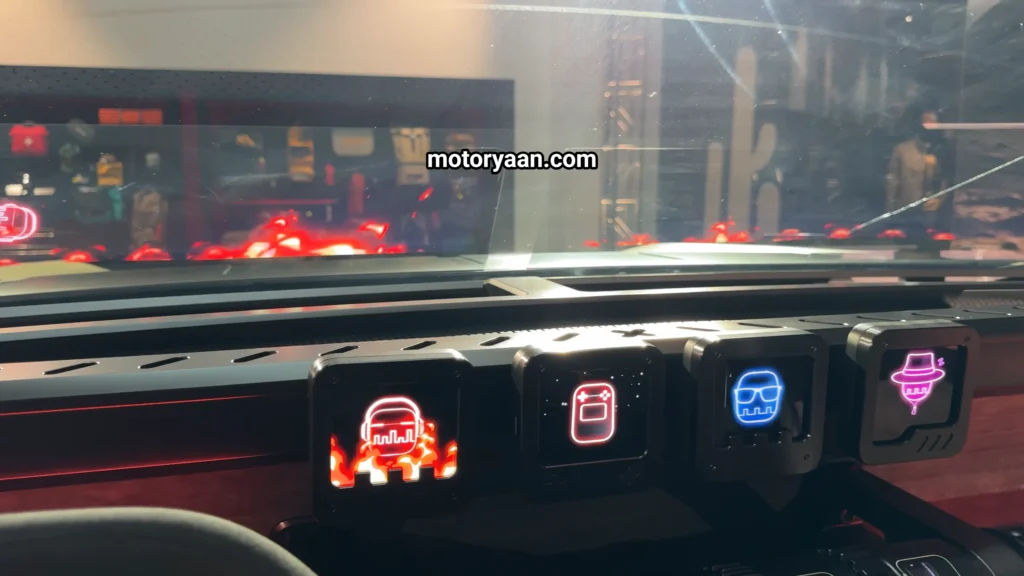
On the dashboard
On the door handle
In multiple interior spots
This is another playful touch that gives the concept SUV some personality.
Interior Design and Cabin Experience
The interior of the Crater is as wild as the exterior. It blends outdoor gear inspiration with comfort.
Interior highlights
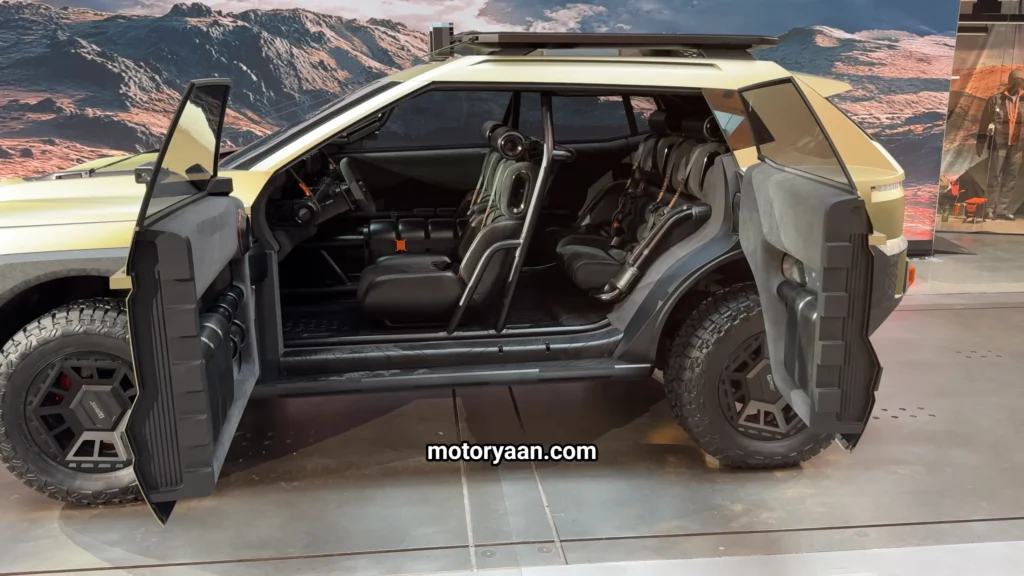
Rear-hinged back doors (like the Toyota FJ Cruiser)
Fully open pillarless entry when both doors are opened
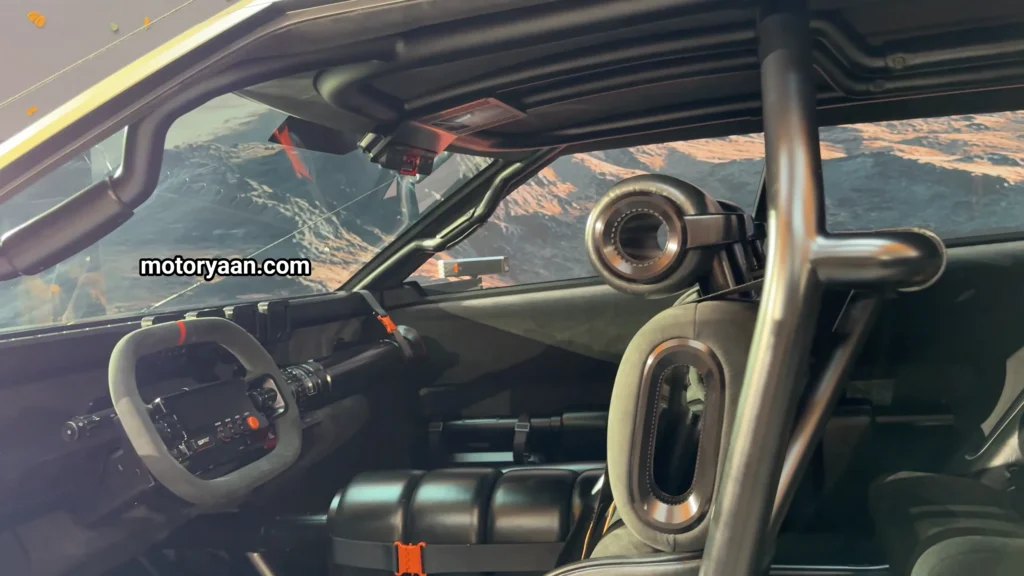
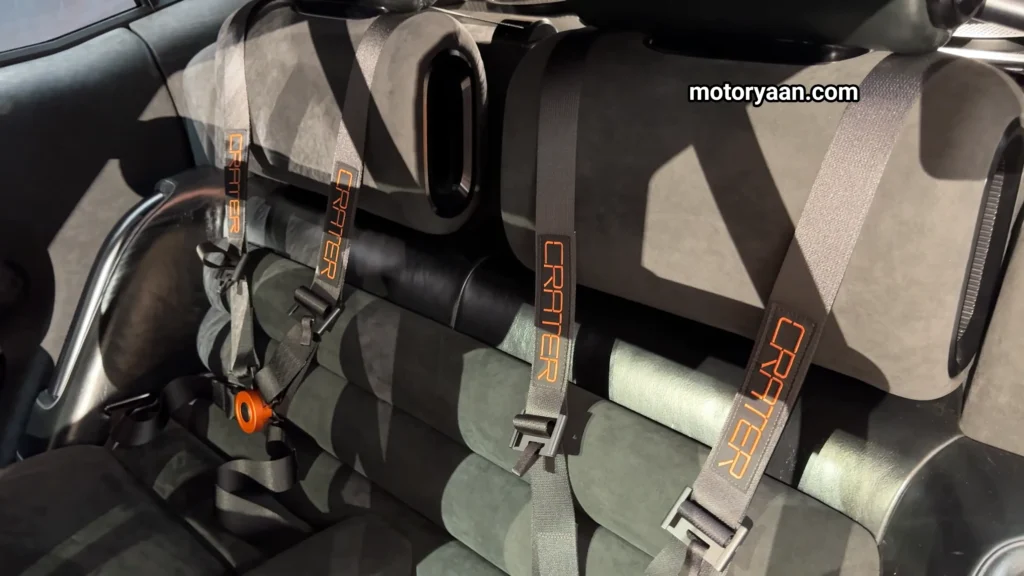
A full interior roll cage
Grab handles everywhere
Seating inspired by sleeping bags
Cabin design inspired by adventure gear
Built-in equipment
Fire extinguisher on the driver’s door
First aid kit on the passenger’s door
Kid-friendly touches
On the rear roll cage, Hyundai added:
Lower hand grip holes for children
Upper grip holes for adults
This helps children climb inside during camp or trail use.

Tech and Innovation Inside
While the cabin is rugged, the technology is futuristic.
Detachable Rear View Mirror Module
This is one of the most unique features of the Crater.
Front side has pixel lighting
Back side has the rear view camera
The entire unit can be detached
It becomes a handheld flashlight
The rear camera becomes a portable action camera
This turns the mirror into a multi-purpose outdoor tool.
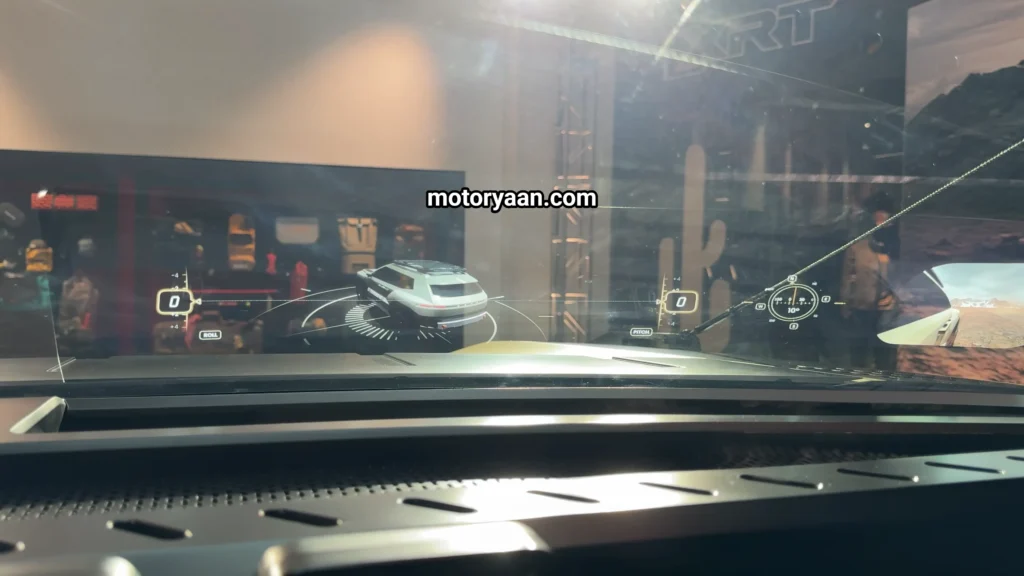
Windshield Projection Display with 4 Modes
The biggest interior highlight is the projection display that shows different interfaces based on the mode. Instead of a traditional instrument cluster, the Crater uses a full-width projection at the base of the windshield.
Available modes
Drive Mode
Game Mode
Camping Mode
Music Mode
Drive Mode
Drive mode projects:
Speed
Gear position
Elevation
Vehicle angles
Driver assist info
Left and right rear view camera feeds
This eliminates conventional screens and merges everything into one windshield projection.
Game Mode
You can choose a character and play a simple platform jumping game.
Tap the screen to jump
Earn points for landing on platforms
Three lives
Displayed directly on the windshield
It sounds strange, but it is surprisingly addictive.
Camping Mode
Camping mode transforms the SUV into a relaxation zone.
You can choose:
A virtual campfire
A starry night sky with shooting stars
A soothing rainstorm
Each mode includes matching ambient sounds.
Music Mode
Music mode is designed to create a full audio-visual experience inside the cabin.
(This is where your provided data stops, so the article pauses this section here.)
Conclusion
The Hyundai Crater concept proves that Hyundai wants to expand beyond practical everyday cars. With its rugged design, playful touches, detachable gadgets, advanced projection display, and bold off-road hardware, it shows what Hyundai could be capable of if they decide to challenge the Wrangler and Bronco class.
Even if the Crater never reaches production in this exact form, many of these ideas could inspire future Hyundai off-road vehicles and the XRT brand.
Frequently Asked Questions
What is the Hyundai Crater XRT concept?
The Hyundai Crater XRT concept is a dedicated off-road EV designed as Hyundai's answer to models like the Jeep Wrangler and Ford Bronco. It was created at Hyundai’s design center in Irvine, California with a rugged exterior, advanced technology, and strong focus on off-road capability.
Is the Crater XRT concept based on an EV platform?
Yes, the Crater XRT concept is built on the same dedicated EV architecture as the Hyundai Ioniq 5. Hyundai has not confirmed output figures, but the platform supports dual motor setups and high-performance configurations.
How big is the Hyundai Crater XRT concept?
Hyundai says the Crater XRT concept will be smaller than the Tucson. It is a compact off-roader with a tall, boxy shape and suicide-style rear doors. The brand has not revealed exact dimensions yet.
What off-road features does the concept include?
The Crater XRT concept features a full underbody skid plate, 35 inch tires, wide fender flares, locking front and rear differentials, an exposed roll cage, roof-mounted off-road lights, and heavy duty tow hooks including a bottle-opener design element.
Does the concept have a production ready interior?
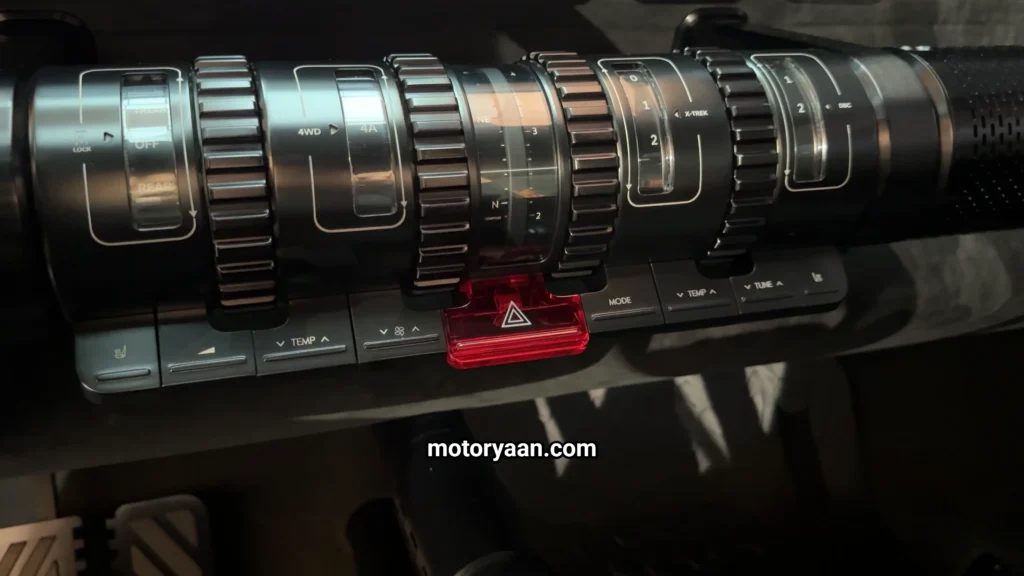
Yes, the interior looks surprisingly realistic for a concept vehicle. It includes a four screen setup that can be removed or rearranged, analog style controls, a unique gear-like dashboard design, a projection style instrument display, four point harnesses, dual zone climate control, and heated seats.
What are the special drive modes available?
The Crater XRT concept features multiple drive and experience modes including Standard mode with synthetic EV sound, Game mode with interactive graphics, Camp mode with fire, rain, nighttime and sleep ambiances, and Music mode that lets the user create beats and sound patterns.
What interior technologies stand out?
The interior highlights include removable screens, digital camera based side mirrors, ambient lighting, a projection style head-up display, integrated fire extinguisher, technical camo accents, and unique Easter eggs like the Crater face design integrated into various elements.
How practical is the rear seating area?
The rear cabin seats two passengers with the same four point harnesses, suede-like materials, padded grab handles, illuminated speakers, and a spacious layout. It appears to be designed for both comfort and off-road durability.
Will Hyundai build the Crater XRT for production?
Hyundai has not confirmed production, but the concept looks close to a production ready vehicle. Many elements appear functional and refined, which suggests Hyundai is seriously exploring the possibility.