
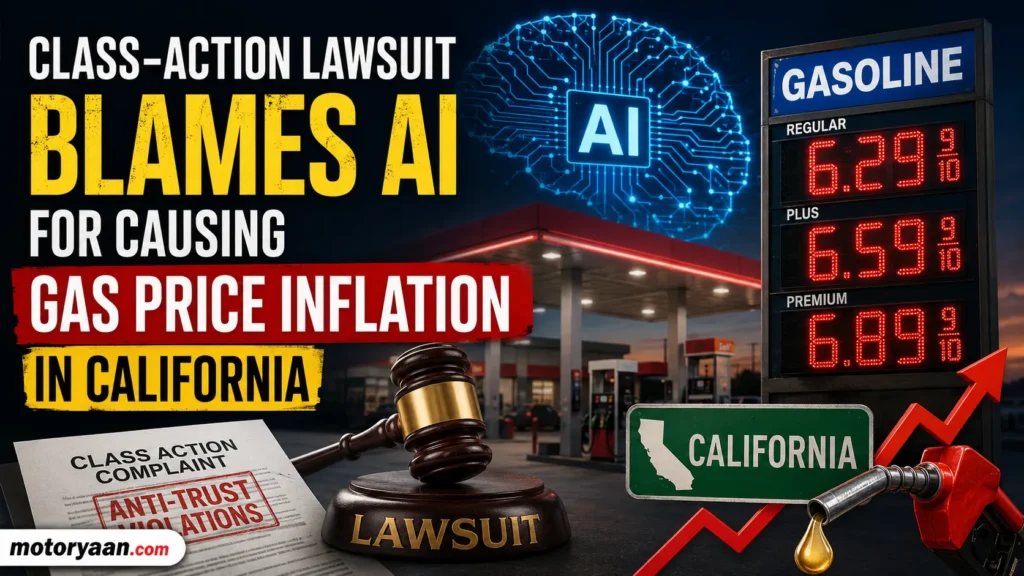
AI Gas Price Lawsuit in California: Class Action Targets Kalibrate Over Alleged Fuel Price Inflation
Table of Contents
Californians already pay some of the highest fuel prices in the United States. Now, a new class action lawsuit claims that artificial intelligence may have made those prices even higher.
The lawsuit accuses fuel pricing software company Kalibrate and several gas station operators of violating California’s anti trust laws by using AI powered pricing technology to keep gasoline prices artificially high.
What Is the California AI Gas Price Lawsuit About?
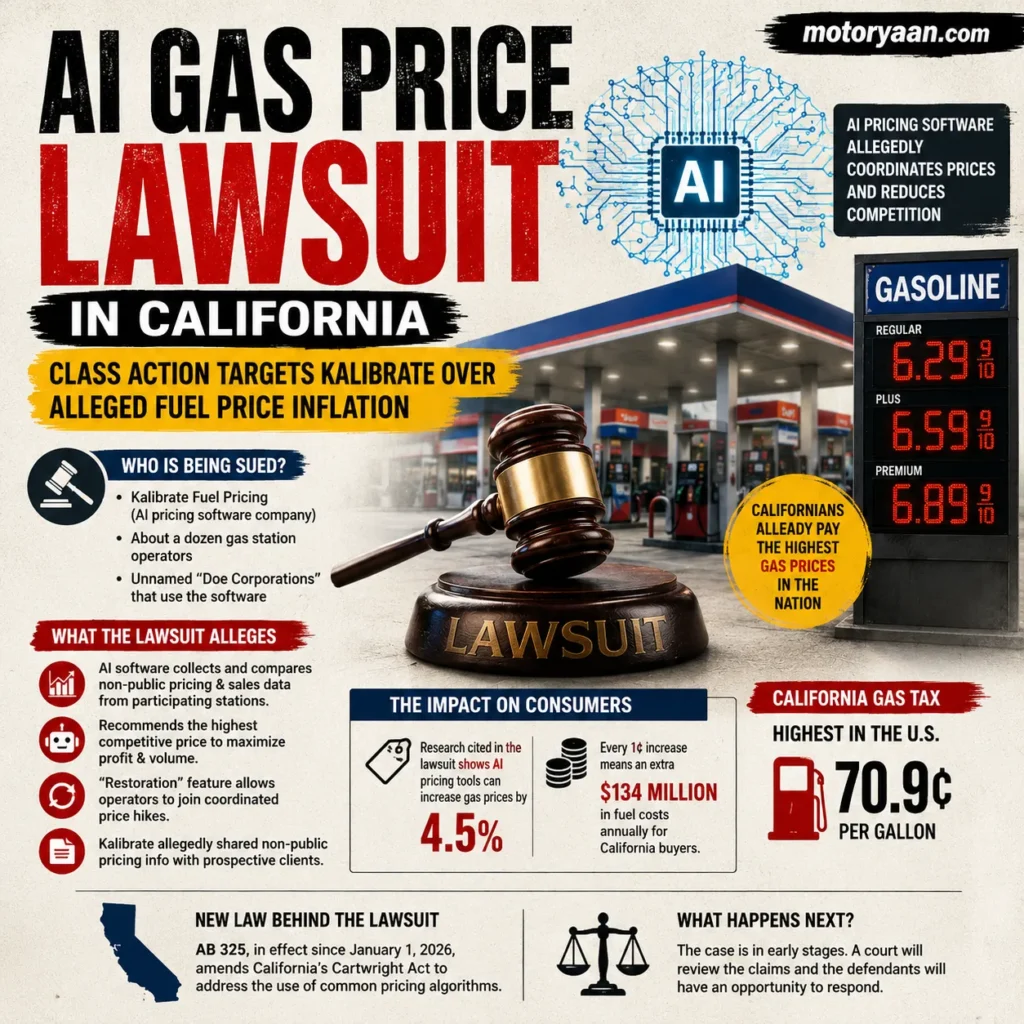
A federal class action lawsuit has been filed in the U.S. District Court for California’s Eastern District. The lawsuit claims that Kalibrate’s fuel pricing software helped gas station operators coordinate fuel prices instead of competing fairly.
The complaint also names around a dozen fuel retailers that reportedly use Kalibrate’s software. In addition, the lawsuit includes unidentified companies, referred to as “Doe Corporations,” that may also use the same pricing technology.
According to the plaintiffs, the software relies on artificial intelligence to collect and compare private pricing and sales information from participating gas stations. It then recommends fuel prices that are designed to maximize profits while remaining competitive in the local market.
Why Was the Lawsuit Filed in California?
The lawsuit is based on California’s updated anti trust law.
A new law known as AB 325 came into effect on January 1, 2026. The legislation amended California’s Cartwright Act by adding rules that specifically address the use of common pricing algorithms.
Lawmakers introduced the bill after concerns that similar software had been used in the rental housing market to influence apartment prices. The plaintiffs now argue that the same type of pricing strategy is being used in California’s fuel market.
How Does Kalibrate's Fuel Pricing Software Work?
According to the lawsuit, Kalibrate Fuel Pricing helps gas stations automatically determine the highest fuel price customers are likely to pay without losing business to nearby competitors.
The plaintiffs argue that this approach allows participating stations to increase both sales volume and profits while reducing normal price competition.
The lawsuit also highlights several allegations, including:
- AI software compares pricing and sales information from participating stations.
- The system recommends fuel prices based on shared market data.
- A feature called “restoration” reportedly allows operators to start or join coordinated price increases.
- Kalibrate allegedly shared non public pricing information from existing customers with potential clients.
These claims remain allegations and have not been proven in court.
Plaintiffs Claim AI Pricing Can Increase Fuel Costs
The lawsuit cites research suggesting that when many gas stations in the same area use similar pricing software, average fuel prices could increase by approximately 4.5 percent.
The plaintiffs argue that even small increases have a significant financial impact.
According to the complaint:
| Claim | Alleged Impact |
|---|---|
| Average fuel price increase | Around 4.5% |
| Cost of a 1 cent increase | About $134 million annually for California fuel buyers |
The figures are presented as part of the lawsuit’s claims and have not been confirmed by the court.
California Already Has the Highest Gas Prices
California drivers already face some of the highest gasoline prices in the country.
One major reason is the state’s fuel taxes. According to the lawsuit, California’s combined state gas taxes total 70.9 cents per gallon, making them the highest in the United States.
The plaintiffs argue that if AI based pricing also contributes to higher pump prices, consumers could end up paying even more than they already do.
What Happens Next?
The lawsuit is still in its early stages.
A court will now review the claims, and the defendants will have an opportunity to respond. At this stage, no court has determined that Kalibrate or the named gas station operators violated the law.
The case could become an important legal test for how artificial intelligence pricing software is used in competitive markets. It may also influence future regulation of AI driven pricing systems in industries beyond fuel.
Final Thoughts
Artificial intelligence is becoming more common in business pricing decisions, but regulators are paying closer attention to how these systems affect competition.
The California class action lawsuit against Kalibrate raises important questions about whether AI pricing software can cross the line from helping businesses compete to allowing them to coordinate prices. The outcome of this case could shape how pricing algorithms are regulated in the future, especially in industries where consumers are highly sensitive to price changes.
Sources and References
Official Sources
Kalibrate
https://kalibrate.com/
Official website of Kalibrate, the company whose fuel pricing software is named in the lawsuit.
California Legislative Information (AB 325)
https://leginfo.legislature.ca.gov/
Official California government website where you can search for Assembly Bill 325 and other state legislation.
California Energy Commission
https://www.energy.ca.gov/
Official source for California fuel market data, energy policies, and gasoline regulations.
California Department of Justice
https://oag.ca.gov/
Official website of the California Attorney General, which oversees enforcement of state antitrust laws.
AAA Gas Prices
https://gasprices.aaa.com/
Official AAA fuel price tracker with daily gasoline price averages across the United States.
Trusted News & Industry Sources
Reuters
https://www.reuters.com/business/
Trusted global news agency covering the lawsuit and business developments.
Associated Press (AP News)
https://apnews.com/
Independent news organization covering the AI fuel pricing lawsuit.
Car and Driver
https://www.caranddriver.com/news/
Automotive publication that first reported detailed information about the class action lawsuit.
San Francisco Chronicle
https://www.sfchronicle.com/
Regional newspaper providing California-focused coverage of the lawsuit.
Tom’s Hardware
https://www.tomshardware.com/
Technology publication explaining the AI and pricing software aspects of the case.
CalMatters
https://calmatters.org/
Nonprofit newsroom covering California legislation and public policy, including AB 325.