
California New Tire Proposal Could Reshape the Aftermarket Tire Industry
Table of Contents
California is considering a new regulation that could dramatically change the replacement tire market across the United States. While the proposal aims to reduce fuel consumption and lower carbon emissions, many experts believe it could create unintended consequences for drivers, tire manufacturers, and the environment itself.
What Is California's Replacement Tire Efficiency Program?
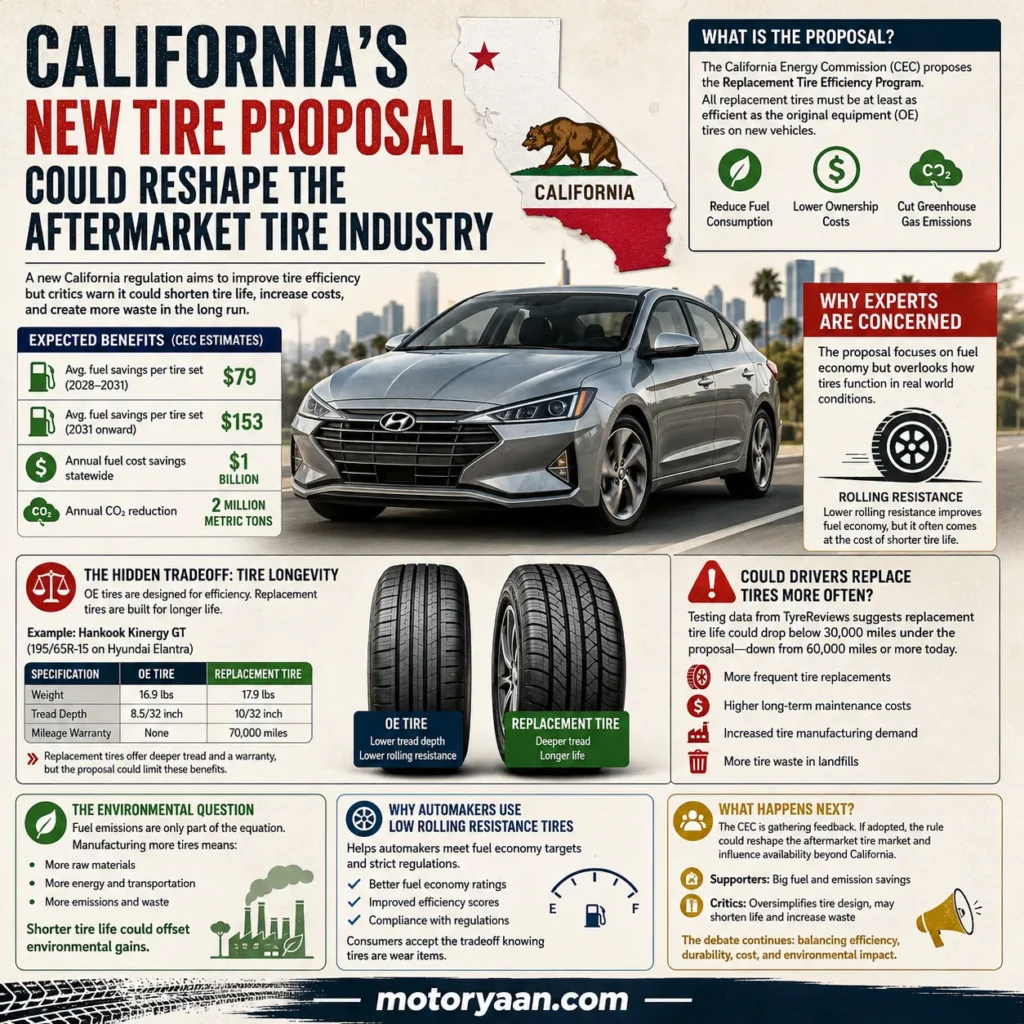
The California Energy Commission (CEC) has proposed a new regulation called the Replacement Tire Efficiency Program. The goal is simple: require all replacement tires sold for passenger vehicles to match or exceed the efficiency levels of the original equipment (OE) tires that come fitted on new vehicles.
According to the CEC, more efficient tires can help reduce fuel consumption, lower ownership costs, and cut greenhouse gas emissions across the state.
The agency estimates that:
| Expected Benefit | Estimate |
|---|---|
| Average Fuel Savings per Tire Set (2028–2031) | $79 |
| Average Fuel Savings per Tire Set (2031 Onward) | $153 |
| Annual Fuel Cost Savings Statewide | $1 billion |
| Annual CO₂ Reduction | 2 million metric tons |
The proposal is designed to help California meet its environmental targets while reducing fuel expenses for drivers.
Why Are Some Industry Experts Concerned?
At first glance, improving tire efficiency sounds like a win for everyone. However, critics argue that the proposal focuses too heavily on fuel economy and overlooks how tires actually work in real world conditions.
The main concern revolves around rolling resistance, which is the force that resists a tire’s movement as it rolls down the road. Lower rolling resistance generally improves fuel economy because the vehicle uses less energy to move.
To achieve lower rolling resistance, manufacturers often reduce tread depth and make changes to tire construction. While this can improve efficiency, it may also shorten tire lifespan.
The Hidden Tradeoff: Tire Longevity
Many original equipment tires supplied on new vehicles are specifically engineered to help automakers achieve better fuel economy ratings. These tires often feature:
- Lower rolling resistance
- Reduced tread depth
- Lower overall weight
Replacement tires, on the other hand, are usually designed with longer service life in mind.
One commonly cited example is the Hankook Kinergy GT fitted to the Hyundai Elantra.
| Specification | OE Tire | Replacement Tire |
|---|---|---|
| Weight | 16.9 lbs | 17.9 lbs |
| Tread Depth | 8.5/32 inch | 10/32 inch |
| Mileage Warranty | None | 70,000 miles |
The replacement version offers deeper tread and a long mileage warranty, while the original equipment version prioritizes efficiency.
Because of this difference, many aftermarket tires can last significantly longer than factory fitted alternatives.
Could Drivers End Up Replacing Tires More Often?
One of the biggest criticisms of the proposal is that it may encourage the sale of tires that wear out faster.
According to testing data compiled by TyreReviews, replacement tire life could potentially drop below 30,000 miles if manufacturers are forced to prioritize efficiency above all else.
That is a significant change considering many modern all season replacement tires currently carry warranties of 60,000 miles or more.
For drivers, that could mean:
- More frequent tire replacements
- Higher long term maintenance costs
- Increased tire manufacturing demand
- More tire waste entering the disposal stream
The Environmental Question
The proposal focuses heavily on reducing emissions from fuel consumption. However, vehicle pollution is not limited to fuel burned at the pump.
Manufacturing tires requires raw materials, energy, transportation, and industrial processes that generate emissions and waste.
If tire lifespan decreases substantially, manufacturers would need to produce more tires to meet demand. Critics argue that this could offset some of the environmental gains achieved through improved fuel economy.
In other words, saving fuel is beneficial, but replacing tires twice as often may create a different environmental challenge.
Why Automakers Use Low Rolling Resistance Tires
Automakers constantly look for ways to improve fuel economy figures and meet increasingly strict regulations.
Low rolling resistance tires help achieve those goals because they reduce the energy needed to keep a vehicle moving.
For vehicle manufacturers, the strategy works well:
- Better fuel economy ratings
- Improved efficiency scores
- Compliance with regulations
Consumers generally accept these factory tires because they know tires are wear items that will eventually need replacement.
The aftermarket tire industry, however, serves a different purpose. Most buyers prioritize longevity, comfort, traction, and value rather than squeezing out every possible drop of fuel savings.
What Happens Next?
The California Energy Commission is still evaluating the proposal and gathering feedback. If adopted, the regulation could significantly influence the replacement tire market and potentially affect tire availability beyond California due to the state’s influence on automotive regulations.
Supporters believe the proposal could reduce fuel consumption and emissions on a large scale. Critics argue that the rule oversimplifies tire design and may unintentionally shorten tire life while increasing waste.
As discussions continue, the debate highlights a broader challenge facing the automotive industry: balancing efficiency, durability, cost, and environmental impact without sacrificing one for another.
Sources & References
1. California Energy Commission (Official Source)
California’s Proposed Replacement Tire Efficiency Program
Official California Energy Commission report outlining the proposed Replacement Tire Efficiency Program and its expected environmental and fuel saving benefits.
2. California Energy Commission Rulemaking Page (Official Source)
Replacement Tire Efficiency Program Proceeding
Official rulemaking page containing proposal documents, updates, public comments, and regulatory details.
3. California Energy Commission Public Hearing
Replacement Tire Efficiency Program Public Hearing
Official hearing page covering public participation and discussions regarding the proposed tire regulations.
4. National Highway Traffic Safety Administration (NHTSA)
Tire Safety Ratings and Awareness (TireWise)
Official U.S. government resource explaining tire safety, rolling resistance, and the relationship between tires and fuel economy.
5. Tyre Reviews
Independent tire testing platform widely referenced for tire performance, tread life, rolling resistance, and comparison testing.
6. Car and Driver
A New California Proposal Could Effectively Ban All Aftermarket Tires
Detailed analysis of the proposed regulation and its potential impact on aftermarket tires, tire longevity, and consumer costs.
7. SEMA (Specialty Equipment Market Association)
SEMA Response to California Tire Proposal
Industry perspective highlighting concerns about consumer choice, performance tires, and potential cost increases.
8. Consumer Federation of America
Support for California Tire Efficiency Standards
Consumer and environmental organizations’ viewpoint supporting the proposed efficiency standards.
9. Appliance Standards Awareness Project
How Inefficient Replacement Tires Are Costing Californians Money
Research report discussing potential fuel savings and environmental benefits of more efficient replacement tires.
10. ScienceDirect Research Paper
End of Life Options of Tyres: A Review
Peer reviewed research examining tire waste, recycling challenges, and environmental impacts of tire production and disposal.
Frequently Asked Questions
The California Energy Commission (CEC) has proposed the Replacement Tire Efficiency Program, which would require replacement tires sold for passenger vehicles to meet or exceed the efficiency levels of the original equipment tires fitted by automakers.
The proposal aims to reduce fuel consumption, lower greenhouse gas emissions, and help drivers save money on fuel. The CEC estimates the program could reduce CO2 emissions by 2 million metric tons annually while saving California drivers about $1 billion per year in fuel costs.
Critics argue that the proposal focuses heavily on fuel economy and may overlook how tires perform in real world conditions. They believe prioritizing efficiency could reduce tread depth and tire lifespan, leading to more frequent tire replacements.
Rolling resistance is the force that resists a tire's movement as it rolls. Lower rolling resistance helps improve fuel economy because the vehicle uses less energy to move, but reducing it can sometimes affect tire durability and longevity.
Possibly. Industry concerns suggest that replacement tires designed primarily for efficiency could wear out faster. Some testing data indicates tire life could fall below 30,000 miles, compared with many current replacement tires that offer warranties of 60,000 miles or more.
Original equipment tires are often optimized for fuel economy and lower rolling resistance. Replacement tires usually offer deeper tread depth, longer mileage warranties, improved durability, and a focus on long term ownership value.
While drivers may save money on fuel, critics argue that shorter tire life could lead to more frequent replacements, potentially increasing long term maintenance expenses.
Some experts argue that producing and disposing of more tires could increase waste, raw material consumption, and manufacturing emissions. They believe these impacts should be considered alongside fuel savings and emissions reductions.
Automakers use low rolling resistance tires to improve fuel economy ratings, increase efficiency scores, and meet regulatory requirements. These tires help vehicles consume less fuel during standardized testing.
No. The California Energy Commission is still reviewing feedback and evaluating the proposal. The regulation has not yet been finalized.