Tesla Patents Reveal A Smart New Way To Keep Electric Cars Cool
Table of Contents
Tesla Could Turn Glass Roofs Into Part Of The AC System
Electric cars already use less energy than traditional fuel powered cars, but cabin cooling still affects range, especially during summer. Now, new Tesla patents show the company working on a smarter way to cool the cabin without putting extra load on the air conditioning system.
The idea sounds unusual at first. Tesla wants the panoramic glass roof itself to help cool the cabin.
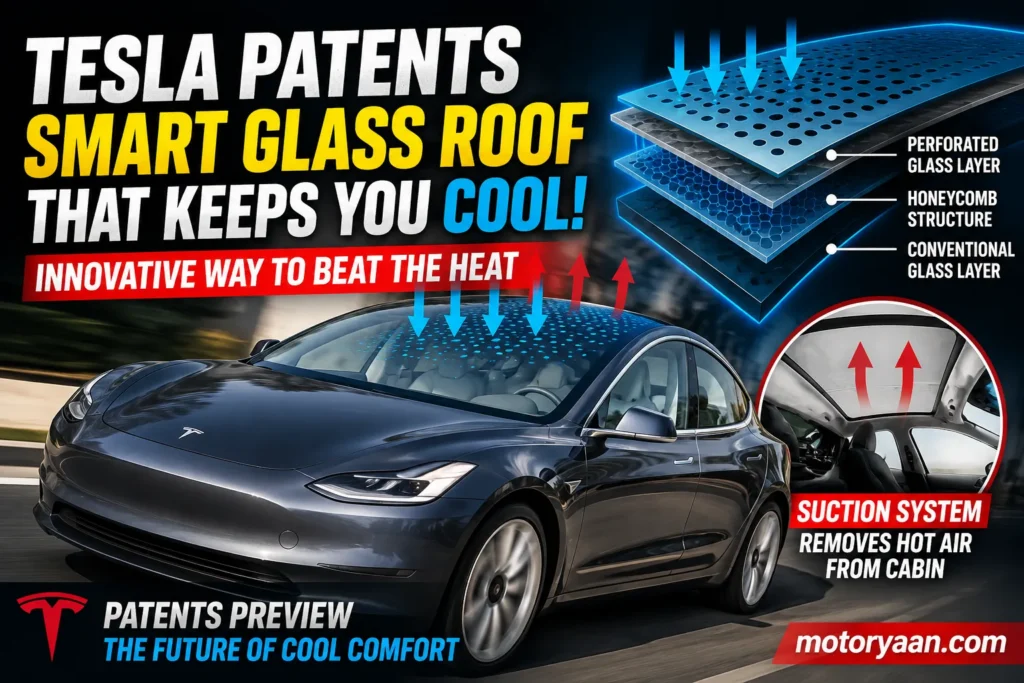
According to recently published patent details, Tesla is developing a roof system that combines standard glass with perforated glass and a honeycomb style inner structure. Instead of acting like a giant heat trap during summer, the roof could spread cool air evenly over passengers inside the cabin.
For people living in hot regions, that sounds far more useful than blasting cold air directly at your face while the rest of the cabin still feels warm.
How Tesla’s Cooling Roof System Works
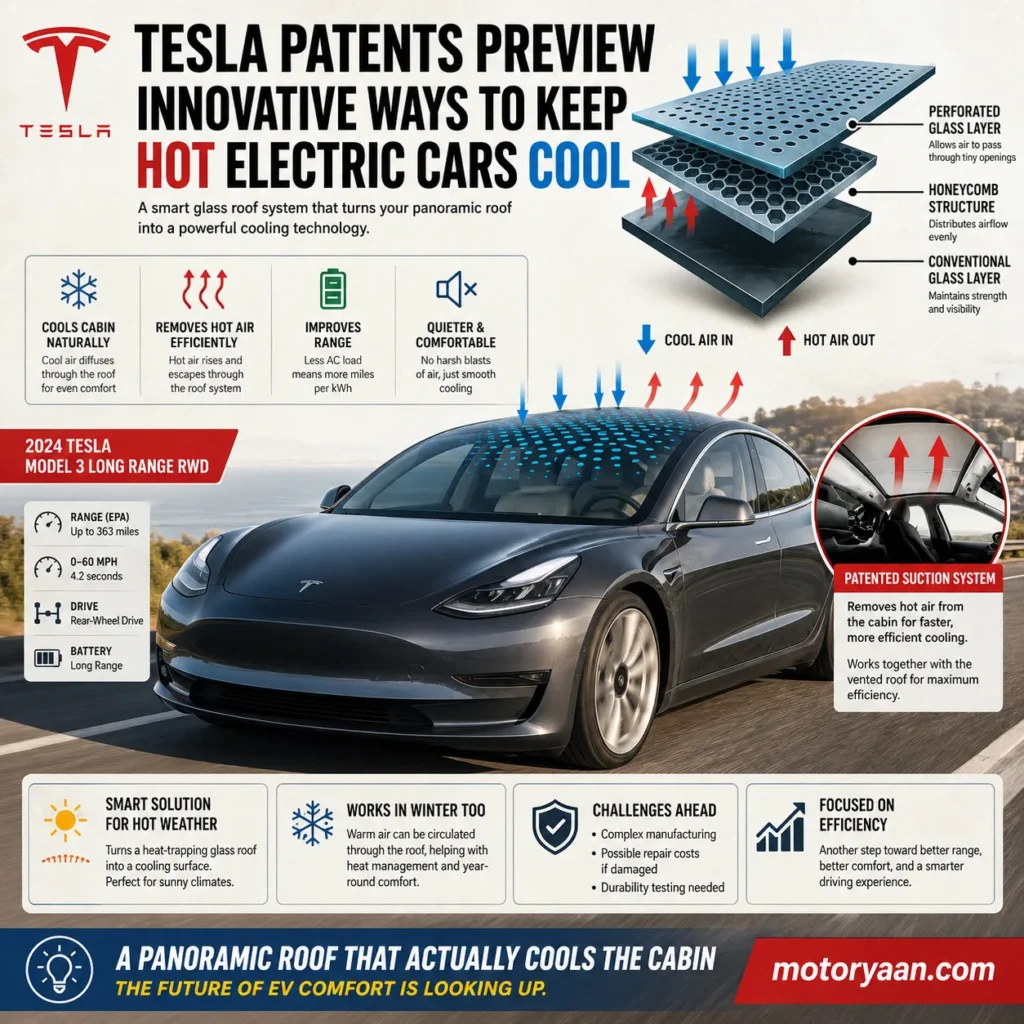
Tesla’s patent explains a layered roof setup that works as part of the HVAC system.
The system includes:
| Feature | Purpose |
|---|---|
| Perforated glass layer | Allows air to pass through tiny openings |
| Honeycomb internal structure | Helps distribute airflow evenly |
| Conventional glass layer | Maintains roof strength and visibility |
| Integrated HVAC connection | Pushes cool or warm air through the roof |
Instead of cooling the cabin only through dashboard vents, cool air would slowly diffuse through the roof area. At the same time, hot air inside the cabin could move upward and escape more efficiently.
Tesla also patented another system that removes hot air from the cabin using suction. Reports suggest both technologies could work together.
That matters because reducing cabin heat load directly improves EV efficiency. Less stress on the air conditioning system means less battery usage, which can slightly improve driving range.
A Smart Solution For Hot Weather
Large panoramic roofs look premium, but they also create problems in extreme sunlight. Many owners already use sunshades or heavily tinted films to reduce cabin temperatures.
Tesla’s approach tries to solve the issue differently.
Instead of blocking heat alone, the company wants the roof to actively participate in cooling the interior. In simple words, the glass roof would stop behaving like a greenhouse and start acting like a cooling surface.
That could improve comfort in states and countries with strong summer temperatures.
The System Could Also Work During Winter
Interestingly, the patent also mentions warm air moving through the roof structure during colder weather.
Tesla has not fully explained whether that setup would help warm the cabin directly or simply manage heat distribution more efficiently. Still, it confirms that the roof system would stay deeply connected with the car’s climate control setup throughout the year.
Mass Production Still Looks Challenging
Right now, this technology remains at the patent stage. Tesla has not confirmed production plans or rollout timelines.
There are also practical concerns.
A roof with perforated glass and honeycomb air channels would naturally be more complex than a regular panoramic roof. Repairs could become expensive if the glass gets damaged by road debris or stones.
Durability testing would also play a major role before such a system reaches production vehicles.
Tesla Continues To Focus On Efficiency
Modern electric vehicles already recover energy through regenerative braking and use advanced thermal management systems. Tesla’s latest patents show the company still searching for small efficiency gains in areas most drivers never think about.
That is important because EV range improvements no longer come only from bigger batteries. Smarter cooling, heating, aerodynamics, and energy management now matter just as much.
If Tesla successfully develops this roof technology for mass production, other manufacturers will likely follow. The automotive industry already watches Tesla closely when it comes to EV focused engineering solutions.
A panoramic roof that actually helps cool the cabin instead of heating it up could become one of the more interesting future upgrades for electric cars.
Sources and References
1. Car and Driver
Official automotive publication from the US covering Tesla’s new cooling roof patent and HVAC technology. Good for mainstream automotive readers and credibility.
Car and Driver Tesla Cooling Roof Article
2. InsideEVs
One of the most trusted EV focused websites in North America. Covers Tesla’s hot air suction HVAC patent and explains how it could improve EV range.
InsideEVs Tesla HVAC Patent Report
3. Autoblog
US based automotive news platform explaining Tesla’s perforated glass roof system and cooling airflow technology in detail.
Autoblog Tesla Vented Glass Roof Patent
4. Autoevolution
Detailed technical breakdown of Tesla’s perforated glass roof patent and HVAC integration system.
Autoevolution Tesla Cooling Roof Patent Explained
5. Digital Today
Additional reporting focused on Tesla’s selective heat suction cooling system and efficiency improvements.
Digital Today Tesla Cooling Patent Report
6. Tesla Official Website
Official Tesla website for vehicle specifications, panoramic roof design references, and EV technology background.