
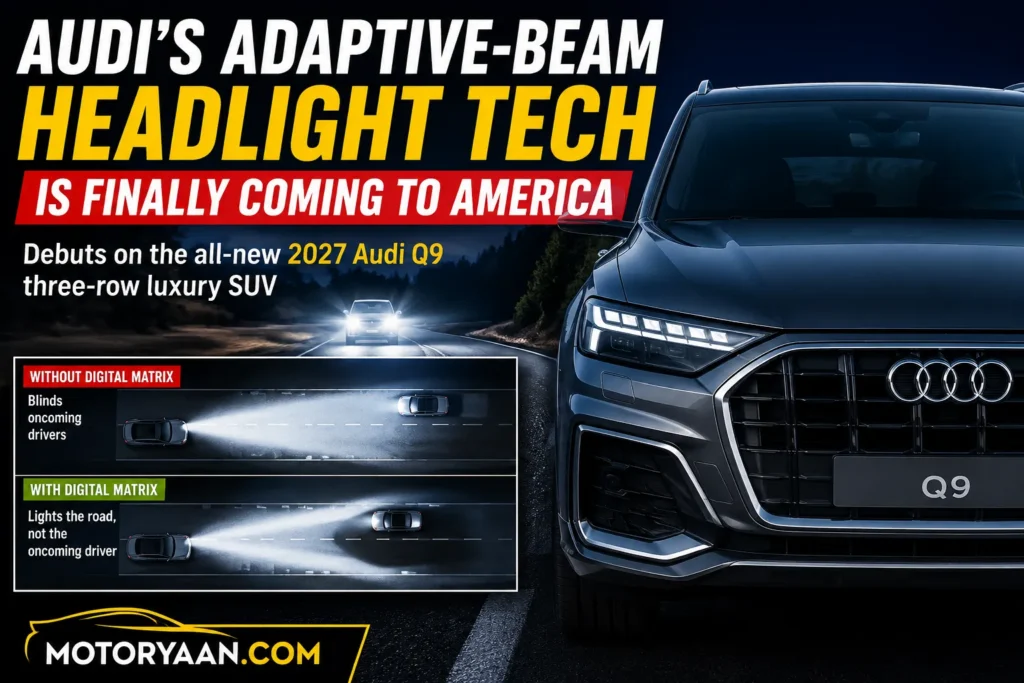
Audi’s Adaptive Beam Headlight Tech Is Finally Coming to America
Table of Contents
Blinding LED headlights have become one of the biggest complaints among drivers in recent years. Whether it is a lifted pickup, a badly aimed SUV, or an EV with ultra bright LEDs, nighttime driving can quickly turn annoying and unsafe. Now Audi is finally bringing a solution that Europe has already been using for years.
The brand’s advanced Digital Matrix headlight system is officially coming to the United States, and it will debut on the upcoming 2027 Audi Q9 three row luxury SUV.
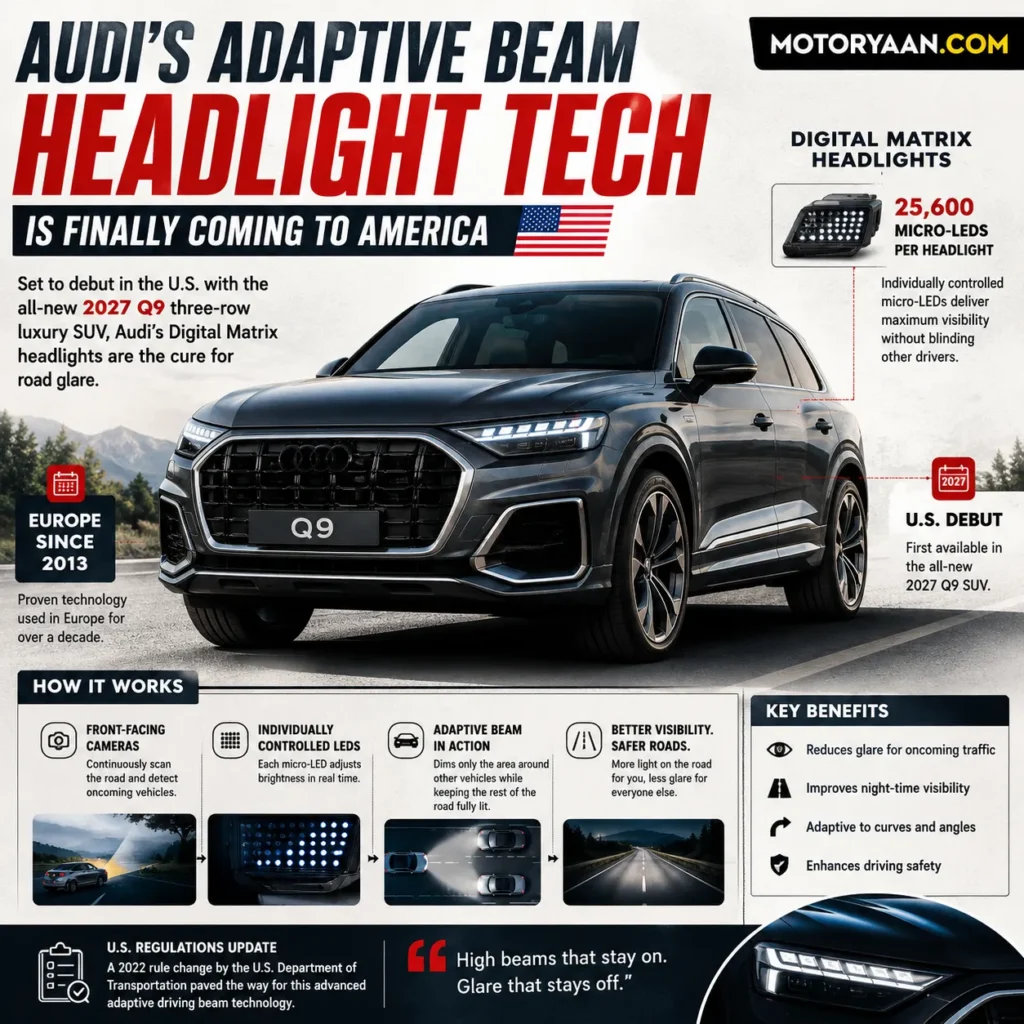
Audi Digital Matrix Headlights Are Designed to Reduce Glare
Audi’s adaptive beam technology is not exactly new. The company first introduced Digital Matrix headlights in Europe back in 2013. European drivers have already experienced the benefits for more than a decade, especially on dark highways and winding roads.
The problem was never the technology itself. U.S. regulations simply did not allow adaptive driving beam systems for years. That changed in 2022 when the U.S. Department of Transportation updated federal lighting rules and finally opened the door for smarter headlights.
After the rule change, Audi engineers started working on making the system compliant for the American market. The result is now ready, and the 2027 Audi Q9 will be the first vehicle in the country to use it.
How Audi’s Adaptive Beam Headlights Work
Audi’s Digital Matrix headlights are far more advanced than traditional LED systems. Instead of using a single bright beam pattern, the system uses thousands of tiny individually controlled micro LEDs.
Here is what makes the setup special:
| Feature | Details |
|---|---|
| LEDs Per Headlight | 25,600 micro LEDs |
| Technology Type | Individually controlled Digital Matrix LEDs |
| Detection System | Front facing cameras |
| Main Function | Reduces glare for oncoming traffic |
| First U.S. Vehicle | 2027 Audi Q9 |
Each headlight contains tiny LEDs arranged into small modules. Every single LED can brighten or dim independently depending on traffic conditions.
Using front mounted cameras, the system constantly scans the road ahead. When it detects an approaching vehicle, the headlights automatically create a shaded area around that vehicle while keeping the rest of the road brightly illuminated.
In simple terms, the high beams stay on without blasting light directly into another driver’s eyes.
Why This Technology Matters
Most modern vehicles already offer automatic high beam systems that switch between high and low beams. Audi’s Digital Matrix headlights take things much further.
Instead of turning the whole beam off, the system selectively dims only the portion of light aimed at other vehicles. That means drivers still get maximum visibility on dark roads while reducing glare for everyone else.
This could make a noticeable difference on:
- Rural highways
- Mountain roads
- Poorly lit back roads
- Curvy two lane roads
- Night driving during bad weather
Anyone who regularly drives at night knows how exhausting bright headlights can be. Temporary blindness from oncoming traffic is not just frustrating, it can become a real safety issue.
2027 Audi Q9 Will Debut the Technology in America
Audi plans to launch this adaptive beam setup first on the new Q9 flagship SUV. The Q9 is expected to sit above the Q7 in Audi’s lineup and compete with large luxury SUVs from BMW, Mercedes Benz, and Range Rover.
Besides adding premium features and extra space, the Q9 will now also introduce one of the smartest lighting systems currently available in the American market.
For Audi, this is more than just another luxury feature. It is also a practical technology that benefits every driver sharing the road.
Adaptive Headlights Could Become the New Industry Standard
As LED headlights continue getting brighter across the industry, adaptive beam technology may eventually become necessary rather than optional.
Several automakers already use similar systems in Europe, but Audi appears ready to become one of the first major brands to fully push the technology into the U.S. luxury market after regulatory approval.
Drivers will likely welcome anything that reduces nighttime glare. Honestly, most people would rather enjoy “Blinded by the Light” through their speakers instead of directly through their windshield.
Sources And References
Official Sources
- Audi USA Newsroom
Official Audi U.S. media and press website with announcements, vehicle technology updates, and future model information. - NHTSA Adaptive Driving Beam Rule PDF
Official U.S. government document explaining the approval of adaptive driving beam headlights in America. - NHTSA Official Press Release on Adaptive Headlights
Official statement from the National Highway Traffic Safety Administration about allowing adaptive beam headlights in the U.S. market.
Trusted Unofficial Sources
- Axios Coverage on Smart Headlights in America
Simple and easy to understand report about why adaptive headlights matter for U.S. drivers. - The Guardian Report on Bright LED Headlights
Detailed article covering growing complaints about bright headlights and how adaptive beam tech could help. - TIME Report on Headlight Glare and Eye Safety
Explains the safety concerns around modern LED headlights and discusses adaptive driving beam technology. - SEMA Article on Adaptive Driving Beam Approval
Industry focused explanation of the U.S. adaptive headlight approval and aftermarket impact.
FAQ
It is Audi’s Digital Matrix headlight system. It uses individually controlled micro LEDs to keep the road bright while reducing glare for oncoming drivers.
The first U.S. model to use it will be the 2027 Audi Q9 three row luxury SUV.
Front facing cameras scan the road ahead. When the system detects another vehicle, it dims only the needed LEDs so the high beams do not blind other drivers.
Each headlight uses 25,600 micro LEDs. Every LED can brighten or dim on its own depending on traffic conditions.
The technology was already in use in Europe, but U.S. rules did not allow adaptive driving beam systems for years. That changed in 2022 when federal lighting rules were updated.
It helps reduce glare and makes night driving easier on rural highways, mountain roads, back roads, and other dark stretches where bright headlights can become a real problem.