Proposed BUILD America 250 Act Could Add $130 Annual EV Registration Fee in the US
Table of Contents
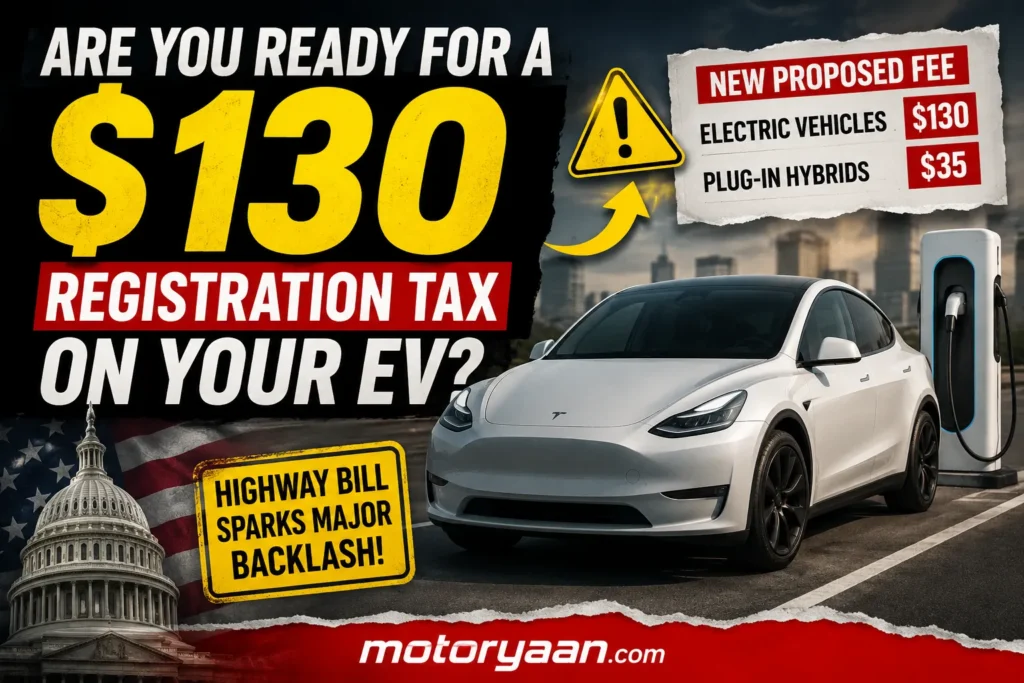
Electric vehicle owners in the United States could soon face a new annual registration fee if the proposed BUILD America 250 Act becomes law. The bill has already sparked strong reactions from EV advocates, environmental groups, and parts of the auto industry.
The proposal comes at a time when EV buyers are already dealing with rising vehicle prices, charging concerns, and the recent removal of the federal EV tax credit.
What Is the BUILD America 250 Act?
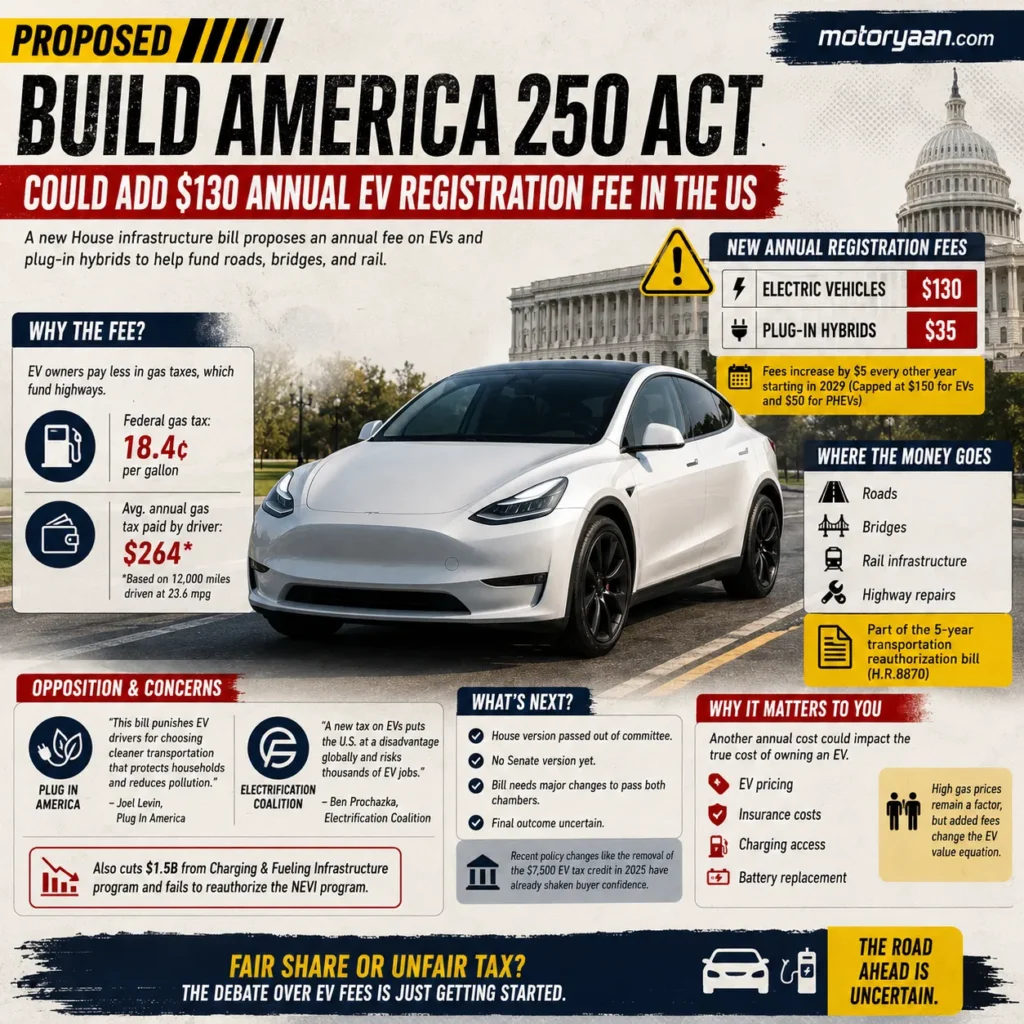
The BUILD America 250 Act, officially known as H.R.8870, recently moved forward through the House Transportation and Infrastructure Committee.
Under the current proposal:
| Vehicle Type | Proposed Annual Fee |
|---|---|
| Electric Vehicles | $130 |
| Plug In Hybrid Vehicles | $35 |
The bill would also increase those fees by $5 every two years starting in 2029.
That means the maximum fee could eventually reach:
- $150 annually for EVs
- $50 annually for plug in hybrids
The proposed charges would become part of the broader five year transportation reauthorization bill that funds:
- Roads
- Bridges
- Rail infrastructure
- Highway repairs
Why Is the Government Proposing This EV Fee?
Supporters of the bill argue that EV owners currently contribute less toward road maintenance because they do not pay traditional gasoline taxes.
At present, federal highway funding mainly comes from the federal gas tax, which sits at 18.4 cents per gallon.
According to data referenced in the proposal:
- The average American driver pays around $264 annually in gas taxes
- That estimate assumes:
- 12,000 miles driven yearly
- Vehicle efficiency of 23.6 mpg
Republican Representative Sam Graves of Missouri said the proposal would ensure EV owners pay their “fair share” for using public roads.
The bill has bipartisan backing through cooperation between:
- Representative Sam Graves (R Missouri)
- Representative Rick Larsen (D Washington)
Still, bipartisan support does not mean smooth approval in Congress.
Environmental Groups Strongly Oppose the Proposal
Several EV and environmental organizations say the fee unfairly targets electric vehicle owners and could slow EV adoption in the United States.
Joel Levin, executive director of Plug In America, criticized the proposal and said it punishes drivers for choosing cleaner transportation technology.
Groups opposing the bill argue EVs already help reduce:
- Fossil fuel dependence
- Air pollution
- Household fuel costs
Ben Prochazka, executive director of the Electrification Coalition, also warned that new EV taxes could hurt American competitiveness in the global EV market and threaten jobs connected to EV manufacturing and infrastructure.
Charging Infrastructure Funding Could Also Take a Hit
The debate is not only about registration fees.
Critics also point to proposed cuts affecting EV charging infrastructure programs.
According to the Electrification Coalition, the bill would:
- Reduce Charging and Fueling Infrastructure program funding by $1.5 billion
- Skip reauthorization for the NEVI program
The National Electric Vehicle Infrastructure program has played a major role in expanding public EV charging stations across the US.
Without continued funding, charging network growth could slow significantly in some regions.
Could the Bill Actually Become Law?
Right now, nothing is final.
The House version still faces multiple hurdles before becoming law. The Senate has not yet introduced its own transportation bill, and both chambers would need to agree on a final version.
Ingrid Malmgren, senior policy director at Plug In America, said the bill would likely need major changes before passing Congress.
That said, recent political decisions around EV policy have shown that major changes can happen quickly.
The Trump administration already rolled back fuel economy rules and removed the federal $7,500 EV tax credit in 2025. Because of that, many EV buyers now worry this proposal could become another financial setback for electric vehicle ownership.
Why This Matters for EV Buyers
For many consumers, EV ownership was supposed to lower long term operating costs.
Adding another yearly fee changes that equation slightly, especially for budget conscious buyers already comparing:
- EV pricing
- Insurance costs
- Charging access
- Battery replacement concerns
At the same time, gasoline prices in many parts of the US remain high. Some drivers may still see EVs as the cheaper option overall despite the proposed fee.
The bigger question now is whether lawmakers can balance highway funding needs without slowing down electric vehicle adoption in America.
Sources and References
- House Transportation and Infrastructure Committee – BUILD America 250 Act Introduction
Official US House Committee page introducing the BUILD America 250 Act and explaining the transportation bill. - T&I Committee Approves BUILD America 250 Act
Official update confirming the committee approval of the proposed infrastructure bill. - BUILD America 250 Act Committee Markup Details
Official congressional markup and hearing information related to H.R.8870. - House Democrats Transportation Committee Release
Official Democratic committee statement covering the bipartisan infrastructure proposal. - Plug In America
US based EV advocacy organization focused on electric vehicle adoption, charging, and policy discussions. - Electrification Coalition
US transportation electrification advocacy group tracking EV legislation and infrastructure policy. - Federal Highway Administration
Official US government transportation agency covering highway funding, infrastructure, and federal road programs. - National Electric Vehicle Infrastructure Program
Official federal NEVI program page explaining the US EV charging infrastructure rollout. - Autoweek
Automotive news publication covering EV legislation, car industry news, and transportation policy. - Transportation for America
Transportation policy organization that frequently analyzes major US infrastructure bills and mobility policies.
BUILD America 250 Act
What is the BUILD America 250 Act?
The BUILD America 250 Act is a proposed US House infrastructure bill, also known as H.R. 8870. It would be part of a five year transportation reauthorization plan that helps fund roads, bridges, rail infrastructure, and highway repairs.
How much is the proposed EV registration fee?
Under the current proposal, electric vehicle owners would pay $130 a year and plug in hybrid owners would pay $35 a year. The bill would also raise those fees by $5 every two years starting in 2029.
What would the maximum fee become later?
If the fee schedule keeps moving up as written, the maximum annual charge would reach $150 for EVs and $50 for plug in hybrids.
Why are lawmakers proposing this fee?
Supporters say EV owners do not pay the federal gas tax, so they contribute less toward road maintenance. The federal gas tax is currently 18.4 cents per gallon, and the proposal says the average driver pays about $264 a year in gas taxes based on 12,000 miles of driving at 23.6 mpg.
Who supports the bill and who is pushing back?
The bill has bipartisan backing from Representative Sam Graves of Missouri and Representative Rick Larsen of Washington. Environmental and EV advocacy groups, including Plug In America and the Electrification Coalition, say the fee punishes EV drivers and could slow adoption.
Could the proposal affect EV charging infrastructure?
Yes. Critics say the bill would reduce Charging and Fueling Infrastructure program funding by $1.5 billion and would not reauthorize the NEVI program, which supports public EV charging expansion across the US.
Is the bill already law?
No. The House version has moved through committee, but the Senate has not introduced its own transportation bill yet. Both chambers would need to agree on a final version before anything becomes law.