North Carolina Sues VinFast Over Delayed EV Factory Project
Table of Contents
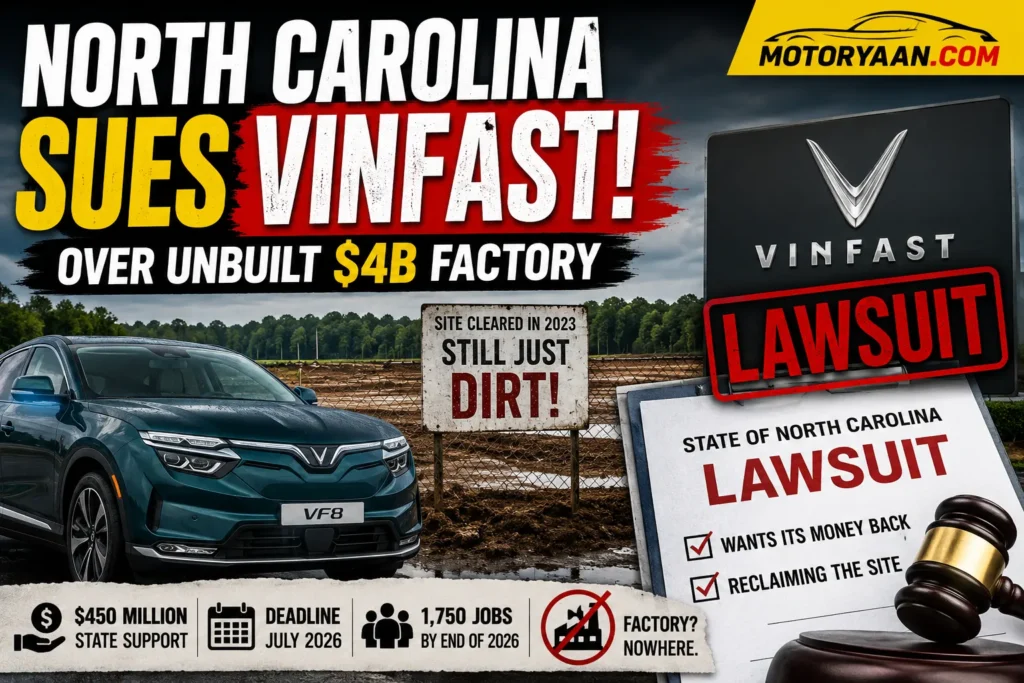
Vietnamese EV maker VinFast is now facing legal action in North Carolina after failing to build its promised manufacturing plant in Chatham County. The company cleared the land back in 2023, but nearly three years later, the site still sits empty.
North Carolina officials now want their money back.
North Carolina Files Lawsuit Against VinFast
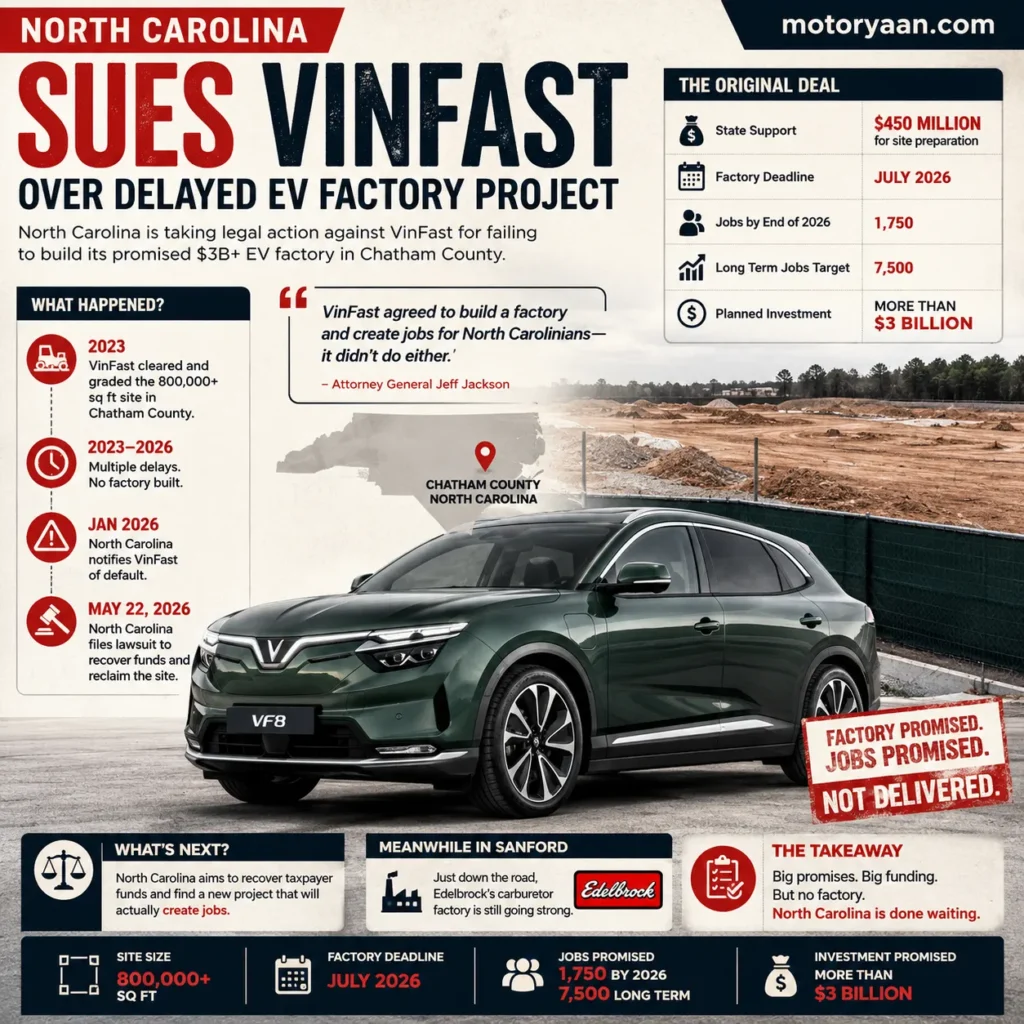
North Carolina attorney general Jeff Jackson announced the lawsuit on May 22, 2026. The state says VinFast failed to meet the terms of its agreement related to the planned EV factory near Raleigh.
The lawsuit aims to do two things:
- Recover reimbursements paid for site preparation
- Reclaim control of the Chatham County property
VinFast originally planned to build a massive manufacturing facility covering more than 800,000 square feet. The company also promised thousands of jobs and billions in investment.
That factory never happened.
What Was the Original Deal?
Back in March 2022, VinFast and North Carolina announced a major agreement tied to the automaker’s U.S. expansion plans.
Under the deal:
| Agreement Details | Commitment |
|---|---|
| State support | $450 million for site preparation |
| Factory deadline | July 2026 |
| Jobs required by end of 2026 | 1,750 |
| Long term jobs target | 7,500 |
| Planned investment | More than $3 billion |
The project was supposed to become one of the largest EV manufacturing investments in the state.
Instead, the land was cleared and graded in 2023, and progress stopped there.
With June 2026 approaching, the factory deadline is effectively impossible to meet.
North Carolina Says VinFast Broke the Agreement
Attorney general Jeff Jackson made the state’s position very clear.
According to Jackson:
“VinFast agreed to build a factory and create jobs for North Carolinians. It didn’t do either.”
He also said North Carolina included taxpayer protections in the agreement and now plans to use those protections to secure another project for the site.
The state informed VinFast in January 2026 that it had defaulted on the agreement.
VinFast Wanted More Time
VinFast argued that it still planned to build the factory, but the company reportedly pushed the timeline to 2028.
That response did not convince state officials.
At this point, North Carolina appears ready to move on and look for another industrial project that can actually create jobs at the site.
VinFast’s U.S. Struggles Continue
This lawsuit adds more pressure to VinFast’s already difficult U.S. expansion.
The automaker entered the American market with the VF8 electric SUV, but the vehicle received heavy criticism from reviewers after launch. Early concerns about quality, software, ride comfort, and overall refinement hurt the brand’s reputation in the U.S.
The delayed factory project only adds to questions about the company’s long term strategy in North America.
Automotive Manufacturing Still Exists in the Area
While the VinFast project stalled, automotive manufacturing in the region has not disappeared.
Sanford, located near the proposed factory site, still has active automotive industry operations. Edelbrock’s carburetor factory continues production there.
That contrast probably makes this situation even more frustrating for local officials who expected VinFast to become a major employer in the area.
Final Thoughts
VinFast arrived in the U.S. with aggressive expansion plans, huge investment promises, and ambitious EV targets. North Carolina supported the project with major financial incentives and prepared the site for construction.
But in 2026, the reality looks very different.
The factory was supposed to open next month. Instead, the state is suing the automaker and trying to take the land back.
Sources and References
Official Sources
- North Carolina Department of Justice Statement
Official press release from North Carolina attorney general Jeff Jackson about the lawsuit against VinFast and the state’s attempt to reclaim the site. - North Carolina Governor’s 2022 VinFast Announcement
Official announcement covering the original VinFast factory investment plan, job promises, and state support package. - Chatham County Economic Development VinFast Page
Official local economic development page explaining the planned EV and battery factory project in Chatham County.
Trusted News Sources
- Reuters Coverage
Global news coverage focused on the lawsuit, delayed construction timeline, and North Carolina’s legal action against VinFast. - Car and Driver Report
Automotive industry report explaining the failed factory timeline, investment promises, and VinFast’s U.S. struggles. - Axios Raleigh Report
Short local news coverage focused on North Carolina reclaiming the Chatham County megasite. - WRAL News Coverage
Detailed North Carolina local coverage discussing the lawsuit and future plans for the manufacturing site. - WUNC Public Radio Report
In depth local reporting with details about construction delays, state funding, and contract issues. - News & Observer Report
Regional business coverage explaining why the partnership between North Carolina and VinFast collapsed.
Additional Background Sources
- Reuters 2024 Delay Report
Earlier Reuters report discussing VinFast’s financial pressure and factory delays before the lawsuit happened. - Axios 2024 Factory Delay Article
Coverage of VinFast officially pushing the North Carolina factory opening to 2028.