
2026 Chevrolet Blazer EV vs Chevrolet Equinox EV
General Motors now has two electric SUVs that look similar on paper but target different buyers. The Chevrolet Blazer EV sits higher in the lineup, while the Chevrolet Equinox EV focuses on value and everyday practicality.
They share motors, batteries, and most of the tech, but the experience changes once you look at size, space, and pricing. Here is a clean, real-world breakdown based on actual usage and testing.
Powertrain and Performance
Both vehicles share motors and basic performance figures.
Front wheel drive models
220 horsepower in both SUVs
All wheel drive models
Around 300 horsepower in both
Performance differences are very small:
Blazer front wheel drive is about one-tenth of a second slower to 60 mph
All wheel drive models perform nearly the same
Only the Blazer SS shows a big performance jump
In everyday driving, they feel almost identical.
Battery, Range, and Charging
Both SUVs share the same basic battery setup.
Standard battery (both models):
85 kWh Ultium battery
Around 280 to 290 volt architecture
DC fast charging up to about 150 kW
Because of the lower voltage, these cars charge fastest on high-current 350 kW stations. On a typical 150 kW station, charging speeds may start slower until the battery warms up.
Blazer EV extra option:
110 kWh battery available in the SS trim for 2026
Exterior Size and Design Differences
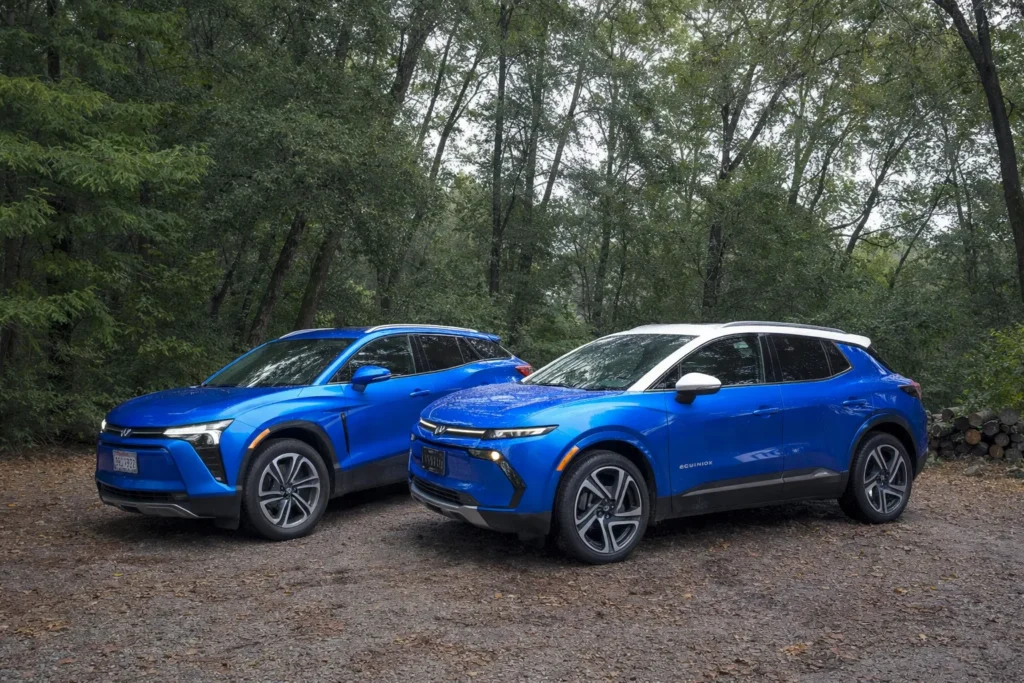
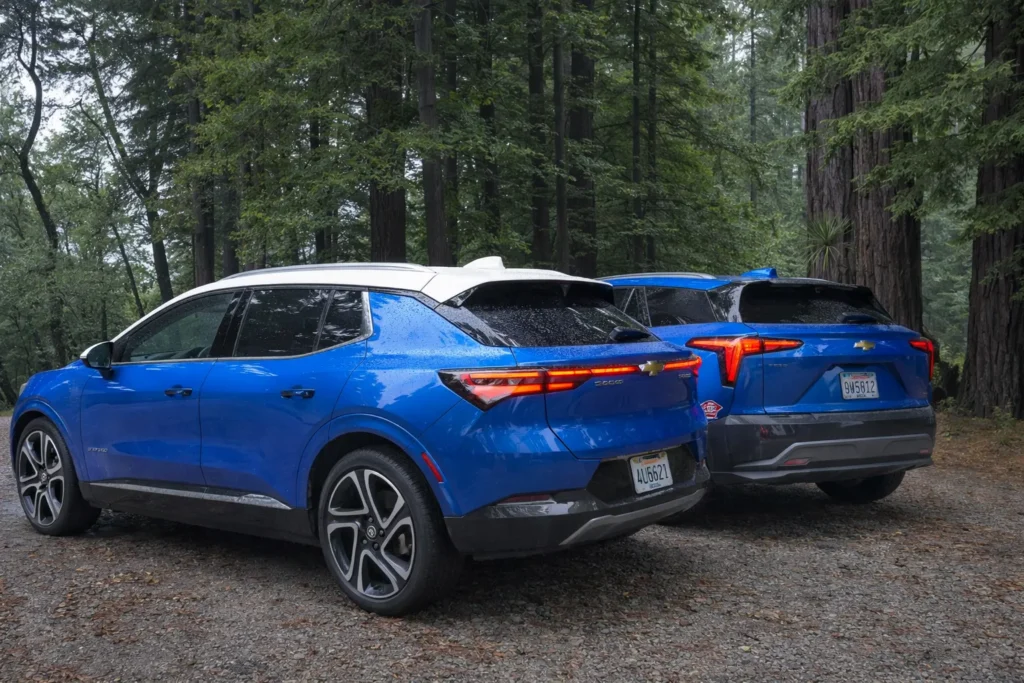
The Blazer EV is the larger vehicle. It is wider overall and sits on a much longer wheelbase, which directly affects interior space.
Key size impressions from real-world comparison:
Blazer EV is several inches wider than the Equinox EV
Rear seat width is about 4 to 5 inches more in the Blazer
Wheelbase is roughly 6 inches longer in the Blazer
Blazer uses wider 21 inch wheels with 275-section tires
Equinox uses 19 inch wheels with 255-section tires
Design is subjective, but the Equinox EV uses a more modern split headlamp layout, while the Blazer keeps a more traditional, cleaner rear design.
The Equinox also gets a few surprising touches:
Power pop-out door handles on some trims
Manual charge port door
Slightly more futuristic rear styling
The Blazer, on the other hand, gets:
Powered illuminated charge port door
Wider body and stance
More conventional exterior details
Interior Space and Practicality
The biggest difference between the two vehicles is inside.
Rear seat space
Blazer EV has noticeably more legroom
Rear bench is wider in the Blazer
Center seat is also wider in the Blazer
Easier child-seat installation in the middle position
The Equinox feels tighter in the second row, especially when compared back to back.
Cargo area comparison
| Feature | Blazer EV | Equinox EV |
|---|---|---|
| Cargo width | Wider opening and floor | Narrower between wheel wells |
| Total volume (seats up) | Slightly smaller on paper | Slightly larger on paper |
| Seats folded | More usable space | Less overall length |
| Underfloor storage | Single stage | Two-stage adjustable floor |
Even though the Equinox shows a slightly larger number on paper, the Blazer’s wider cargo opening makes it easier to load large items. If you carry furniture, tools, or big boxes, the Blazer feels more practical.
Interior Tech and Features
Both share a similar dashboard layout and software.
Common features:
Large central touchscreen
Digital instrument cluster
Similar steering wheel and control layout
Same infotainment system
Notable points:
No Apple CarPlay or Android Auto in either
Some trims get head-up display
Super Cruise available on higher trims
Base trims may have single-zone climate control
The software is generally responsive and easy to use, but lack of smartphone integration remains a common complaint.
Ride Comfort and Handling
Despite similar powertrains, their road manners differ slightly.
Ride quality
Both are comfortable
Blazer feels more relaxed due to longer wheelbase
Better ride comfort than Tesla Model Y and Ford Mustang Mach-E in testing
Handling
Equinox feels more nimble in tight turns and parking
Blazer feels heavier but more stable at speed
Braking
Both stopped from 60 mph in about 130 feet
Nearly identical results despite different tire sizes
Cabin noise
Around 60 dB at 50 mph in rain for both
Very similar noise levels
Efficiency
About 3.4 to 3.5 miles per kWh in real driving
Almost identical between the two
Price Positioning
From real-world examples:
Equinox EV tested around $50,000 in front wheel drive form
Blazer EV base all wheel drive was priced similarly or slightly lower in some markets
This overlap makes the choice more about size than price.
Key Differences at a Glance
| Area | Blazer EV | Equinox EV |
|---|---|---|
| Size | Larger overall | Smaller and easier to park |
| Rear seat space | More legroom and width | Tighter rear bench |
| Cargo usability | Wider opening, better for large items | Slightly more volume on paper |
| Ride comfort | More relaxed | Slightly firmer but still comfortable |
| Efficiency | Slightly lower | Slightly better |
| Performance | Similar, except SS | Similar overall |
| Price | Slightly higher in some trims | More value focused |
Which One Makes More Sense?
In real use, the decision is simple.
Choose the Equinox EV if you want:
Lower price focus
Easier city driving
Similar performance and efficiency
Choose the Blazer EV if you want:
Much more interior space
Wider rear seat
Better cargo usability
More comfortable highway ride
Unless you step up to the Blazer SS, the driving experience stays very close between the two. The real difference is space.
The Bottom Line
These two EVs exist for the same reason as many petrol SUV pairs. One targets value and urban buyers, the other targets space and comfort.
If space matters, the Blazer EV feels like the better long-term choice. If price and city usability matter more, the Equinox EV does the job just as well.
In short, this is not about performance. It is about size.
Chevrolet Blazer EV vs Equinox EV FAQs
Why did Chevrolet launch both the Blazer EV and the Equinox EV?
Chevrolet created both models for different types of buyers. The Equinox EV targets value focused shoppers who want a smaller and more affordable electric SUV. The Blazer EV is larger, wider, and aimed at buyers who want more interior space, comfort, and performance options like the Blazer SS.
Which EV is bigger, the Blazer EV or the Equinox EV?
The Blazer EV is noticeably larger. It has a longer wheelbase and a wider body. Inside, the rear seat is about four to five inches wider, and there is more legroom. The extra size makes it better for passengers and large cargo.
Do the Blazer EV and Equinox EV use the same battery?
Yes, both models share an 85 kWh Ultium battery in standard form. The battery operates at around 280 to 290 volts and supports DC fast charging up to about 150 kW. The Blazer EV also offers a larger 110 kWh battery in the SS trim.
How much power do these electric SUVs produce?
Front wheel drive versions of both models produce about 220 horsepower. All wheel drive versions increase output to around 300 horsepower. Performance is very similar between the two unless you choose the high performance Blazer SS.
Which one has more cargo space?
On paper, the Equinox EV shows slightly more cargo volume behind the rear seats. However, the Blazer EV has a wider cargo opening and floor, which makes it easier to load larger items. With the rear seats folded, the Blazer offers more usable space overall.
Do both EVs drive the same?
Yes, in most versions they feel very similar on the road. Acceleration, braking, and efficiency are close between the two. The main difference is comfort and size. The Blazer feels more relaxed on the highway, while the Equinox is easier to maneuver in tight spaces.
Do the Blazer EV and Equinox EV support Apple CarPlay or Android Auto?
No, both models run GM’s built in software and do not offer Apple CarPlay or Android Auto integration on the main display. This is a common setup across GM’s newer electric vehicles.
Which EV is more comfortable?
Both are comfortable, but the Blazer EV has a smoother and more relaxed ride because of its longer wheelbase. It feels more stable on highways, while the Equinox feels slightly more agile in city driving.
Which one is more efficient?
Efficiency is nearly identical. Real world testing shows both vehicles averaging about 3.4 to 3.5 miles per kWh on similar driving routes. The Equinox may have a slight edge because it is lighter.
Which one should buyers choose?
Buyers who want a more affordable and city friendly electric SUV should consider the Equinox EV. Those who want more interior space, a wider rear seat, and a more relaxed ride should look at the Blazer EV. The main difference comes down to size and practicality.