2026 Toyota Hilux Review: Expected Price, New Design, Interior Upgrades and Driving Experience

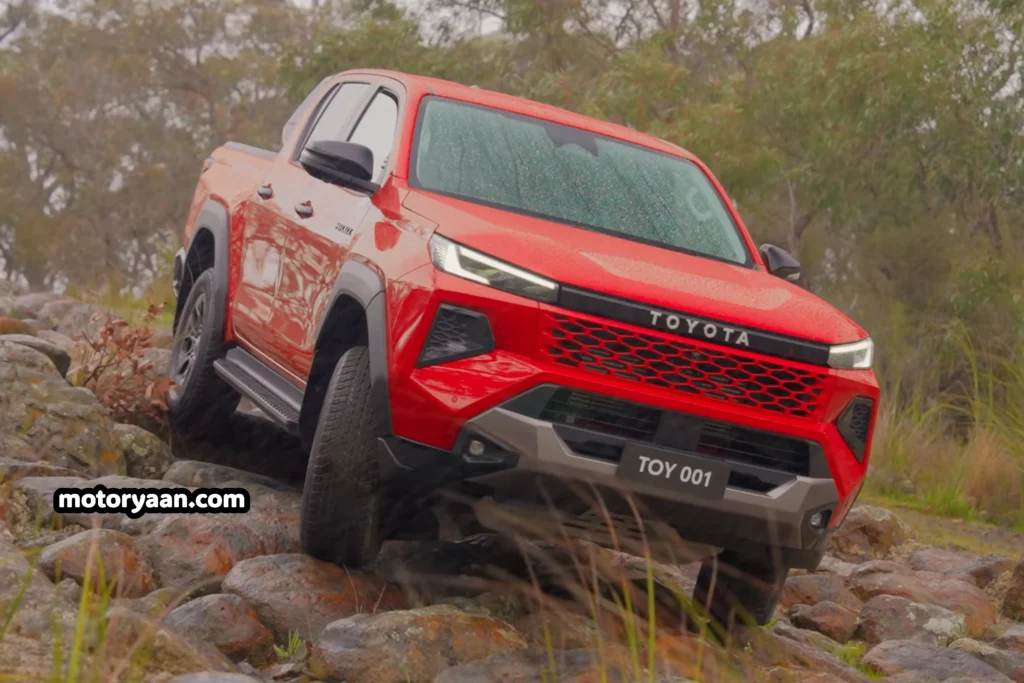
2026 Toyota Hilux front and side profile view showcasing aggressive headlights, grille, and body stance.

2026 Toyota Hilux: First Look Review

At first glance, it looks completely different from before, and Toyota is calling it an all-new generation. However, under the skin, it is still very similar to the outgoing Hilux. Throughout the review, there are a few red flags. There are meaningful improvements, but also decisions that may disappoint people expecting a fully new platform.

This article explains everything you need to know about the 2026 Toyota Hilux: pricing expectations, design, interior, mechanical changes, and driving experience.

Pricing and Variants

Toyota has not officially confirmed pricing.

Based on past Toyota pricing behavior, the new Hilux is expected to be priced 3000 to 4000 dollars higher than the current equivalent models. For example, a base SR dual-cab 2.8 turbo diesel currently at 52,000 dollars may move closer to 56,000 dollars.

Key changes to the lineup:

  • 2.7 L petrol engine: deleted

  • 2.4 L turbo diesel: deleted

  • Low-rider variants: deleted

  • Only the 2.8 L turbo diesel remains

Because of these deletions, the entry price into the Hilux range will be higher.

Engine, Platform, and Mechanical Changes

No change in powertrain from the outgoing Hilux.

2.8 L turbo diesel (1GD)

  • 150 kW

  • 500 Nm

  • Six-speed Aisin torque converter automatic

There is no GR Sport 165 kW tune and Toyota has no plan to offer it.

Platform:

  • Still riding on the old IMV platform

  • Not using Toyota’s newer-generation body-on-frame platform

Mechanical updates:

  • Hydraulic steering replaced with electric power steering

  • New brake booster

  • Re-calibrated traction control and drive modes

  • New liquid sealed engine mounts

  • Additional body mounts and weld points for better refinement

  • Rear suspension with new damper valving to improve ride comfort

These changes are intended to make the Hilux ride more comfortably and smoothly.
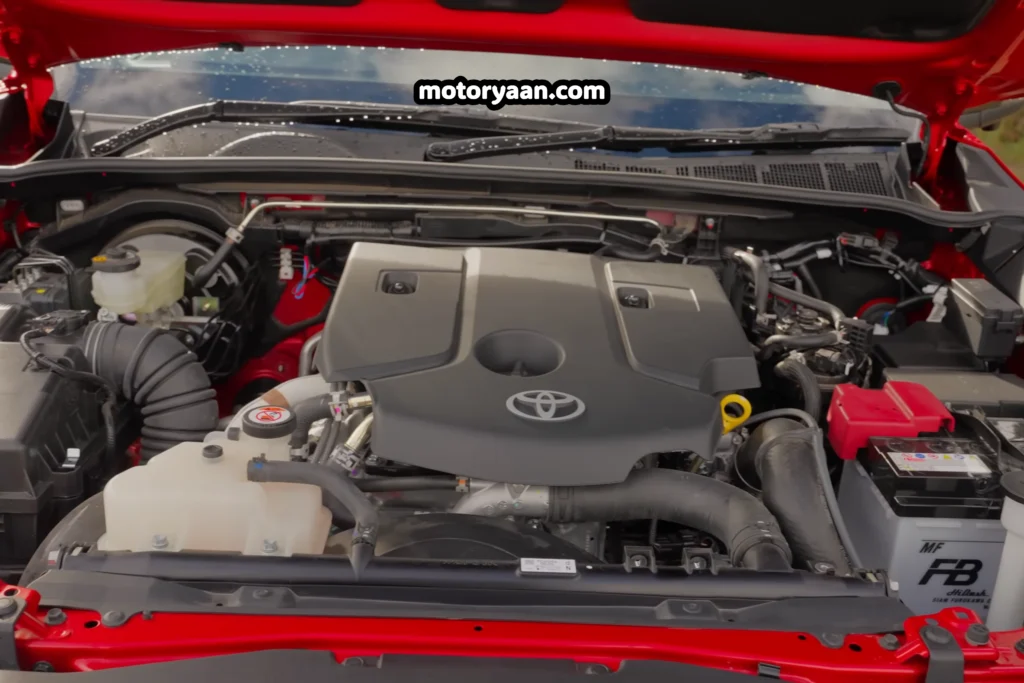
2026 Toyota Hilux engine bay featuring the 2.8-litre turbo-diesel engine.
Engine compartment of the 2026 Toyota Hilux showcasing the 2.8-litre diesel unit.

Exterior Design

Toyota has done a remarkable job with the styling, considering the truck is still built on the old platform. The 2026 Hilux looks tougher, sharper, and more modern.

Highlights:

  • Front fascia is 100 mm taller

  • Exterior design led by Toyota Australia

  • Styling inspired by a sumo pose stance

  • New aggressive grille with heritage Toyota lettering

  • Updated 360 degree camera system

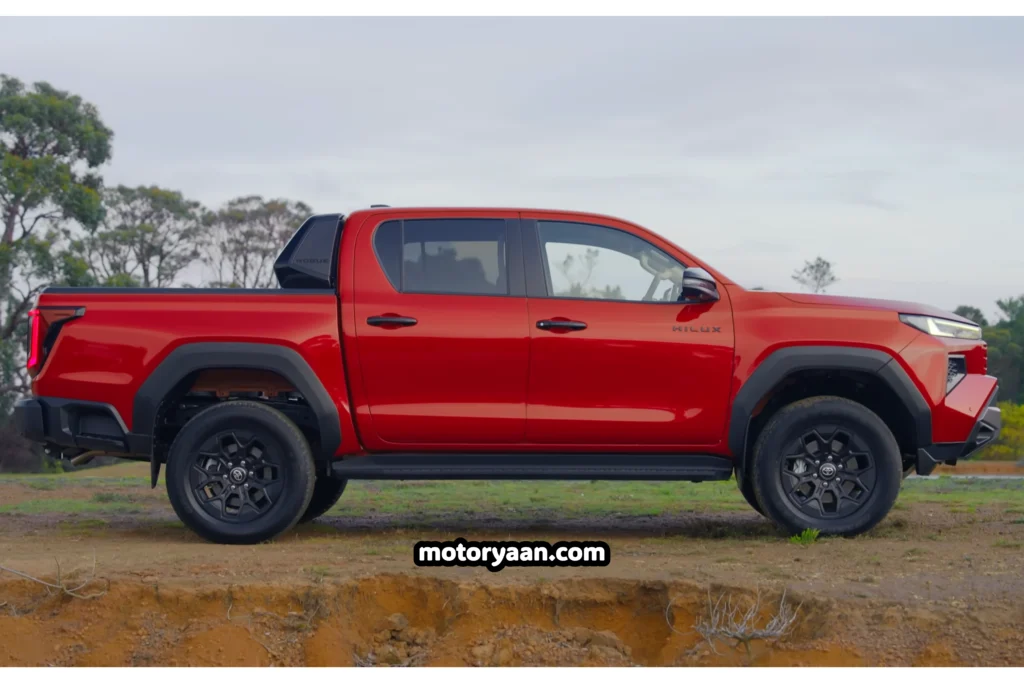
  • New alloy wheels, privacy glass, and side sail panel design

What remains unchanged:

  • Doors, roof, cabin dimensions are carried over from the previous model

The wider track width from the previous Rogue variant is gone.

Practical additions:

  • New integrated side step similar to Ford Ranger and Kia Tasman
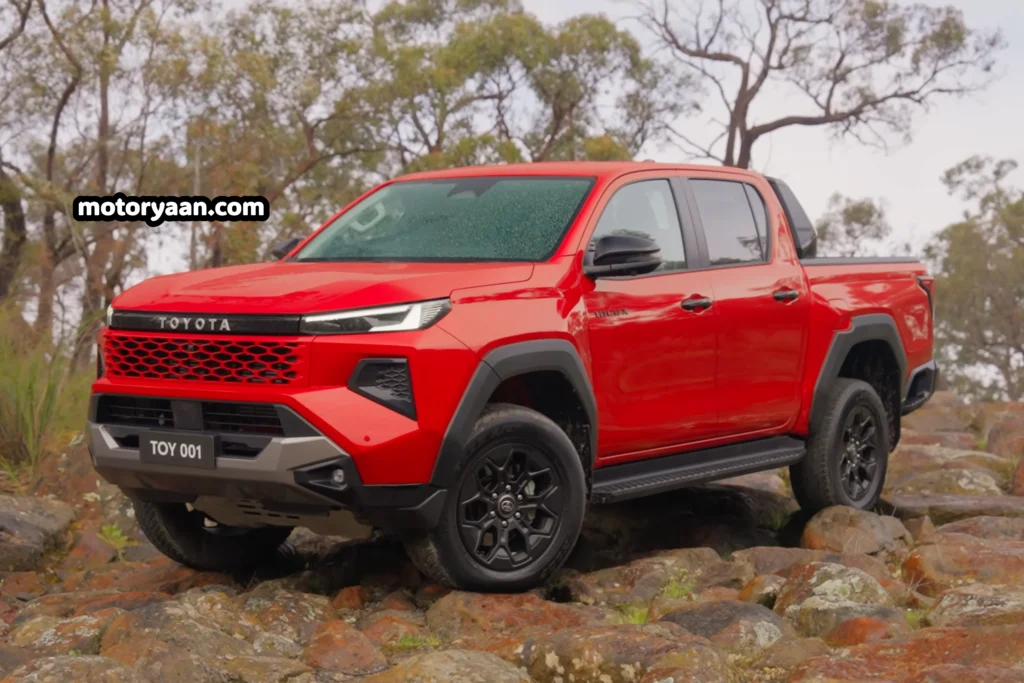
2026 Toyota Hilux front and side profile view showcasing aggressive headlights, grille, and body stance.
2026 Toyota Hilux showing its bold front fascia and muscular side profile design.
2026 Toyota Hilux front profile view highlighting the new grille and LED headlights.
Close view of the 2026 Toyota Hilux front grille and lighting design.
2026 Toyota Hilux full side profile view showing proportions, wheels, and stance.
Side profile angle of the 2026 Toyota Hilux, highlighting body lines and road presence.
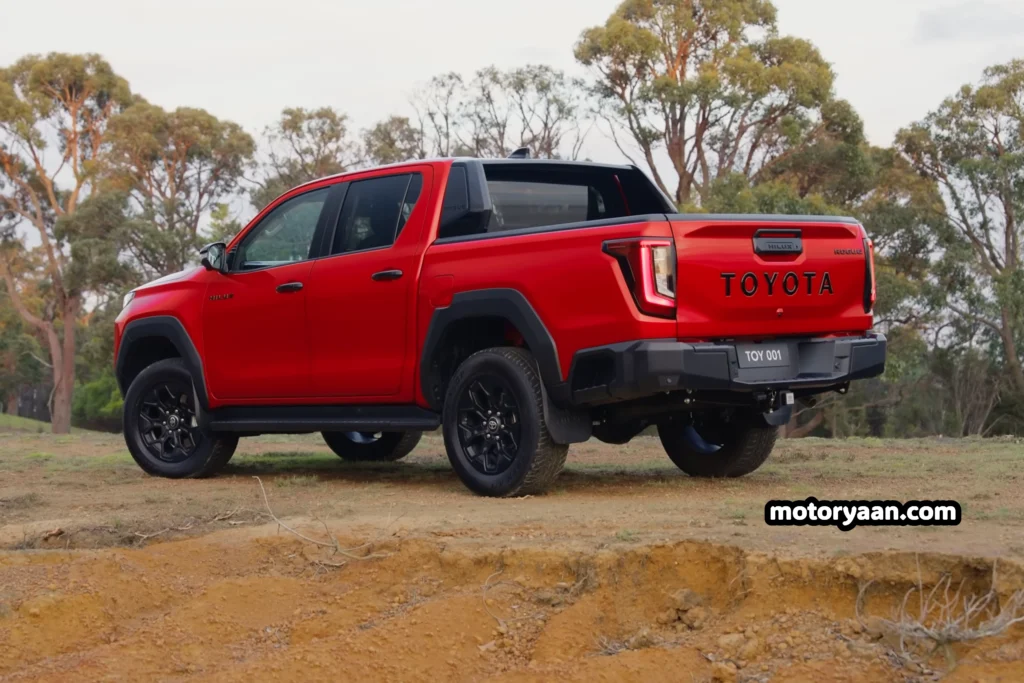
2026 Toyota Hilux rear and side profile displaying LED taillights and tailgate badging.
Rear and side design of the 2026 Toyota Hilux featuring redesigned tailgate and updated taillights.

Rear and Tub

  • Tail-lights now LED, but turn indicators are still halogen

  • Toyota logo is embossed and debossed into the tailgate

  • Towing remains 3.5 tonnes braked

Tub dimensions (unchanged from old Hilux):

  • Length: 1570 mm

  • Width: 1645 mm

  • Width between wheel arches: 1190 mm (cannot fit a Euro pallet)

  • Depth: 481 mm

In the Rogue trim:

  • Carpeted tub

  • Electronic roll-top tonneau cover

Payload expected to remain about 950 kg.

Important red flag: retaining the exact tub dimensions and packaging from the previous Hilux.
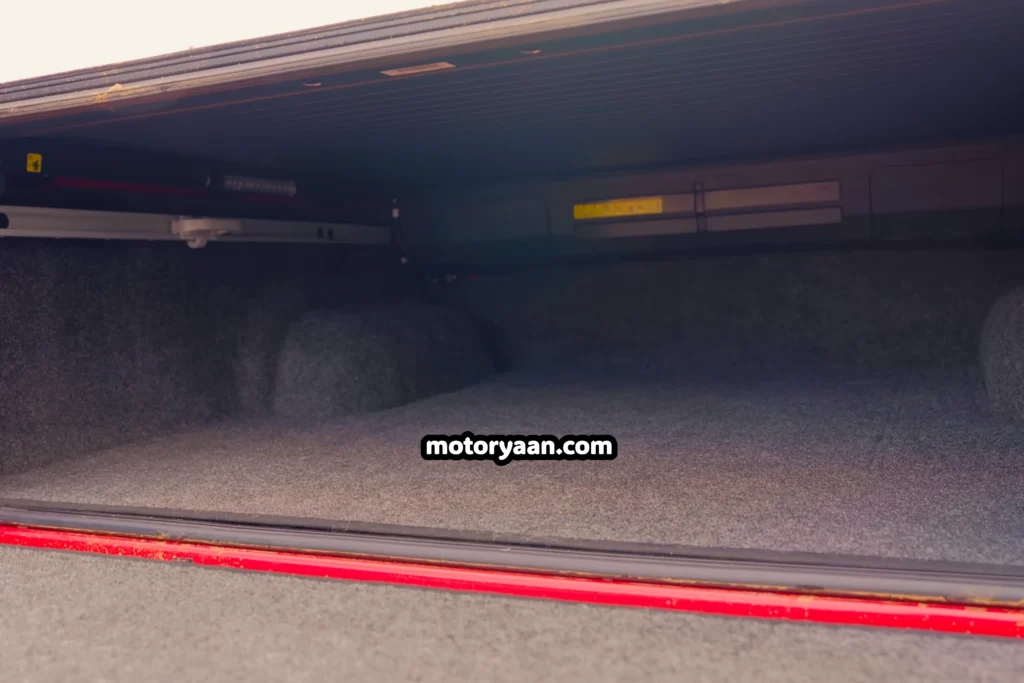
2026 Toyota Hilux rear tub cargo bed showing loading space and deck area.
Cargo bed area of the 2026 Toyota Hilux showing rear tub layout.

Interior and Features

Toyota has finally addressed the biggest complaint of the outgoing Hilux: the cabin is now quieter and more premium.

Key improvements:

  • Soft-touch materials across the dashboard and touchpoints

  • Extra sound insulation and deadening

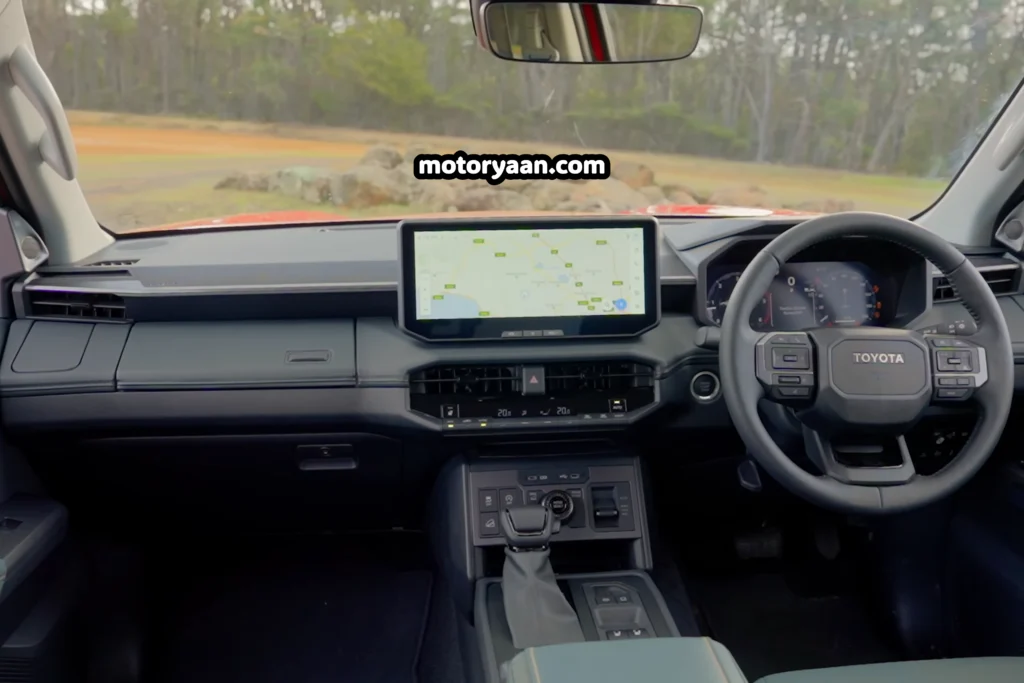
  • 12.3 inch infotainment screen

  • Wireless Apple CarPlay and Android Auto

  • Fully digital instrument cluster

  • Upgrade 360 camera system

  • Heated steering wheel and heated seats (single-stage)

  • USB-C fast chargers

  • Properly integrated JBL audio system

  • Redesigned seats with a softer center armrest

Functional layout improvements:

  • Drive mode selector and 4WD selector grouped together

  • Buttons for locking rear diff, hill descent control, and auto start stop

However, because the cabin structure is unchanged:

  • Driving position is still compromised

  • Rear seat space is still tight

Rear passengers still get mostly hard plastics.

Interior verdict: looks new, feels premium, but ergonomics remain old.
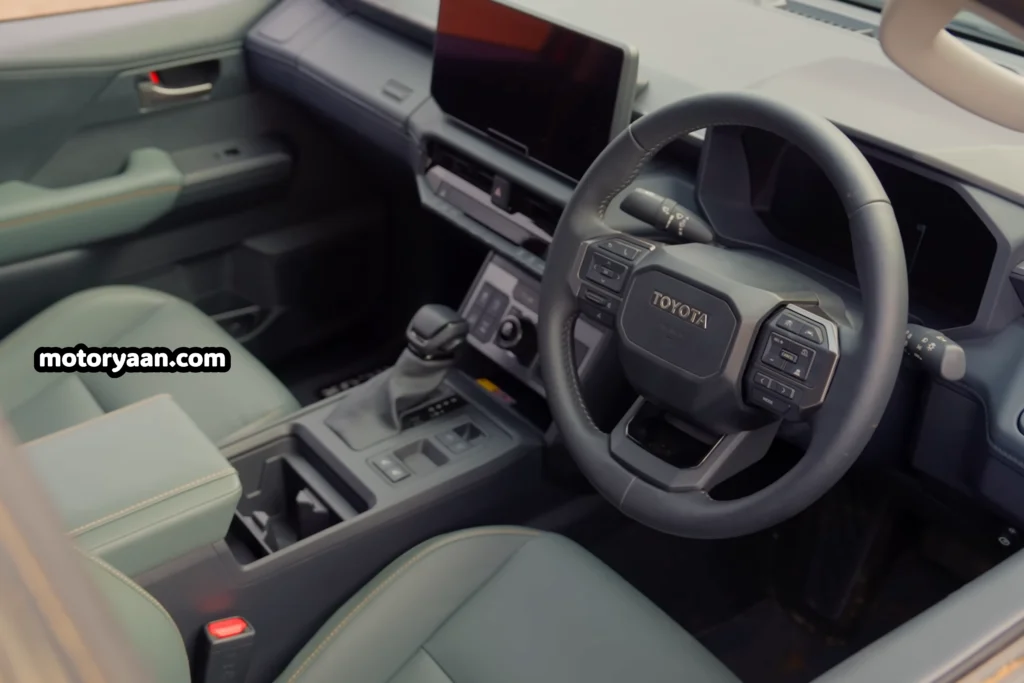
2026 Toyota Hilux dashboard interior showing steering wheel, digital instrument cluster, infotainment, center console, and front seats.
Interior of the 2026 Toyota Hilux featuring the new dash layout, digital cluster, and infotainment display.
2026 Toyota Hilux complete dashboard with steering wheel, infotainment system, and instrument cluster.
Complete dashboard setup of the 2026 Toyota Hilux with upgraded infotainment and instrumentation.

Driving Experience

The reviewer has already driven the 2026 Hilux.

Key takeaways based on provided data:

  • Ride and handling feel different from the previous Hilux

  • New electric steering gives a lighter and more controlled steering feel

  • Revised rear dampers help with better ride comfort

  • Cabin noise levels are significantly reduced

Full driving impressions will follow later.

Final Thoughts

The 2026 Toyota Hilux brings noticeable improvements where it matters:

What Toyota nailed

  • Aggressive and modern exterior styling

  • Huge leap in interior quality and technology

  • Quieter cabin with improved comfort

  • Better steering and suspension tuning

What Toyota did not change

  • Old IMV platform underneath

  • Same engine and gearbox as the previous Hilux

  • Cramped cabin space unchanged

  • Tub dimensions unchanged (still cannot fit a Euro pallet)

The Hilux looks and feels more premium, but mechanically, it is still tied to the past.
FAQ

2026 Toyota Hilux

Q1 Is the 2026 Toyota Hilux truly an all-new generation?
No. It looks all new on the outside but under the skin it is very, very much like the old Hilux. The review repeatedly points out that the IMV platform and many cabin and tub panels are carried over from the current model.
Q2 Which engines and variants have been removed or retained?
The 2.7 L petrol engine is deleted. The 2.4 L turbo diesel is deleted. Low-rider variants are gone. The 2026 Hilux is offered with the 2.8 L turbo diesel only, which pushes the entry price higher.
Q3 What are the expected price changes?
Toyota has not published official pricing. Based on previous Toyota behaviour, the reviewer estimates roughly $3,000 to $4,000 more than the equivalent older Hilux. Example: a base SR dual-cab 2.8 turbo diesel currently at $52,000 could move closer to $56,000. This estimate is speculative and final pricing will be confirmed at launch.
Q4 Has the Hilux's tub changed? Can it carry a Euro pallet?
The tub is visually updated but the core dimensions remain the same as before. Length is 1570 mm, width 1645 mm, width between wheel arches 1190 mm, and depth 481 mm. The width between wheel arches still cannot accept a Euro pallet. Retaining the old tub packaging is flagged as a downside.
Q5 What has changed inside the cabin?
Interior improvements are significant: soft-touch materials, more deadening and insulation, a quieter cabin, a 12.3 inch infotainment display with wireless Apple CarPlay and Android Auto, a full digital instrument cluster, upgraded JBL audio integration, heated steering wheel and seats (single-stage), USB-C fast chargers, and redesigned seats. Despite these upgrades, the cabin structure and driving position still reflect the old platform, so leg and foot angles remain compromised.
Q6 Has the engine or transmission changed?
The powertrain is unchanged: the 1GD 2.8 L turbo-diesel remains, producing 150 kW and 500 Nm and paired to a six-speed Aisin torque-converter automatic. The higher 165 kW JR/GR Sport tune is not offered in the reviewed market.
Q7 What mechanical updates were made to improve ride and refinement?
Key mechanical changes: hydraulic steering replaced by electronic power steering, a new brake booster, re-calibrated traction control and drive modes, liquid-sealed engine mounts, additional body mounts and weld points, and revised rear damping with new valving for improved ride comfort and reduced vibration.
Q8 How does the new Hilux drive?
The reviewer confirms they have driven the 2026 Hilux and reports the driving feel is different and improved versus the old Hilux: lighter, more controlled electric steering, better ride from revised dampers, and a noticeably quieter cabin. A full detailed driving impressions video and write-up were embargoed at the time of the notes and were due to follow shortly.
Q9 What are the strongest positives and the biggest red flags?
Positives: bold, aggressive styling; much improved interior quality and tech; quieter cabin; better steering and suspension tuning. Red flags: still based on the old IMV platform, same engine and gearbox, unchanged tub packaging that cannot fit a Euro pallet, and tighter cabin ergonomics despite new trim and materials.
Q10 When will full pricing and full driving impressions be available?
Pricing will be confirmed closer to the official launch. The reviewer expected a December launch window for official pricing and promised a full driving impressions video and article shortly after the test drive; at the time of the notes the detailed driving review was said to follow in about two days.

Related articles