2026 Range Rover Evoque
Table of Contents
Is the cheapest Range Rover still worth buying?
The Range Rover Evoque is the most affordable way into the Range Rover badge. Prices start at just over £44,000 in the UK. That is serious money when a Audi Q3, BMW X1, or Volvo XC40 costs less.
So the obvious question is simple.
Are you paying for the badge, or is the Evoque actually good?
Let’s break it down properly. Engines, trims, practicality, reliability, and what is coming next in 2027.
Engines explained: Which Evoque should you buy?
The Evoque range includes diesel, petrol, and plug in hybrid options.
D165 Diesel
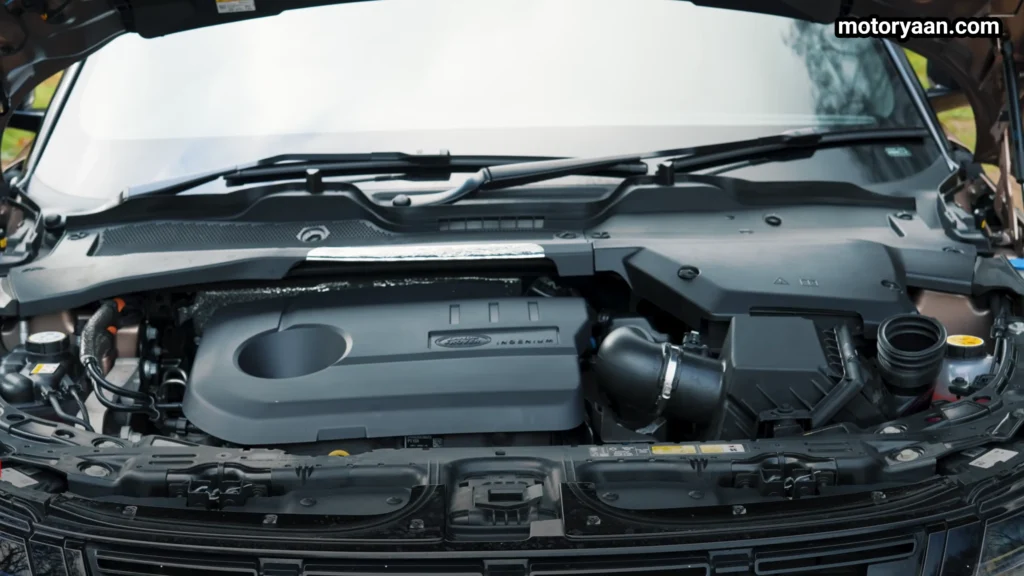
2.0 litre 4 cylinder mild hybrid
161 bhp
Around 44 mpg official
D200 Diesel
2.0 litre 4 cylinder mild hybrid
201 bhp
Similar official economy
Noticeably stronger acceleration
The D200 costs just over £1,000 more than the D165. For most private buyers, this is the sweet spot. Better performance, minimal extra cost.
P160 Petrol
1.5 litre 3 cylinder mild hybrid
158 bhp
Around 35 mpg official
0 to 60 mph in about 10 seconds
It is not very quick and not especially efficient. Unless you dislike diesel strongly, the D200 makes more sense.
P270e Plug in Hybrid
This pairs the 1.5 litre petrol engine with an electric motor.
265 bhp combined
0 to 60 mph in under 7 seconds
Official electric range around 38 miles
In winter conditions, expect around 25 to 30 miles of electric driving. That matches real world testing from multiple UK reviews.
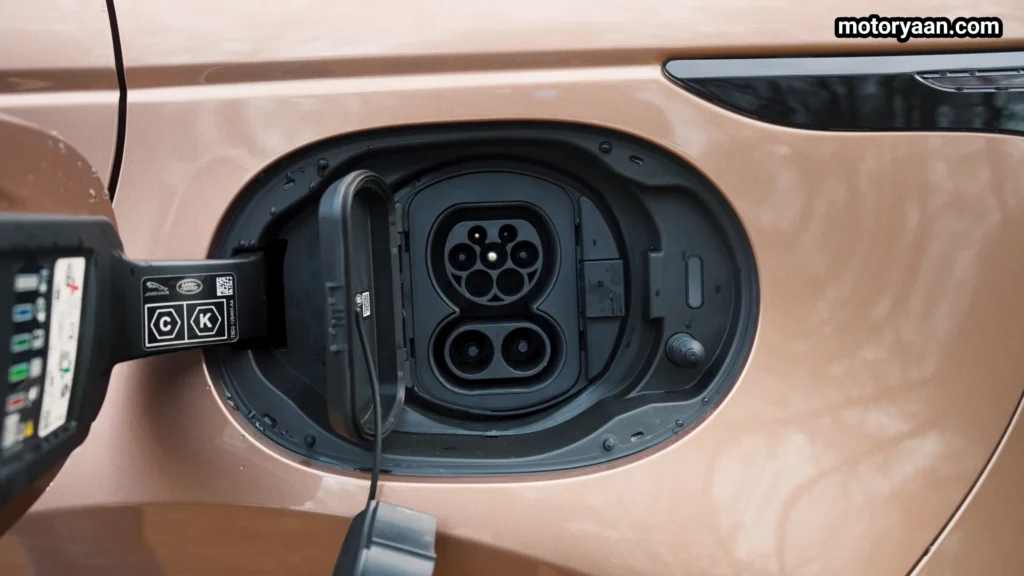
It uses a CCS charging port. On a rapid charger, 0 to 80 percent can take around 30 minutes. At home on a 7 kW wallbox, a full charge takes about 2 hours and 15 minutes.
Important reality check:
Public charging often costs more than petrol
With a flat battery, expect around 27 to 30 mpg
It costs roughly £3,700 more than a D200
For private buyers, it takes a long time to recover that price gap.
For company car drivers, Benefit in Kind tax makes the plug in hybrid far more attractive.
Rivals like plug in versions of the Q3 and X1 offer longer electric ranges, which can mean lower tax bands.
Design: Still fresh after eight years
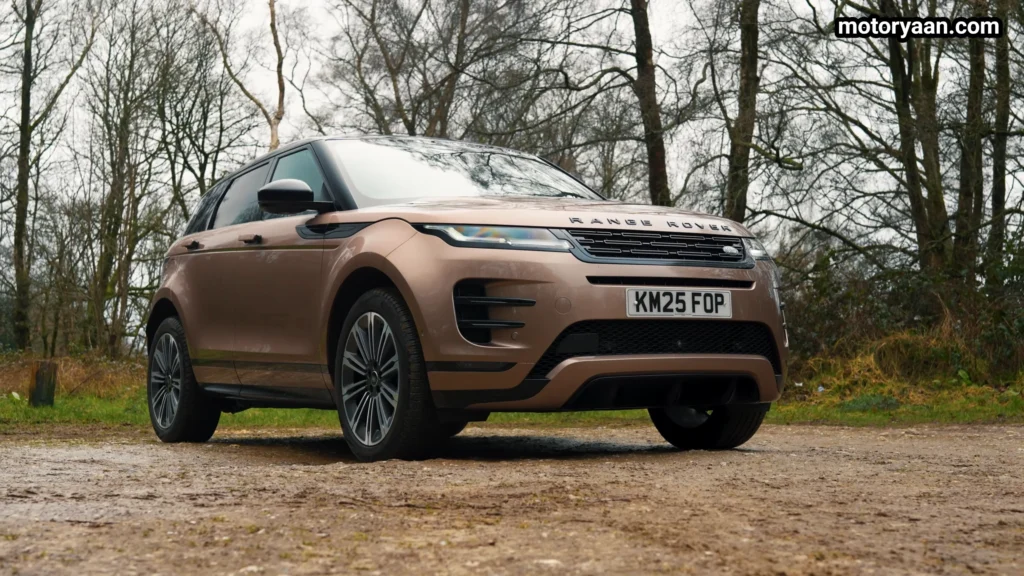
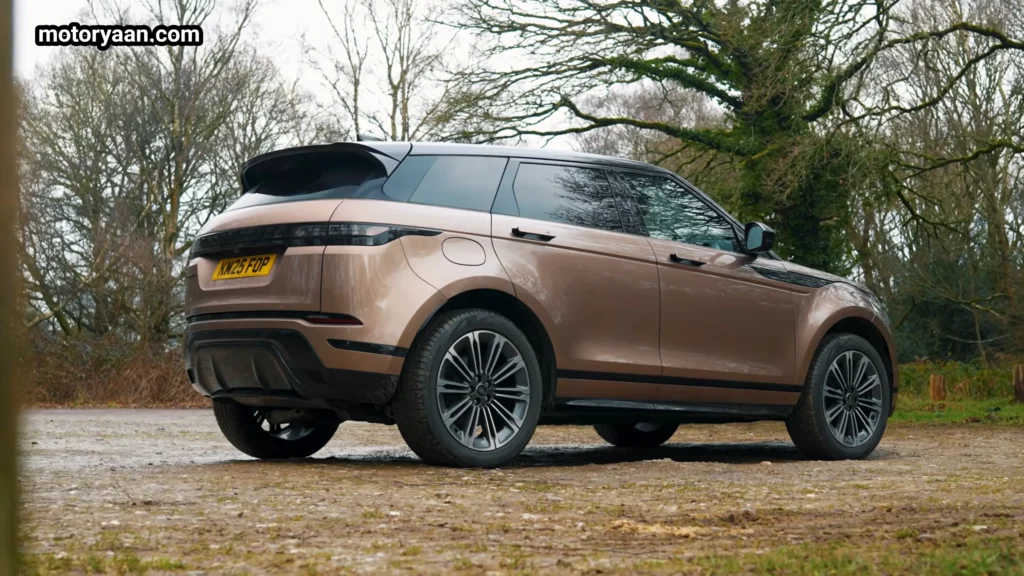
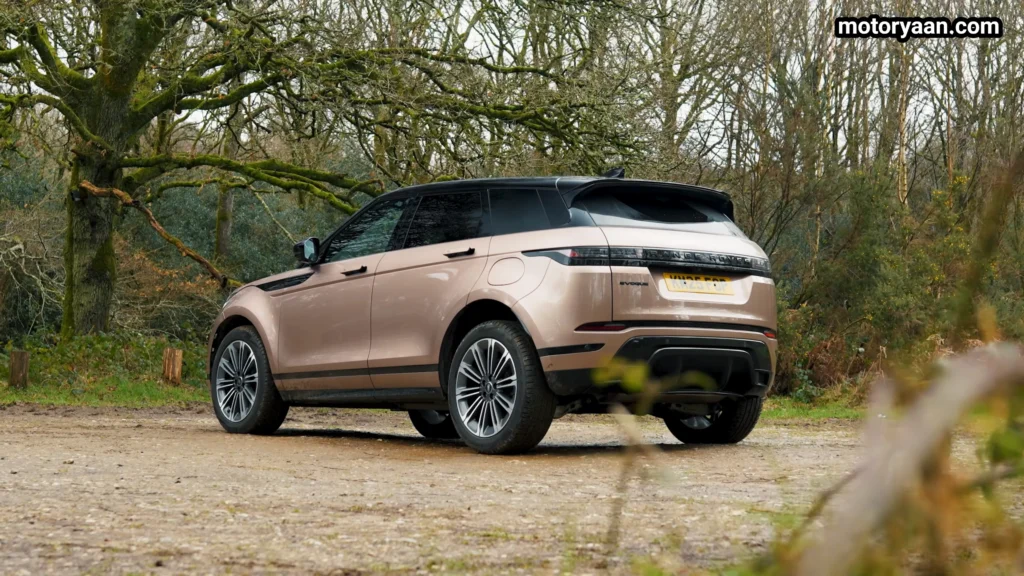
The second generation Evoque launched in 2018. On paper, that makes it one of the older cars in this class. In reality, it still looks modern.
Updates over the years have been subtle:
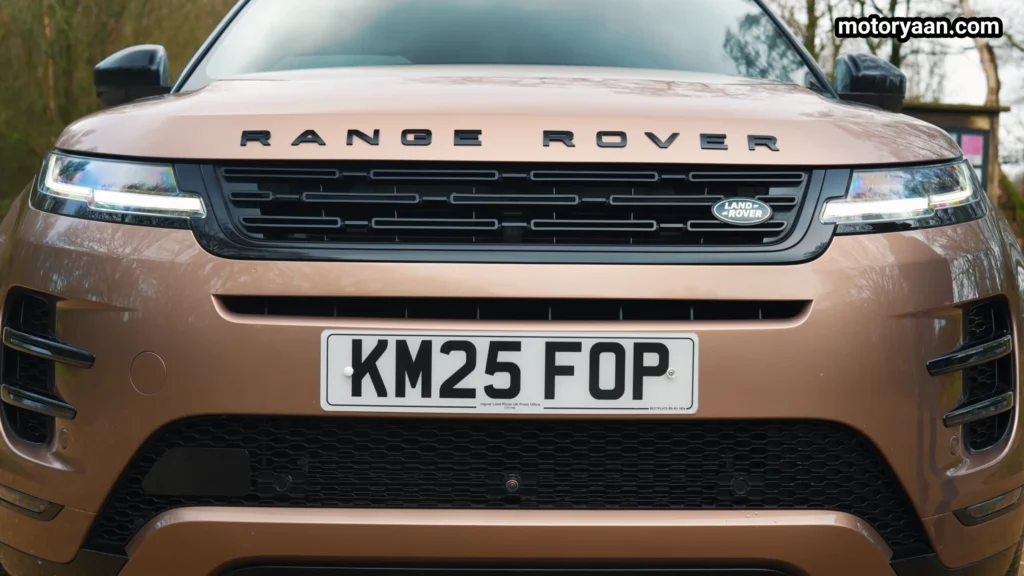
Revised grille pattern
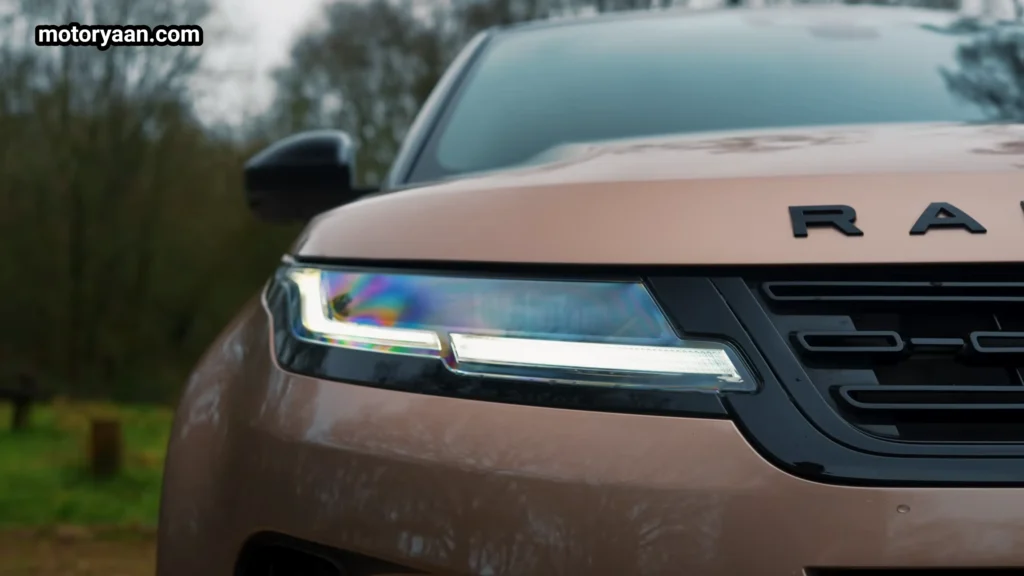
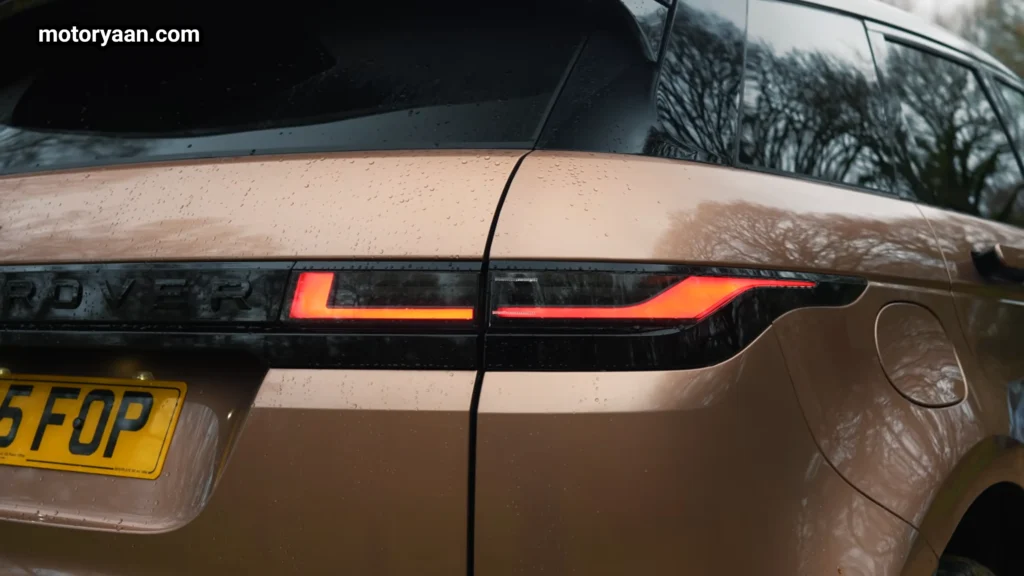
New light signatures front and rear
Updated alloy wheel designs
New paint colours
That is about it. And honestly, that tells you something. The original 2011 Evoque changed the small SUV market. This one evolved that look rather than reinventing it.
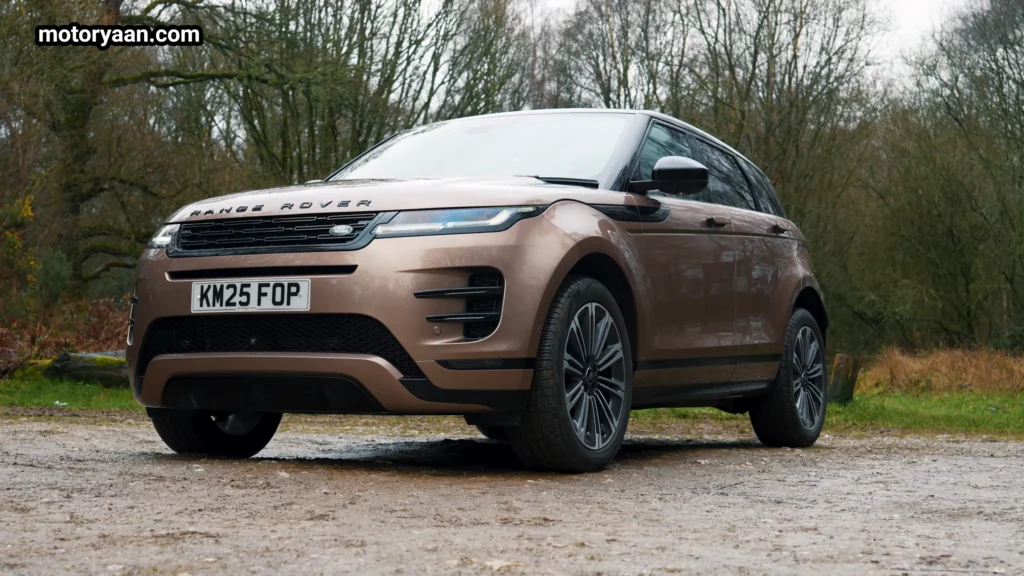
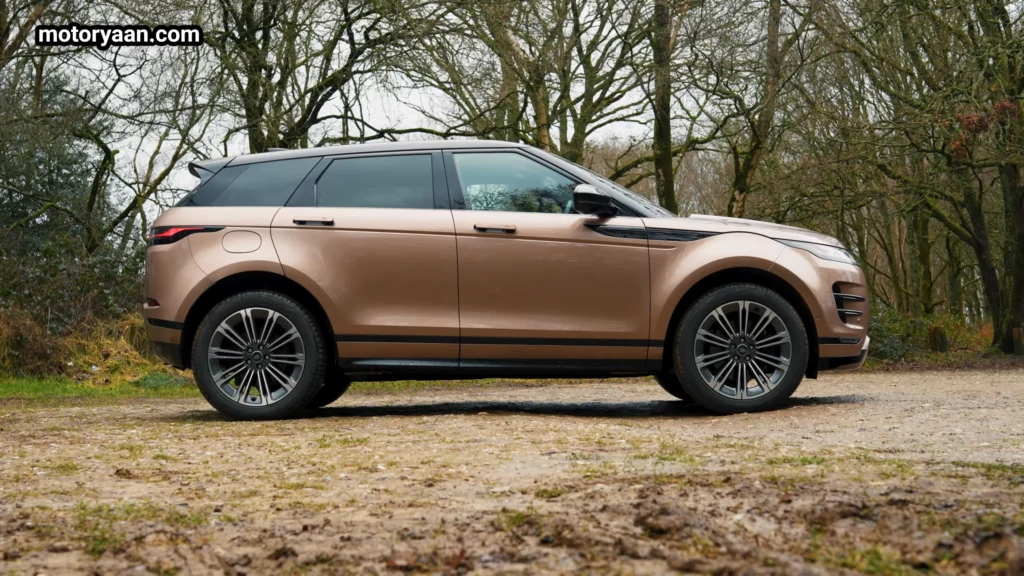
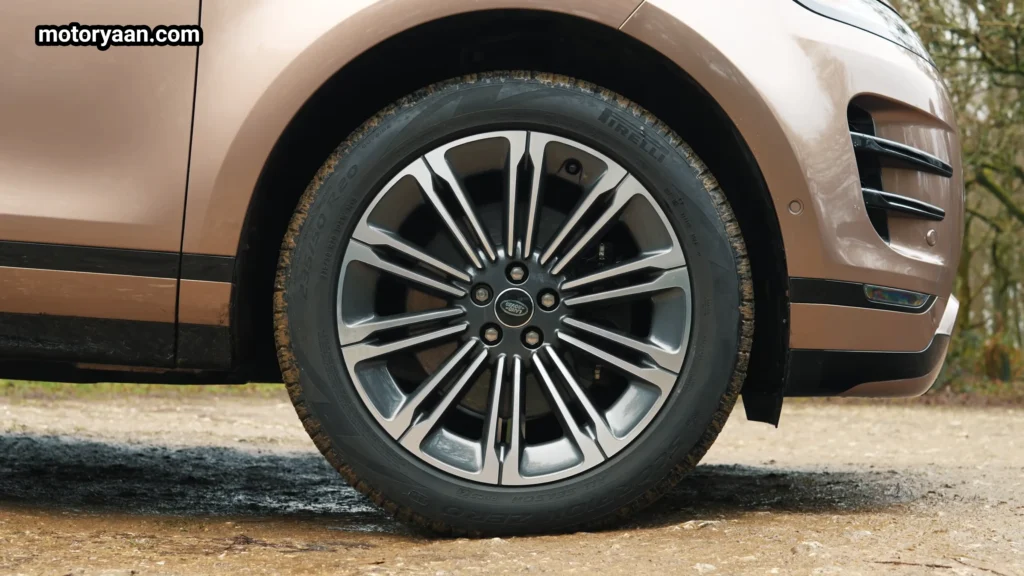
If you like the 20 inch Style 1085 gloss dark grey alloys with diamond turned contrast finish, they come standard on Autobiography trim. On mid spec trims they cost around £200 extra. On entry level S trim they add roughly £1,680, which feels steep. The standard 18 inch wheels make more financial sense.
Paint and options costs
White is the only no cost paint. Everything else costs extra.
Example:
Corinthian Bronze paint costs around £750
Black contrast roof costs around £650
Black exterior pack costs about £920
The black pack mainly adds gloss black detailing to the grille, vents, and badges. It looks smart, but the Evoque is not cheap to begin with. Choose carefully.
Interior: Premium feel, but some frustration
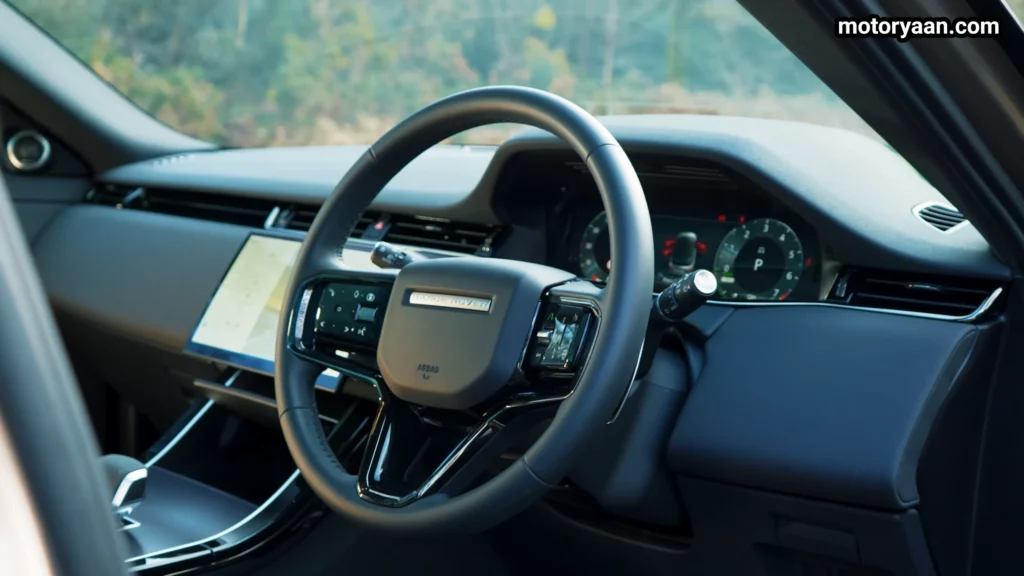
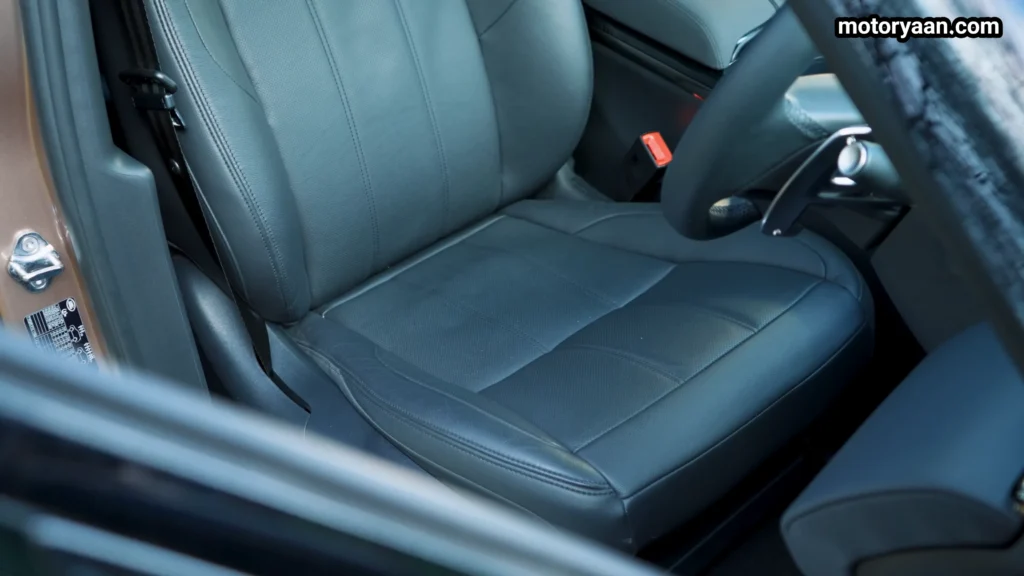
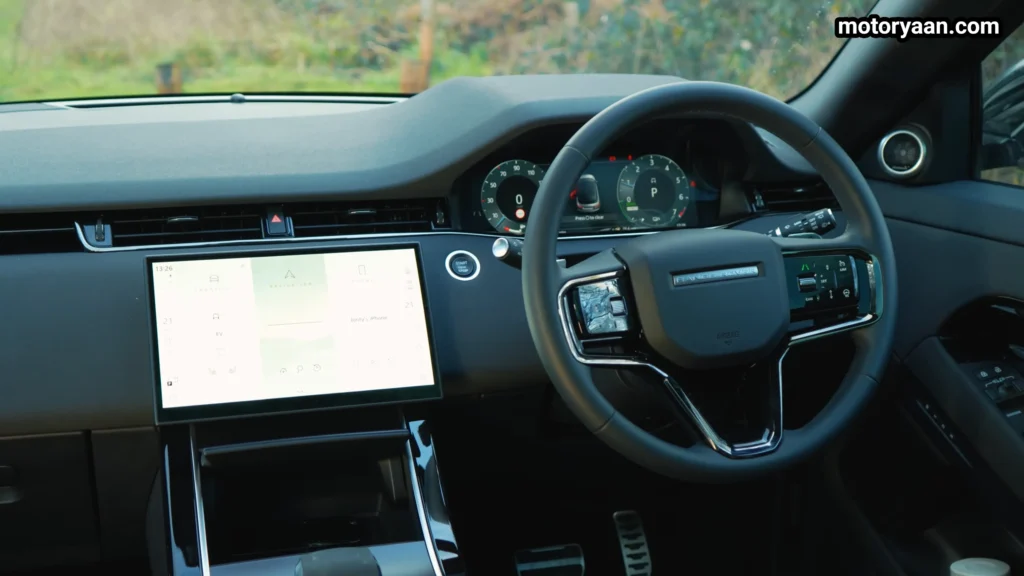
The driving position is excellent. You sit high, like in a proper SUV. Adjustment is generous. Even entry level models get 12 way electric seats.
Standard equipment includes:
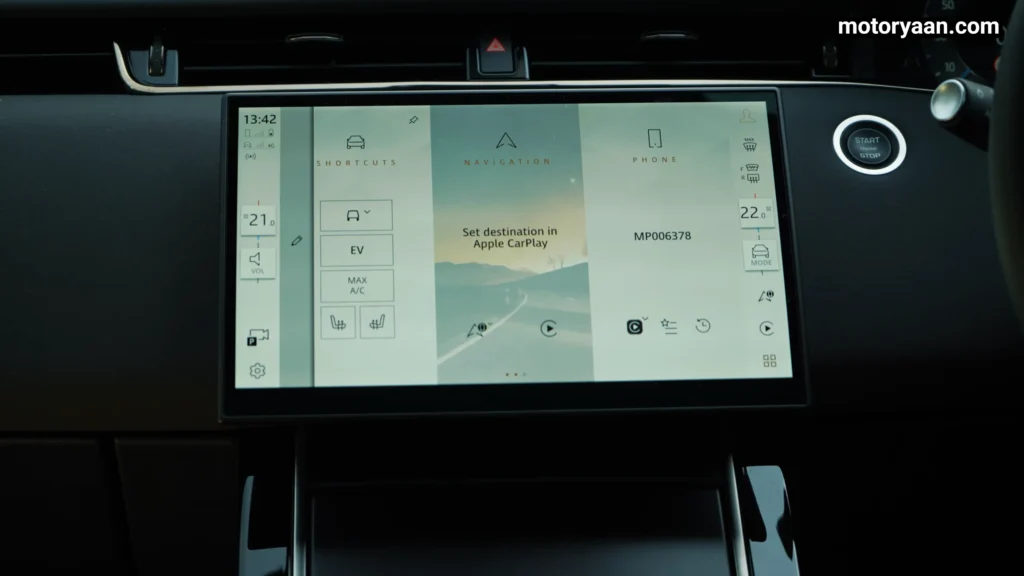
11.4 inch curved touchscreen
Apple CarPlay
Android Auto
Wireless phone charging
Front and rear parking sensors
3D surround camera
Material quality feels a step above the Q3 and X1. The dashboard and door tops use soft touch materials. Real leather seats come as standard, unlike some rivals that use synthetic alternatives.
One clear downside: physical climate controls are gone. You now adjust temperature through the touchscreen. It works, but it feels fiddly. Physical knobs were easier. Many manufacturers have gone this route. It is not progress.
Storage is average:
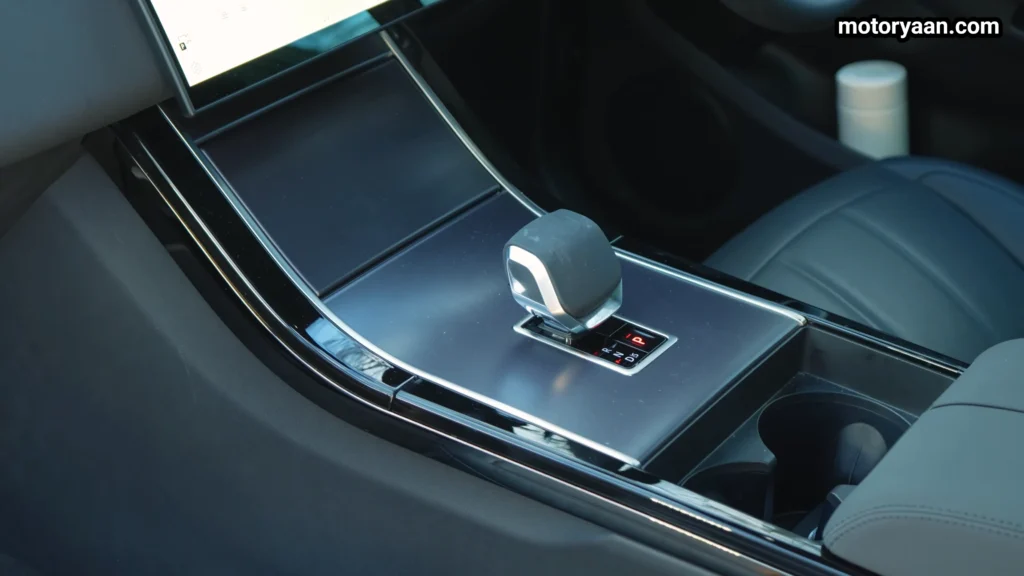
Two cup holders
Split lid centre armrest storage
Decent door bins
Covered phone charging tray
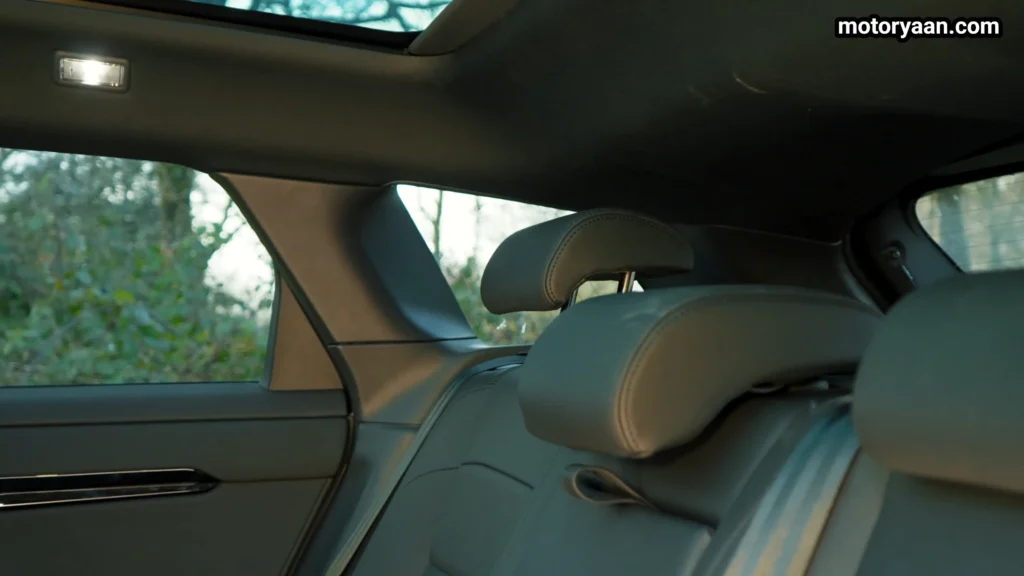
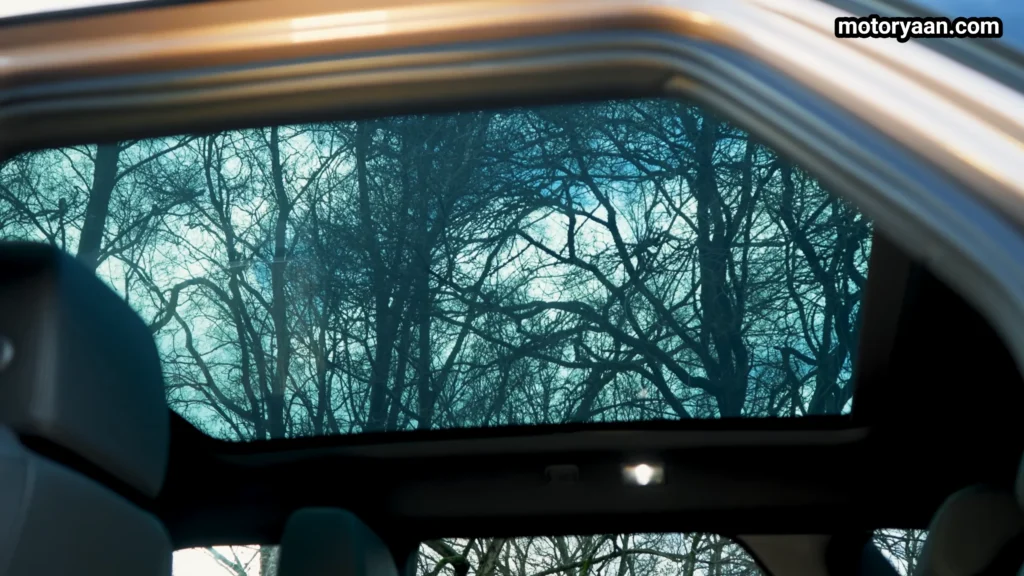
Overall, the cabin feels solid and premium. Just avoid overly grey colour schemes if you want more character.
Boot space and practicality
The Evoque is slightly shorter than most rivals. That affects practicality.
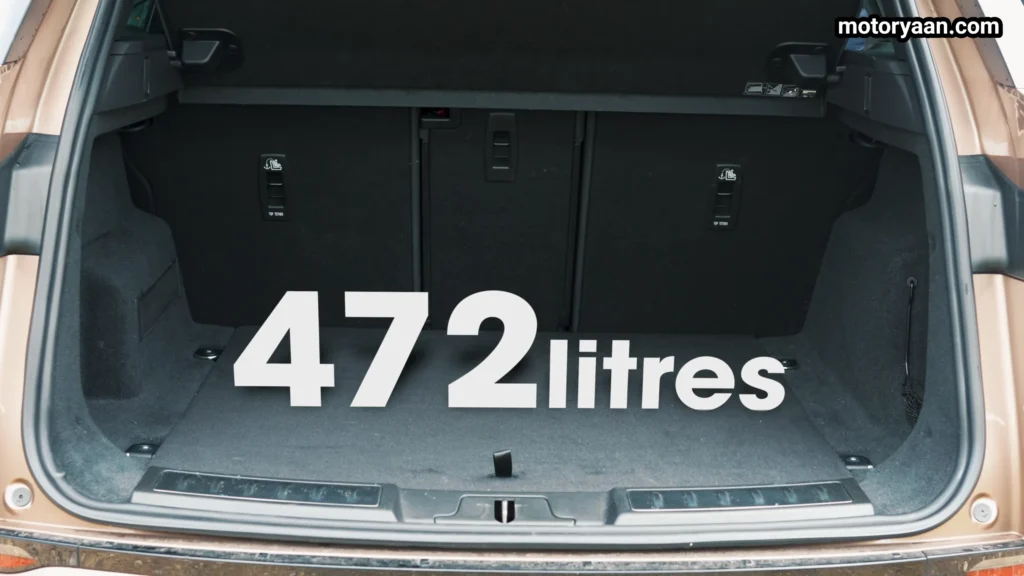
Under the parcel shelf, it fits five carry on style suitcases. For comparison:
BMW X1 fits around eight
Audi Q3 fits around six
Volvo XC40 fits around seven
Five is not class leading. It is similar to what you get in some superminis.
Rear seats split 40 20 40. The load floor stays flat when folded, with no major step. All versions get a powered tailgate as standard.
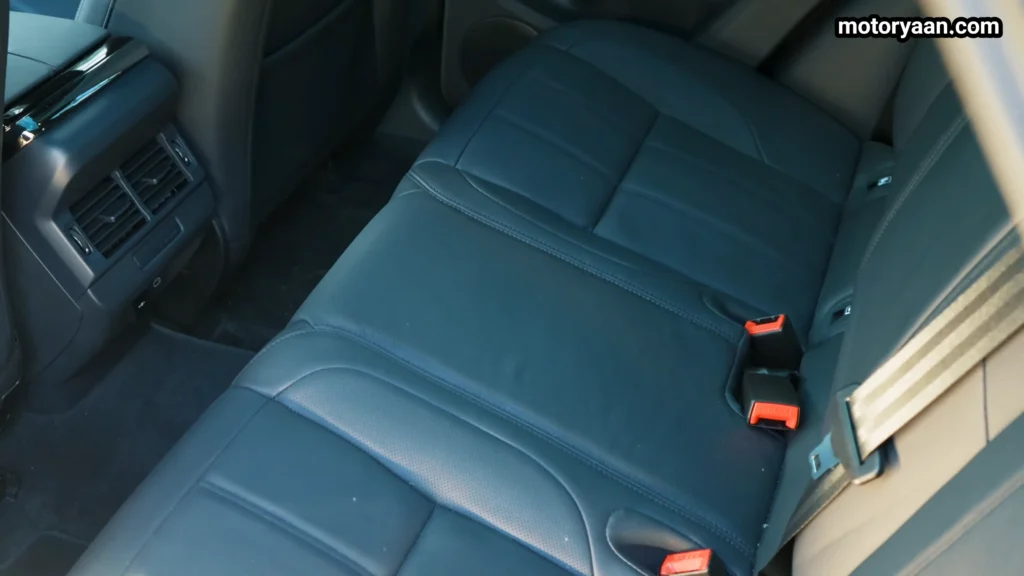
Rear passenger space is decent but not generous. Two adults will sit comfortably. Three adults in the back will notice:
A narrow middle seat
A raised central floor hump
No sliding or reclining rear bench
The Q3 and X1 offer more flexibility here.
How does the Evoque drive?
In plug in hybrid form, it can feel like an electric car around town. Smooth and quiet in EV mode.
Once the petrol engine joins in, things get mixed.
The 3 cylinder engine sounds coarse under load
There can be a delay when accelerating hard
The brake pedal feels slightly grabby
With an empty battery, efficiency drops and refinement suffers.
The diesel versions feel more consistent. They suit the car better.
Ride comfort is strong. Even on 20 inch wheels, the Evoque rides better than many versions of the Q3 and X1. The XC40 still edges it for low speed comfort.
Off road ability
Like every Range Rover, it remains surprisingly capable:
Strong ground clearance
Good approach angles
Hill descent control
Off road cruise control
Most owners will never test this. But it is there.
Safety and reliability
The Evoque received a five star rating from Euro NCAP in 2019. That rating has now expired under newer testing standards. At the time, it performed strongly for adult and child occupant protection.
Reliability is less impressive.
According to the 2025 What Car Reliability Survey, Land Rover ranked 26th out of 30 manufacturers. The Evoque finished in the lower third of its class. It scored below models such as the Lexus NX and Mercedes GLA.
Ownership costs and warranty cover should factor into your decision.
Best Range Rover Evoque spec to choose
For private buyers:
Choose D200 diesel
Go for S trim
Add metallic paint
Consider the convenience pack
S trim already includes:
Dual zone climate control
Adaptive cruise control
Heated front seats
Heated steering wheel
Keyless entry
Autobiography trim adds luxury but pushes the price too high for most buyers.
For company car users:
P270e plug in hybrid makes more sense due to tax advantages
Next generation Range Rover Evoque: What we know
Land Rover plans a major overhaul.
Reveal expected late 2027
Deliveries likely 2028
Built on new EMA electric platform
800 volt architecture
The new model will focus heavily on pure electric power. Expect:
Fast charging
Target range over 450 miles
Flat floor interior for more space
Production will continue in the UK at Halewood, with batteries sourced from Tata’s Somerset facility.
There is also a possibility of hybrid or range extender versions if market demand continues.
Final verdict
The 2026 Range Rover Evoque is not cheap. It is not the most practical. It is not the most reliable in its class either.
But it feels special.
It offers:
Strong design even after eight years
Excellent driving position
Premium interior materials
Better comfort than most German rivals
Objectively, the Volvo XC40 makes more sense as an all rounder. Emotionally, the Evoque wins more hearts.
If you want a compact luxury SUV that still turns heads, the Evoque remains a solid choice. Just pick the right engine and avoid overspending on options.
Sources and reference
Official Specifications and Pricing
Range Rover Evoque Official Models and Specifications
https://www.rangerover.com/en-gb/range-rover-evoque/models-and-specifications.html
Official UK page with full trim details, engine options, charging information, and starting prices.
Range Rover Evoque Prices and Deals – Carwow
https://www.carwow.co.uk/land-rover/range-rover-evoque
Market pricing overview, discounts, and comparison with key rivals.
Safety Ratings
Range Rover Evoque Euro NCAP Safety Rating
https://www.euroncap.com/en/results/land+rover/range+rover+evoque/35028
Official 2019 crash test results showing five star safety performance. Note that the rating has since expired under updated testing standards.
Range Rover Evoque Safety Review – What Car?
https://www.whatcar.com/land-rover/range-rover-evoque/4×4/review/n109
Independent safety analysis and detailed technical breakdown.
Reliability
What Car? Reliability Survey Results
https://www.whatcar.com/news/most-and-least-reliable-land-rover-models-what-car-reliability-survey/n27549
2025 reliability survey data covering brand rankings and model performance.
Range Rover Evoque Reliability – Edmunds
https://www.edmunds.com/land-rover/range-rover-evoque/
Independent reliability scores and owner feedback insights.
Range Rover Evoque Common Problems Overview
https://www.whocanfixmycar.com/advice/range-rover-evoque-common-problems
Summary of reported issues and real world ownership feedback.
Background Information
Range Rover Evoque Overview – Wikipedia
https://en.wikipedia.org/wiki/Range_Rover_Evoque
Model history, production information, and global market background.