2026 Nissan Rogue Plug-in Hybrid First Drive Review
Real world range, powertrain details, interior, third row space, and everything you should know
For almost two decades, the Nissan Rogue has been one of the most reliable and popular compact family SUVs in North America. One area where Nissan always struggled was electrification. After a short-lived hybrid attempt between 2017 and 2020, Nissan is back again, and this time it is serious.
For 2026, Nissan has introduced the first ever Rogue Plug-in Hybrid (PHEV). This model is not built from scratch by Nissan. It is based heavily on the Mitsubishi Outlander Plug-in Hybrid platform. That makes this SUV unique because it is essentially a rebadged Mitsubishi with Nissan design touches.
This article breaks down everything in simple language so you can understand if this SUV is actually worth waiting for.
Engine and Hybrid Powertrain Explained
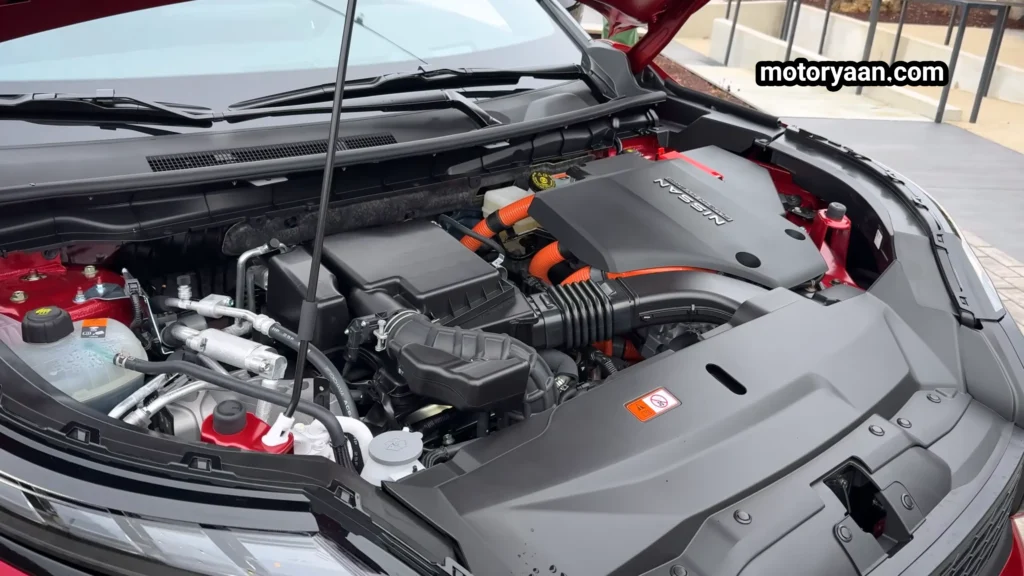
Under the hood, the 2026 Rogue Plug-in Hybrid uses Mitsubishi hardware, not Nissan’s traditional engines.
Powertrain highlights
2.4-liter naturally aspirated 4-cylinder petrol engine
Dual electric motors
20 kWh battery pack
One-speed reduction gear transmission
Power output
| Component | Power |
|---|---|
| Petrol engine | 131 hp |
| Front electric motor | 114 hp |
| Rear electric motor | 118 hp |
| Combined system output | 248 hp |
| Torque | 332 lb-ft |
This makes it the most powerful Rogue ever produced.
Electric Range, Fuel Economy and Real World Range
This is a proper plug-in hybrid that can run on electricity alone.
Electric and fuel efficiency
Pure electric range: up to 38 miles
Hybrid fuel economy: 25 to 26 MPG combined
Fuel tank capacity: 14.8 gallons
Driving range breakdown
Petrol only range: ~380 miles
Electric only range: ~38 miles
Total combined range: ~420 miles
This makes it less fuel-efficient than the normal petrol Rogue, but far more versatile for city driving.
Performance and Driving Numbers
Even though Nissan does not officially quote acceleration figures, real-world testing confirms strong performance.
Performance data
0 to 60 mph: 6.6 to 6.9 seconds
Top speed: ~110 mph
Towing capacity: 1,500 lbs
Weight: ~4,700 lbs
It is about 1,000 lbs heavier than the normal petrol Rogue due to the battery and electric motors.
Exterior Design Changes
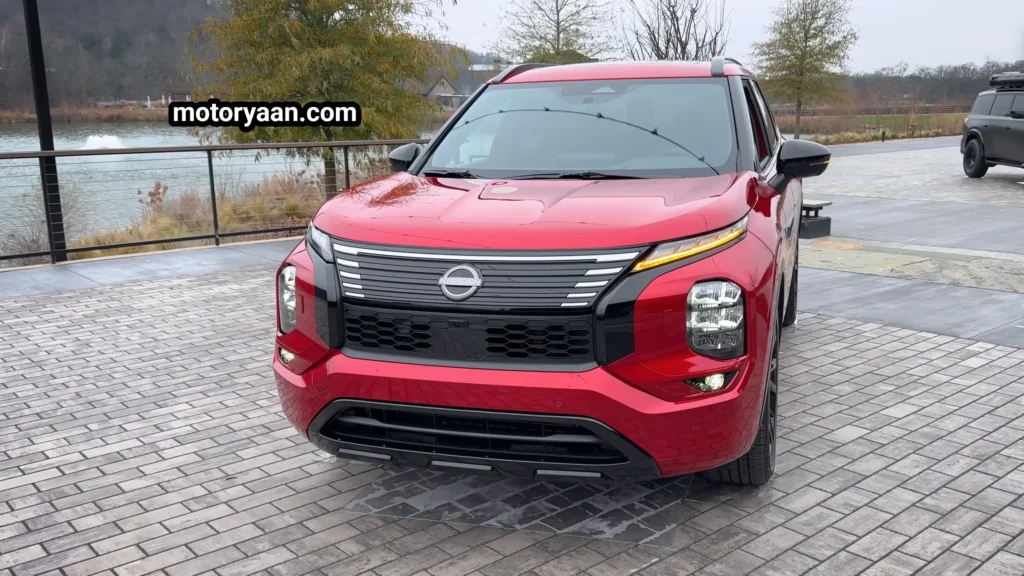
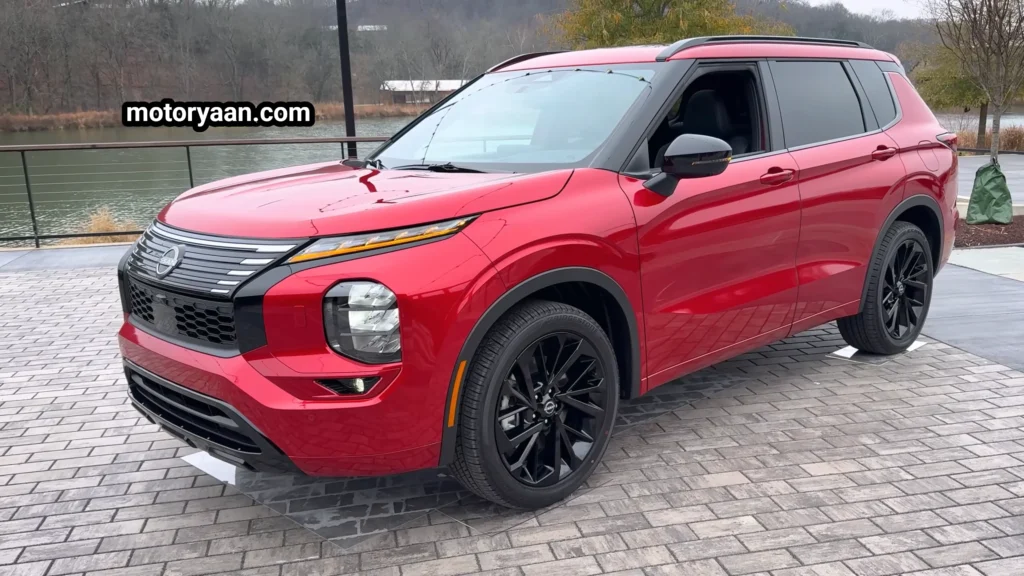
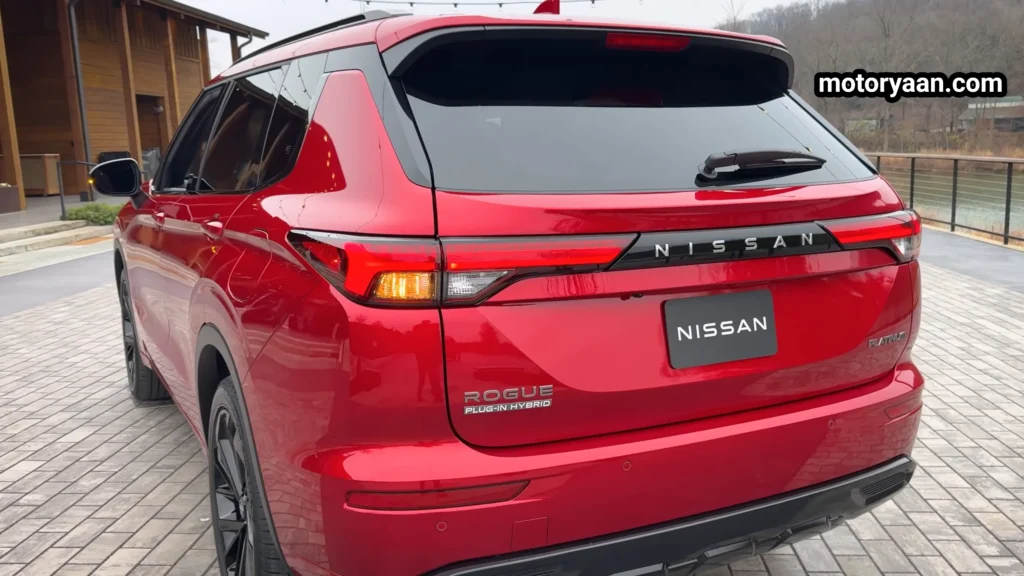
Visually, the Rogue Plug-in Hybrid looks almost identical to the Mitsubishi Outlander PHEV.
What Nissan changed
New Nissan-style grille with Nissan badge
Blacked-out chrome details
Cleaner rear with no large PHEV side badges
Nissan badging across the tailgate
Everything else, including the body shape, lighting layout, and stance, resembles the Outlander.

Dimensions and Platform Difference
This Rogue PHEV is larger than the standard petrol Rogue.
Key dimensions
| Measurement | Value |
|---|---|
| Length | 185.4 inches |
| Wheelbase | 106 inches |
It is about 2.5 inches longer than the normal Rogue, which allows Nissan to add a third row.
Wheels, Suspension and Ground Clearance
Hardware overview
20-inch gloss black alloy wheels
Bridgestone Ecopia tires (255/45 R20)
13.8-inch disc brakes all around
Fully independent suspension
No adaptive suspension
Ground clearance: just over 7 inches
This setup is tuned more for comfort than sporty driving.
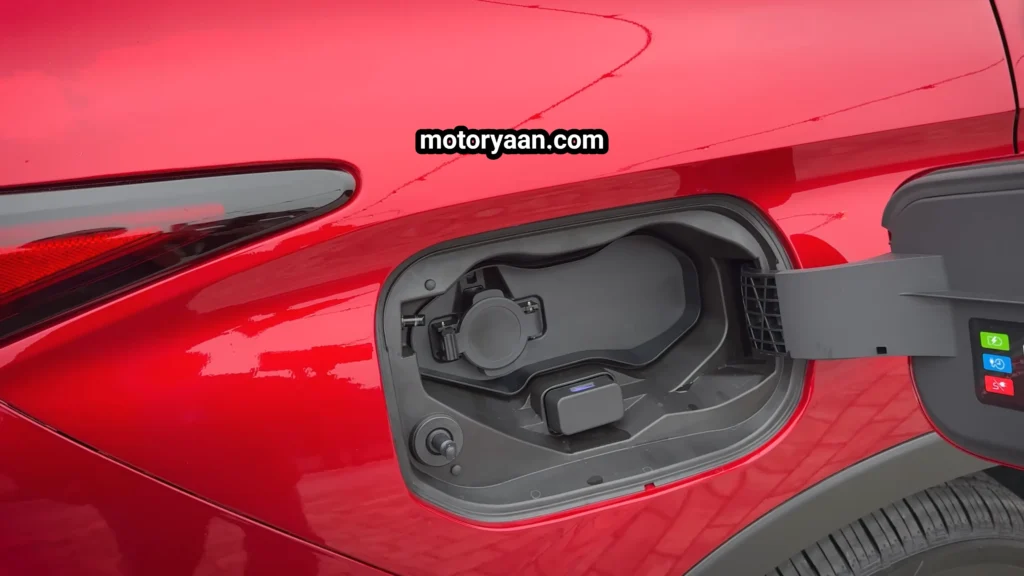
Charging Speed and Battery Details
This is one of the slower-charging plug-in hybrids in its class.
Charging specs
Charging port: J1772
Onboard charger: 3.3 kW
DC fast charging: Not supported
Charging time
| Charger Type | Time |
|---|---|
| Level 2 (240V) | ~7.5 hours |
| Level 1 (120V) | ~13 hours |
Nissan has confirmed this is a temporary model before a full hybrid redesign in 2027.
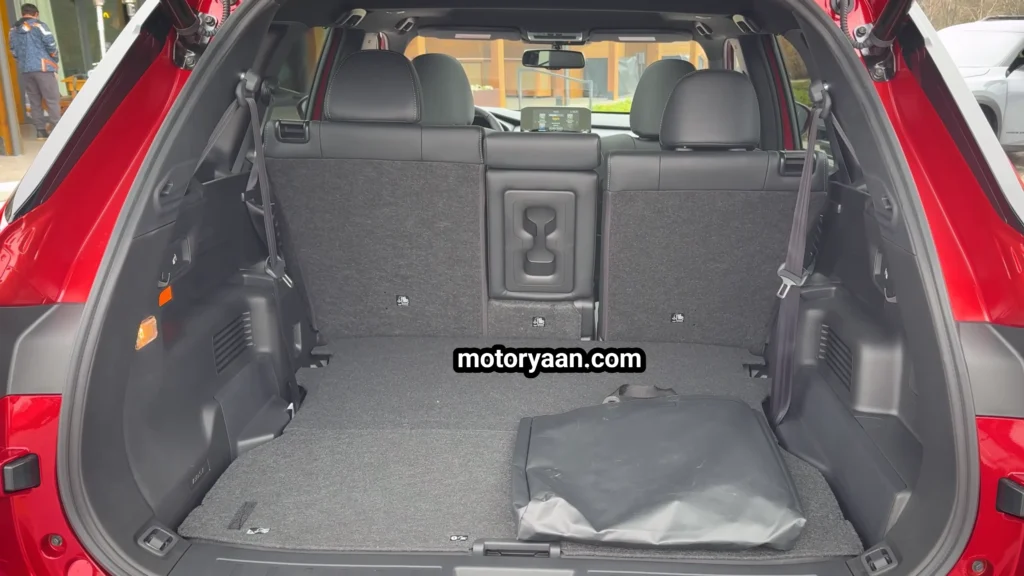
Cargo Space and Third Row Practicality
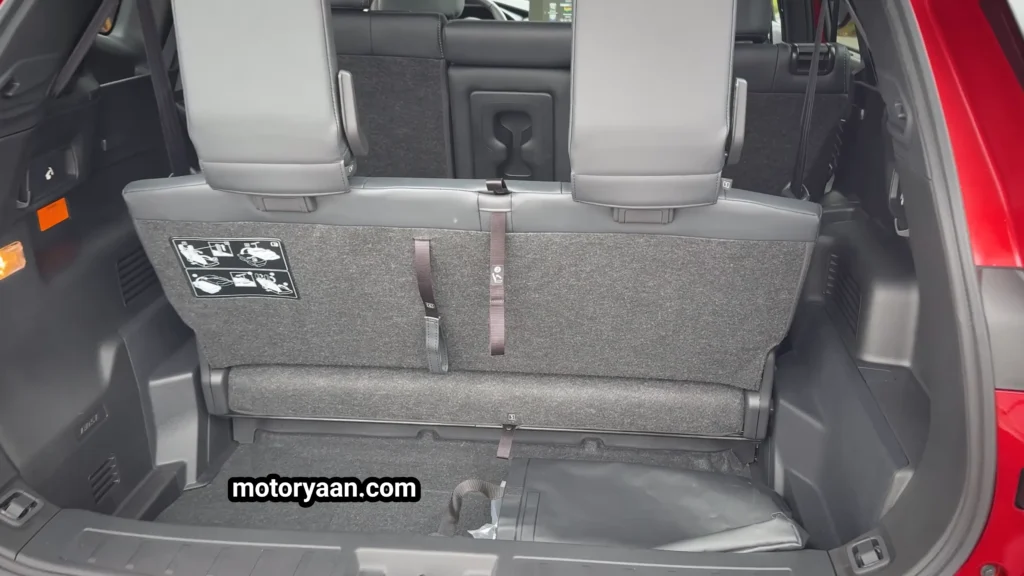
This Rogue brings back a third row, but it is best considered an emergency seat.
Cargo capacity
| Seating Configuration | Space |
|---|---|
| Third row up | 12 cubic feet |
| Third row folded | 30.8 cubic feet |
| Both second and third rows folded | 64.7 cubic feet |
The third row is usable only for small children or very short trips.
Interior Quality and Features
The Platinum trim tested includes premium materials and comfort-focused features.
Front row features
Quilted semi-aniline leather seats
Heated front seats
12-way power driver seat
Memory function
Heated steering wheel
Ventilated seats and massage are not available on the Rogue, though Mitsubishi offers them.

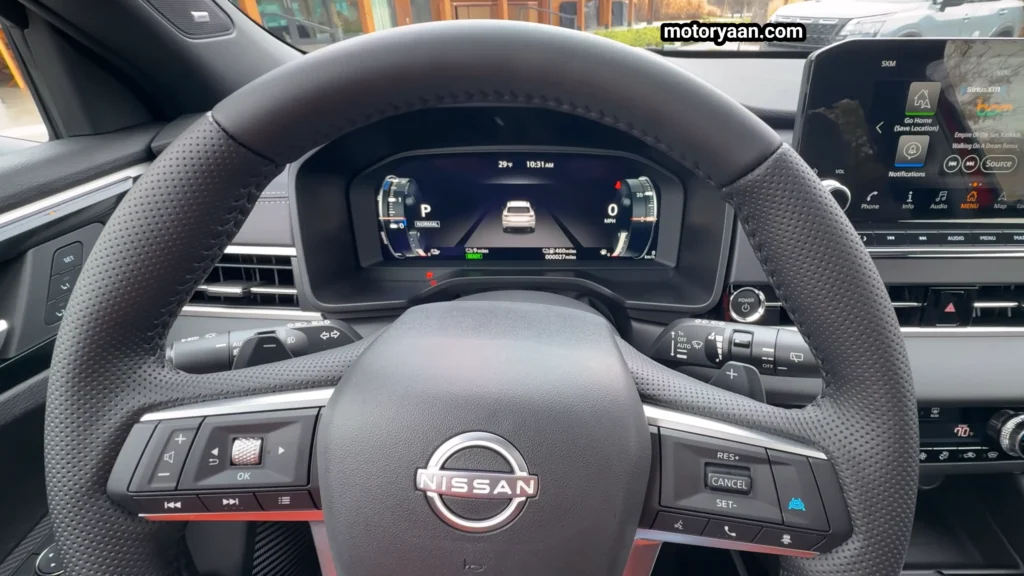
Technology and Infotainment
The Rogue Plug-in Hybrid uses older Nissan tech.
Infotainment features
9-inch touchscreen
Wireless Apple CarPlay
Wired Android Auto
Built-in navigation (not Google based)
360-degree camera
Head-up display
Fully digital instrument cluster
This system is behind the newer tech found in the normal petrol Rogue.

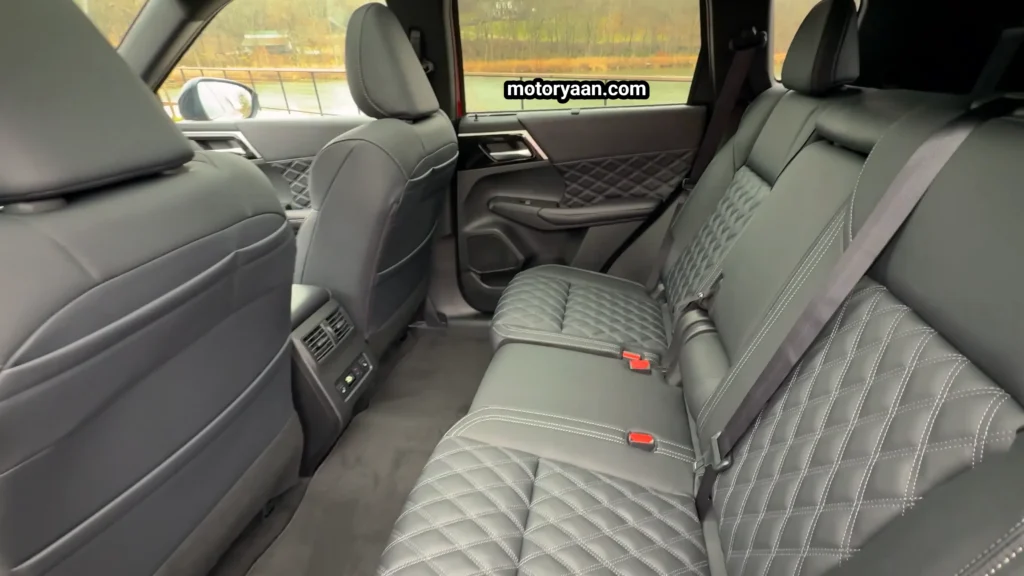
Rear Seat and Third Row Experience
Second row
~38 inches of legroom
Heated rear seats
Sliding and reclining function
Rear sunshades
Rear climate control zone
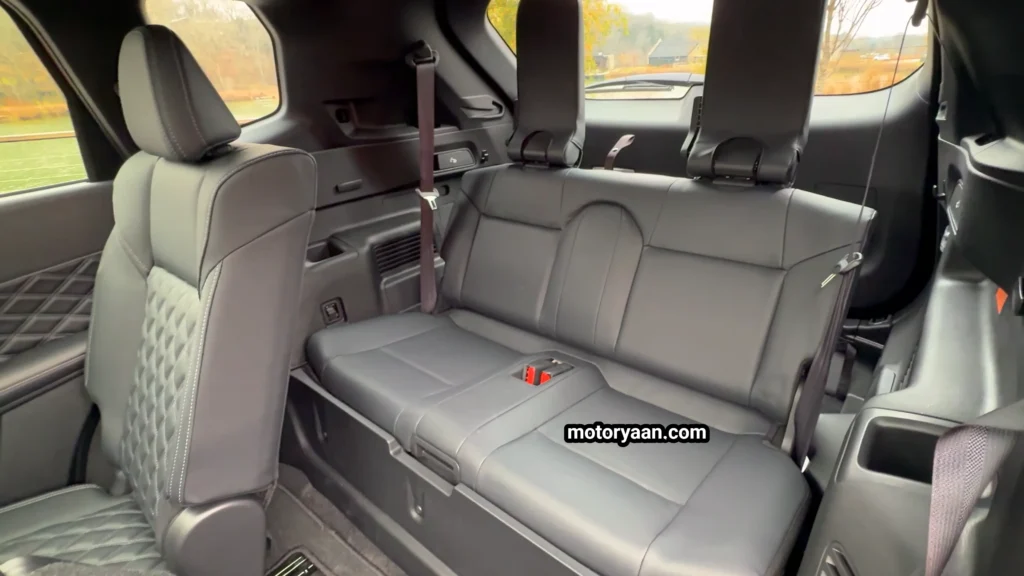
Third row reality
Very tight knee and headroom
Suitable only for kids or short use
Large headrests block rear visibility when upright
Driving Impressions in Real World
On the road, the Rogue Plug-in Hybrid feels:
Smooth
Quiet
Comfortable over bumps
Quick off the line due to electric torque
The transition between electric and petrol power feels smoother than the Mitsubishi version. Steering is light and easy for city driving, not sporty.
However, there is a slight motor whine under hard acceleration.
Expected Price and Availability
Nissan has not officially announced pricing yet.
Expected price position
Regular Rogue: starts under $30,000
Top petrol Rogue: around $45,000
Rogue Plug-in Hybrid: expected to start around $45,000
This makes it slightly more expensive than the Mitsubishi Outlander Plug-in Hybrid.
Launch timeline
US dealerships: early 2026
Upcoming 2027 Rogue Hybrid Plans
This model is a short-term step.
For 2027, Nissan is planning:
Fully redesigned Rogue
New e-Power hybrid system
Turbo petrol engine with electric motor
Expected fuel economy in high 40 MPG range
New AWD hybrid system
This will be a Nissan-engineered system, not shared with Mitsubishi.
Final Verdict
The 2026 Nissan Rogue Plug-in Hybrid is:
Good at:
Smooth ride quality
Strong acceleration
Comfortable seats
Real electric-only driving
Weak at:
Slow charging
Outdated infotainment
Tight third row
Missing ventilated and massaging seats
If you want the wide service network and brand familiarity of Nissan, this makes sense. If features matter more, the Mitsubishi Outlander Plug-in Hybrid still offers better value.
In the end, this is a smart shortcut by Nissan to enter the plug-in hybrid market quickly. It feels like a rebadge, but the result is still a solid and very usable family SUV.