2026 Mercedes CLA Petrol Review
The all-new Mercedes CLA has arrived in a new generation, and this version focuses on the combustion engine model. Most buyers of the previous CLA are still more comfortable with petrol power, mainly due to charging infrastructure and real-world usability. This article organizes the real driving data, design details, interior experience, and performance clearly so it is easy to understand and useful for buyers.
Mercedes CLA Petrol vs Electric Version: Key Difference at a Glance
The petrol hybrid version and electric version look similar but behave very differently in daily use.
Visual Differences
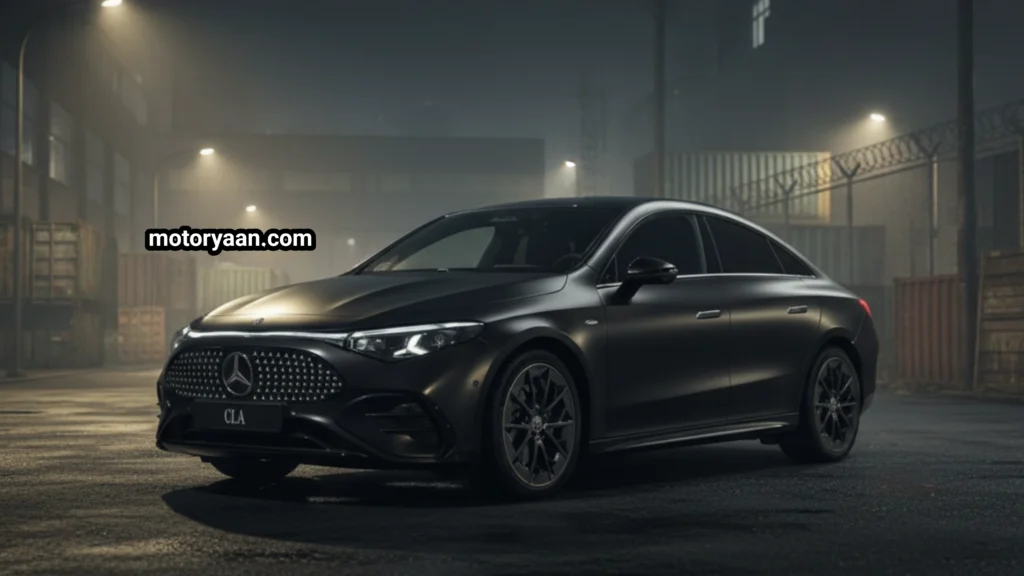
Petrol version gets an open front grille with tiny star pattern
Electric version gets a closed grille with illuminated stars
Petrol version has illuminated grille frame instead of fully lit grille
Both variants get Matrix LED headlamps with strong night performance
Dimensions and Platform Details
The new CLA remains a coupe-style sedan and does not switch to fastback shape.
Key body details:
Length: 4,720 mm
Body style: Classic sedan
Platform: Front-wheel drive based platform
Optional 4MATIC all-wheel drive available
Shooting Brake estate version available for both petrol and EV models
Wheel Options
| Wheel Size | Available Size |
|---|---|
| Entry | 17 inch |
| Test car | 18 inch |
| Top option | 19 inch |
This test car used 18-inch wheels with aerodynamic inserts.
Engine and Powertrain Details
This petrol CLA uses a completely new mild hybrid engine.
Engine Specifications
| Specification | Details |
|---|---|
| Engine type | 1.5L 4-cylinder turbo petrol |
| Hybrid type | Mild hybrid with eBoost |
| Transmission | Dual clutch automatic |
| Variant tested | CLA 220 4MATIC |
| Power output | 211 hp |
| 0–100 km/h | 7.1 seconds |
Available power outputs:
Three engine power variants currently offered
Slowest versions closer to 9 seconds for 0–100 km/h
Important technical facts:
Uses camshaft drive chain, not wet timing belt
NVH foam insulation under bonnet for quieter cabin
No frunk because this is not an EV platform
Real World Driving Experience
Fuel Efficiency
During real testing:
| Test Condition | Consumption |
|---|---|
| Flat roads | ~6.0 L/100 km |
| US equivalent | 39 mpg |
| UK equivalent | 47 mpg |
Eco mode allows electric coasting downhill with engine completely off.
Driving Characteristics
What feels good:
Suspension feels most refined part of the car
Soft, floaty Mercedes ride at all speeds
Light steering in Comfort mode
Heavier steering in Sport or Individual mode
Very stable at high speed
What feels weak:
Dual clutch gearbox stutters at low speed
Jerky downshifts when slowing below 30 km/h
Does not feel punchy out of corners like EV
All Wheel Drive Logic
| Condition | Power Distribution |
|---|---|
| Low speeds | Up to 40% rear |
| Sport mode | More rear engagement |
| Above 120 km/h | Front-wheel drive only |
Interior Experience and Cabin Quality
Materials and Design Highlights
Frameless doors
Artico leatherette seats
Paper-wood matte decorative trims
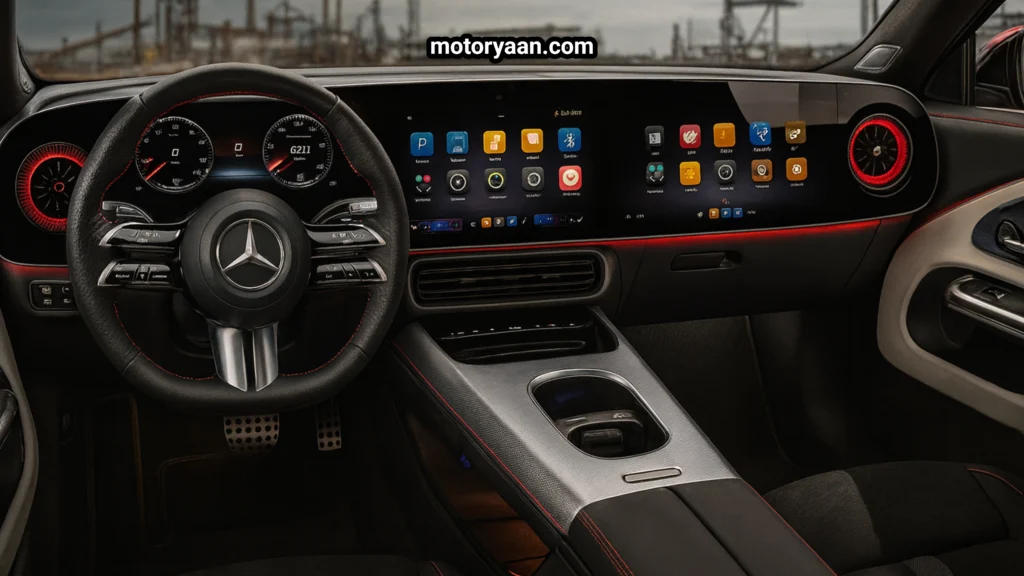
Ambient lighting in turbine air vents
Progressive trim used in test car
AMG Line available for sportier exterior and interior
Seating Reality
Front seats:
Good shoulder comfort
Seat base is too short
Seat cushioning feels firm at sit bone area
Rear seats:
Better leg position in petrol version than EV
Feet sit lower due to transmission tunnel instead of battery floor
Headroom tight for tall passengers with glass roof
Car Technology and Infotainment
Screens and Controls
| Feature | Availability |
|---|---|
| Digital instruments | Standard |
| Central screen | Standard |
| Passenger screen | Optional |
Key usability points:
Return of physical steering wheel buttons
Volume scroll works well
Cannot skip tracks from steering wheel
Climate control icons are too small
Temperature display partially blocked by steering wheel
Smartphone Integration
Supports:
Apple CarPlay
Android Auto
Waze, Google Maps, Apple Maps integration
Wireless charging:
Inductive charging pad
USB-C fast charging ports in lower compartment
Rear Seat Practicality
Important point for buyers choosing petrol over EV.
Rear Seat Comparison
| Area | Petrol Version | Electric Version |
|---|---|---|
| Floor height | Lower | Raised due to battery |
| Foot space | Deeper | Flat and higher |
| Seating posture | More natural | Knees higher |
This makes the petrol CLA better for taller rear passengers.
Boot Space and Usability
Boot Measurements
| Measurement | Value |
|---|---|
| Boot capacity | 405 liters |
| Width at narrow point | ~40 inches |
| Length to rear seat | ~42 inches |
| Max folded length | ~70 inches |
| Height limit | ~18 inches |
Both petrol and EV versions offer the same boot volume.
Driving Experience Compared to Electric CLA
Petrol CLA Advantages
Lighter weight
Better balance in corners
More comfortable for passengers in twisty roads
Better rear seating comfort
Electric CLA Advantages
More powerful versions available
Faster acceleration
Smoother driving without gear shifts
No gearbox stutter
Pricing Overview
New Mercedes CLA Petrol Price
| Region | Starting Price |
|---|---|
| Europe | €44,000 |
| UK | £39,000 |
Fully Loaded Price
| Version | Approx Price |
|---|---|
| Top petrol AWD | ~€67,000 |
| EV premium over petrol | +€4,000 to €8,000 |
Final ownership cost depends heavily on local petrol taxes and EV incentives.
Verdict: Which Mercedes CLA is Better?
The petrol Mercedes CLA makes sense if:
You do not have reliable charging access
You want a lighter and more balanced drive
Rear seat comfort matters
You prefer traditional engine feel
The electric CLA makes more sense if:
You want stronger acceleration
You prefer silent, smooth driving
Your city has good charging infrastructure
The petrol CLA 220 is the best petrol pick. Lower engine variants may feel underpowered in real usage.
Mercedes CLA Petrol vs Electric – FAQs
What is the main visual difference between the petrol and electric Mercedes CLA?
The petrol version gets an open front grille with tiny star elements, while the electric version has a fully closed grille with illuminated stars. The petrol model also uses an illuminated grille frame instead of a fully lit panel.
What engine is used in the petrol Mercedes CLA 220?
The petrol CLA 220 uses a new 1.5-litre four-cylinder turbo engine with mild hybrid technology. It also features eBoost and uses a camshaft drive chain instead of a wet timing belt.
How powerful is the Mercedes CLA 220 petrol version?
The CLA 220 produces 211 horsepower and accelerates from 0 to 100 km/h in around 7.1 seconds. Slower variants take close to 9 seconds.
How fuel efficient is the petrol Mercedes CLA in real-world driving?
In real road tests, the car delivered around 6.0 litres per 100 km. This equals about 39 mpg (US) and 47 mpg (UK), especially in Eco mode where the engine can switch off while coasting.
Does the petrol CLA drive in pure electric mode?
It does not have a full electric-only driving mode, but the mild hybrid system allows electric coasting during downhill driving and when rolling towards traffic lights.
How does the all-wheel drive system work in the CLA 220?
The 4MATIC system can send up to 40 percent of power to the rear wheels at lower speeds. Above 120 km/h, the car switches to front-wheel drive for better efficiency.
Is the petrol CLA smoother to drive than the electric version?
The petrol model feels lighter and more agile in corners, but the electric version is smoother because it does not use a traditional gearbox. The petrol model can feel jerky at low speeds due to the dual-clutch transmission.
How comfortable are the seats in the new Mercedes CLA?
The seats look premium and use Artico leatherette, but the seat base feels short and firm. Some drivers may find the seating depth and cushioning less comfortable on long drives.
Is rear seat space better in the petrol CLA or the electric CLA?
Rear seat comfort is better in the petrol version because the floor is lower. The electric version has a raised floor due to the battery, which forces a higher knee position.
What is the boot space of the Mercedes CLA?
Both the petrol and electric versions offer 405 litres of boot space. With the rear seats folded, the usable length increases significantly, but height is limited to around 46 cm.
Does the Mercedes CLA petrol version have a frunk?
No, the petrol version does not have a front trunk. The engine bay is occupied by the combustion engine and hybrid components.
What technology features are available inside the new CLA?
The cabin offers digital instruments, a large central touchscreen, optional passenger display, wireless charging, USB-C fast chargers, Apple CarPlay, Android Auto, Waze, Google Maps and ambient lighting.
What are the common complaints about the infotainment system?
The climate control icons are small, and important information can be blocked by the steering wheel. Track skipping cannot be done directly from the steering wheel.
What is the starting price of the new Mercedes CLA petrol model?
The petrol Mercedes CLA starts at around €44,000 in Europe and about £39,000 in the UK. Fully loaded versions can reach close to €67,000.
How much more expensive is the electric CLA compared to the petrol version?
The electric version usually costs around €4,000 to €8,000 more, depending on battery size and market-specific taxes or incentives.