2026 Kia Niro Review
The Kia Niro has quietly become one of the most practical and affordable hatchbacks in America. It is one of the least expensive vehicles to own, one of the most efficient hybrids on sale, and even when fully loaded as an EV, it is still cheaper than the average new car in the country. The only major drawback for some buyers is the lack of all wheel drive. So the key question is simple: is the Niro right for you or should you wait for the upcoming Kia K4 hatchback?
This review covers all three versions of the Niro. The hybrid, plug in hybrid, and the fully electric model.
Price and Variants
Kia has positioned the Niro lineup in a very accessible price bracket. Even with options, prices stay well under most compact SUVs.
Hybrid Prices
Starting price: 28,535 dollars (including destination)
Approx price on road: under 30,000 dollars
Fuel economy: 53 MPG combined
Warranty: 10 year / 100,000 mile powertrain
Hybrid SX Touring
36,935 dollars starting
Does not increase much with options
Niro Plug In Hybrid
Base: 35,885 dollars
Fully loaded: 42,185 dollars
Fuel economy: 48 MPG combined
Electric range: 33 miles
Niro EV
Base: 40,995 dollars
Top trim: 45,995 dollars
Horsepower: 201 hp
Electric range: 253 miles
Shortest range of the lineup but quickest and quietest
For most buyers, the hybrid and plug in hybrid models make the most sense. The EV costs more and has rivals like the Nissan Leaf that are cheaper if someone wants a low cost electric car.
Exterior Design and Features
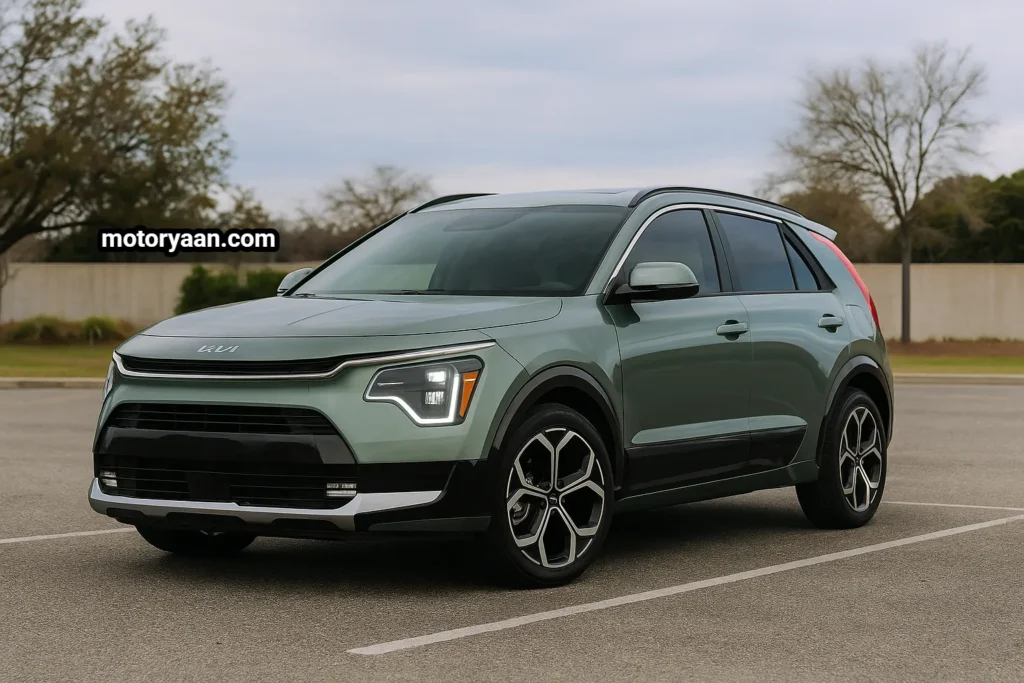
The Niro has a clean, practical design that blends hatchback proportions with subtle crossover styling.
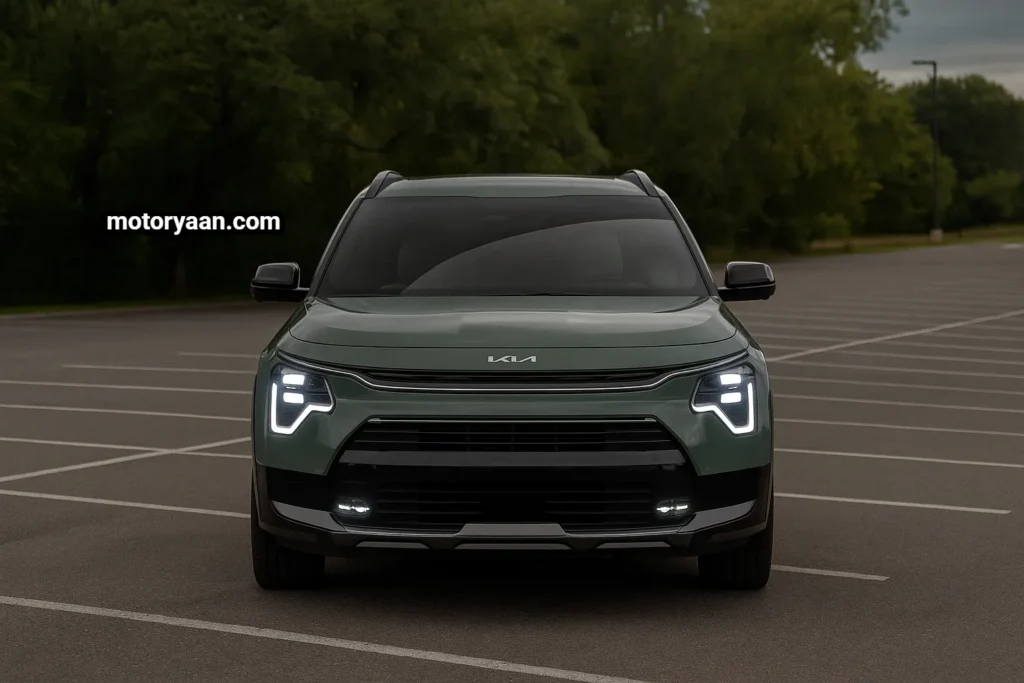
Front Design
Top trims get the attractive LED headlamps
Lower trims and most variants use halogen projector lamps
EV’s charge door is placed at the front which makes charging convenient
Plug in hybrid has the charge port at the rear due to engine cooling needs
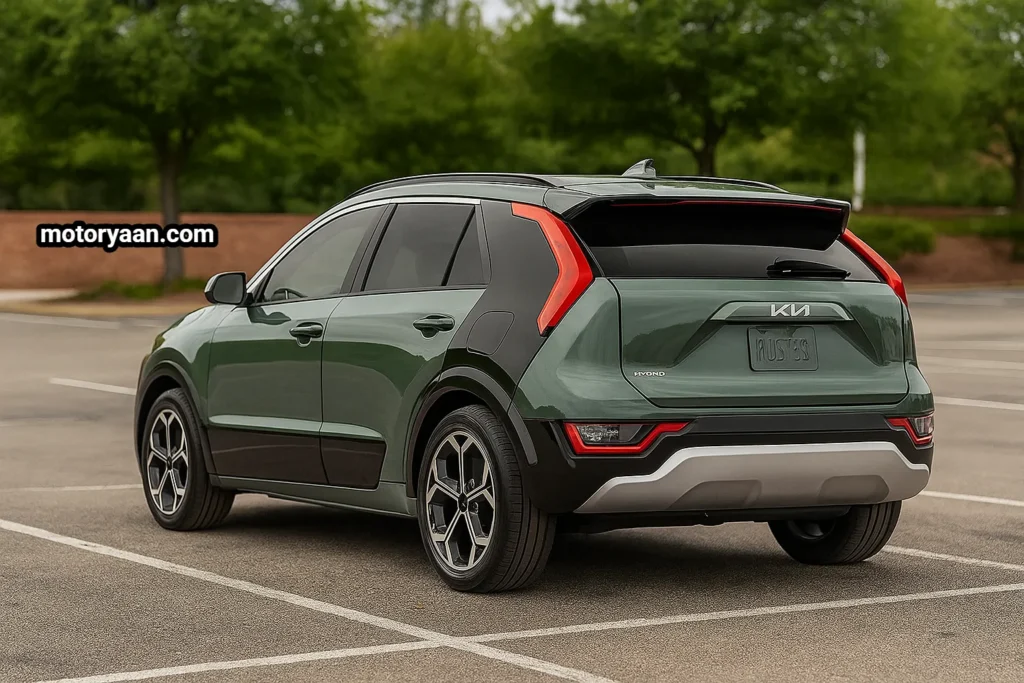
Side and Rear
174 inches long, similar to Volkswagen Taos and Mazda CX 30
Shorter front end helps improve cabin space
No AWD means no driveshaft packaging which allows:
Lower floor height
More interior headroom
Bigger cargo area
Rear has a mix of hatchback and crossover styling
Aerodynamic spoiler for better highway efficiency
Boomerang style LED tail lamps
Air intake behind the rear door that channels air out near the tail lamp
Some trims get a contrasting coloured aero blade on the side

Powertrain and Performance
The Kia Niro comes with three different powertrains. Here is how they compare.
1.6 litre Hybrid
103 hp petrol engine
32 kW motor
Combined output: 139 hp
Gearbox: 6 speed dual clutch transmission
Smooth low speed performance because the electric motor handles creep and initial movement
Best efficiency: 53 MPG
This is the slowest setup but the most popular because of its extremely low running cost.
Plug In Hybrid
Same 1.6 litre engine
Bigger 62 kW electric motor
Total output: 180 hp
Electric only range: 33 miles
Fuel economy drops slightly to 48 to 49 MPG
Same 6 speed DCT
Note: In cold weather the engine may turn on to heat the cabin because Kia did not include a large electric heater or heat pump. This saves cost and weight.
Fully Electric Niro EV
Motor output: 201 hp
Battery: 64.8 kWh
Electric range: 253 miles
More powerful and quieter than hybrid versions
But has the shortest total driving range compared to hybrid and PHEV
Battery placement reduces ground clearance from 6.3 inches to 6 inches
Despite being a conversion EV, Kia has still included a small front trunk which is rare in this category.
Interior, Practicality, and Comfort
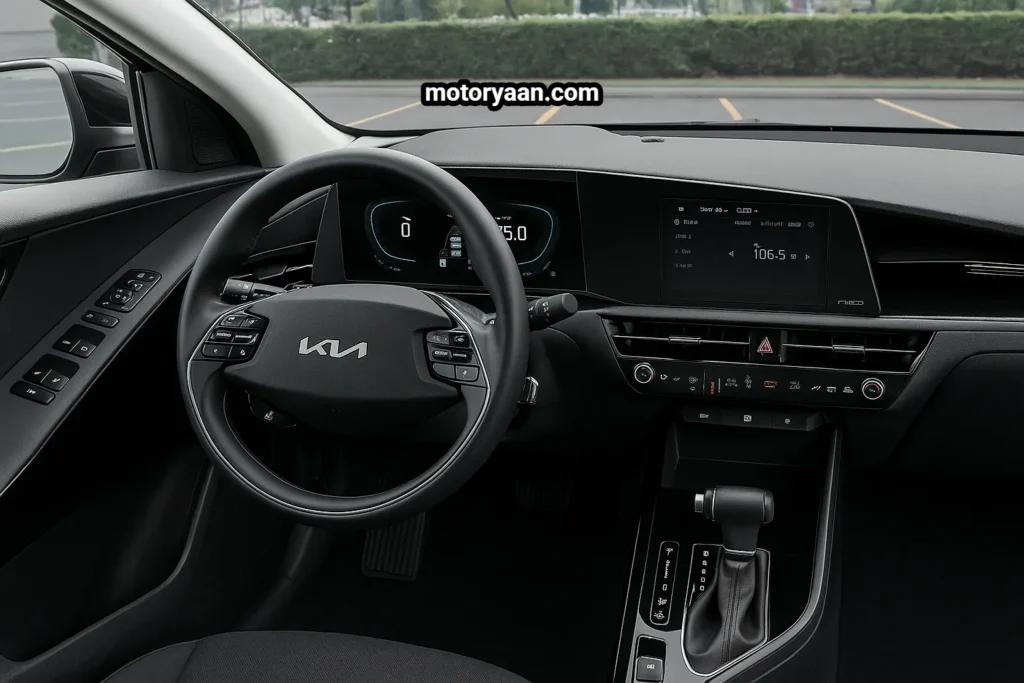
The Niro’s interior is where it truly stands out. The shape, seating position, and floor design give this hatchback more space than many crossovers.
Front Seats
Upright seating position
Dash is upright like an SUV but still low for good visibility
Over 40 inches of headroom in all models
2 way lumbar support for the driver
Memory function on higher trims
Steering column tilts and telescopes, but does not rise as high as some crossovers
Seats rated around 8 out of 10 for long distance comfort
Passenger seat has the same travel but no 4 way lumbar support
Rear Seats
Excellent legroom even behind a 6 foot driver
Room for rear facing child seats
EV’s floor is higher because of the battery pack
Legroom number appears smaller on paper but real world space is the same
Only difference: knees sit slightly higher in the EV
Slightly lower rear headroom in EV because of the raised seat bottom
Cargo Space
Hybrid and EV
22.8 cubic feet
Space for four 24 inch suitcases or multiple carry on bags
Large, usable cargo floor
Space available for a spare tire if you skip the subwoofer
Not a fan of the flip style cargo cover, but still practical
Plug In Hybrid
Reduced to 19.4 cubic feet because of the larger battery sitting at the back
Interior Features
Available moonroof
Imitation leather upholstery with two tone finish
Heated and ventilated front seats
Adjustable headrests
Height adjustable seat belts
Similar door panel design across all trims
Hard plastics in lower areas to keep the price low
The reviewer also tested the hybrid model on an 800 mile long trip and found the seats and cabin comfort to be good for long journeys.
Should You Buy the Kia Niro
The Niro makes a strong case for itself due to:
Low running cost
Spacious interior
Practical cargo area
Three powertrain choices
Excellent warranty
Affordable pricing
Best choice for most buyers
Plug in hybrid
Offers the right mix of performance, range, and cost.
Buy the hybrid if
You want the lowest possible running cost
You want the highest combined range of nearly 588 miles
Buy the EV if
You want silent, quick performance
You don’t mind the shorter 253 mile range
FAQ — 2026 Kia Niro
What are the different powertrain versions available for the 2026 Kia Niro?
The 2026 Kia Niro is offered in three versions:
- Hybrid with a 1.6 litre petrol engine and a 32 kW electric motor producing 139 hp.
- Plug-in hybrid with the same engine paired with a 62 kW motor producing around 180 hp and offering about 33 miles of electric-only range.
- Fully electric version with a 201 hp motor powered by a 64.8 kWh battery offering around 253 miles of range.
What is the starting price of each version?
- Hybrid: around US$ 28,535 including destination.
- Plug-in hybrid: around US$ 35,885 for the base trim and up to US$ 42,185 for the top model.
- Fully electric: around US$ 40,995 for the base trim and US$ 45,995 for the top model.
How good is the fuel economy or efficiency?
- Hybrid: around 53 MPG combined and up to 54 MPG on the highway in ideal conditions.
- Plug-in hybrid: around 48 to 49 MPG combined along with 33 miles of electric-only range.
- EV: around 3.6 to 4.1 miles per kWh in mixed driving.
In a real-world test with luggage and three passengers, the hybrid still delivered around 53 MPG.
How practical is the interior space and cargo area?
The Niro offers a roomy cabin with good headroom and comfortable rear seating. Cargo space is:
- About 22.8 cubic feet in the hybrid and EV versions.
- About 19.4 cubic feet in the plug-in hybrid due to the battery.
You can fit up to four 24-inch suitcases when packed properly. A spare tyre can be added if the optional subwoofer is removed.
What are the trade-offs of the Kia Niro?
- No all-wheel drive option.
- Lower trims come with halogen projector headlamps instead of LEDs.
- Combined infotainment and climate control buttons may feel unintuitive.
- EV floor is slightly higher due to battery placement.
- Ride quality is best in the lighter hybrid model.
Which version is best for most buyers?
The plug-in hybrid is the most balanced option for most buyers. The hybrid is the best for people who want the lowest running cost, while the EV suits buyers who prefer quiet and quick performance with occasional charging.