2025 Subaru Forester Wilderness Review
Subaru introduced the new Forester lineup about a year ago, but two important trims were initially missing: the long-promised hybrid and the Wilderness. The hybrid is now on sale, and the Wilderness finally joins the range as Subaru’s most off-road-focused Forester ever. However, it is important to understand what type of off-road experience Subaru intends with this variant.
The Forester Wilderness is not designed to be a body-on-frame rock crawler like the Wrangler or Bronco. Instead, it is built for practical weekend adventures, national park trails, forest roads, and rough weather conditions where a CR-V or even a regular Forester may struggle.
Off-Road Capability: What the Wilderness Is Designed For
Subaru built the Wilderness for people who regularly drive on muddy forest roads, gravel surfaces, and wet climates. It is more for trail access than extreme rock crawling.
Key Off-Road Changes
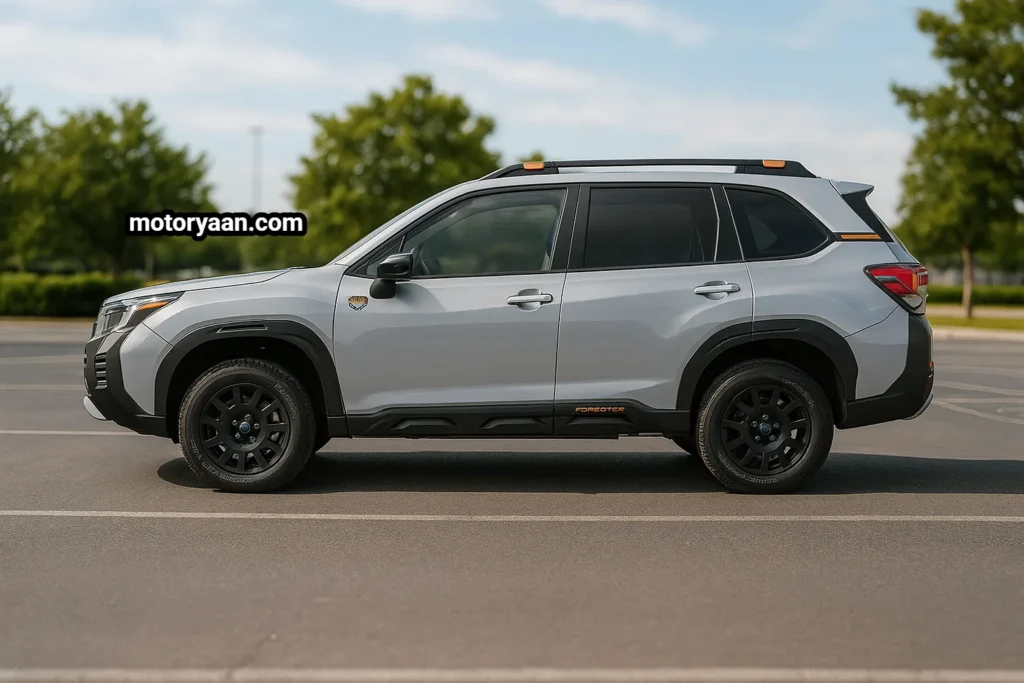
Extra body cladding all-around
9.3 inches of ground clearance
Yokohama Geolandar all-terrain tyres for better grip in mud, rain and loose surfaces
Lower final drive ratio (4.11:1) for improved low-speed climbing
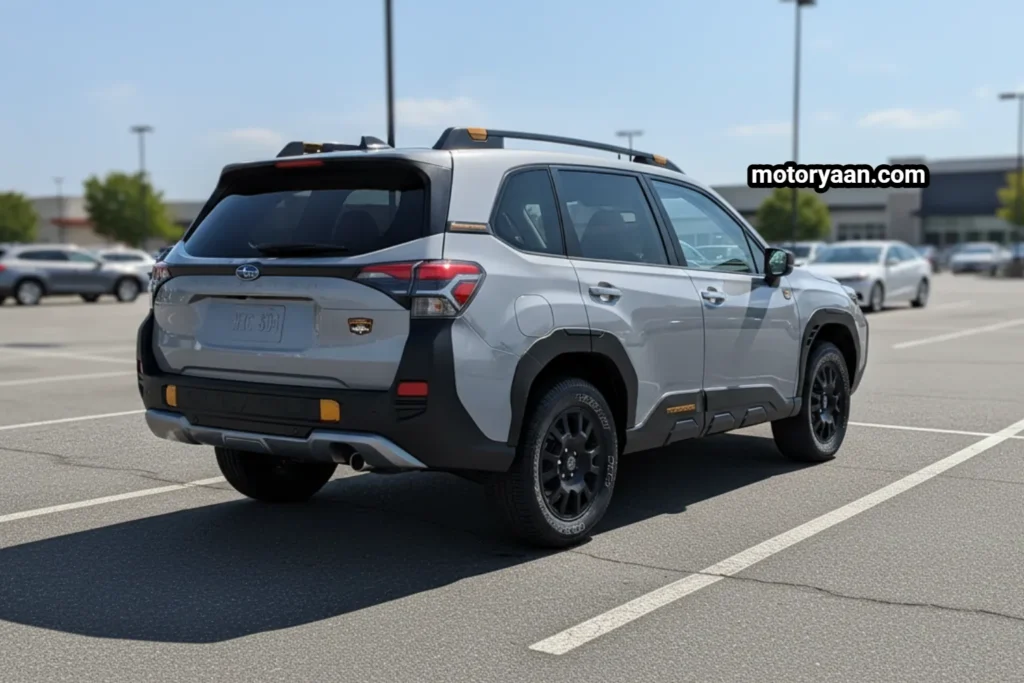
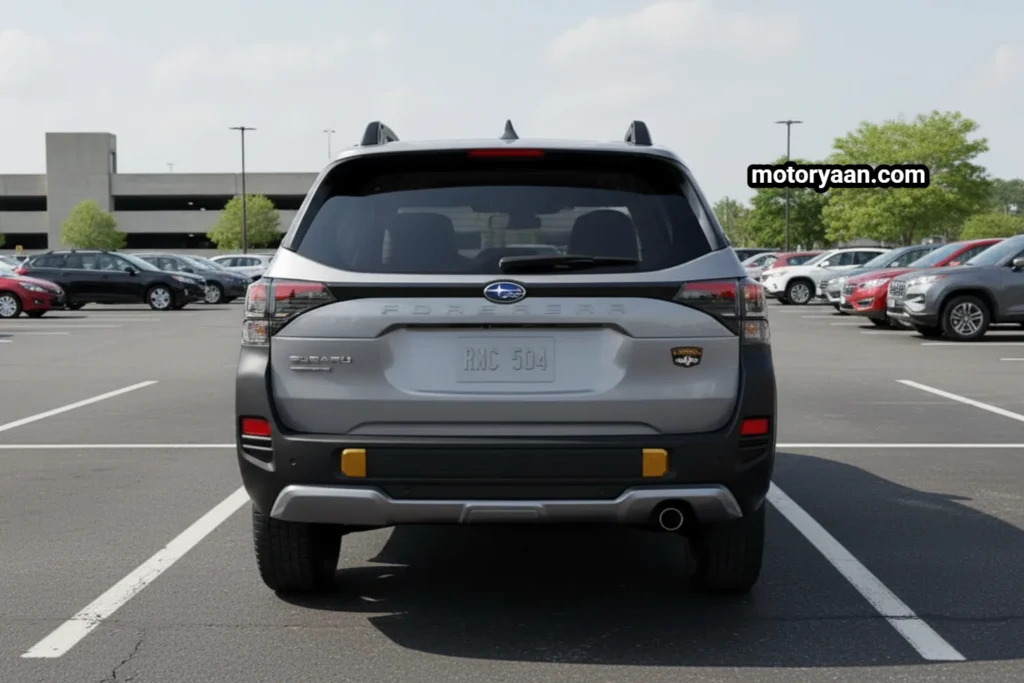
Modular bumper sections for easier replacement
Gold-coloured covers for front recovery-point screw-ins
Enhanced X-Mode with Snow/Dirt and Deep Snow/Mud modes
What You Do NOT Get
No locking differentials
No limited-slip differentials
No front or rear mechanical lockers
No metal modular bumpers like Bronco/Wrangler
No large factory skid plates
This is why the Wilderness is best described as a pragmatic off-road SUV. It prioritises stability, traction, and ease of use rather than hardcore crawling.
Engine, Transmission and Efficiency
Subaru retains the familiar 2.5-litre naturally-aspirated boxer-4 engine.
Engine and Driveline
2.5-litre 4-cylinder engine
180 hp output
CVT automatic transmission
Subaru symmetrical all-wheel drive
Lower 4.11 final drive ratio for better initial traction
Fuel Efficiency
Wilderness: 26 MPG combined (least efficient Forester)
Forester Hybrid: 35 MPG combined (most efficient)
The CVT and AWD system are tuned for traction rather than performance. The lower gearing helps when climbing hills or navigating slippery surfaces but does not match the capability of SUVs with locking rear diffs like the Bronco Sport.
Dimensions and Ground Clearance
The Wilderness maintains the standard Forester proportions but optimises a few areas for adventures.
Dimensions
Length: 183.8 inches
Wheelbase: 105.1 inches (shorter than many rivals, improves breakover angle)
Ground clearance: 9.3 inches
Subaru’s long front overhang remains a drawback because of their longitudinal engine layout. This layout is similar to classic Audi Quattro systems, where part of the engine and transmission sit in front of the axle.
Exterior Highlights
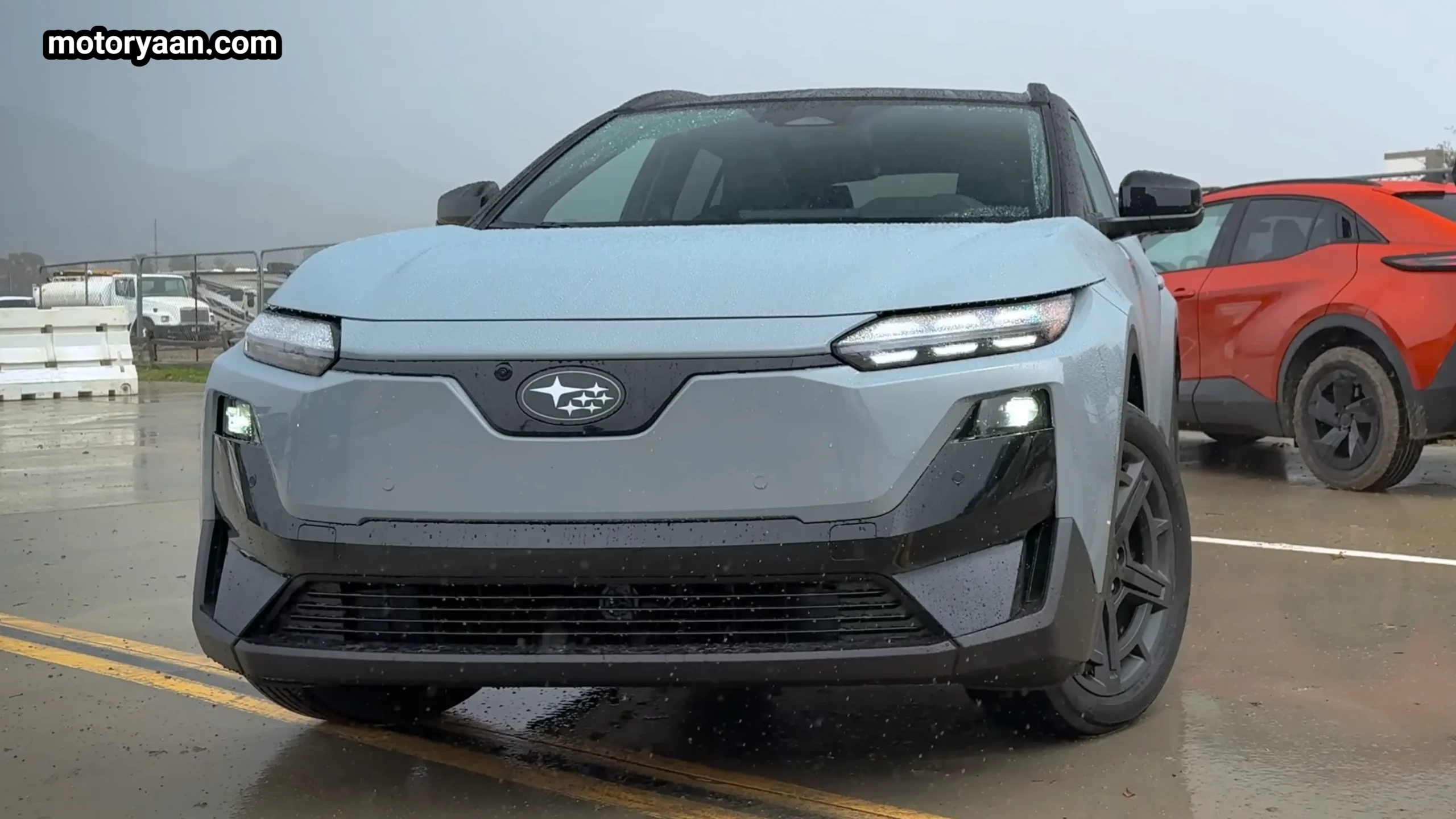
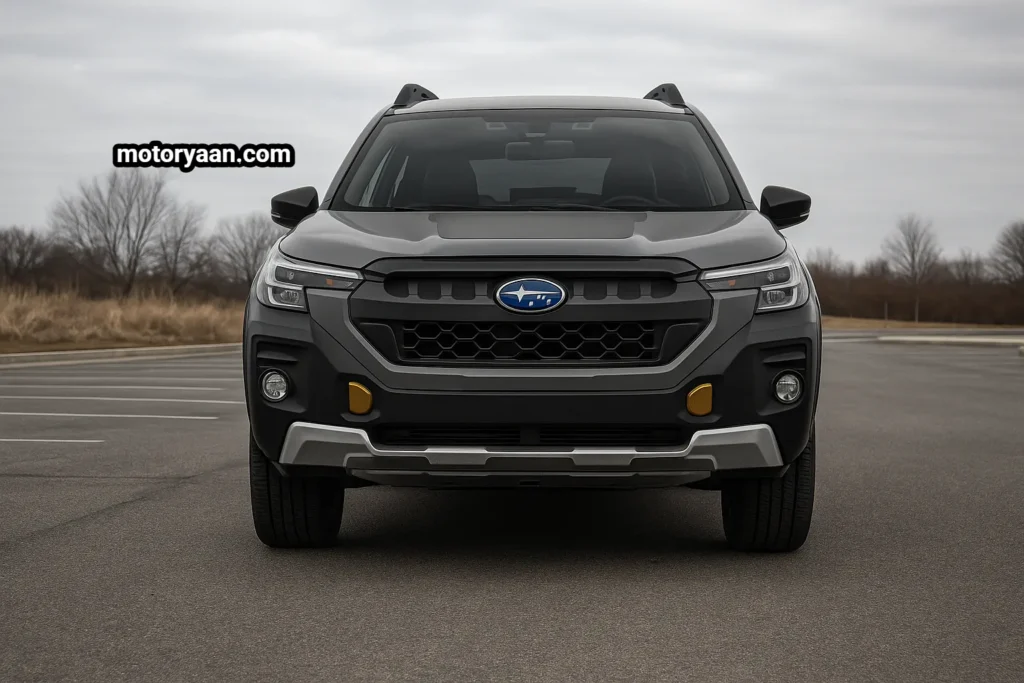
The Wilderness trim stands out through subtle but noticeable rugged upgrades.
Exterior Features
Additional body cladding
Unique fog lamp design
Gold accents on recovery-point covers and roof rail load points
High-capacity roof rails
Partial LED tail lights (amber incandescent indicators)
Underbody protection included but not as extensive as Bronco/Wrangler
The aftermarket scene for Subaru is strong, so owners can add skid plates, fixed recovery hooks, and even roof-top tents if desired.
Interior Design, Infotainment and Technology
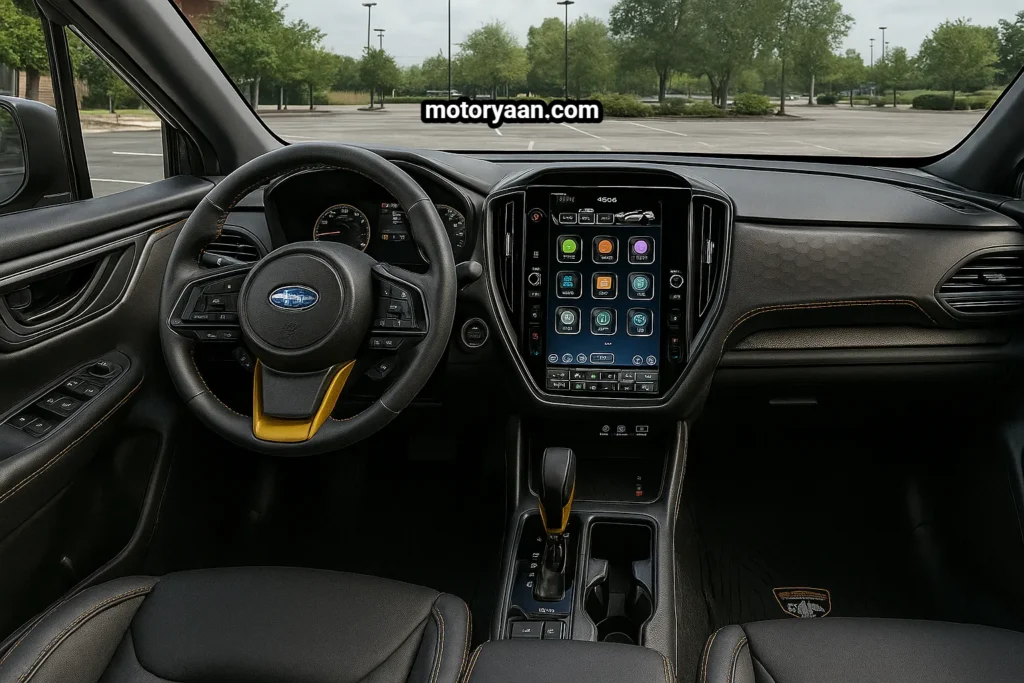
Most of the Wilderness interior is shared with the regular Forester except for a few rugged details.
Dashboard and Controls
Large overhead module with sunglass holder and moonroof controls
Dual-zone climate control
Unique Wilderness trim inserts
Mix of soft-touch materials and hard plastics
Big storage box in the glove compartment
Infotainment System
Approx. 11-inch vertical touchscreen
Wireless Apple CarPlay (initiated via USB but operates wirelessly)
Wireless phone charging pad
Physical climate buttons
Front and rear view cameras (no 360-degree system)
Two large cup holders
Traditional gear shifter with manual mode
Instrument Cluster and Steering Wheel
Fully digital LCD instrument cluster
Multiple view options including analog-style dials and dual-screen mapping
Typical Subaru multifunction steering wheel
Adaptive cruise control buttons on the right
Front and Rear Seat Comfort
Even though the Forester looks tall, the panoramic moonroof eats up some headroom. Subaru’s interior strategy prioritises legroom and an upright seating posture.
Front Seats
Two-way lumbar support
Ample seat height for a commanding view
Tilt and telescopic steering wheel
Wilderness-specific upholstery and gold stitching
Embossed Wilderness logo on the head restraints
Rear Seats
Good overall headroom despite the large moonroof
Approximately 1.5 inches of headroom for a six-footer
Reclining rear seatbacks
Rear AC vents and USB ports
60/40 split folding seats
Center shoulder belt integrated into the roof
Subaru lifts the seats slightly higher to create an upright and comfortable posture instead of the “low-to-the-floor” seating found in some rivals.
Cargo Space and Spare Tyre Details
Cargo room takes a hit because Subaru prioritised passenger room.
Cargo Capacity
| Version | Cargo Space |
|---|---|
| With moonroof | 27.5 cu ft |
| Without moonroof | 29.6 cu ft |
Spare Tyre
The Wilderness comes with a temporary-use spare tyre (225/60R17).
The Forester Hybrid does not include a spare tyre, and there is no space to store one since the battery occupies the rear floor area.
Subaru could have packaged a full-size spare with a slight redesign, but the current foam divider system limits the fitment.
Subaru Symmetrical AWD: What It Really Means
Subaru markets the system heavily, but the term refers to the layout rather than a 50:50 power split.
What “Symmetrical” Refers To
Two cylinders on each side of the boxer engine
Longitudinal engine and transmission layout
Driveshafts aligned in a straight line
In real-world use, the software management of the AWD system is more important than the physical symmetry.
Final Verdict: Who Should Buy the Forester Wilderness?
The Subaru Forester Wilderness is ideal for people who:
Drive on muddy, rainy, forested or gravel roads
Need more capability than a CR-V or Tucson
Want a practical adventure vehicle without extreme off-road expectations
Prefer comfort, visibility and daily usability over hardcore 4×4 features
It is not the SUV for buyers seeking lockers, big metal bumpers or rock-crawling equipment. For everything else, especially outdoor weekend activities and unpaved trails, the Wilderness offers a smart and durable package.
Frequently Asked Questions about the Subaru Forester Wilderness
What makes the Subaru Forester Wilderness different from the regular Forester
The Wilderness trim adds a lower 4.11 final drive ratio, all terrain tires, extra body cladding, unique bumpers, additional recovery point covers, and 9.3 inches of ground clearance. It also uses the same 2.5 litre engine and CVT but is tuned for better low speed capability on trails.
Is the Forester Wilderness designed for rock crawling
No. Subaru designed this trim as a practical off road vehicle for trails, forest roads, and national park routes. It is not built for rock crawling like a Wrangler or a Bronco that use solid axles and locking differentials.
Does the Forester Wilderness have locking differentials
No. It uses software based traction control and Subaru's all wheel drive logic instead of mechanical lockers. Subaru has not added a mechanical rear locker in this generation.
How much ground clearance does the Forester Wilderness offer
The Wilderness trim comes with 9.3 inches of ground clearance, which is higher than many compact SUVs like the Sportage, Tucson, and Tiguan.
What engine and transmission does the Forester Wilderness use
It uses the familiar 2.5 litre four cylinder engine producing 180 horsepower, paired with a CVT automatic. The lower final drive ratio improves climbing performance and low speed traction.
What is the fuel economy of the Forester Wilderness
The Wilderness is the least efficient Forester due to the aggressive gearing and all terrain tires. It delivers a combined figure of around 26 MPG according to Subaru's estimates.
Does the Forester Wilderness have a spare tire
Yes. It includes a temporary spare tire stored under the cargo floor. The design uses a 225/60 R17 temporary spare, and Subaru could not fit a full size spare due to space limitations.
How much cargo space does the Forester Wilderness offer
With the panoramic moonroof, cargo space is around 27.5 cubic feet. Without the moonroof, it increases to about 29.6 cubic feet. The interior layout prioritises passenger legroom over maximum cargo volume.
Does the Forester Hybrid have a spare tire
No. The hybrid version does not offer a spare tire because the battery pack is mounted in the cargo area where the spare would normally go.
What seating and interior features are unique to the Wilderness trim
It comes with imitation leather upholstery, gold stitching, embossed Wilderness logos, unique fabric inserts, and additional rugged trim pieces. The seats remain comfortable with two way lumbar support and an upright seating position.
Does the Forester Wilderness lose headroom because of the panoramic moonroof
Yes. The large moonroof uses a solid sliding panel instead of a roller shade, which takes up more space. Rear seat passengers lose some headroom compared to trims without the moonroof.
Does the Forester Wilderness offer dual zone climate control
Yes. It includes dual zone climate control with both physical and digital controls on the large portrait style touchscreen display.
Does the Forester Wilderness have wireless Apple CarPlay
Yes. CarPlay is wireless, but it still requires a USB connection for initial setup. Once paired, the system communicates wirelessly during use.
Does the Forester Wilderness have a 360 degree camera
No. It includes a forward view camera and a rear camera, but it does not offer a full 360 degree camera system.