
Renault Twingo EV Could Be the Cheapest Electric Car Yet, Here’s What It Offers

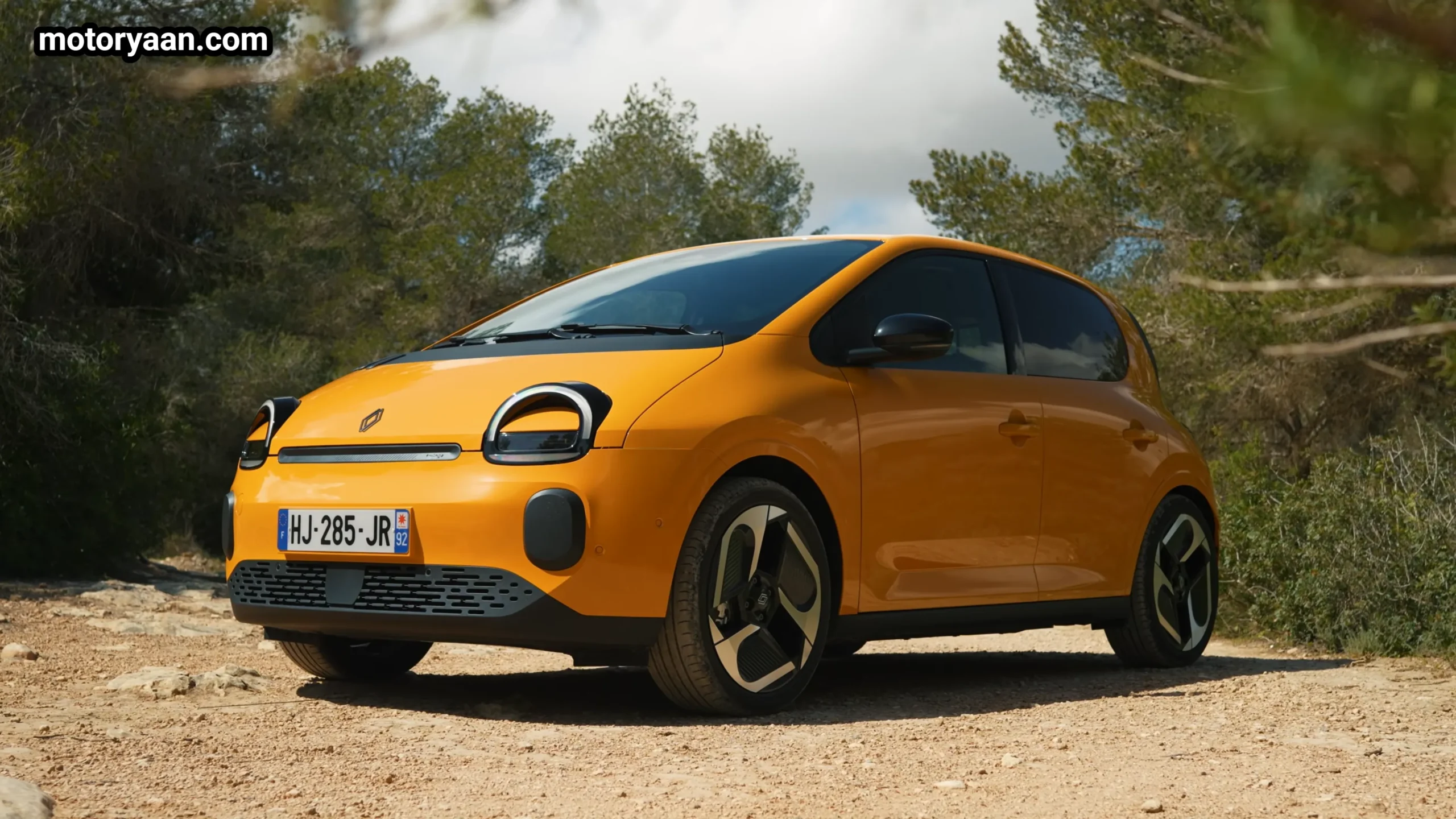
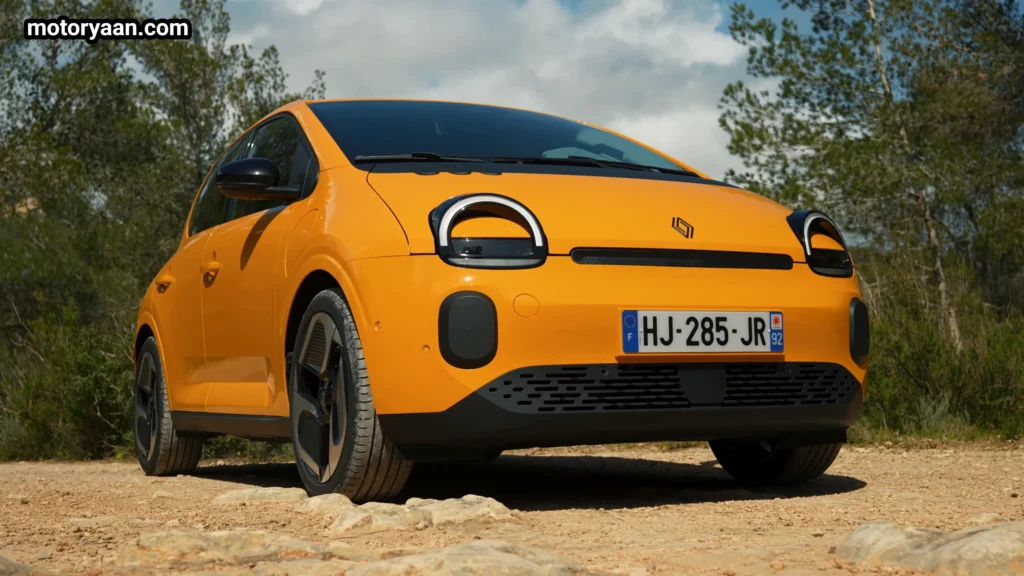
Renault Twingo EV front three quarter view with compact hatchback stance and LED headlamps

Renault Twingo EV: Price, Range, Features and Real World Usability

Table of Contents

Small electric cars were not always affordable. Just a few years ago, entry level EVs felt overpriced compared to petrol cars. Things have changed quickly. Now, some of the cheapest cars you can buy are electric. And right in the middle of this shift sits the new Renault Twingo.

This article breaks down everything that actually matters: price, battery, range, interior, practicality, and how it drives in the real world.

Renault Twingo EV Price: Finally a Truly Affordable EV?

The biggest talking point is pricing.

  • Expected starting price: under £20,000
  • Possible price with incentives: below £17,000
  • Expected UK arrival: around 6 months

For context, the Renault 5 already starts around £21,500 (with incentives). So the Twingo undercuts it clearly.

Why the price could drop further

Government EV grants depend on:

  • Battery origin
  • Production emissions
  • Assembly location

If Renault shifts battery production from China to Hungary, the Twingo could qualify for higher incentives.

Simple takeaway: This could become one of the cheapest EVs on sale, period.

Renault Twingo EV front three quarter view with compact hatchback stance and LED headlamps
The Renault Twingo EV shows its compact city-friendly proportions with a clean front fascia, rounded LED headlamps, and short overhangs.
Renault Twingo EV front fascia with partial side profile and signature lighting
The front design of the Renault Twingo EV features a friendly face with smooth curves and distinctive lighting that reflects its retro-inspired styling.
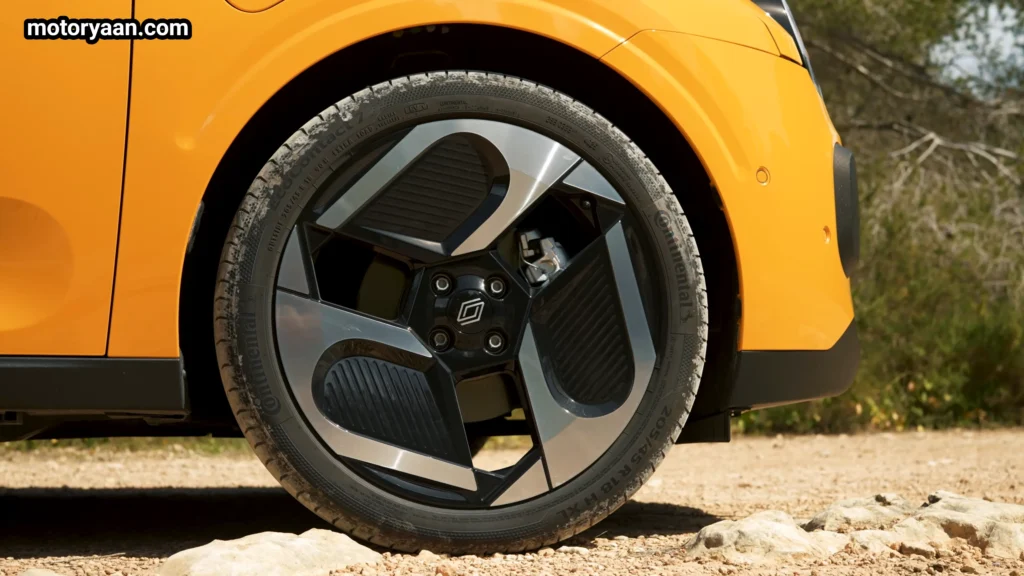
Renault Twingo EV alloy wheel design with aerodynamic styling
The Renault Twingo EV comes with stylish alloy wheels designed to balance efficiency and visual appeal for urban driving.
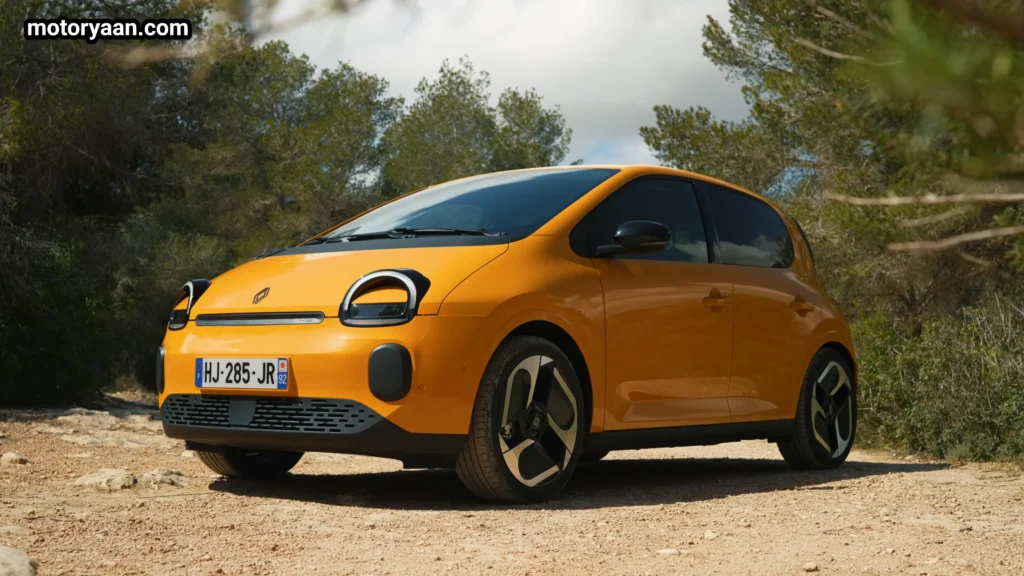
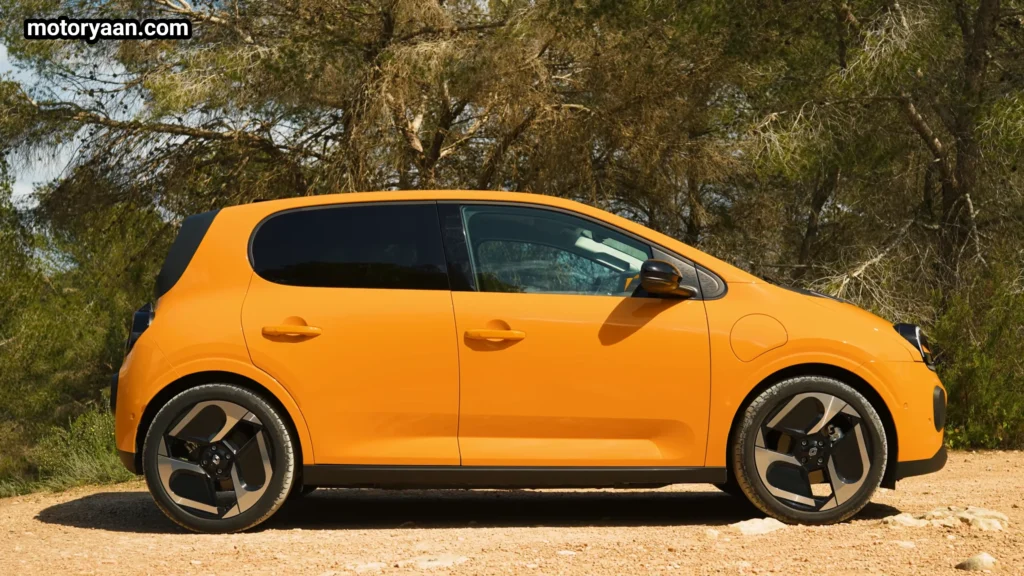
Renault Twingo EV full side profile with compact city car proportions
The full side profile of the Renault Twingo EV shows its short length, tall roofline, and practical four door layout for everyday usability.
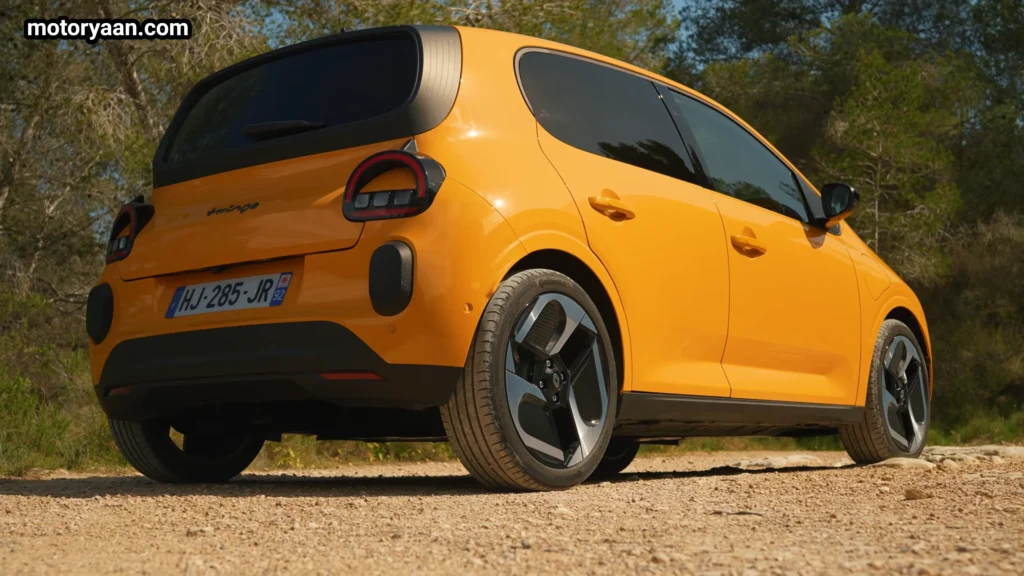
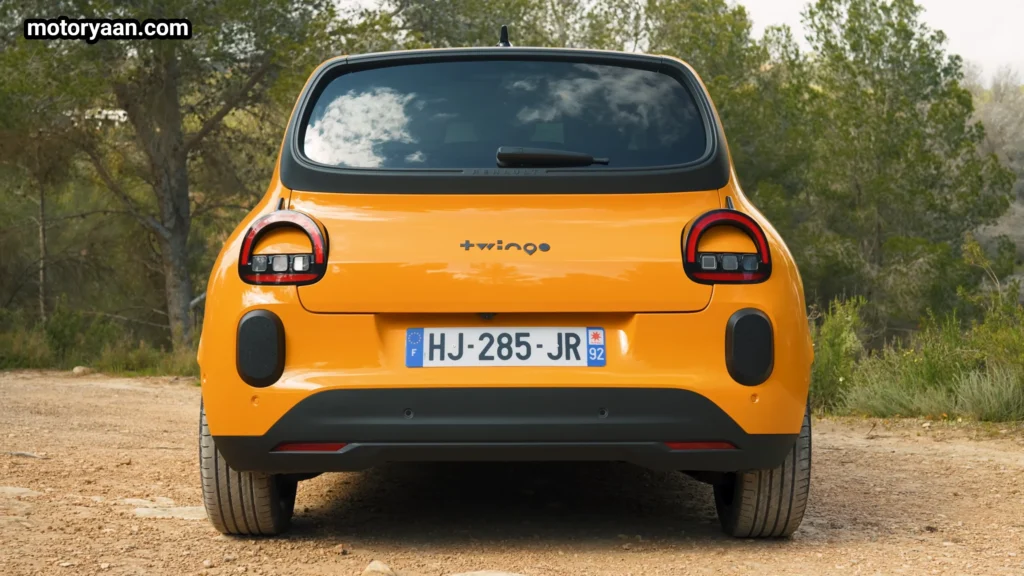
Renault Twingo EV rear three quarter view with compact hatchback design
The rear three quarter angle of the Renault Twingo EV reveals its clean tail design, compact proportions, and urban-friendly styling.
Renault Twingo EV rear profile with tail lamps and hatchback boot design
The rear profile of the Renault Twingo EV features a simple hatchback layout with practical boot access and distinctive tail lamps.

Battery, Range and Charging

Renault keeps things simple here. There is only one battery option.

Key Specs

  • Battery: 27.5 kWh (usable)
  • Chemistry: LFP (Lithium Iron Phosphate)
  • Range:
    • 163 miles (WLTP)
    • 156 miles with bigger wheels
  • Charging speed: 50 kW DC fast charging

What LFP means for you

  • No cobalt usage
  • Better long term durability
  • You can charge to 100% regularly without damage

That last point matters. Many EV owners avoid full charges. Here, you don’t have to.

Charging times

  • 10% to usable range boost: 140 miles in 30 minutes
  • Home charging (7 kW): around 5 hours (0 to 100%)

How it compares

CarRange
Dacia SpringLower
BYD Dolphin (Surf variant)Slightly lower
Leapmotor T03Slightly higher
Renault 530 miles more

So yes, the Twingo sits in the middle. Not class leading, but usable.

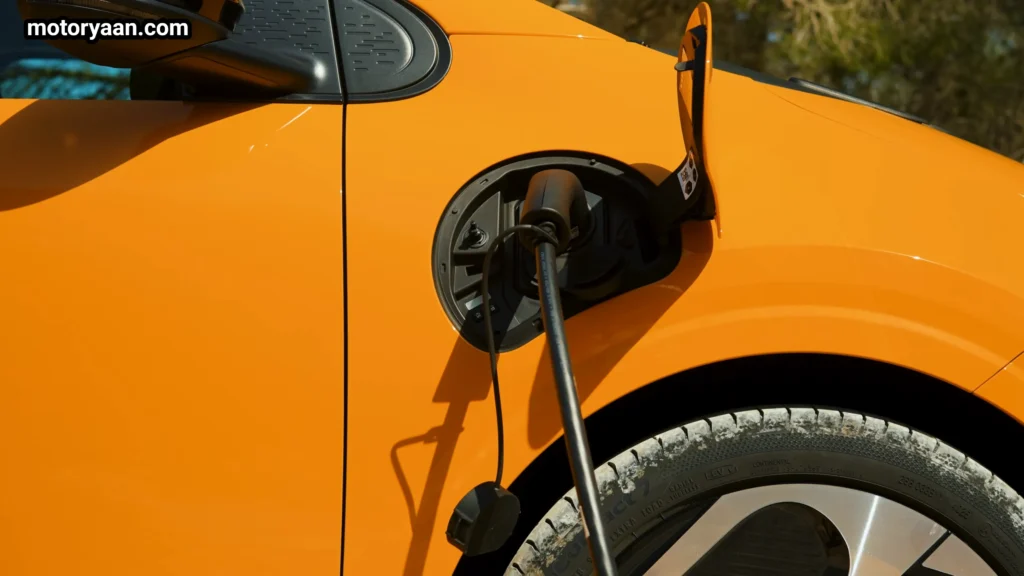
Renault Twingo EV charging port on front fender for electric charging
The charging port of the Renault Twingo EV is neatly placed on the front fender, making it easy to access at public and home charging points.

Size, Platform and Positioning

  • Length: just under 3.8 metres
  • Segment: city focused EV

It’s:

  • Longer than the Dacia Spring
  • Shorter than the Renault 5 and Citroen e C3

Platform detail

  • Front suspension: from Renault 5
  • Rear suspension: simplified setup from Renault Captur

This mix keeps costs down without completely sacrificing driving comfort.

Boot Space and Practicality

At first glance, it looks small. But Renault has added flexibility.

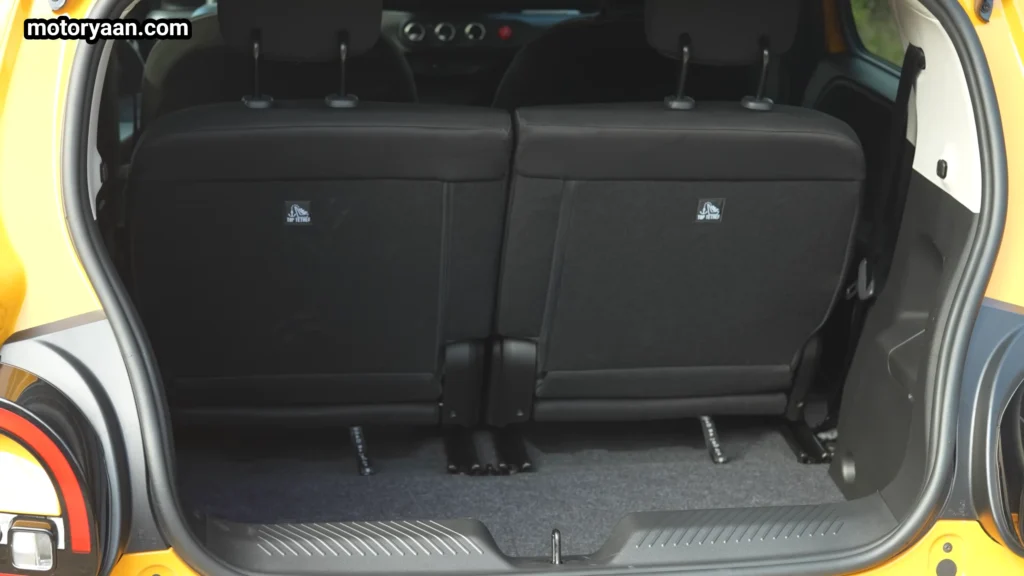
Boot capacity

  • Standard: 205 litres
  • With seats slid forward: 305 litres

That sliding rear seat is the trick.

Practical highlights

  • Split folding rear seats (50:50)
  • Adjustable rear bench (up to 17 cm movement)
  • Underfloor storage for charging cables

Downsides

  • Big step in boot floor when seats folded
  • No parcel shelf in expanded setup

Compared to rivals:

  • Slightly better than Fiat 500e
  • Still smaller than Renault 5 (unless seats pushed forward)
Renault Twingo EV boot space with adjustable rear seats and luggage area
The Renault Twingo EV offers flexible boot space, which can be expanded by sliding the rear seats forward for extra luggage capacity.

Interior and Features

The front cabin is where the Twingo feels more appealing.

What works well

  • Bright, cheerful design
  • Body coloured panels
  • Solid build (even with hard plastics)

Infotainment

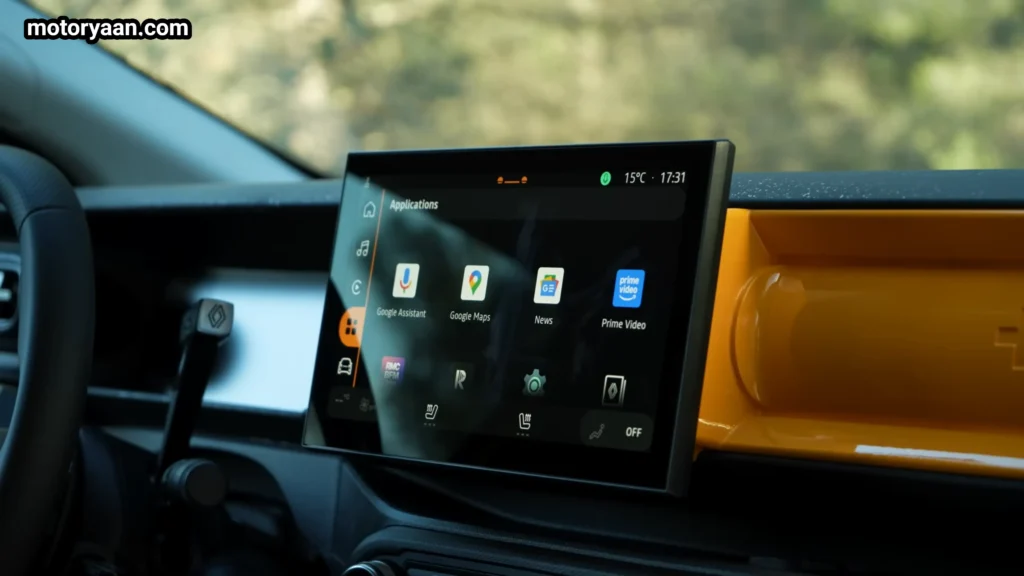
  • 10 inch touchscreen standard
  • Google based system (Techno trim only)
  • Google Maps + voice assistant

Controls

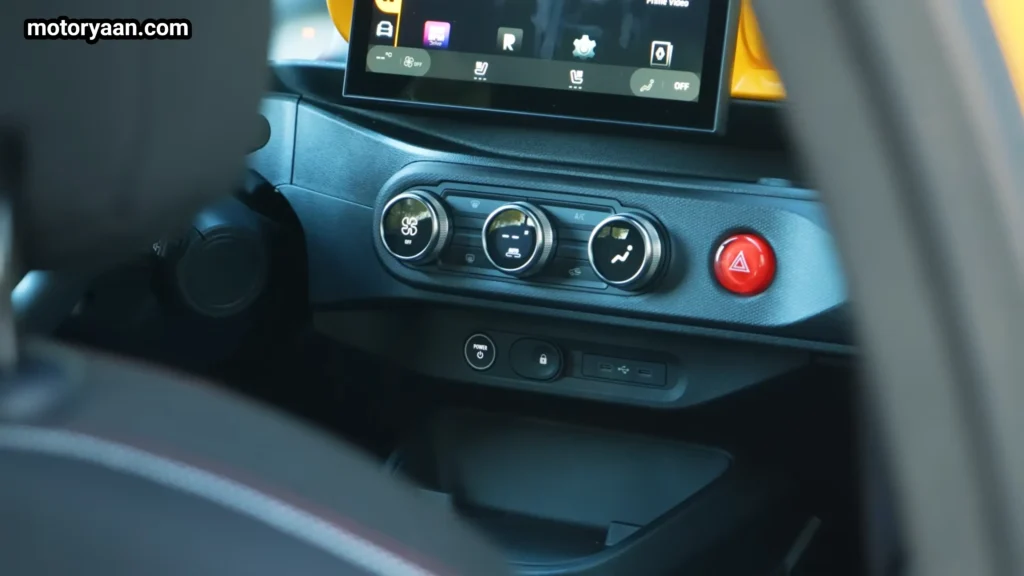
  • Physical AC knobs (thankfully)
  • Easy to use layout

Storage

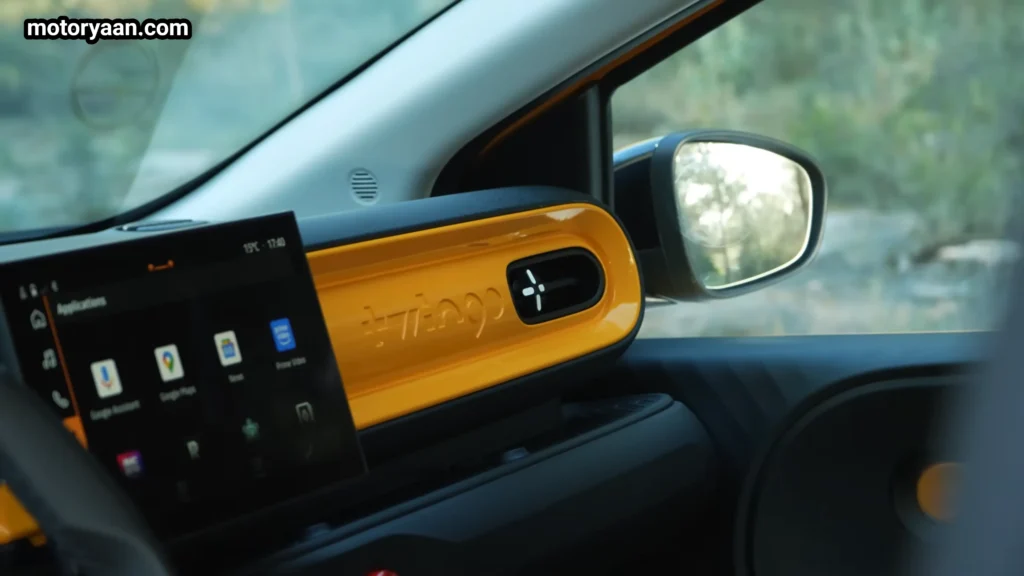
  • Smart dashboard shelves
  • Customisable centre console
  • Small door pockets (weak point)
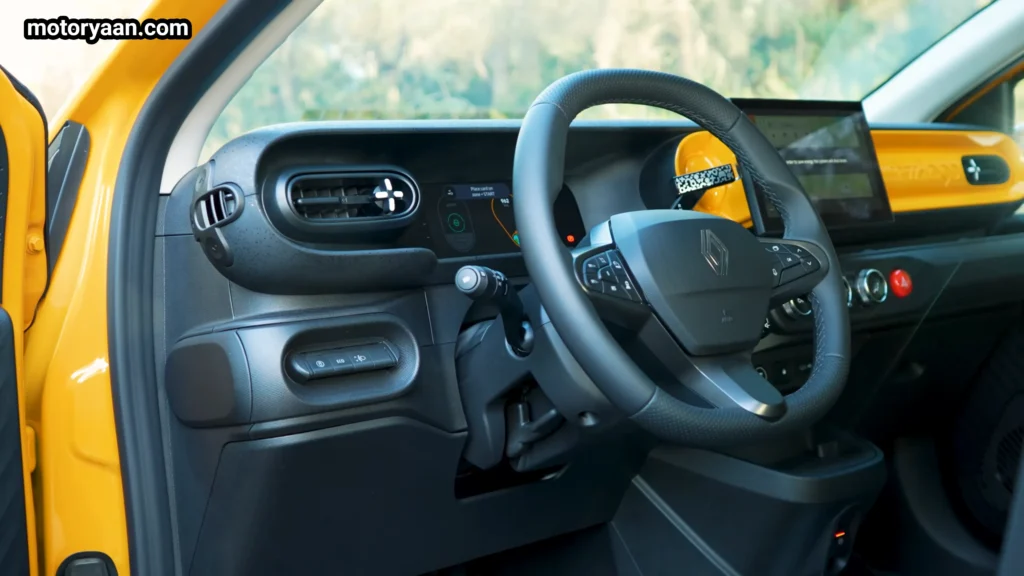
Renault Twingo EV dashboard with steering wheel and driver controls layout
Inside the Renault Twingo EV, the dashboard layout is simple and functional, with a clear instrument display and steering mounted controls.
Renault Twingo EV touchscreen infotainment system with modern interface
The Renault Twingo EV features a centrally mounted touchscreen infotainment system with easy access to navigation and connectivity features.
Renault Twingo EV climate control panel with physical knobs and buttons
The Renault Twingo EV uses physical knobs for climate control, making it easy to adjust temperature and fan speed while driving.
Renault Twingo EV passenger side dashboard with branding detail
The passenger side dashboard of the Renault Twingo EV includes subtle branding and a clean design that adds character to the cabin.

Rear Seat Space: Manage Expectations

Let’s be honest. This is not a family car.

  • Knee room: tight
  • Headroom: poor for tall passengers
  • Windows: pop out style, not full roll down

Compared to:

  • BYD Dolphin more space
  • Citroen e C3 more comfortable

Verdict: Occasional rear passengers only.

Driving Experience: Built for the City

This is where the Twingo makes the most sense.

In the city

  • Turning circle: 9.9 metres
  • Steering: light and easy
  • Ride: comfortable over potholes

It feels more composed than:

  • Dacia Spring
  • Leapmotor T03

Even beats the Renault 5 slightly in brake feel.

On highways

  • More noise inside
  • Less stable than Renault 5
  • Softer suspension more body roll

But still:

  • Better than cheaper rivals
  • Usable outside city limits

Performance

  • Power: 80 hp
  • 0 to 60 mph: 12.1 seconds

Not fast. But quick enough for daily use.

Driving Features Worth Noting

  • Regenerative braking paddles (Techno trim)
  • One pedal driving mode
  • Improved gear selector response

These small things improve daily usability more than raw speed ever could.

Final Verdict: Who Should Buy the Renault Twingo EV?

The new Renault Twingo is not trying to be everything. That’s actually its strength.

Buy it if:

  • You mostly drive in the city
  • You want a cheap EV without compromises
  • You value practicality over badge appeal

Skip it if:

  • You need rear seat comfort
  • You do frequent highway drives
  • You want premium interiors

Compared to rivals:

  • More desirable than Dacia Spring
  • Cheaper than Renault 5
  • More usable than Leapmotor T03

Bottom Line

The Renault Twingo EV feels like a properly thought out budget EV. Not just cheap for the sake of it.

It does not pretend to be premium. It does not overpromise range or performance. It just delivers what most city buyers actually need.

And honestly, that’s exactly why it might sell well.

Sources and References

Renault Twingo EV FAQs

What is the expected price of the Renault Twingo EV?

The Renault Twingo EV is expected to start below £20,000. With government incentives, the price could drop to under £17,000, making it one of the most affordable electric cars available.

What is the battery size and range of the Renault Twingo?

The car comes with a 27.5 kWh battery. It offers a claimed range of around 163 miles, or about 156 miles with larger wheels.

Does the Renault Twingo support fast charging?

Yes, but it is limited. The maximum DC fast charging speed is 50 kW. You can add up to 140 miles of range in about 30 minutes under ideal conditions.

How long does it take to charge the Renault Twingo at home?

Using a 7 kW home wall box, a full charge from 0 to 100 percent takes around 5 hours.

Is the Renault Twingo good for city driving?

Yes, it is designed mainly for urban use. It has a tight turning circle of 9.9 metres and light steering, which makes it easy to drive in traffic and tight spaces.

How practical is the Renault Twingo in terms of boot space?

The standard boot capacity is 205 litres. You can increase it to 305 litres by sliding the rear seats forward, which is a useful feature for extra luggage space.

Is the Renault Twingo spacious for rear passengers?

Rear space is limited. Knee room is tight and headroom is not great, especially for taller passengers. It is best suited for occasional use in the back seats.

What kind of battery technology does the Renault Twingo use?

It uses an LFP battery, which does not contain cobalt. This type of battery allows you to charge to 100 percent regularly without affecting long term durability.

How powerful is the Renault Twingo EV?

The car produces around 80 horsepower. It can accelerate from 0 to 60 mph in about 12.1 seconds, which is enough for daily driving but not performance focused.

Does the Renault Twingo offer one pedal driving?

Yes, but only in higher trims. The Techno variant includes regenerative braking paddles and a one pedal driving mode for easier city driving.

How does the Renault Twingo compare to other budget EVs?

It offers better comfort and usability than cheaper options like the Dacia Spring. While it is not as refined as the Renault 5, it is more affordable and still practical for everyday use.

Related articles