Honda 0 Saloon Shows Why Ferrari Luce’s Design Has Divided Opinions
Table of Contents
Ferrari’s first electric vehicle, the Ferrari Luce, has sparked one of the biggest design debates in the automotive world this year. While Ferrari expected its EV to represent a new era for the brand, many enthusiasts and industry observers have questioned its styling.
Interestingly, one of the strongest comparisons comes from an unlikely source: Honda.
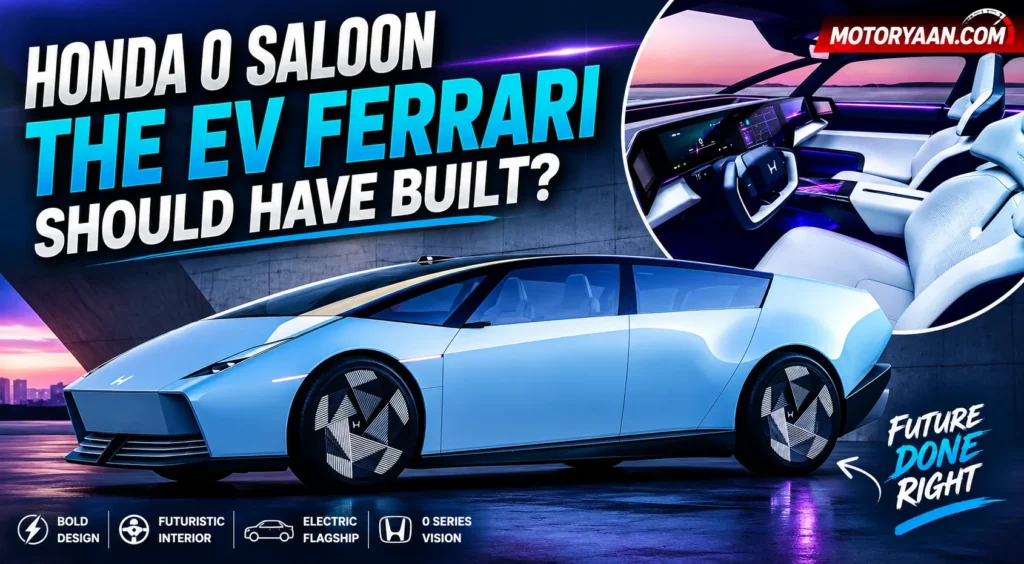
The now cancelled Honda 0 Saloon concept presented a bold vision for an electric flagship. Looking back, many enthusiasts believe Honda’s design captured the emotional appeal expected from a Ferrari better than the Luce itself.
Ferrari Luce Design Faces Criticism
The Ferrari Luce arrived with enormous expectations. As Ferrari’s first fully electric model, it needed to balance innovation with the visual drama that has defined the brand for decades.
Instead, the Luce has received mixed reactions. Critics argue that while the car contains several interesting design details, its overall shape feels too familiar. The silhouette resembles a modern aerodynamic crossover rather than a groundbreaking Ferrari.
Many observers have compared its proportions to other electric SUVs and crossovers already on the market, including models from Mercedes Benz, Lucid, BMW, and Tesla.
The issue is not necessarily that the design is bad. The bigger criticism is that it does not create an immediate emotional connection, something many people expect from a Ferrari.
Honda 0 Saloon Delivered Instant Impact
When Honda revealed the 0 Saloon concept at CES 2024, it immediately grabbed attention.
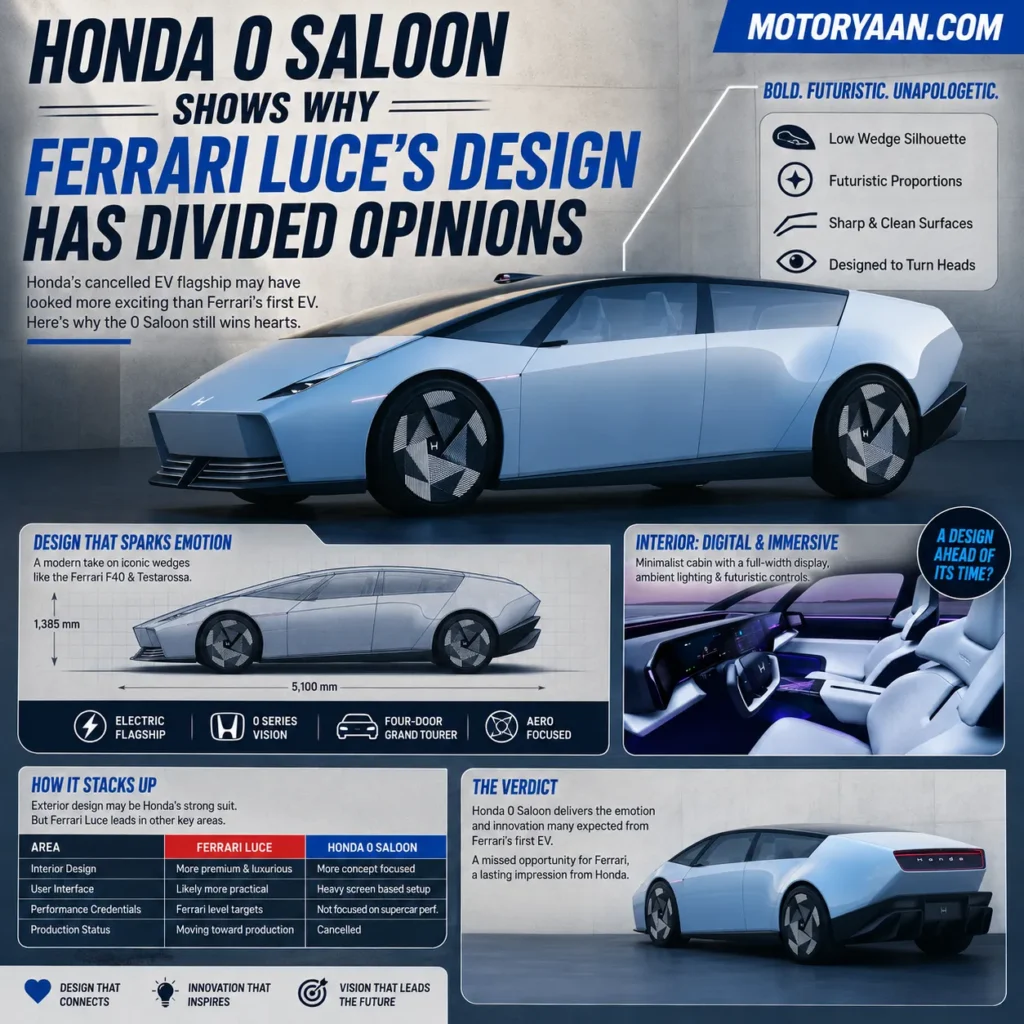
Unlike many modern EVs that prioritize aerodynamic efficiency above all else, the Honda concept combined futuristic styling with classic supercar proportions. Its low stance and dramatic wedge shape reminded enthusiasts of legendary performance cars from the past.
The design drew comparisons to iconic Ferraris such as the Ferrari F40 and Ferrari Testarossa. While the Honda was a four door electric sedan rather than a traditional supercar, it managed to create excitement from the first glance.
That immediate visual impact is exactly what many critics feel is missing from the Ferrari Luce.
A Wedge Shape That Felt Like a Supercar
One reason the Honda 0 Saloon stood out was its profile.
Key design highlights included:
- Sharp wedge shaped bodywork
- Extremely low and wide stance
- Futuristic proportions unlike most modern EVs
- Distinctive front and rear styling
- Strong visual identity that stood apart from competitors
The concept looked futuristic without relying on the common crossover formula that dominates today’s EV market.
For many enthusiasts, that approach felt closer to what a Ferrari EV should have been.
Ferrari Focused on Details While Honda Focused on Presence
The Ferrari Luce includes several innovative design elements. Reports suggest the vehicle features unique aerodynamic solutions and other carefully engineered details.
However, many of those innovations require explanation before they can be appreciated.
The Honda 0 Saloon took a different approach. Its appeal came from the overall design rather than hidden engineering features. The car made a strong first impression without needing a detailed presentation.
That distinction has become a major talking point among automotive enthusiasts.
The Honda 0 Saloon Came Close to Production
Honda returned to CES in 2025 with a more refined version of the 0 Saloon.
At the time, the company described it as a prototype that was close to production readiness. The updated version retained much of the dramatic styling that made the original concept popular.
Unfortunately, changing market conditions and Honda’s shifting EV strategy in North America eventually led to the project’s cancellation.
As a result, what could have been one of the most visually distinctive electric sedans never reached showrooms.
Where the Ferrari Luce Still Has an Advantage
The comparison is not entirely one sided.
The Ferrari Luce appears stronger in several areas:
| Area | Ferrari Luce | Honda 0 Saloon |
|---|---|---|
| Interior Design | More premium and luxurious | More concept focused |
| User Interface | Likely more practical | Heavy screen-based setup |
| Performance Credentials | Ferrari-level performance targets | Not focused on supercar performance |
| Production Status | Moving toward production | Cancelled |
Why This Debate Matters
The discussion surrounding these two vehicles highlights a larger question facing the automotive industry.
Should electric vehicles look dramatically different from traditional performance cars, or should they continue to prioritize emotional design?
Many enthusiasts believe the Honda 0 Saloon found a better balance. It looked futuristic while still delivering the visual excitement associated with high performance machines.
The Ferrari Luce, by contrast, appears to have prioritized EV specific design requirements over emotional styling.
Whether that proves successful in the long run remains to be seen, but one thing is clear: the cancelled Honda 0 Saloon continues to influence conversations about what future electric performance cars should look like.
Sources and References
Official Honda Sources
- Honda 0 Series Official Page
Honda’s official overview of the 0 Series EV platform and future electric vehicle strategy. - Honda CES 2024 0 Series Reveal
Official announcement of the Honda 0 Series, including the original Saloon concept debut. - Honda CES 2025 0 Saloon Prototype Reveal
Official details about the production ready Honda 0 Saloon prototype shown at CES 2025. - Honda Newsroom CES 2025 Announcement
Honda’s newsroom release covering the 0 Saloon, 0 SUV, and ASIMO OS technology.
Official Ferrari Sources
- Ferrari Luce Official Page
Ferrari’s official page covering the Luce EV, design philosophy, technology, and specifications. - Ferrari Luce Inside Story Series
Ferrari’s official behind the scenes series explaining the development of the Luce.
Trusted Automotive Publications
- Car and Driver Ferrari Luce Review Overview
Detailed breakdown of the Luce’s design, interior, performance, and EV platform. - Motor Authority Honda 0 Saloon CES 2025 Coverage
Covers Honda’s production plans and design evolution from concept to prototype. - MotorTrend Ferrari Luce Name Reveal
Background information on Ferrari’s first EV and the Luce naming announcement. - Top Gear Ferrari Luce First Look
Analysis of the Luce’s design direction and collaboration with Jony Ive. - Reuters Ferrari Luce EV Report
Trusted business and automotive coverage covering Ferrari’s EV strategy, pricing, and launch plans.
Honda 0 Saloon and Ferrari Luce
What is the Honda 0 Saloon, and why is it being compared with the Ferrari Luce?
The Honda 0 Saloon is a cancelled electric concept that drew attention for its sharp wedge shape and strong visual impact. It is being compared with the Ferrari Luce because many enthusiasts feel Honda’s concept looked more emotional and more fitting for a Ferrari style EV.
Why did the Honda 0 Saloon stand out so much in design?
It stood out because it looked low, wide, and dramatic from the first glance. The design used supercar style proportions, a clean front end, and a bold profile instead of the usual crossover look that many EVs follow.
What is the main criticism of the Ferrari Luce’s design?
The biggest criticism is that the Luce feels too familiar. Many observers say it has interesting details, but the overall shape does not create the instant emotional reaction people expected from Ferrari’s first EV.
Was the Honda 0 Saloon close to production?
Yes. Honda showed a more refined version at CES 2025 and described it as close to production readiness. Even so, the project was later cancelled as Honda adjusted its EV strategy in North America.
What advantages does the Ferrari Luce still have over the Honda 0 Saloon?
The Ferrari Luce appears stronger in interior design, likely offers a more practical interface, and carries Ferrari performance expectations. The Honda 0 Saloon is stronger in exterior styling, but it was always more of a concept focused design study.
Why does this design debate matter for electric vehicles?
This debate matters because it shows the split between EV efficiency and emotional design. Some brands focus on clean aerodynamics, while others try to keep the drama and identity that enthusiasts expect from performance cars.