Bugatti Tourbillon Tire Development: How Michelin and Bugatti Are Creating the Perfect Hypercar Setup
Table of Contents
Developing a hypercar is about much more than horsepower and top speed. Every component has to work together, and one of the biggest factors is something many people overlook: the tires.
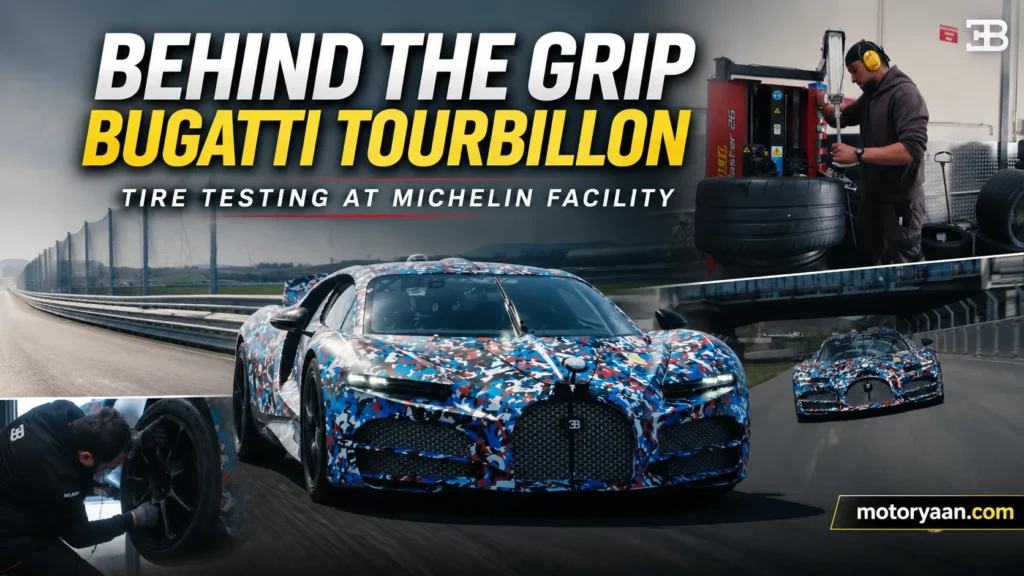
For the Bugatti Tourbillon, Michelin and Bugatti engineers have spent years testing different tire combinations to create the right balance of grip, stability, comfort, and high speed performance. The process involves thousands of kilometers of testing, simulations, and real world validation before the final specification reaches production.
Tire Development Started Years Before the Car Was Finished
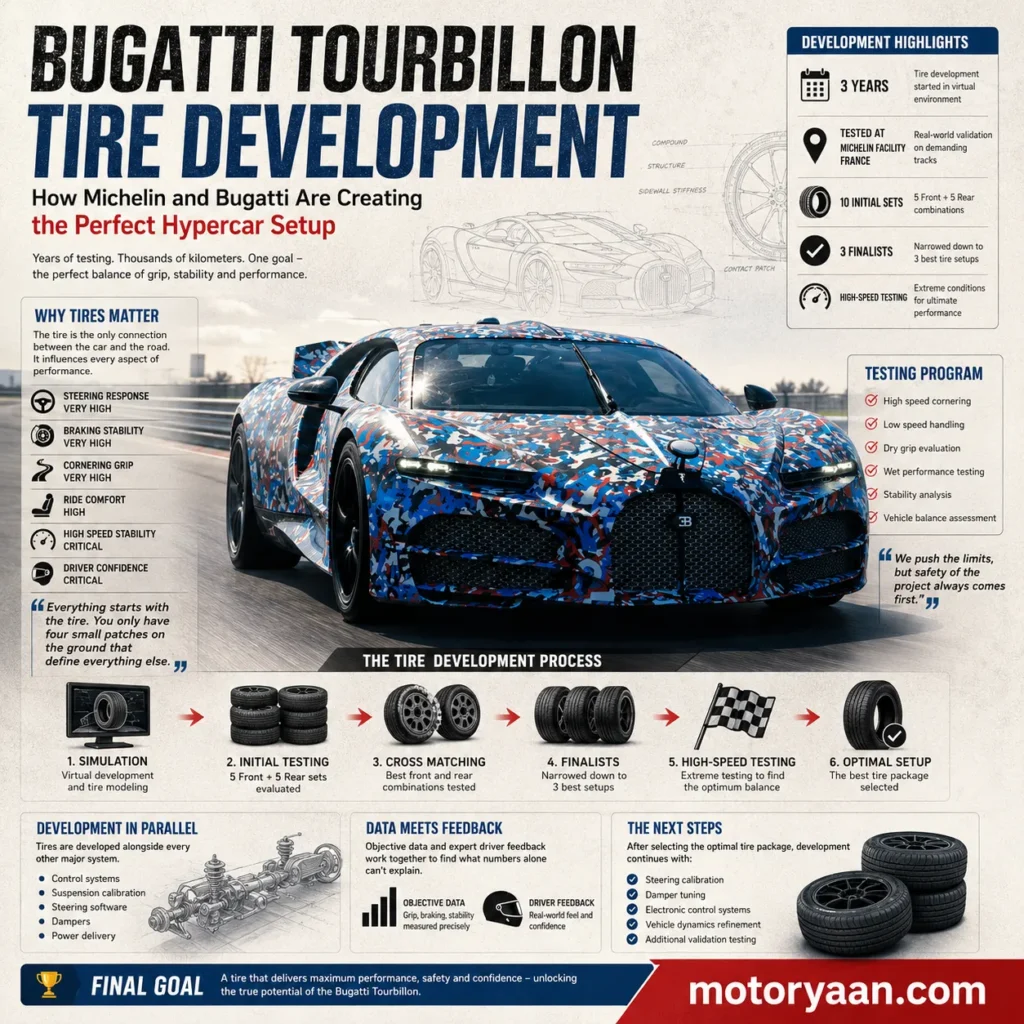
According to the development team, work on the Tourbillon’s tires began nearly three years ago in a virtual environment.
Computer simulations helped engineers narrow down possible tire designs, but digital models can only go so far. The final decisions require experienced test drivers and engineers to evaluate how the car feels on the road and track.
That emotional and subjective feedback remains an important part of vehicle development.
Michelin Test Facility Plays a Key Role
Testing took place at Michelin’s proving ground in France, where Bugatti engineers worked closely with Michelin specialists to evaluate multiple tire specifications.
The goal was simple but difficult to achieve.
Find the tire that delivers:
- Maximum grip
- Stable high speed handling
- Strong wet weather performance
- Predictable cornering balance
- Consistent performance under extreme loads
Every small change in the tire affects the way the entire vehicle behaves.
Why Tires Matter More Than Most People Think
Many drivers see tires as nothing more than black rubber circles, but engineers describe them as one of the most complex parts of any vehicle.
The tire compound, internal construction, sidewall stiffness, and overall structure all influence vehicle dynamics.
Everything the driver feels starts from the four small contact patches touching the road.
That connection determines:
| Vehicle Characteristic | Tire Influence |
|---|---|
| Steering Response | Very High |
| Braking Stability | Very High |
| Cornering Grip | Very High |
| Ride Comfort | High |
| High-Speed Stability | Critical |
| Driver Confidence | Critical |
Even the best suspension and powertrain cannot perform properly without the right tire setup.
Multiple Tire Combinations Were Tested
The engineering team began testing with several different tire combinations selected through simulation work.
Initially, they evaluated:
- Five rear tire specifications
- Five front tire specifications
Each set was tested independently before engineers mixed and matched front and rear combinations to identify the best overall balance.
After extensive evaluation, the list was reduced to only three candidate setups.
Those finalists then underwent more demanding high speed testing.
High Speed Testing Pushes Every Component
Once the candidate tires were selected, engineers focused on testing under extreme conditions.
The program included:
- High speed cornering
- Low speed handling
- Dry grip evaluation
- Wet performance testing
- Stability analysis
- Vehicle balance assessment
The objective was to ensure the tires could perform consistently while supporting the Tourbillon’s enormous power and acceleration.
Objective Data Meets Driver Feedback
Engineers rely on both measurable data and driver impressions during testing.
Objective tests record information such as grip levels, braking distances, and steering response.
Subjective evaluations allow experienced drivers to describe how the car behaves in real situations.
This combination helps engineers understand differences that numbers alone may not fully explain.
Tire Development Happens Alongside Vehicle Development
One of the biggest challenges is timing.
The vehicle itself is still evolving while tire development is taking place.
Control systems, suspension calibration, steering software, dampers, and power delivery are all under development at the same time.
Engineers must choose the tire specification before every other system reaches full maturity because manufacturing and validation require significant time.
This means several teams work in parallel throughout the project.
Safety Remains the Highest Priority
Testing prototype hypercars involves significant risks.
The development team explained that protecting the prototype is about more than avoiding repair costs.
A serious accident can delay the entire development program.
For that reason, engineers always maintain a healthy safety margin while still exploring the vehicle’s limits.
Finding the balance between pushing performance and protecting the project depends heavily on driver experience.
Experience Makes the Difference
Developing a car like the Tourbillon demands enthusiasm, technical knowledge, and years of practical experience.
Long working days and constant problem solving are part of the process.
The engineering team believes that every member contributes valuable expertise, allowing the project to reach the highest possible standards.
At this level, they are not simply improving technology. They are exploring the limits of what current technology can achieve.
The Final Tire Specification Has Been Selected
After completing the latest round of testing under ideal weather conditions, engineers selected what they believe is the optimum tire package available at this stage of development.
The next phase involves Michelin producing the approved specification so Bugatti can continue calibrating other vehicle systems.
Upcoming work will focus on:
- Steering calibration
- Damper tuning
- Electronic control systems
- Vehicle dynamics refinement
- Additional validation testing
Only after all these systems work together will the Tourbillon achieve the driving character envisioned by its engineering team.
Final Thoughts
The development of the Bugatti Tourbillon shows that ultimate performance is not created by engine power alone. Tires play a central role in how every hypercar accelerates, brakes, corners, and communicates with the driver.
Behind the scenes, years of testing, simulation, and collaboration between Bugatti and Michelin go into selecting a single tire specification. While it may seem like a small component, engineers agree that everything starts where the tire meets the road, making it one of the most important elements of the entire vehicle.
Sources and References
Official Sources
1. Bugatti Official Tourbillon Page
Official product page featuring the Tourbillon’s design philosophy, specifications, hybrid V16 powertrain, and engineering highlights.
2. Bugatti Newsroom
Bugatti Newsroom Tourbillon Press Release
Official press release explaining the Tourbillon’s development, bespoke Michelin tires, chassis technology, and engineering philosophy.
Trusted Automotive Sources
3. Motor1
2026 Bugatti Tourbillon Review and Specs
Covers the 1,800 hp hybrid powertrain, acceleration figures, and bespoke Michelin tire setup with technical analysis.
4. Bugatti Official YouTube
Bugatti Official YouTube Channel
Official videos showcasing the Tourbillon, engineering process, design philosophy, and testing programs.
Tire Technology Reference
5. Michelin Global
Official source for Michelin tire technologies, motorsport innovations, and high performance tire development.
Background Information
6. Wikipedia
Useful for quick background information, production details, engine specifications, and historical context. Always cross check technical details with official Bugatti sources.