Porsche Says the Taycan May Have Arrived Too Early as EV Strategy Evolves
Table of Contents
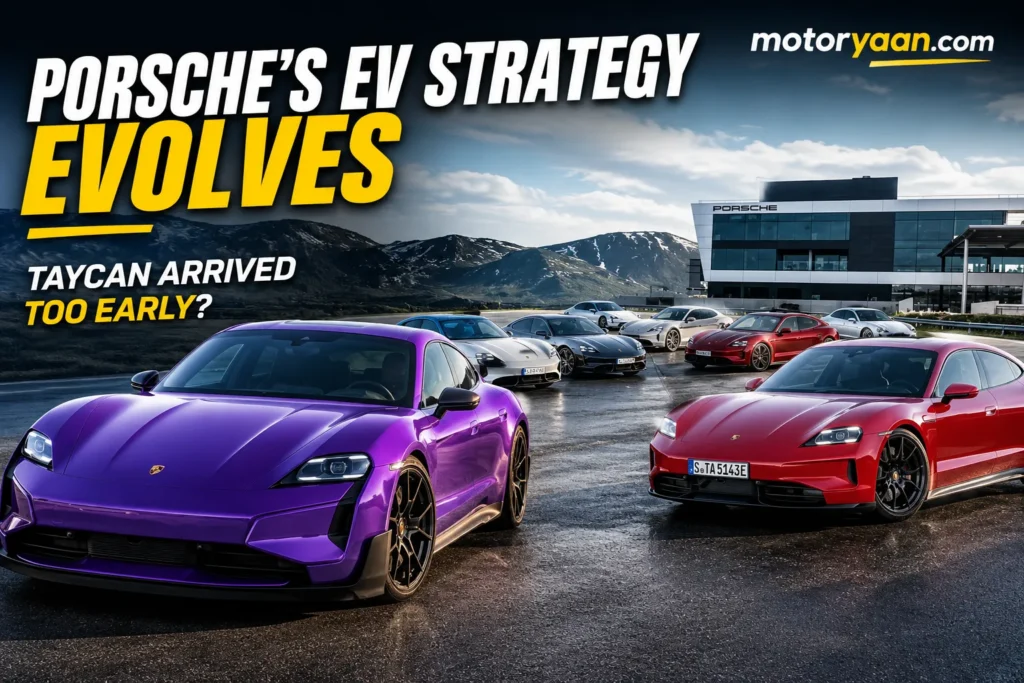
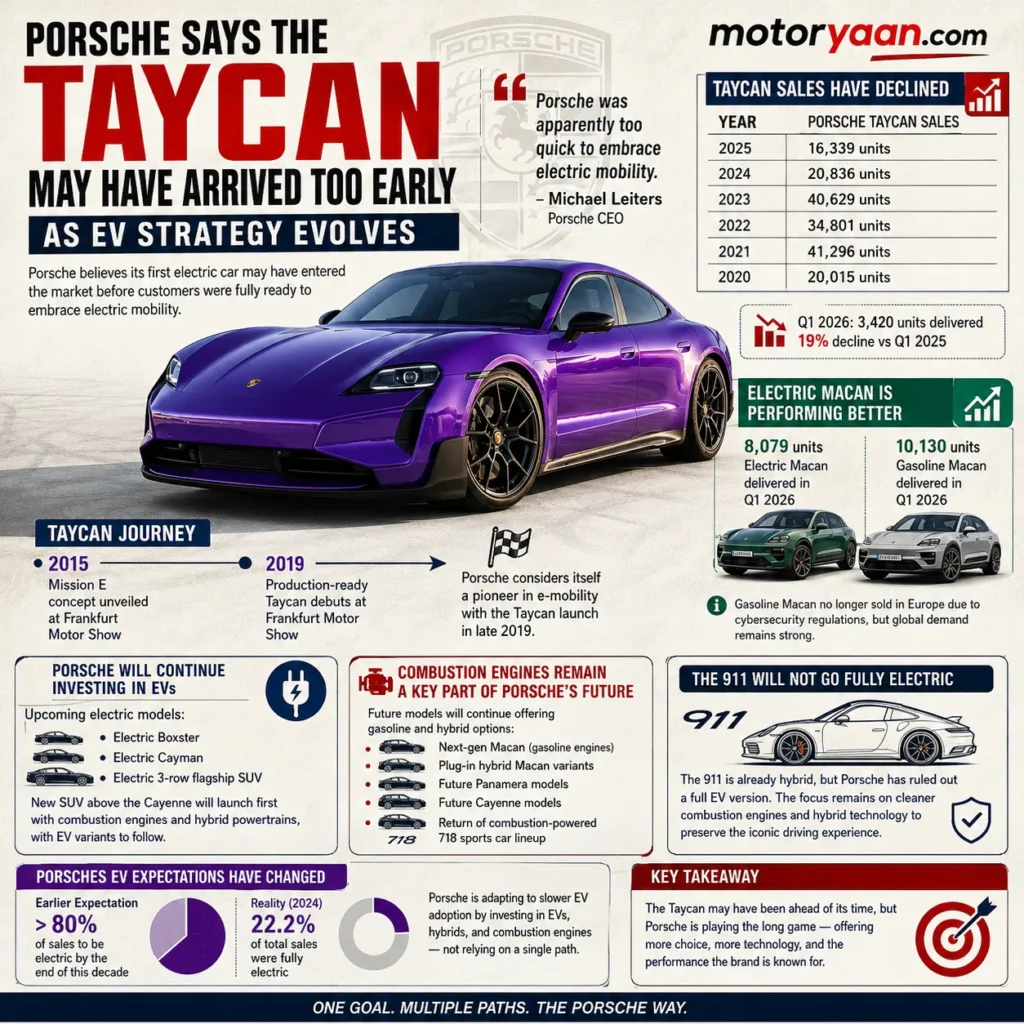
Porsche believes its first electric car may have entered the market before customers were fully ready to embrace electric mobility. Nearly seven years after the Taycan debuted, the company now admits that the timing may not have been ideal, even though it considers itself one of the pioneers in the premium EV segment.
The statement comes at a time when Taycan sales are slowing while Porsche continues investing in both electric vehicles and combustion engine technology.
Porsche Reflects on the Launch of the Taycan
The journey began in 2015 when Porsche unveiled the Mission E concept at the Frankfurt Motor Show. The concept previewed the company’s future electric ambitions and generated significant excitement among enthusiasts.
Four years later, in 2019, Porsche introduced the production version, the Taycan, marking the brand’s first fully electric production car.
Looking back, Porsche CEO Michael Leiters believes the company may have entered the EV market earlier than many customers were prepared for.
According to him, Porsche was “apparently too quick to embrace electric mobility,” suggesting buyers had not yet fully recognized the advantages of an electric sports sedan.
Taycan Sales Have Declined in Recent Years
The sales figures show that the Taycan enjoyed a strong start but has struggled over the last two years.
| Year | Porsche Taycan Sales |
|---|---|
| 2025 | 16,339 units |
| 2024 | 20,836 units |
| 2023 | 40,629 units |
| 2022 | 34,801 units |
| 2021 | 41,296 units |
| 2020 | 20,015 units |
The trend has continued into 2026.
During the first quarter, Porsche delivered just 3,420 Taycan units, representing a 19 percent decline compared to the same period last year.
For a model once expected to lead Porsche’s electric future, these numbers highlight the slower than expected transition toward EV adoption.
Electric Macan Is Performing Better
While the Taycan faces declining demand, the electric Macan has shown much stronger momentum.
During the first quarter, Porsche delivered 8,079 electric Macan crossovers worldwide.
However, the gasoline powered Macan remains the better selling version with 10,130 deliveries.
Even though the combustion version is no longer sold in Europe due to cybersecurity regulation changes, global demand continues to remain strong.
Porsche Will Continue Investing in Electric Vehicles
Despite slowing Taycan sales, Porsche has made it clear that it is not stepping away from electrification.
The company continues to invest heavily in future EV development.
Upcoming electric models include:
- Electric Porsche Boxster
- Electric Porsche Cayman
- Electric version of the upcoming three row flagship SUV
The new SUV above the Cayenne will initially launch with combustion engines and hybrid powertrains before electric variants join the lineup later.
This balanced strategy allows Porsche to serve customers with different preferences while gradually expanding its EV portfolio.
Combustion Engines Remain a Key Part of Porsche's Future
Porsche is also strengthening its commitment to internal combustion engines and hybrid technology.
Several future products will continue offering gasoline powered options.
These include:
- Next generation Macan with gasoline engines
- Plug in hybrid Macan variants
- Future Panamera models
- Future Cayenne models
- Return of the combustion powered 718 sports car lineup
The company believes combustion engines and hybrid systems will remain important well into the 2030s.
The Porsche 911 Will Not Become Fully Electric
The iconic Porsche 911 has already entered the hybrid era, but Porsche has ruled out a fully electric version.
Instead of replacing its legendary sports car with a battery electric model, the company plans to improve combustion engine efficiency while expanding hybrid technology to meet future emissions regulations.
For enthusiasts, this means the traditional driving experience of the 911 will remain part of Porsche’s identity for years to come.
Porsche's EV Expectations Have Changed
Only a few years ago, Porsche expected electric vehicles to account for more than 80 percent of its annual sales by the end of this decade.
Reality has unfolded differently.
Last year, fully electric vehicles represented only 22.2 percent of the company’s total sales volume.
As customer demand has evolved more slowly than anticipated, Porsche has shifted toward a flexible strategy that includes electric vehicles, hybrids, and combustion engines instead of focusing primarily on EVs.
Why Porsche Believes the Taycan Was Ahead of Its Time
Whether the Taycan arrived too early will continue to be debated, especially since several premium EVs were already available around its launch period.
However, Porsche now appears to believe it overestimated how quickly its traditional customer base would switch from high performance combustion engines to electric powertrains.
The company is now adapting its long term strategy by investing in multiple technologies rather than relying on a single path.
For buyers, this means Porsche intends to offer greater choice, allowing customers to decide whether they prefer gasoline, hybrid, or fully electric performance vehicles in the years ahead.
Conclusion
The Porsche Taycan remains an important milestone in the brand’s history and helped establish Porsche as a serious player in the premium EV market. However, changing market conditions and slower customer adoption have prompted the company to rethink its original expectations.
Instead of abandoning electrification, Porsche is expanding its approach by investing in electric vehicles while continuing to develop combustion engines and hybrid technology. This balanced strategy reflects current market demand and ensures the brand remains prepared for different automotive futures.
Sources & References
Official Porsche Newsroom
https://newsroom.porsche.com/en.html
Official press portal from Porsche with company announcements, EV updates, product launches, and media resources.
Porsche USA Taycan
https://www.porsche.com/usa/models/taycan/
Official US page for the Porsche Taycan featuring specifications, trims, performance details, and pricing.
Porsche USA Taycan Model Details
https://www.porsche.com/usa/models/taycan/taycan-models/taycan/
Detailed information on the Taycan’s design, technology, battery, charging, and performance for the US market.
Porsche Taycan Press Kit
https://newsroom.porsche.com/en/press-kits/taycan.html
Official Porsche media kit containing technical information, specifications, and press materials for the Taycan lineup.
Porsche Taycan World Premiere
Official announcement covering the global debut of the Porsche Taycan in 2019.
Porsche Newsroom Taycan Hub
https://newsroom.porsche.com/en/products/taycan.html
Dedicated Porsche Newsroom section with the latest Taycan news, updates, charging technology, and product developments.
Motor1 Porsche Taycan News
https://www.motor1.com/porsche/taycan/
Trusted automotive publication covering Taycan reviews, industry news, first drives, and EV developments.
Car and Driver Porsche Taycan Review
https://www.caranddriver.com/porsche/taycan
US based automotive review covering pricing, specifications, performance, and expert analysis of the Porsche Taycan.
Road & Track Porsche EV News
https://www.roadandtrack.com/news/a71546685/porsche-will-not-produce-electric-911-ceo-says-report/
Industry report discussing Porsche’s evolving electrification strategy and comments from CEO Michael Leiters.
Porsche Product Information for Media
https://newsroom.porsche.com/en/products/taycan/product-information-for-media.html
Official technical reference with charging, efficiency, battery, and engineering information for media use.
Porsche Taycan FAQ
Why does Porsche believe the Taycan arrived too early?
Porsche CEO Michael Leiters said the company may have embraced electric mobility sooner than many customers were ready for. According to Porsche, buyers did not fully appreciate the benefits of a premium electric sports sedan when the Taycan launched in 2019.
When did the Porsche Taycan first debut?
The production Porsche Taycan made its official debut in 2019 after the Mission E concept previewed the company's electric future in 2015 at the Frankfurt Motor Show.
How have Porsche Taycan sales changed in recent years?
Taycan sales reached over 40,000 units in both 2021 and 2023 but have declined over the last two years. During the first quarter of 2026, deliveries fell by 19 percent compared with the previous year.
Is the electric Porsche Macan selling better than the Taycan?
Yes. The electric Macan has shown stronger demand recently, with more than 8,000 deliveries during the first quarter. However, the gasoline powered Macan still remains the higher volume model globally.
Will Porsche continue investing in electric vehicles?
Yes. Porsche has confirmed continued investment in electric mobility, including future electric versions of the Boxster, Cayman, and a new flagship SUV while maintaining a broader multi powertrain strategy.
Will Porsche stop making gasoline powered cars?
No. Porsche plans to continue offering combustion engines and plug in hybrid models for several vehicles, including future versions of the Macan, Panamera, Cayenne, and the return of the combustion powered 718 lineup.
Will the Porsche 911 become a fully electric car?
No. Porsche has ruled out a fully electric 911. Instead, the company plans to improve combustion engine efficiency while expanding hybrid technology to meet future emissions standards.
Has Porsche changed its electric vehicle sales expectations?
Yes. Porsche previously expected electric vehicles to account for more than 80 percent of annual sales by the end of the decade. As customer adoption has progressed more slowly than expected, the company now follows a balanced strategy that includes EVs, hybrids, and combustion engines.