AI Occupant Detection Cameras Could Make Future Cars Safer and Cheaper
Table of Contents
Artificial intelligence is finding new roles inside modern vehicles, and one of its latest applications could benefit both automakers and drivers. A new AI powered occupant detection camera system developed by Aptiv aims to replace multiple traditional seat sensors with a single camera while adding several new safety features.
If the technology sees wider adoption, future vehicles could become cheaper to build, easier to assemble, and even safer for passengers.
What Is an AI Occupant Detection Camera?
Traditional occupant detection systems rely on several different sensors installed throughout the vehicle. These sensors help determine whether a seat is occupied and whether airbags should deploy during a crash.
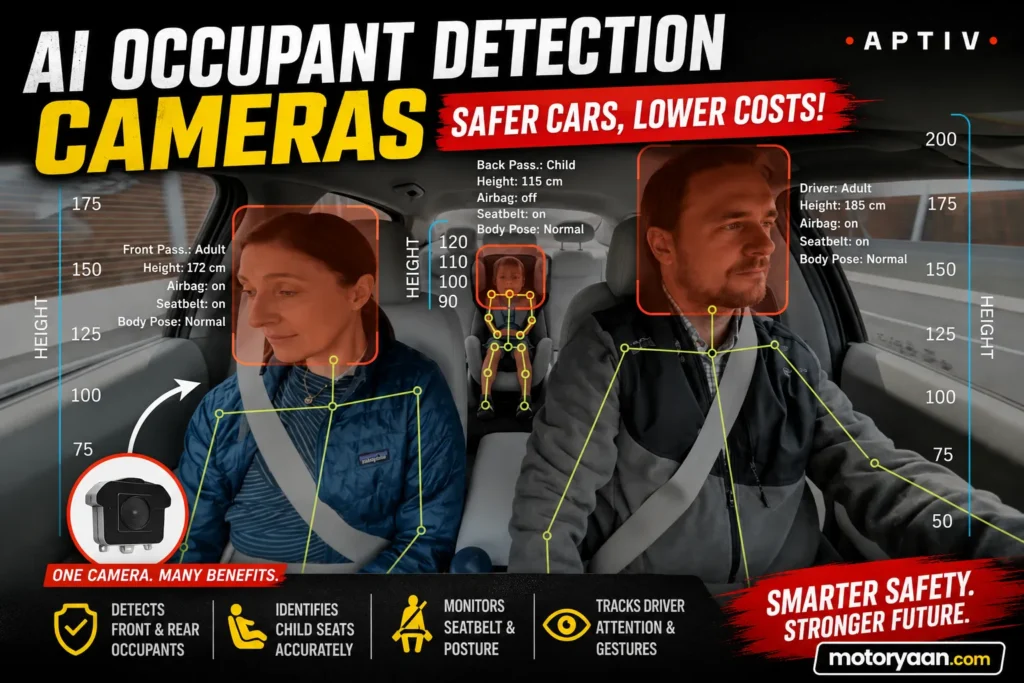
Aptiv’s new Advanced Occupancy Classification system uses one wide angle camera mounted beneath the rearview mirror to monitor both the front and rear seating areas.
Instead of depending on multiple weight and pressure sensors, the camera uses artificial intelligence to identify occupants, understand their position, and classify who is sitting in each seat.
Why Occupant Detection Is Important
Modern vehicle safety regulations require cars to accurately detect passengers for proper airbag deployment.
For example, the system needs to determine whether the front passenger is:
- An adult
- A small occupant
- A child
- An empty seat
This information helps the vehicle decide whether to deploy the passenger airbag at full force, reduced force, or not deploy it at all.
Future regulations aimed at preventing children from being left inside hot vehicles are also expected to require reliable rear seat occupant detection.
How Current Occupant Detection Systems Work
Most vehicles today use a combination of hardware sensors, including:
| Current Sensor Type | Purpose |
|---|---|
| Load Cells in Seat Tracks | Measure occupant weight |
| Pressure Mats | Detect seat occupancy |
| Weight-Sensing Bladders | Estimate passenger mass |
| Integrated Seat Load Structures | Support airbag deployment decisions |
| Rear Buckle Sensors | Detect rear-seat usage |
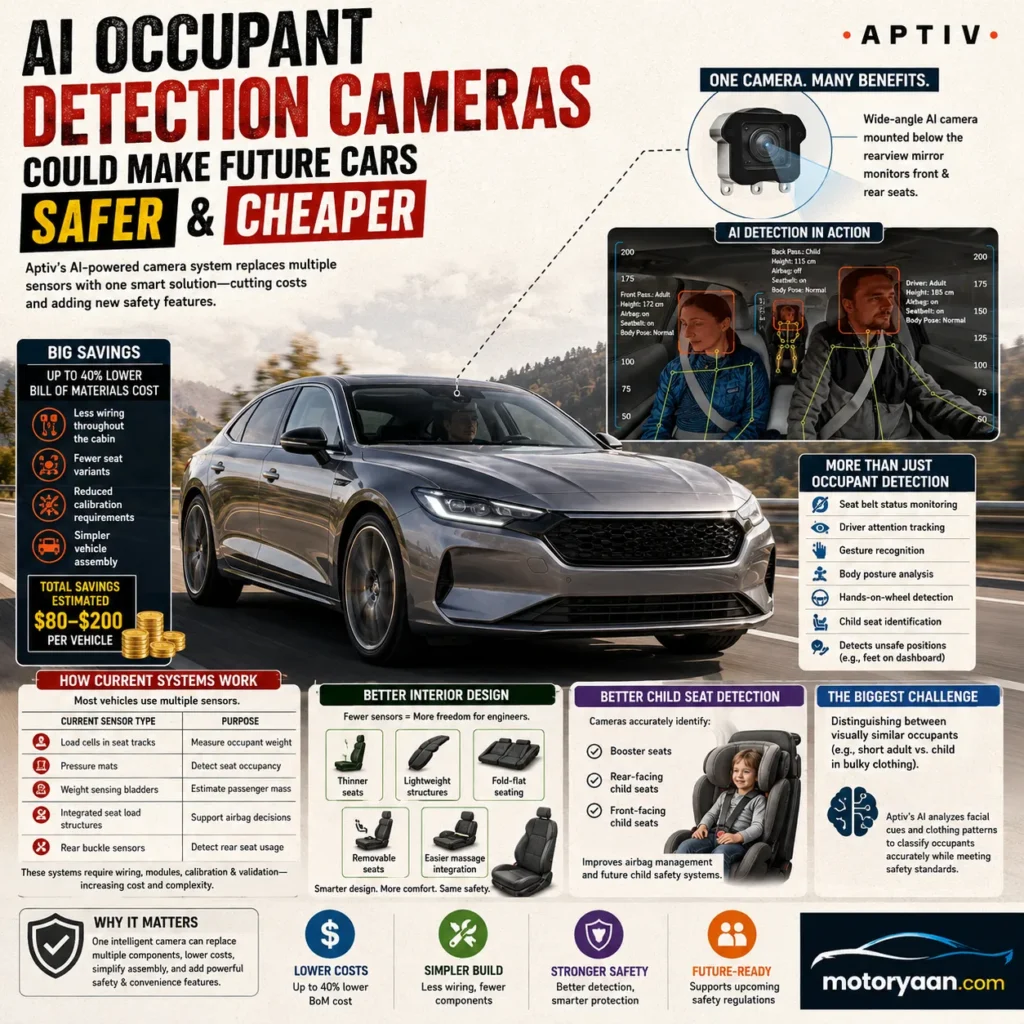
These systems require electrical wiring, communication modules, calibration, and validation during manufacturing, increasing production complexity and cost.
How Aptiv's Camera System Reduces Costs
Replacing multiple physical sensors with one AI powered camera simplifies the entire system.
According to Aptiv, manufacturers could benefit from:
- Up to 40 percent lower bill of materials cost
- Less wiring throughout the cabin
- Fewer seat variants during production
- Reduced calibration requirements
- Simpler vehicle assembly
Industry estimates suggest the overall savings could range between 80 dollars and 200 dollars per vehicle, depending on the vehicle platform and configuration.
For large scale manufacturers producing millions of vehicles each year, these savings could become significant.
More Than Just Occupant Detection
The camera is designed to perform several additional functions beyond identifying passengers.
Its capabilities include:
- Seat belt status monitoring
- Driver attention tracking
- Gesture recognition
- Body posture analysis
- Hands on wheel detection
- Child seat identification
- Detection of unsafe seating positions such as feet placed on the dashboard
Combining these functions into one system reduces the need for multiple dedicated sensors across the cabin.
Better Vehicle Interior Design
Removing traditional seat mounted detection hardware gives engineers more flexibility when designing interiors.
Manufacturers could introduce:
- Thinner seats
- Lightweight seat structures
- Fold flat seating
- Removable seats
- Easier integration of massage functions
With fewer embedded sensors inside the seats, future cabin layouts could become more innovative while remaining compliant with safety standards.
The Biggest Technical Challenge
One of the hardest tasks for an AI based camera system is estimating passenger size accurately.
For example, a shorter adult and an older child may appear visually similar. Heavy winter clothing can also make accurate classification more difficult.
Aptiv says its artificial intelligence analyses facial characteristics and clothing patterns to improve classification accuracy while meeting the performance requirements for passenger protection systems.
Camera Based Systems May Improve Child Seat Detection
One area where cameras have an advantage over traditional weight sensors is child seat recognition.
The system can distinguish between:
- Booster seats
- Rear facing child seats
- Front facing child seats
This could improve airbag management and help future child safety systems operate more effectively.
Why This Technology Matters
Automakers constantly look for ways to reduce manufacturing costs without sacrificing safety.
An AI powered occupant detection camera has the potential to replace multiple components with a single intelligent system while delivering additional safety and convenience features.
If adopted across the industry, it could lower production costs, simplify assembly, and support future safety regulations focused on passenger protection and child detection.
Final Thoughts
Artificial intelligence is steadily becoming part of every aspect of vehicle technology, from driver assistance to cabin monitoring.
Aptiv’s camera based occupant detection system demonstrates how one intelligent component can perform multiple jobs traditionally handled by separate sensors. Besides reducing manufacturing complexity and cost, it also opens the door for smarter safety features and more flexible interior designs.
As vehicle technology continues to evolve, solutions like this could become a standard feature in next generation cars, benefiting both manufacturers and consumers through improved safety and lower production costs.
Sources & References
Official Sources
- Aptiv Official Website
Official website of Aptiv, the company behind the AI powered Advanced Occupancy Classification system and other automotive safety technologies. - National Highway Traffic Safety Administration (NHTSA)
Official U.S. government agency responsible for vehicle safety regulations, crash standards, and occupant protection requirements. - Federal Motor Vehicle Safety Standards (FMVSS) Information
Official regulations covering vehicle safety standards in the United States, including occupant protection requirements.
Trusted Industry References
- Aptiv Insights: Advanced Occupancy Classification
Official overview of Aptiv’s AI based occupant detection technology and in cabin perception solutions. - SAE International
Global authority on automotive engineering standards, mobility technologies, and vehicle safety research. - Insurance Institute for Highway Safety (IIHS)
Independent U.S. organization that researches crashworthiness, occupant protection, and vehicle safety technologies. - MotorTrend
Leading automotive publication covering new vehicle technologies, engineering developments, and industry news.