Volkswagen Tayron: What This New Seven Seater Really Is
Volkswagen calls it the Tayron. Spelled T A Y R O N.
Most people will still call it Tyron. English does that sometimes.
This SUV is not new globally. It first appeared in China back in 2018. What matters now is that Volkswagen has positioned it as the seven seater version of the Tiguan and effectively the replacement for the Tiguan Allspace. In India, this becomes Volkswagen’s flagship SUV.
Unlike the Tiguan which comes in as a CBU, the Tayron is assembled in India via the CKD route. That decision alone explains a lot of what this car offers.
Positioning and Rivals
The Tayron sits between the Tiguan and the Touareg globally. In India, it lands straight into a space dominated by the Toyota Fortuner and Skoda Kodiaq.
Here is the key difference.
The Fortuner focuses on ruggedness, ladder frame construction, diesel engines, and long term durability.
The Tayron takes the opposite route. It goes all in on features, tech, comfort, and driving dynamics.
The Kodiaq is its closest rival mechanically. Same group, similar platform. But the Tayron offers noticeably more features, especially in technology and driver assistance.
Engine and Powertrain
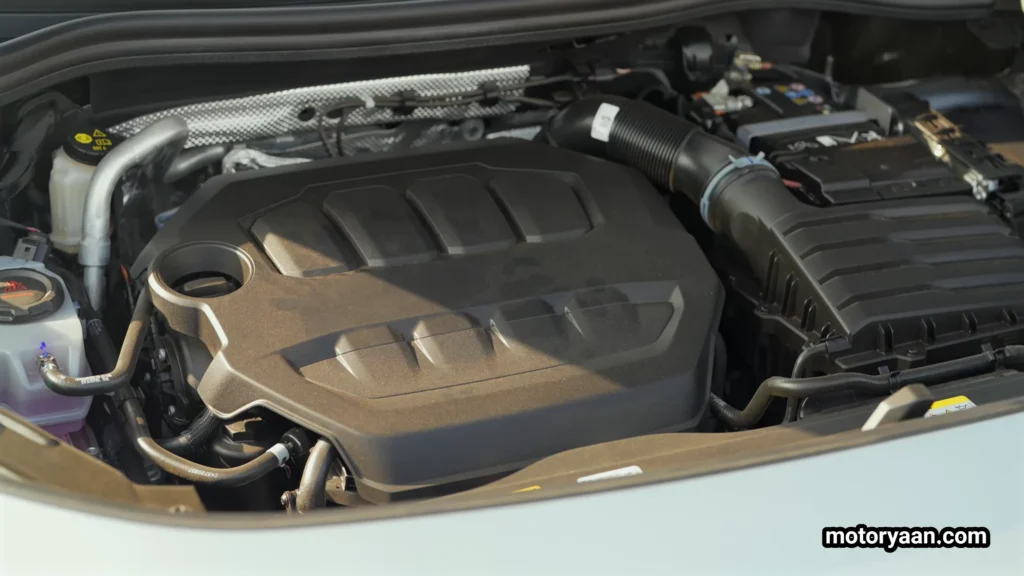
Open the bonnet and you will not find a diesel engine.
Power comes from the 2.0 litre TSI EA888 Gen 4 petrol engine.
Key figures
• 204 horsepower
• 320 Nm torque
• 7 speed dual clutch automatic
• 4Motion all wheel drive
This engine is extremely smooth and refined. There is so much refinement that Volkswagen has not even bothered with heavy insulation under the bonnet.
Yes, diesel fans will complain. Fairly so. The Fortuner offers diesel and hybrid options. But Volkswagen has clearly chosen performance and refinement over efficiency here.

Performance Numbers
Volkswagen claims
0 to 100 kmh in 7.3 seconds
Real world testing shows consistency.
Repeated runs return times between 7.2 and 7.5 seconds, depending on road conditions. Launch control works reliably every single time, which is rare.
Braking performance is strong and confidence inspiring. The balance through corners is genuinely impressive for a three row SUV.
This does not feel like a seven seater when driven hard. It feels light, agile, and surprisingly playful.
Ride and Handling
Even without DCC adaptive dampers, the Tayron handles beautifully.
Steering is light and effortless in the city. On highways and twisty roads, the balance is neutral and predictable. The 4Motion all wheel drive system ensures there is no wheel spin even with traction control switched off.
It is not an off roader. It is not pretending to be one either. This is a road focused SUV with excellent body control.
Platform and Dimensions
The Tayron is built on the MQB Evo platform.
Compared to the Tiguan, it is
• 7 mm wider
• 9 mm taller
The real change is length.
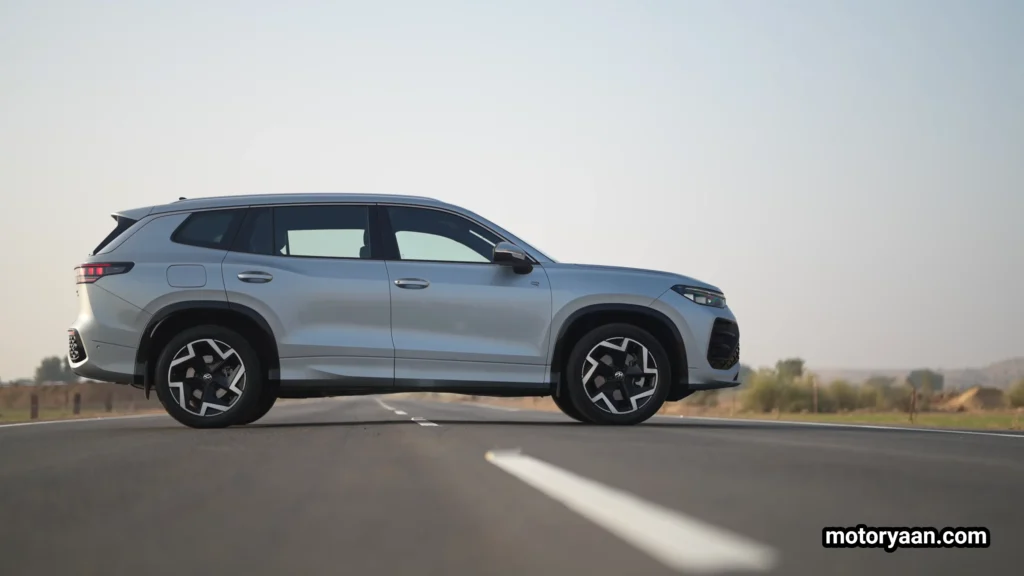
It is around 253 mm longer than the standard Tiguan and roughly 23 mm longer than the Tiguan Allspace. The wheelbase has grown by 111 mm, which allows Volkswagen to squeeze in the third row.
Ground clearance looks usable for Indian roads, though this is clearly not an off road focused SUV.
Exterior Design and Lighting Tech
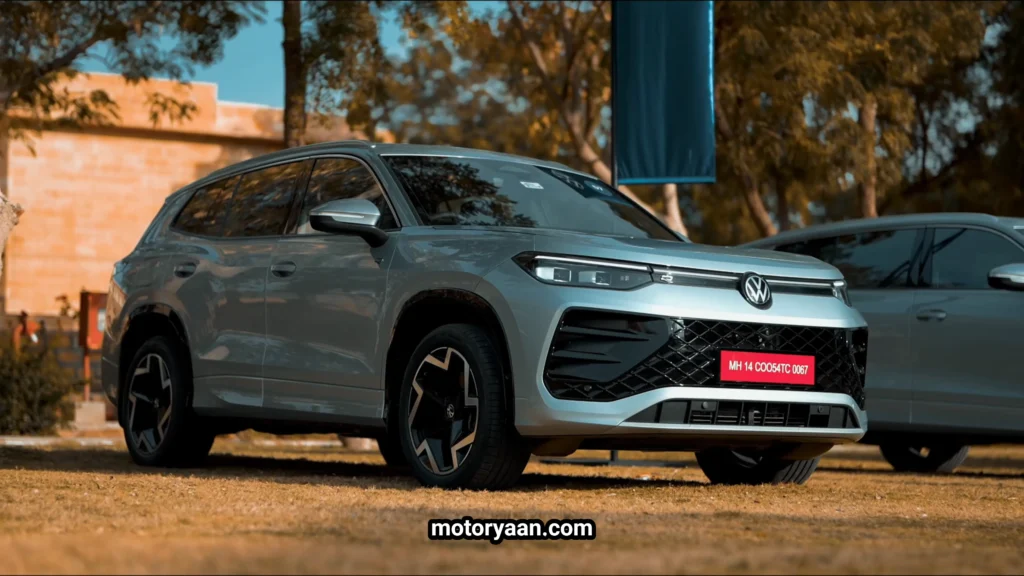
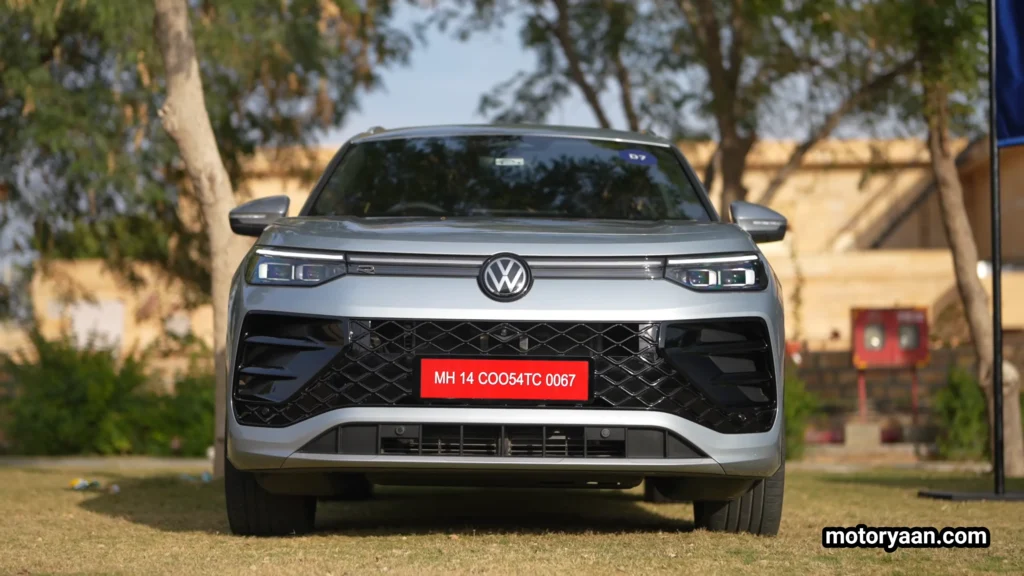
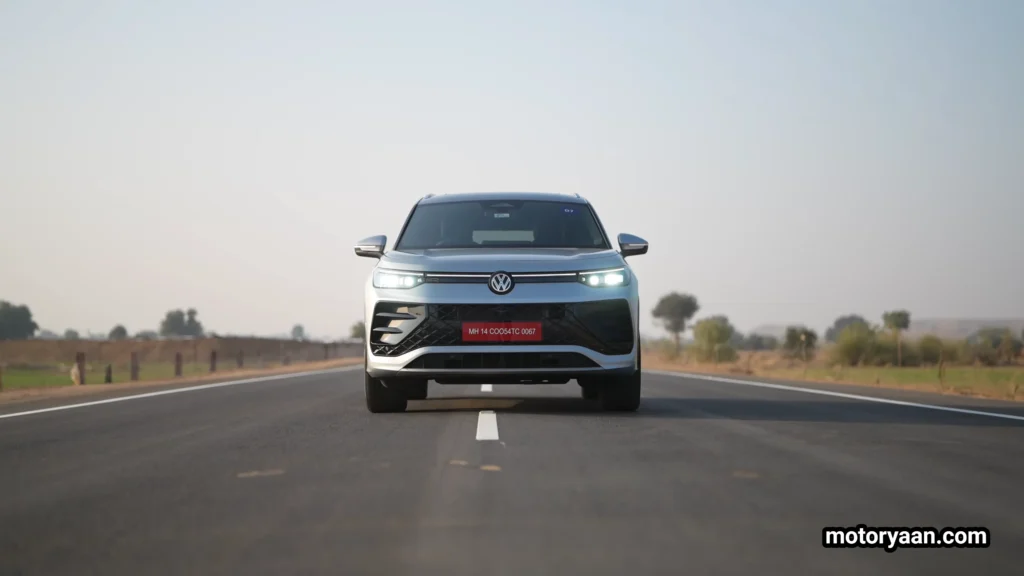
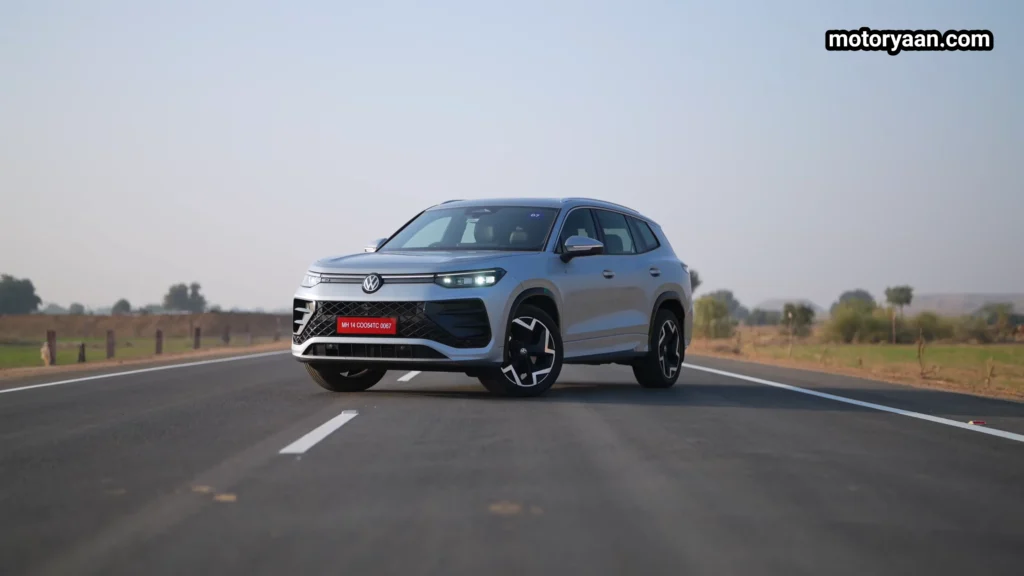
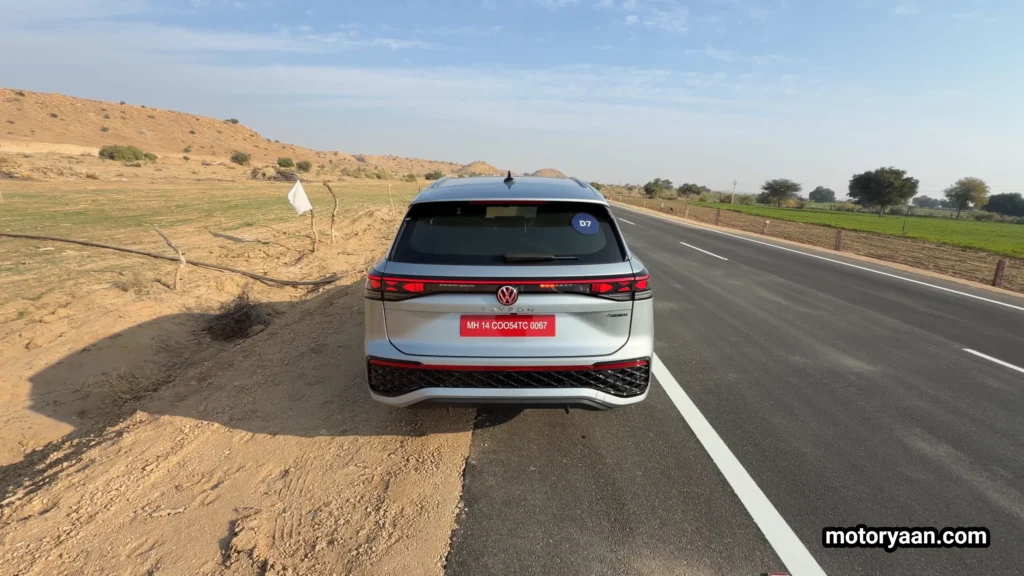
At first glance, the Tayron looks very similar to the Tiguan. That is not a bad thing. The design is clean, sharp, and unmistakably Volkswagen.
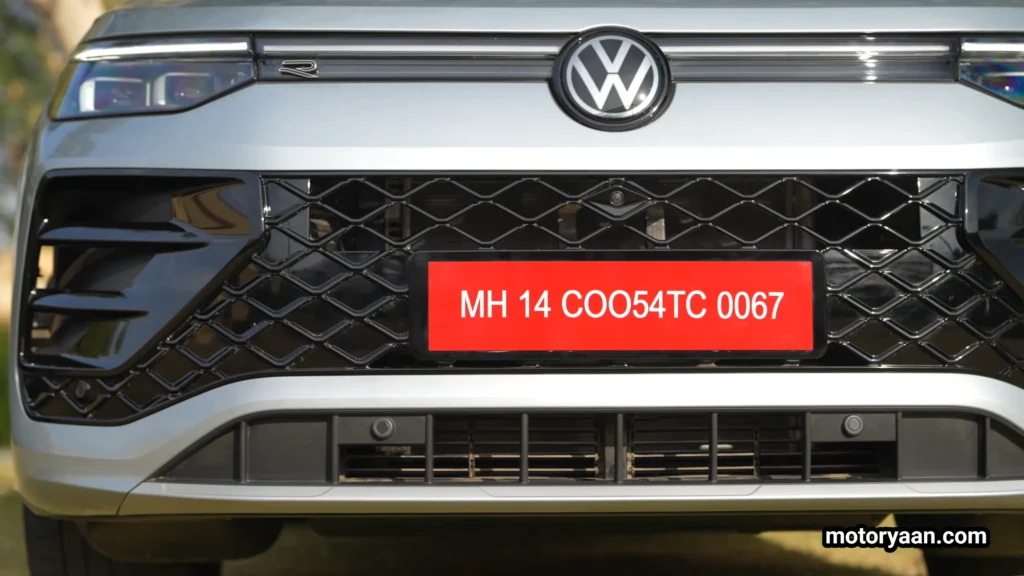
The R Line variant adds
• Gloss black grille elements
• Sporty bumper detailing
• R badging
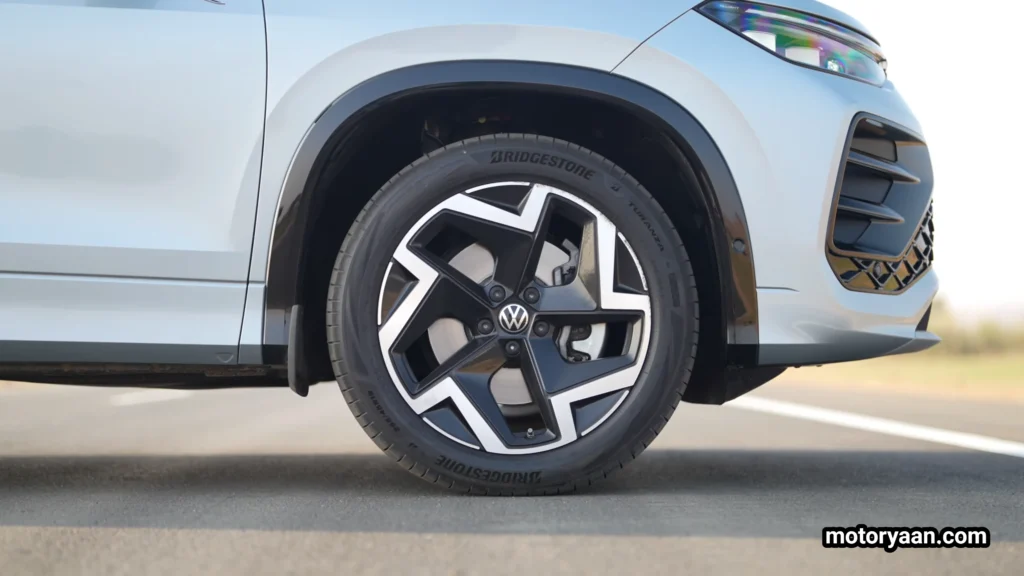
• 19 inch dual tone alloy wheels with 255 45 R19 tyres
Lighting is where things get interesting.
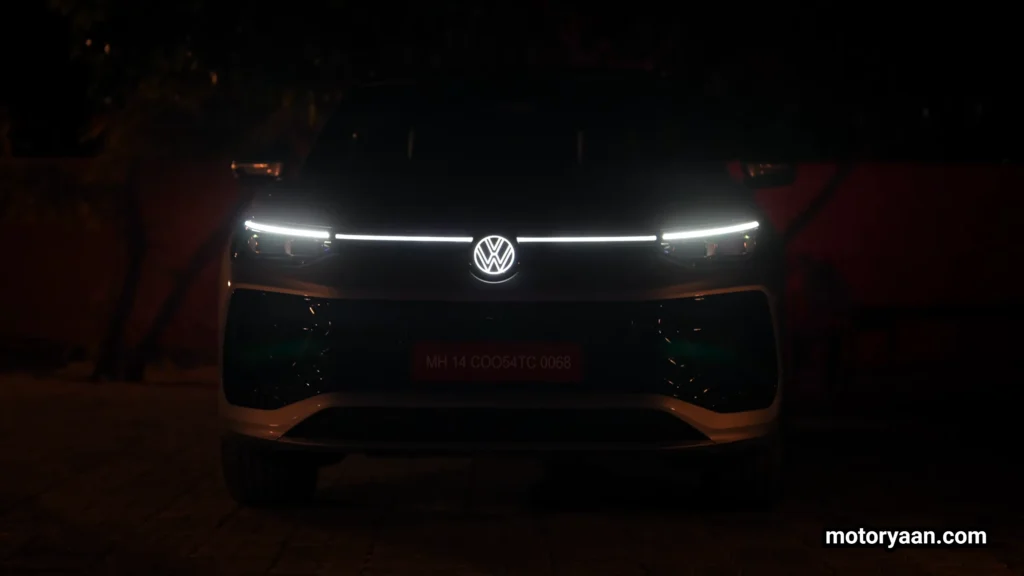
You get full LED IQ Light HD Matrix headlights with three selectable lighting animations. These animations can be changed from inside the infotainment system. You cannot really appreciate them from outside while driving, but the drama is there.
Other lighting highlights include
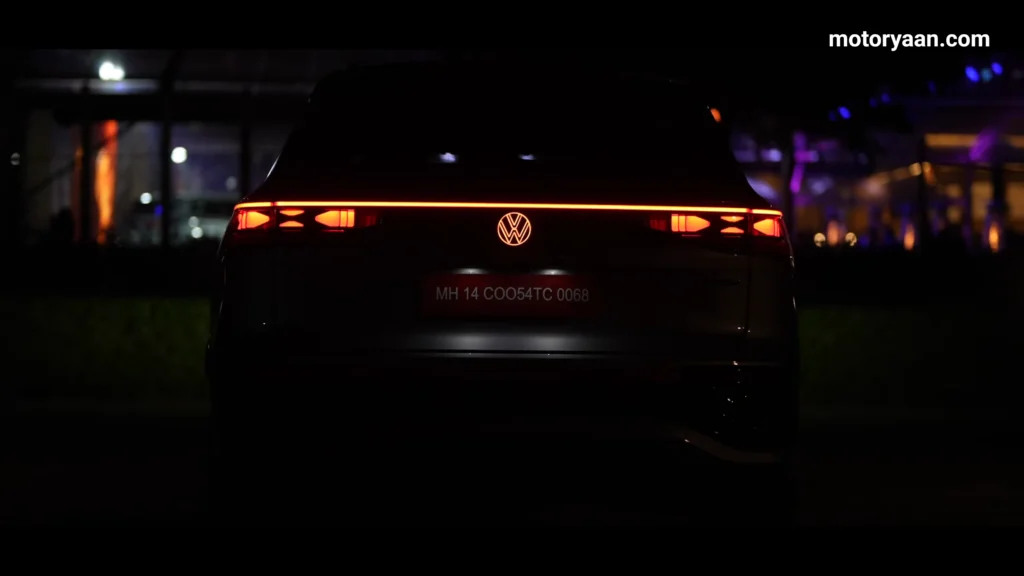
• Illuminated VW logo
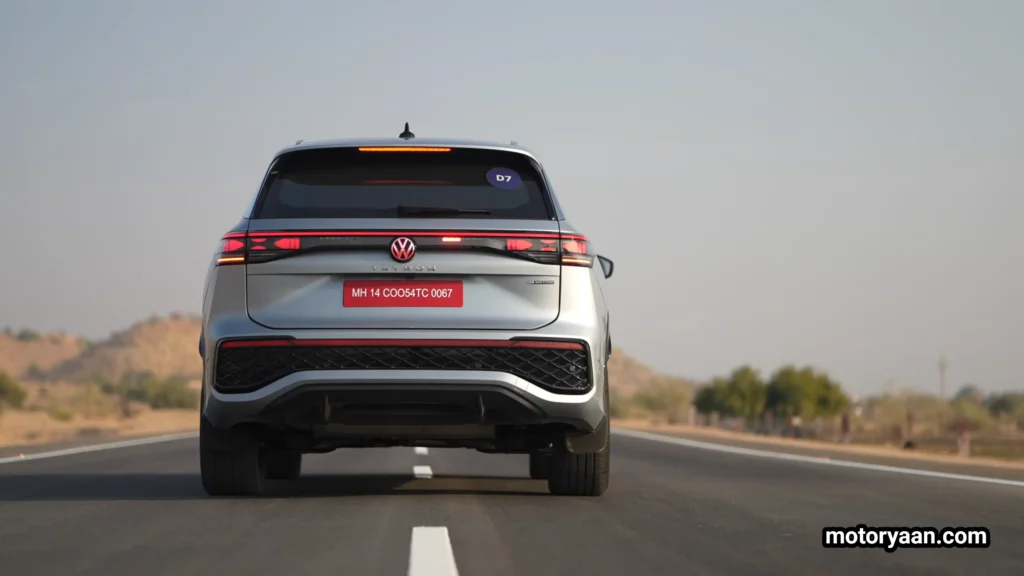
• Connected front and rear light bars
• Dynamic swipe indicators that can be switched to normal indicators
• Door handle illumination at night
The connected lighting animations during lock and unlock look straight out of a GTI.


Cameras, Sensors, and ADAS
This is where the Tayron clearly pulls ahead of the Tiguan and Kodiaq sold in India.
You get
• 360 degree parking camera
• Self park assist
• Front and rear parking sensors everywhere
• Level 2 ADAS with 14 active safety features
The Tiguan gets more ADAS features globally, but in India, the Tayron is better equipped. The Kodiaq, surprisingly, offers no ADAS at all.
The radar for ADAS appears to be integrated behind the front panel rather than sitting in an obvious external housing.
Interior Layout and Quality
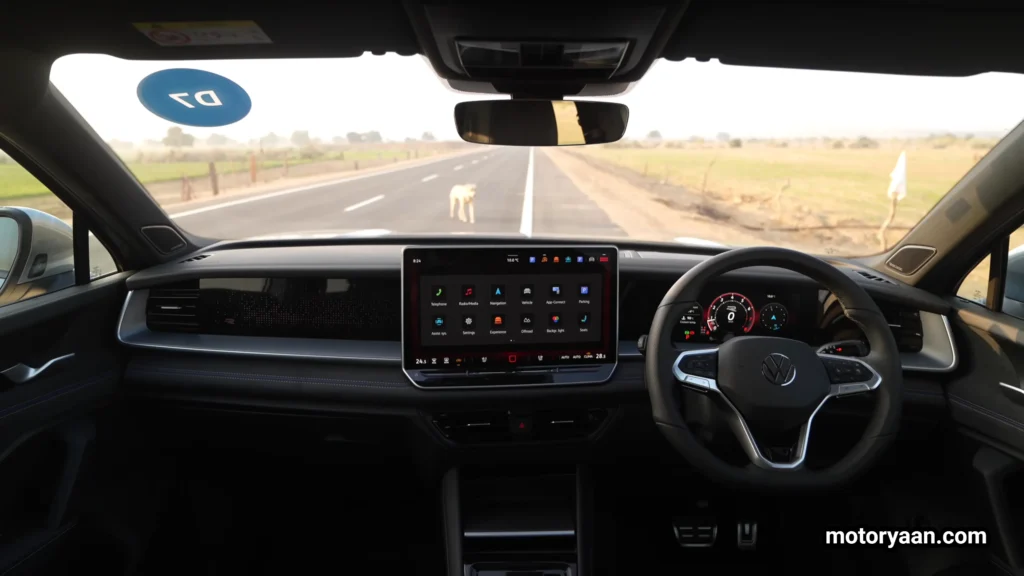
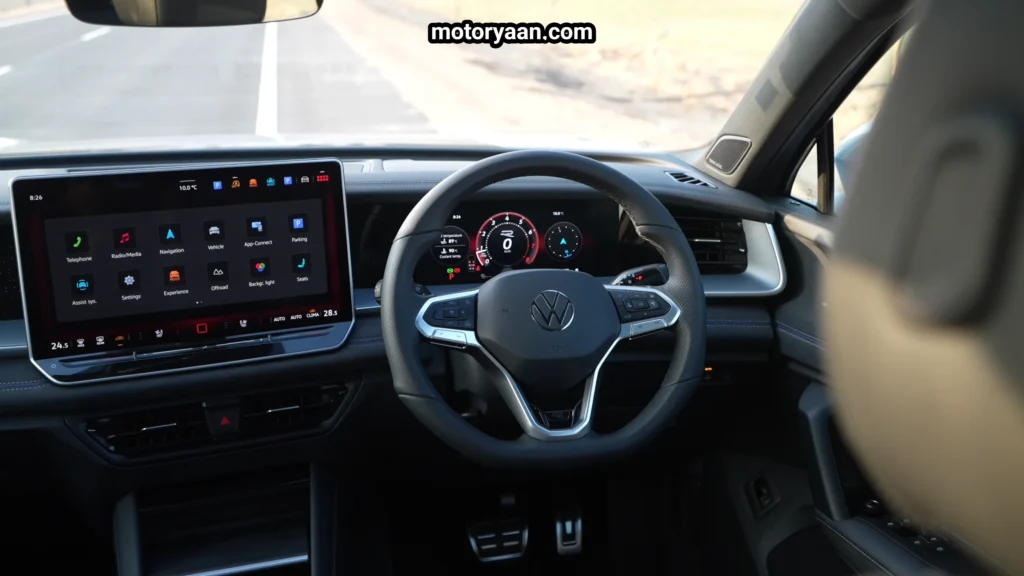
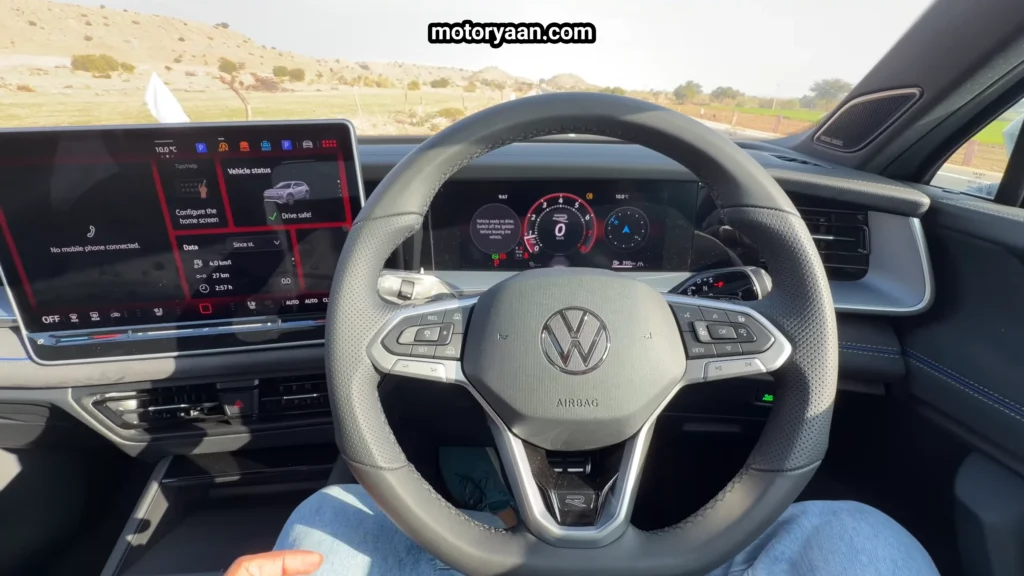
Step inside and the dashboard will instantly remind you of the Tiguan.
The difference lies in features.
The Tayron gets
• Keyless entry
• Powered front seats
• Electric tailgate with gesture control
• 360 degree camera
• Heads up display with augmented reality
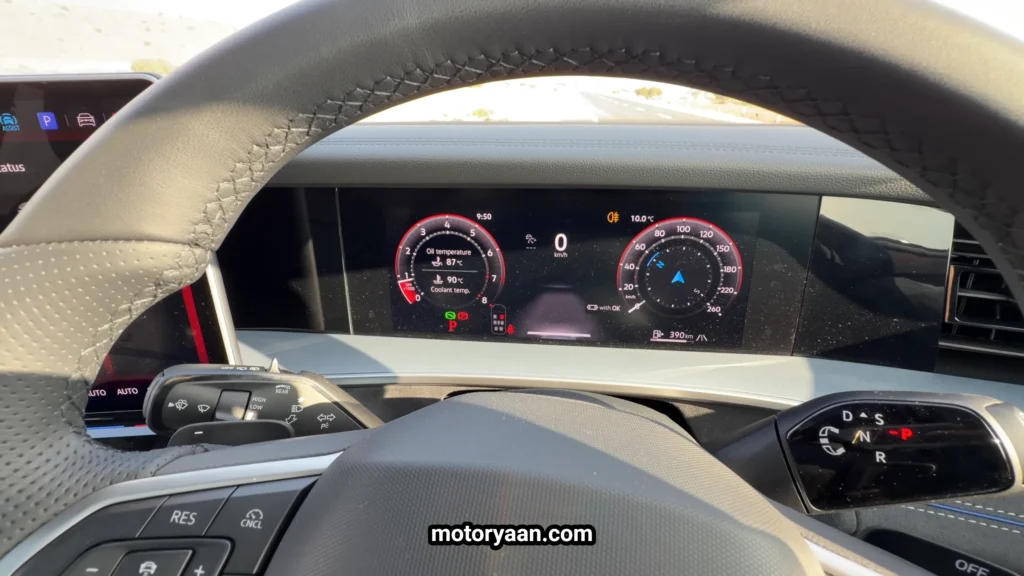
• Large digital instrument cluster
• A massive 15 inch touchscreen on higher trims
Material quality is good overall. Soft touch materials up top, hard plastics lower down. That lower hard plastic does stand out in a car at this price point.
The cabin design feels sporty with an all black theme and R Line accents.


Front Seats and Driving Position
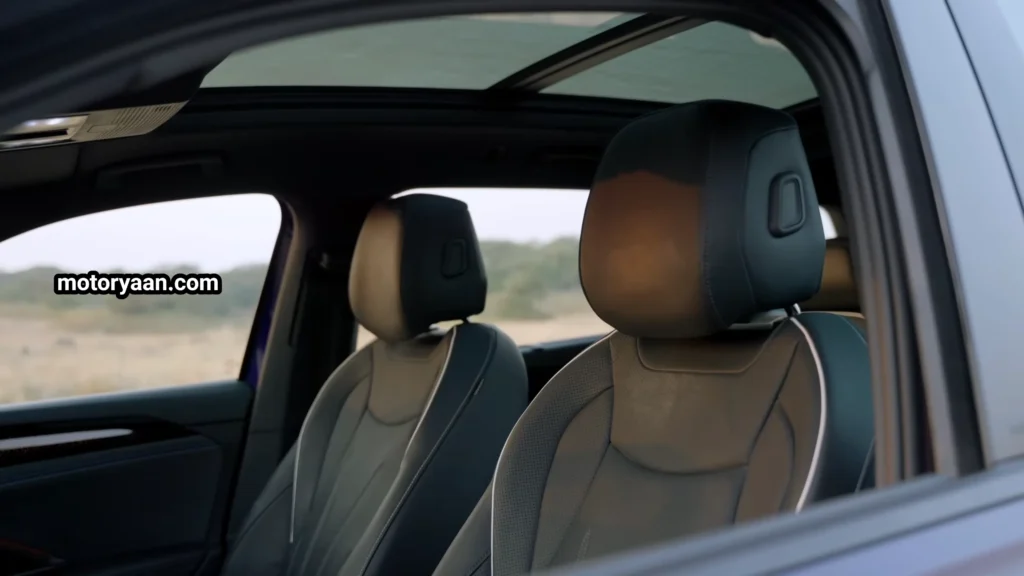
Both front seats are 12 way electrically adjustable with memory and welcome function. They slide back when you enter and move forward when you start driving.
They are comfortable, supportive, and designed for long hours behind the wheel.
Seat massage is available with eight massage modes, adjustable intensity, and up to 30 minutes of operation. This is something you will not find in the Fortuner.

Infotainment and Screens
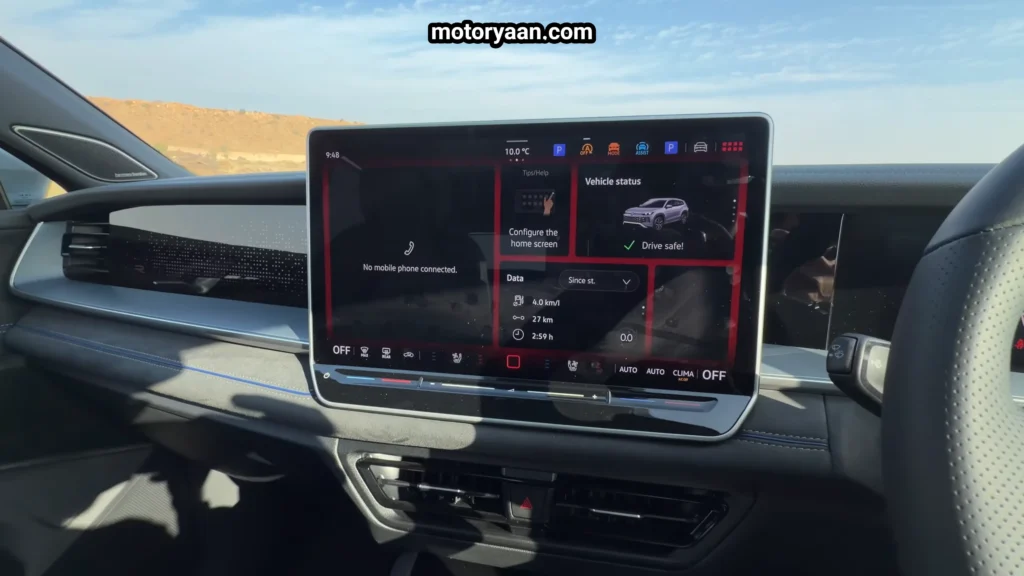
The 15 inch touchscreen dominates the cabin.
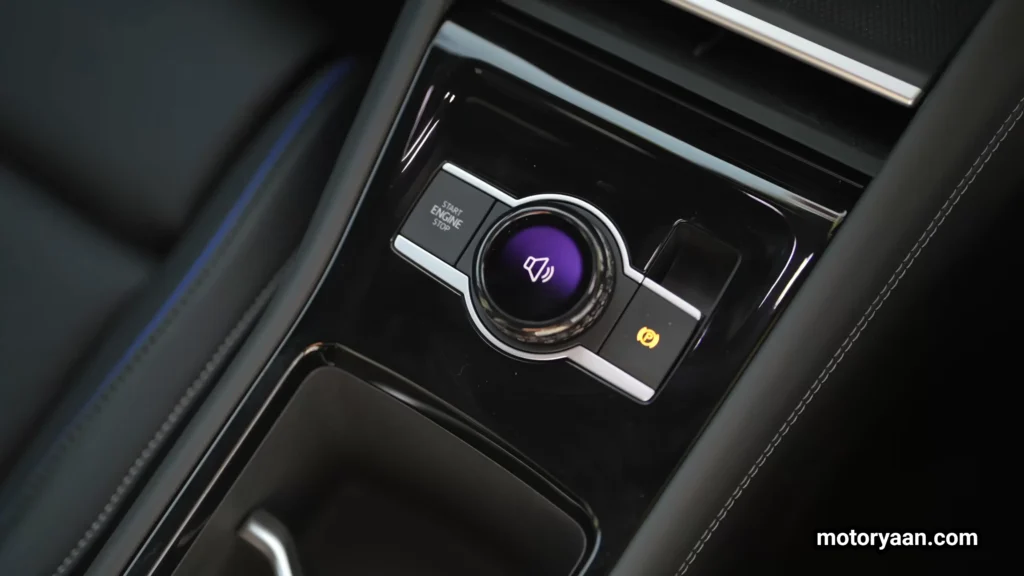
Most functions are screen based. Physical buttons are minimal. Climate control, drive modes, ambient lighting, and seat functions all live inside the screen.
The system is slick, responsive, and feature packed. But it can get confusing. Too many menus, too many layers.
Wireless Apple CarPlay and Android Auto are standard. Built in navigation works with the heads up display as well.
Audio comes from a Harman Kardon system with 11 speakers and 700 watt output. Sound quality is genuinely impressive.


Ambient Lighting and Customisation
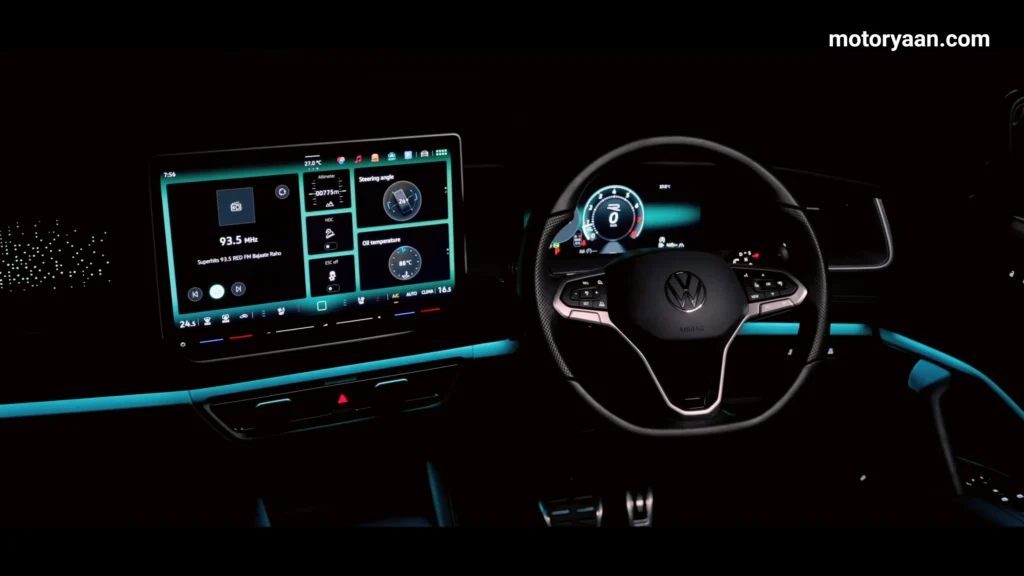
Ambient lighting is one of the Tayron’s standout features.
You get
• 30 colour options
• Multiple lighting themes
• Lighting synced with driving modes and displays
The lighting spills across the doors, dashboard, instrument cluster, and even the R Line badging. It adds a premium feel that most rivals simply do not offer.

Second Row Comfort
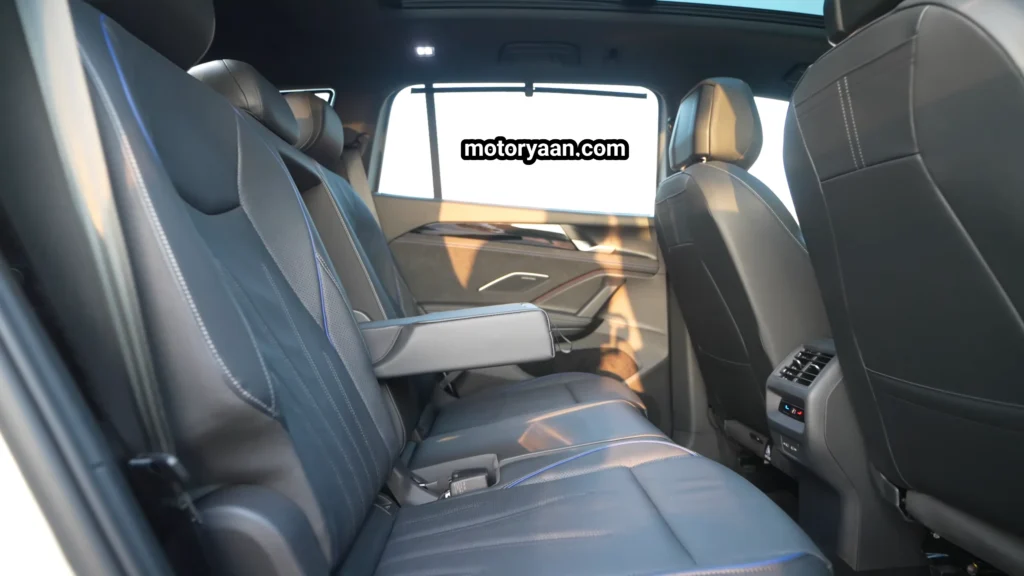
This is where the Tayron scores big.
The second row offers
• Sliding seats
• Recline function up to 15 degrees
• 40 20 40 split folding
• Good knee room and foot room
• Comfortable headroom even for tall passengers
The Tiguan does not offer recline. The Tayron does. That makes a big difference on long drives.
You also get
• Rear sun blinds
• Centre armrest with cupholders
• Magazine pockets
• Phone holders
• Touch activated roof lights

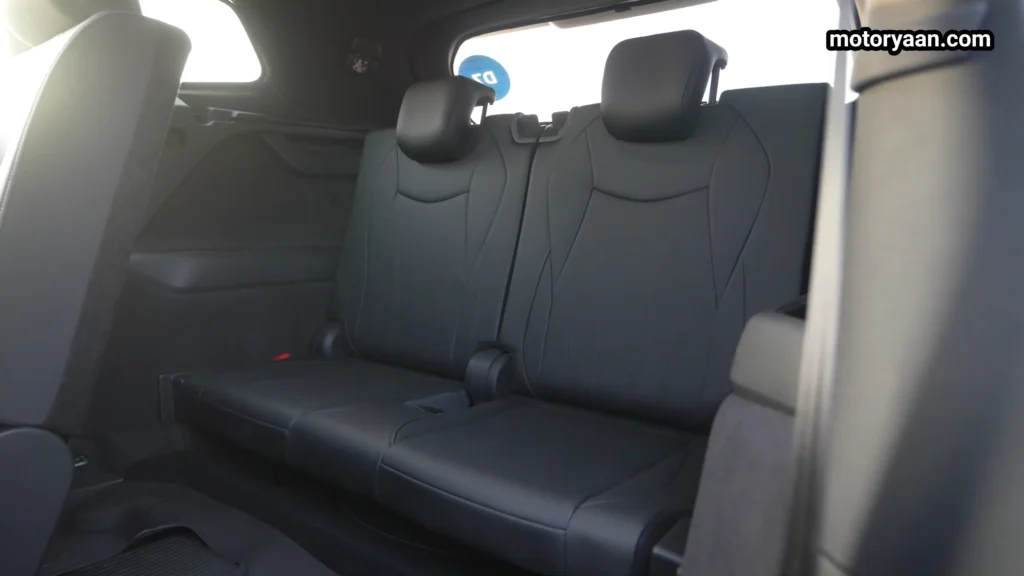
Third Row Reality Check
Volkswagen is honest here.
The third row is for children or young adults. Not full size adults.
Leg room, knee room, and under thigh support are limited. Headroom is acceptable. There are seat belts, lights, cup holders, and sun blinds, but no AC vents.
The sliding second row helps adjust space when needed. Think of it as flexibility rather than true seven adult seating.

Boot Space and Practicality
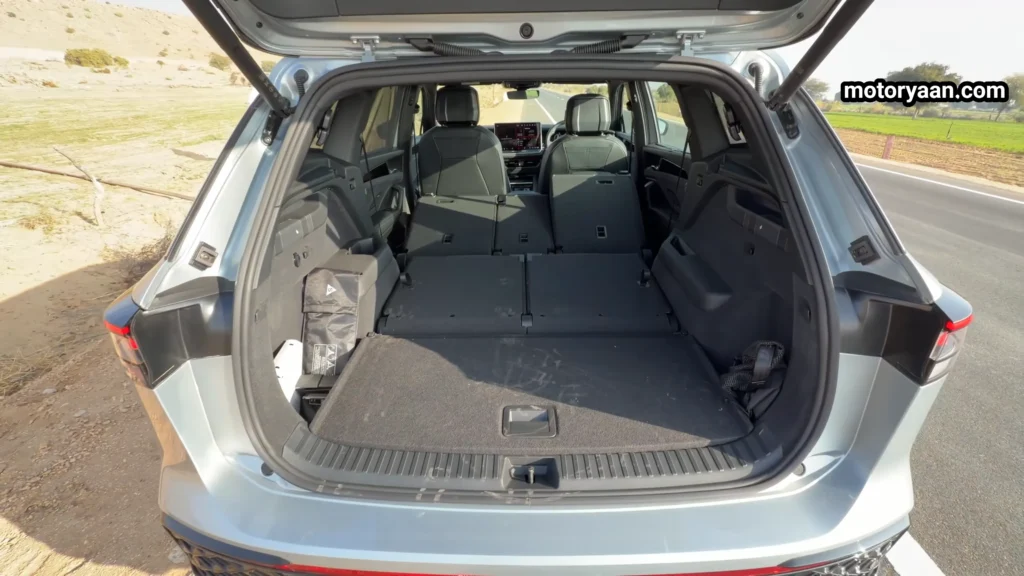
With all seats up, boot space is limited.
Fold the third row and you get around 850 litres. Fold both rows and the Tayron turns into a large cargo hauler.
The power tailgate supports gesture open and close, something the Tiguan lacks.
Other boot features include
• 12V charging socket
• Hooks
• Lighting
• Space saver spare wheel
• Subwoofer mounted in the boot area

Fuel Efficiency
This is not the Tayron’s strength.
Expect
• 7 to 8 km per litre in the city
• Better numbers on the highway with relaxed driving
This is a heavy petrol SUV. Efficiency is not the goal here.
Safety
The Tayron has a five star Euro NCAP rating.
Safety highlights include
• Nine airbags including centre airbag
• Level 2 ADAS
• Lane assist
• Adaptive cruise control
• Blind spot monitoring
• Driver attention monitoring
ADAS works well but resets itself every time you restart the car. That can be annoying.
Global Powertrain Options
Globally, the Tayron offers more choices.
International markets get
• Higher tune 2.0 TSI with 265 horsepower
• Plug in hybrid options
• Diesel engines up to 190 horsepower
India gets only the 204 horsepower petrol. A diesel would dramatically change the game for Volkswagen here.
Pricing Expectations
Based on current pricing
• Fortuner sits between 41 and 60 lakh
• Kodiaq seven seater ranges from 47 to 55 lakh
• Tiguan costs around 58.5 lakh
The Tayron is expected to sit close to the Tiguan, possibly slightly lower due to CKD assembly. Considering the features on offer, the pricing will feel justified to many buyers.
Final Thoughts
The Volkswagen Tayron is not trying to be a Fortuner.
It is smoother, faster, more comfortable, and far more feature rich. It offers a driving experience that most three row SUVs cannot match.
A diesel engine would double its appeal overnight. Until then, this remains a petrol only enthusiast friendly family SUV that prioritises tech, comfort, and driving pleasure.
If you want rugged, buy a Fortuner.
If you want features and driving joy, this is where Volkswagen makes its case.
Frequently Asked Questions
What exactly is the Volkswagen Tayron?
The Volkswagen Tayron is the seven seater version of the Tiguan and effectively replaces the Tiguan Allspace. While the design looks similar to the Tiguan, the Tayron is longer and offers a third row of seating.
Is the Volkswagen Tayron made in India?
Yes, the Volkswagen Tayron sold in India is assembled locally using the CKD route. This is different from the Tiguan, which comes to India as a fully imported CBU.
Does the Volkswagen Tayron get ADAS features?
The Volkswagen Tayron offers Level 2 ADAS with 14 active safety features. This gives it a clear advantage over the Skoda Kodiaq sold in India, which does not offer ADAS.
Is there a diesel engine option available?
No, the Volkswagen Tayron sold in India does not get a diesel engine. It is powered by a petrol engine only, which may be a drawback for buyers who prefer diesel SUVs.
What engine powers the Volkswagen Tayron?
The Tayron uses the 2.0 litre TSI EA888 Gen 4 petrol engine. It produces 204 horsepower and 320 Nm of torque and is paired with a dual clutch automatic gearbox.
How quick is the Volkswagen Tayron?
Volkswagen claims a 0 to 100 km per hour time of 7.3 seconds. Real world testing shows consistent results between 7.2 and 7.5 seconds using launch control.
Is the third row usable for adults?
The third row in the Volkswagen Tayron is best suited for children or young adults. Leg room and under thigh support are limited, though headroom is acceptable.
How practical is the boot space?
With the third row folded, the Tayron offers around 850 litres of boot space. With all seats up, space is limited but usable for small luggage.
Does the Tayron offer all wheel drive?
Yes, the Volkswagen Tayron comes with the 4Motion all wheel drive system, which helps with traction and stability in different driving conditions.
What kind of fuel efficiency can buyers expect?
The petrol powered Volkswagen Tayron delivers single digit fuel efficiency in city driving, roughly around 7 to 8 km per litre. Highway efficiency improves with relaxed driving.