2026 Subaru Forester Wilderness
Table of Contents
Subaru launched the first Forester Wilderness in late 2021 as an experiment. The idea was simple. Take the regular Forester, give it more ground clearance, real off road hardware, and see if buyers cared. They clearly did. Subaru says Wilderness trims now make up close to 20 percent of its total sales mix.
Fast forward to the sixth generation Forester. The new model arrived with fresh styling, a hybrid option, and improved tech. But Subaru held back the Wilderness version for about a year. Now it is here as the 2026 Subaru Forester Wilderness, and it sticks to the same idea: more capability without losing everyday comfort.
This article organises all the key facts, numbers, and real world impressions from the data provided, without fluff or brochure talk.
Engine, drivetrain, and real world performance
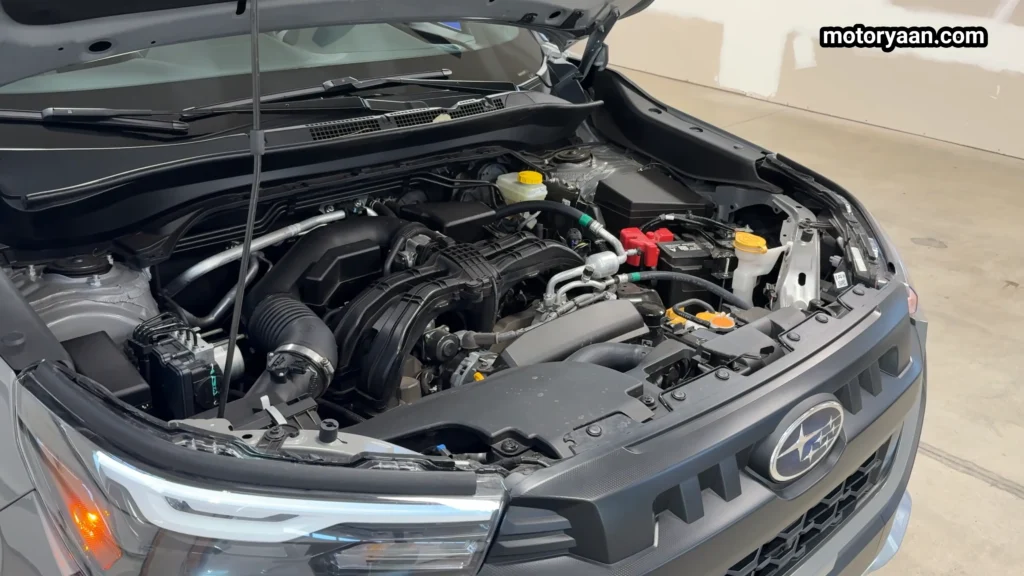
Under the hood, the Forester Wilderness keeps things simple. It does not get the hybrid setup. Instead, it uses the familiar naturally aspirated boxer engine.
Engine specs
2.5 litre naturally aspirated boxer four cylinder
180 horsepower
178 lb ft of torque
Lineartronic CVT with eight virtual ratios
Standard symmetrical all wheel drive
Dual function X Mode for off road traction
The engine is largely carried over from the previous generation. Power is down by two horsepower, but torque is up slightly.
The hybrid version of the Forester makes up to 194 horsepower, but it is not available on the Wilderness trim. Because this version skips the battery and electric motors, it is around 300 pounds lighter.
Acceleration and speed
0 to 60 mph: around 8.3 seconds best case
Typical real world 0 to 60: around 9 seconds
Top speed: roughly 115 mph
No one buys a Forester for drag racing. In daily driving, the powertrain feels adequate. The CVT does a decent job mimicking gear shifts, and the boxer engine stays smooth until higher revs.

Fuel economy and range
The off road upgrades come at a cost to efficiency.
Fuel economy
24 mpg city
28 mpg highway
Around 26 mpg combined
That is lower than:
Regular Forester: about 26 city and 33 highway
Hybrid Forester: up to mid 30s mpg
However, the Wilderness uses a large 16.6 gallon fuel tank.
Estimated range
Around 430 miles on a full tank
In real world driving, the tested average was about 25 mpg, with close to 400 miles of range.
Towing and weight
The Wilderness model also gets a stronger towing setup.
Maximum towing capacity: 3,500 pounds
That is 500 pounds more than the previous Wilderness
And 2,000 pounds more than a regular Forester
Curb weight comes in at just under 3,700 pounds.
Exterior design and off road hardware
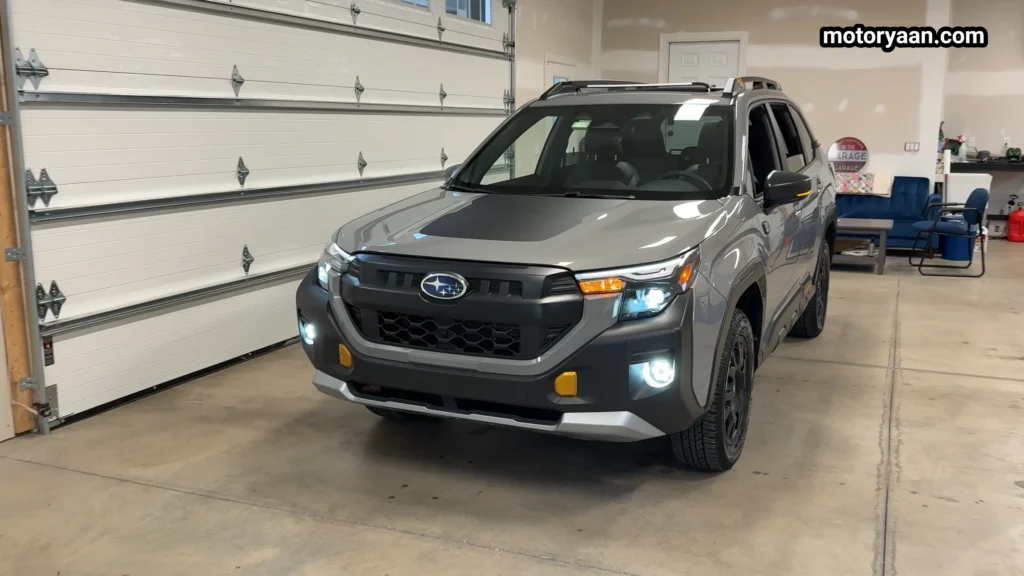
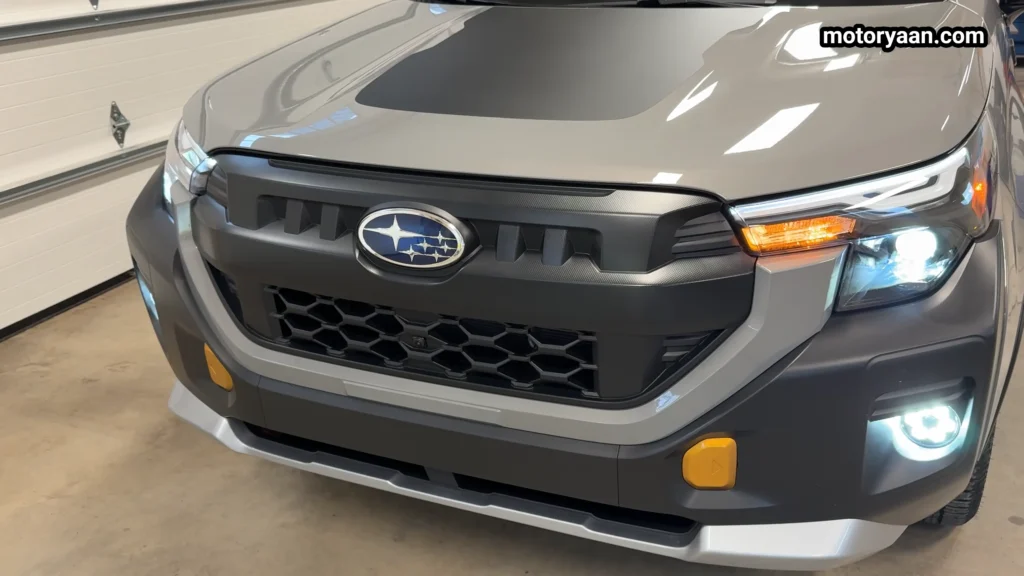
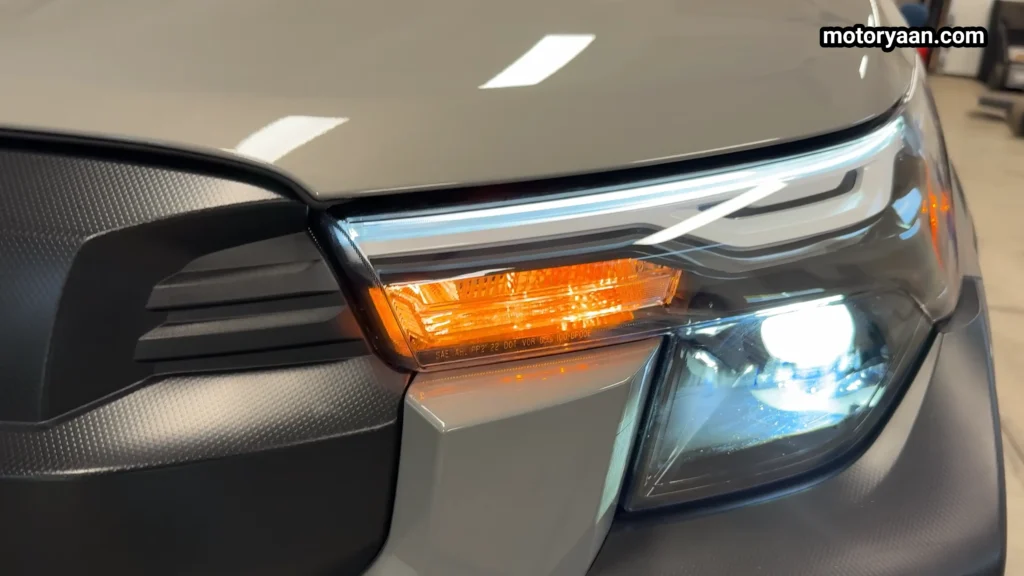
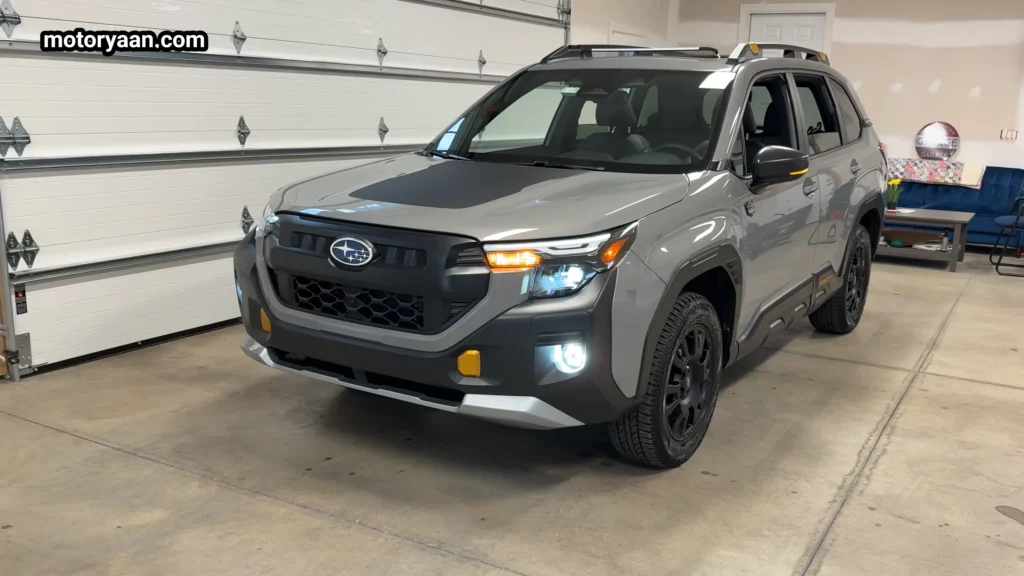
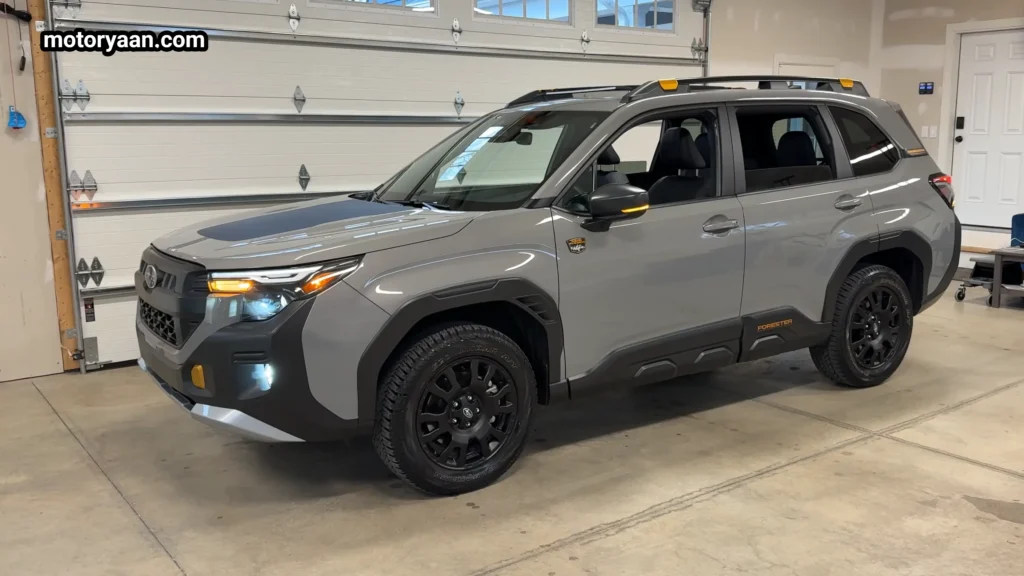
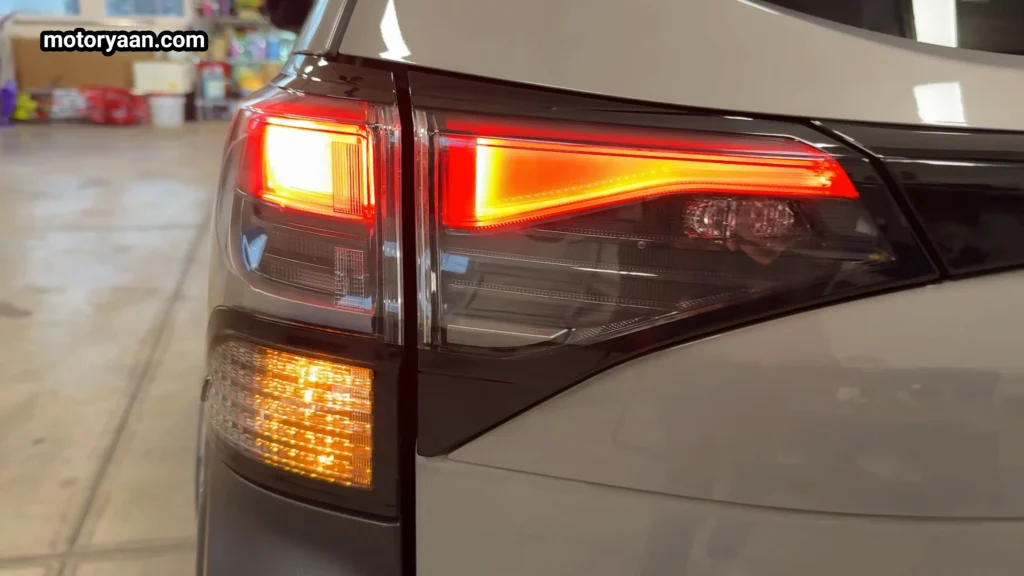
The Wilderness trim is easy to spot. It looks tougher than the regular Forester and adds actual hardware, not just stickers.
Key exterior changes
Matte black hood decal to reduce glare
Larger grille with rugged textures
Copper coloured exterior accents
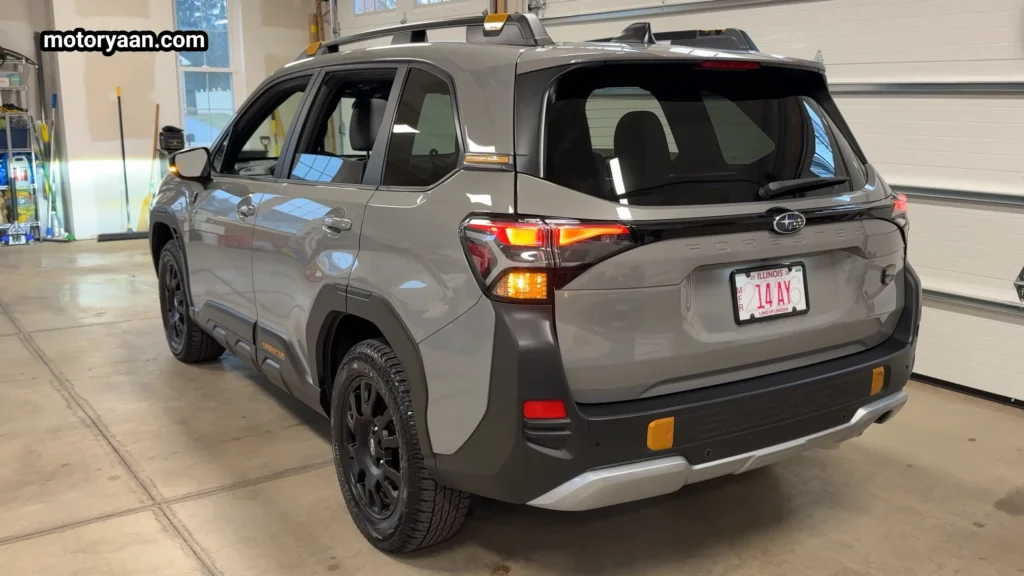
Unique front and rear bumpers
Underbody steel skid plates
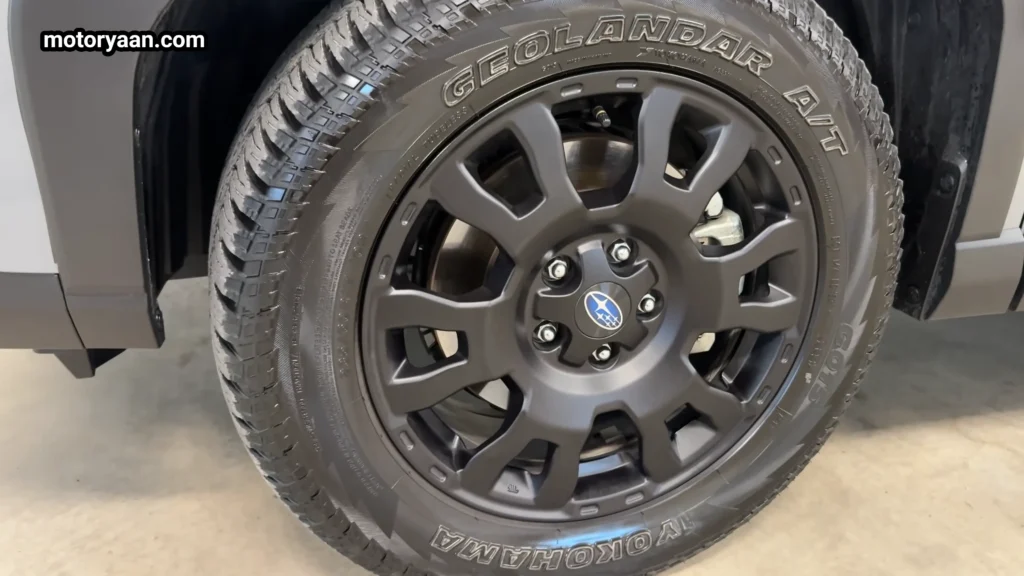
All terrain tyres
Raised suspension
Ground clearance
9.3 inches
0.1 inch more than the previous Wilderness
More than the standard Forester’s 8.7 inches
Wheels and tyres
17 inch matte black wheels
Yokohama Geolandar all terrain tyres
Slightly wider than before
Dimensions
Length: 182.9 inches
Wheelbase: 104.9 inches
Width: about 72 inches
Height: just under 70 inches
The Wilderness also gets heavy duty roof rails that can support up to 800 pounds of static load, useful for rooftop tents or cargo.


Cargo space and practicality
Subaru still focuses heavily on practicality. The Forester remains one of the more usable compact SUVs.
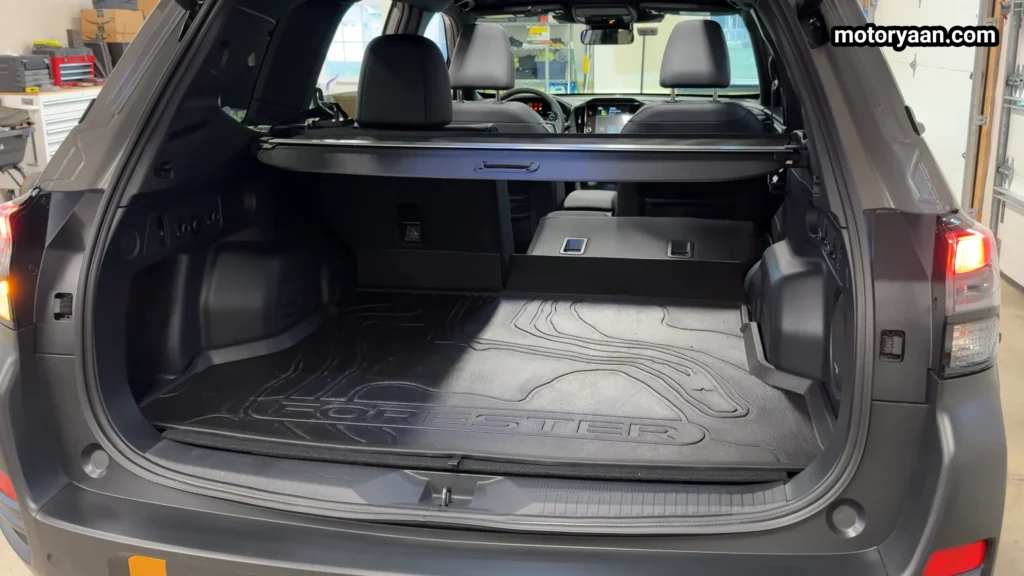
Cargo capacity
27.5 cubic feet with seats up
69.1 cubic feet with seats folded
Some rivals offer more on paper, but the Forester’s tall body gives it better vertical storage.
Other practical touches include:
Wide and low cargo opening
Rubberised cargo tray
Temporary spare wheel
Near flat load floor with seats folded

Interior: tough materials, mixed tech
The Wilderness interior focuses on durability rather than luxury.
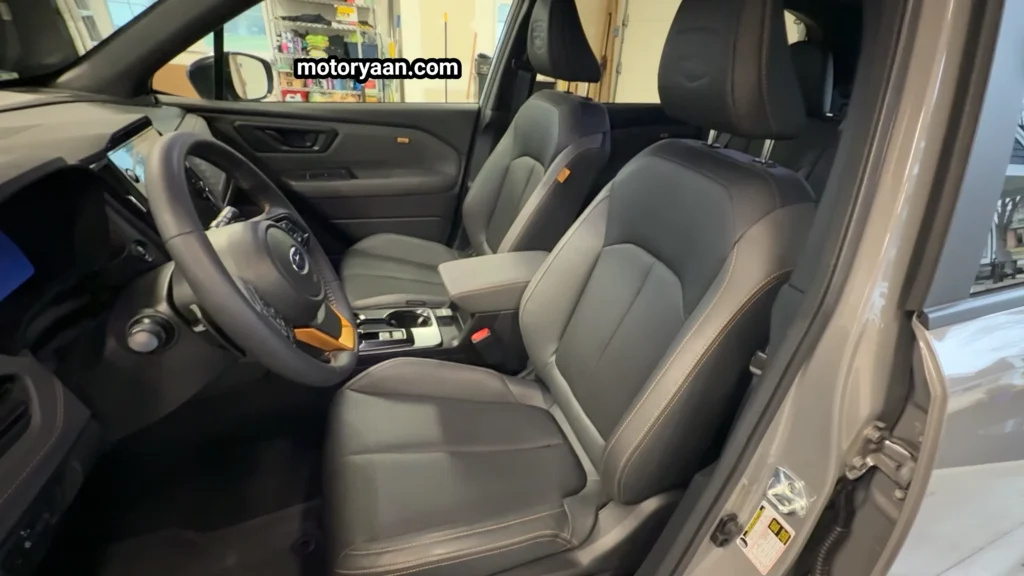
Seat material
StarTex water resistant upholstery
Copper contrast stitching
Heated front seats
No ventilated seats on this trim
The material is designed to handle mud, spills, and outdoor use.
Driver’s area highlights
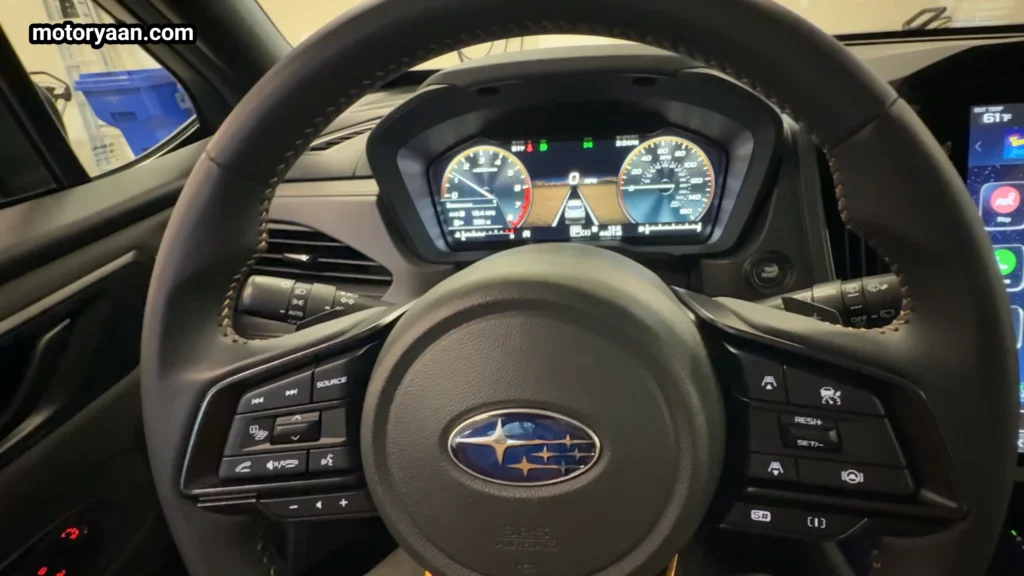
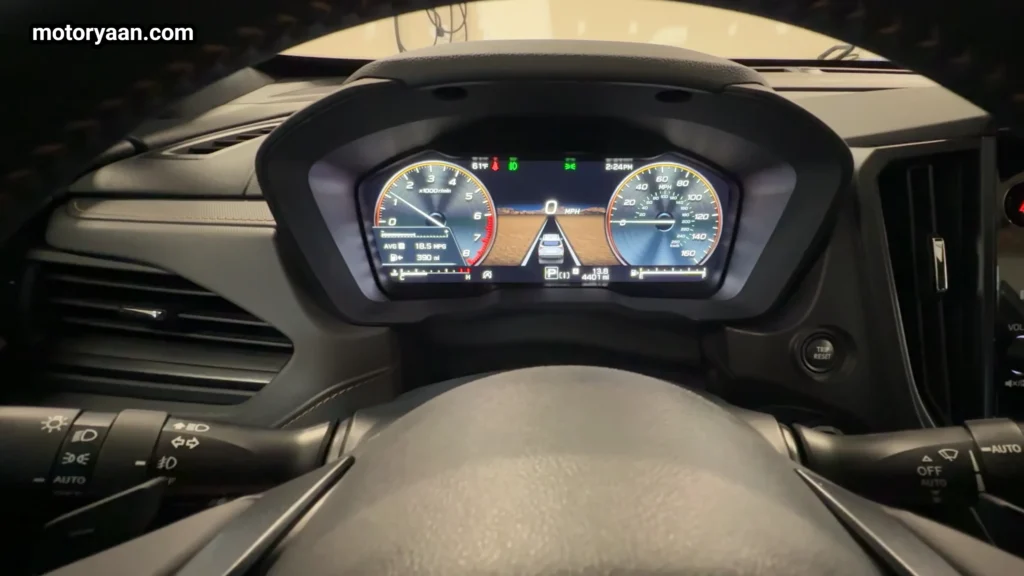
12.3 inch digital instrument cluster
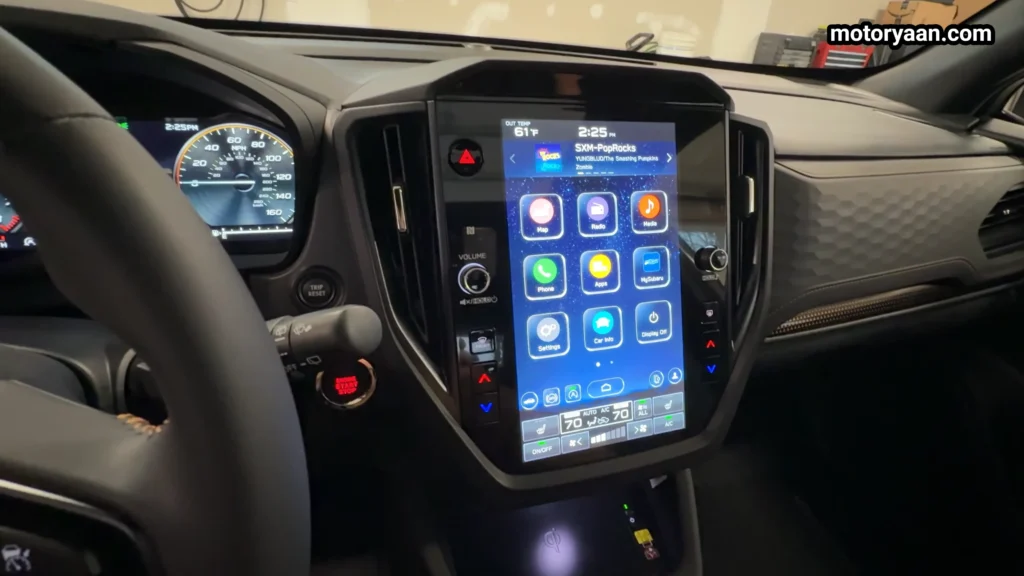
11.6 inch portrait touchscreen
Wireless Apple CarPlay and Android Auto
Physical buttons for key functions
The main complaint is the infotainment system. It uses Subaru’s older software, which feels slow and laggy, especially at startup.


Rear seat and comfort
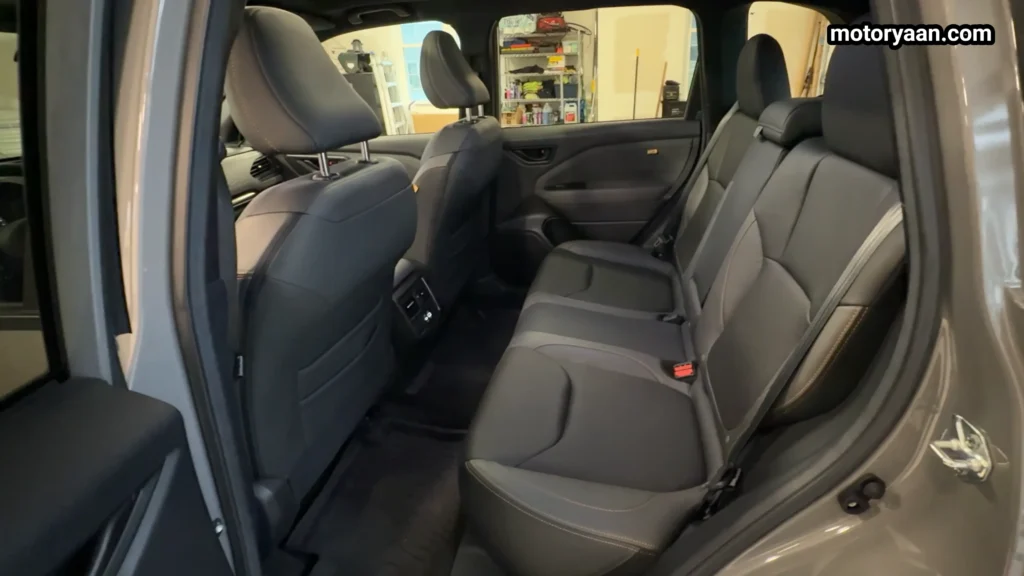
The Forester remains one of the roomiest compact SUVs.
Rear seat space
39.5 inches of legroom
Among the best in the segment
Other rear seat features:
Rear air vents
USB A and USB C ports
Large door openings for easy child seat access
The seats do not recline, and there are no heated rear seats on this trim.

Ride, handling, and daily driving
Despite the off road focus, the Wilderness stays comfortable on the road.
Driving impressions
Softer suspension than standard Forester
Comfortable ride over rough roads
Quick and direct steering
Excellent outward visibility
Subaru added more sound insulation in this generation, which reduces wind and road noise. The all terrain tyres do add a bit of extra tyre hum.
Nearly half of Wilderness owners actually plan to take their vehicles off road, which explains the focus on real capability rather than cosmetic upgrades.
Safety and driver assistance
The Forester Wilderness comes with Subaru’s EyeSight system.
Standard features include
Adaptive cruise control
Lane keep assist
Automatic emergency braking
It does not get the hands free driving tech found on higher trims of some Subaru models.
Pricing and rivals
2026 Subaru Forester Wilderness pricing
Starting price: about 38,385 dollars
Test vehicle price: around 42,430 dollars with options
The main option package adds:
Harman Kardon audio system
Navigation
Power liftgate
Digital instrument cluster
Key rivals and pricing
Honda CR V TrailSport: around 38,900 dollars
Toyota RAV4 Woodland: around 39,000 dollars
Ford Bronco Sport Badlands: about 39,000 dollars starting, but closer to 48,000 with options
The Subaru sits right in the middle on price but offers real off road hardware and strong practicality.
Sales context
In 2025, Subaru sold around:
175,000 Foresters
191,000 Crosstreks
The Forester was the brand’s second best selling model. With the hybrid and Wilderness versions now available, Subaru expects demand to stay strong.
Verdict: who should buy the Forester Wilderness
The 2026 Forester Wilderness is not for everyone. If you mostly drive in the city, the hybrid or Touring trims make more sense. They are quicker and more efficient.
But if you:
Drive on rough roads regularly
Go camping or off roading
Need extra towing capacity
Want a tougher looking Forester
then the Wilderness makes a strong case.
It keeps the Forester’s strengths: comfort, space, and visibility. It adds real off road hardware instead of just cosmetic upgrades. The main drawback is the slow infotainment system and the lack of the hybrid option.
Still, as a practical, capable compact SUV that you can use every day and take into the wild on weekends, the Forester Wilderness stays true to Subaru’s core formula.
Sources and References
- Subaru of America official product pages and specifications for the 2026 Forester and Forester Wilderness
https://www.subaru.com - Edmunds vehicle specifications and comparisons
https://www.edmunds.com - Kelley Blue Book pricing and feature data
https://www.kbb.com - Car and Driver road tests and technical specifications
https://www.caranddriver.com